Jeremiah 18
Gumatj Bible · Tap a verse to see its cross-references.
Yolŋu'‐yulŋunydja dhuwala balanyara bitjan dhoḻu Godkala goŋŋura
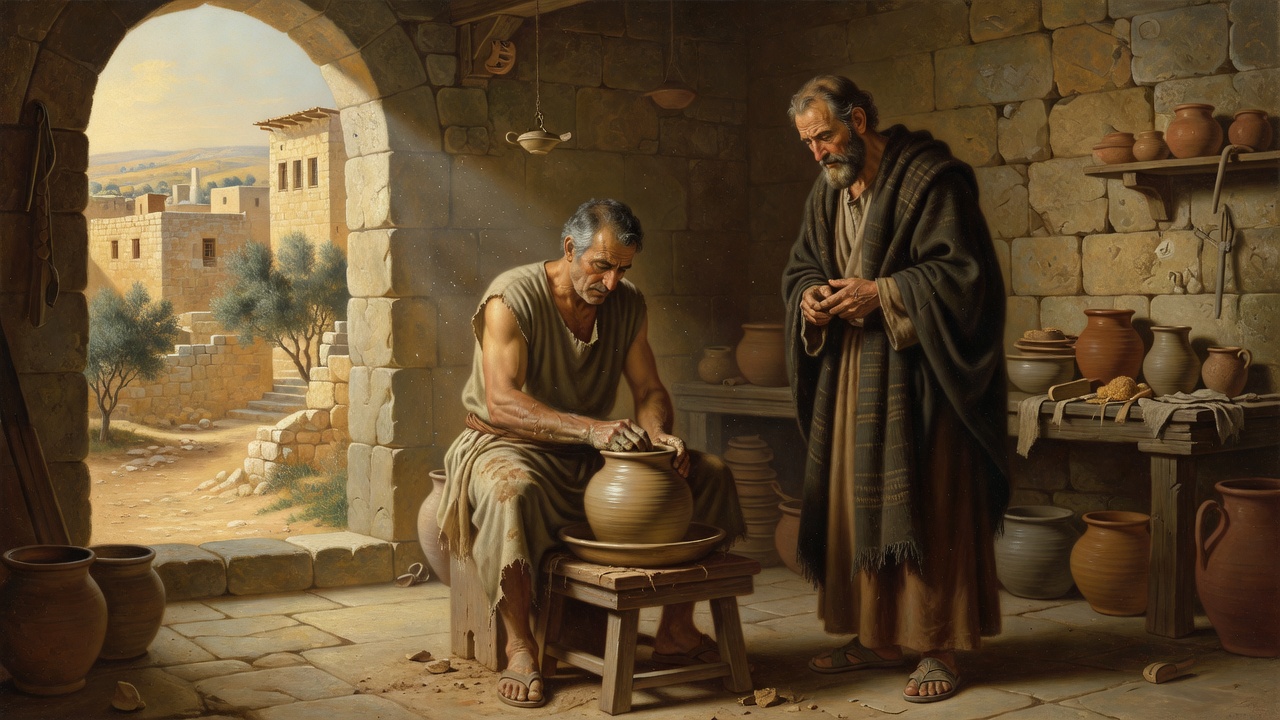
18:1–12 (People are like clay in God’s hands)
1Yo, bala ŋayi Garray waŋana bitjarra ŋarrakala, “Djiramaya, marrtjiya bala ŋunha ya' dhoḻu‐djämamirriwala yolŋuwala wäŋalili, ga ŋunhalayina ŋarra nhuŋu yurru dhäruktja wekama.” 3Bala ŋarra marrtjinana ŋunhimalayinydja wäŋalili, bala ŋarra nhäŋalana ŋunhiyinydjayi dhoḻu‐djämamirrinhanydja yolŋunha, ŋayi yukurrana djäma ŋunhiliyi banikin' dhoḻu. 4Wiripunydja ŋunhi dhoḻu banikin' yätjthina nhanukala goŋŋura, bala ŋayi ŋunhiyi goŋdhuna djäma buyuwuyu'kuŋalanydja, ga ŋunhiyi liŋgu dhoḻu ŋayi djäma biyapul ŋula nhäku ŋayi djäl ŋayi yurru djäma.
5Ga ŋayi Garraynydja waŋana bitjarra, 6“Nhuma Yitjuralnydja miṯtji dhuwala ŋarrakala goŋŋura bitjan, bitjan ŋunhiyi dhoḻu ŋurikalayi yolŋuwala dhoḻu‐djämamirriwala goŋŋura. Dhunupa yana ŋarraku djämawu, ŋarra yurru djäma bitjandhiyinydja ŋunhi ŋarra ḏukṯuk ŋula nhäku djämawu. 7Ŋuli ŋarra yurru waŋa miṯtjinha yolŋu'‐yulŋunha bitjan, ŋarra yurru walalanha ḏulŋurr'yun djalkiri manapan yana, bala baḏuwaḏuyunna ŋunhiyi miṯtjinhanydja, 8ga ŋuli ŋayi yurru ŋunhiyi miṯtji bilyun yätjŋurunydja, ga djäma ŋamathamanydja wal'ŋu, bala ŋarranydja yurru bitjandhi liŋgu bilyun, ga yakana ŋarra yurru baḏuwaḏuyundja walalanha, bitjarra ŋarra ŋäthili waŋana. 9Ga ŋunhi yurru ŋarra waŋa wiripunha miṯtjinha bitjandja, ‘Ŋarranydja yurru nhuna dhärranhamarama, gaŋgathinyamirriyamana ḻatju'kumana wal'ŋu,’ bitjandja, ga ŋunhi miṯtji ŋunhiyi bilyundja yurru ŋarrakala, ga djäma yätjtja, ga yakanydja dhäruk-märrama yurru ŋarranha, ga ŋarranydja yurru bitjandhi liŋgu bilyundhi, yakana ŋarra yurru djäma ŋunhiyi ŋamakurru' ŋunhi ŋarra ŋurruthaŋala waŋana nherrara.”
11Ga biyapul ŋayi Garrayyu djuy'yurruna ŋarranha, waŋana bitjarra, “Gatjuy marrtjiya, ga ḻakaraŋa ŋuripa miṯtjiwa Djurutjalambuyŋuwa, ga bukmak ŋunhi wäŋa buku‐ḻiw'marama, ḻakaraŋanydja walalambala biyaka, ŋunhi ŋarranydja yukurra girri'‐ŋamathirrina dhä‐ḏir'yunarawuna walalaŋgu; yätjnha mirithirrina yurru buna dhiyaliyinydja walalaŋgu. Ḻakaraŋa walalambala, walala yurru ḏaḏawyunna ŋuliŋuruyinydja yätjŋurunydja, ga djambina walalaŋguway dhukarrnydja.”
12Bala ŋarra marrtjinanydja, bala ḻakaraŋalana walalambala ŋuripa yolŋu'‐yulŋuwanydja, ga walalanydja buku‐ruŋinyamaraŋala waŋana yaka'yurruna bitjarra, “Nhäku nhe yukurra waŋa bitjandhinydjayi? Ŋanapurrunydja yurru djäma ŋanapurruŋgalaynha yana djälkurru. Yakana ŋanapurru yurru ganan ŋanapurruŋguway yätj.” Bitjarra warray walalanydja yukurrana yolŋu'‐yulŋunydja waŋana.
Did you know?
The Potter and the Clay
- At the potter's house, Jeremiah observes an artisan reshaping a spoiled vessel on the wheel into another pot. The passage uses this craft to illustrate divine authority and conditional judgment: if a nation turns from evil after being warned, disaster is averted, but if a nation turns to evil, intended blessings are withheld.Sources: the Bible text itself
- The prophecy contrasts Israel's abandonment of God with the constancy of the natural world, asking if the snow of Lebanon ever departs from its rocky crags. The mountain range of Lebanon, whose name means white, was notable for its lofty peaks and enduring cold streams.Sources: Lebanon · the Bible text itself
- The conspiracy against Jeremiah was driven by opponents who assumed religious security, arguing that instruction would never be lost to the priest, counsel to the wise, or the divine word to the prophet. Jeremiah's message of impending ruin directly challenged this institutional confidence.Sources: Jeremiah · the Bible text itself
Notes written with AI assistance from open sources (Theographic Bible Metadata, CC BY-SA 4.0; Easton’s Bible Dictionary, public domain) and reviewed before publishing.
Places in this chapter
- Jerusalem · 31.777, 35.234 · verse 11
- Lebanon · 33.540, 35.584 · verse 14
- Mount Hermon · 33.400, 35.850 · verse 14
Only places identified with high confidence are shown (90% or more according to the scholarly sources compiled by OpenBible). Period map: DARE (Digital Atlas of the Roman Empire), CC BY 4.0; modern map: © OpenStreetMap contributors; places: OpenBible.info (CC BY 4.0).
Credits and license for this translation
Gumatj Bible
The Holy Bible in the Gumatj language of Australia
copyright © 1989, 2017 Bible Society of Australia
Language: Gumatj
Old Testament published 1989; New Testament published 2017
This translation is made available to you under the terms of the
Creative Commons Attribution-Noncommercial-No Derivatives license 4.0.
You may share and redistribute this Bible translation or extracts from it in any format, provided that:
You include the above copyright and source information.
You do not sell this work for a profit.
You do not change any of the words or punctuation of the Scriptures.
Pictures included with Scriptures and other documents on this site are licensed just for use with those Scriptures and documents.
For other uses, please contact the respective copyright owners.
2025-10-10
Source: http://ebible.org/gnn/ · eBible.org