Jeremiah 17
Gumatj Bible · Tap a verse to see its cross-references.
Ganaŋ'maranharamirrinydja dhuwala walu dhulŋuŋu nhanŋuway, gäna wal'ŋu
17:19–27 (About the sabbath)
19Yo, bala ŋayi Garray ŋarraku waŋa bitjan, “Djiramaya, marrtjiya ga dhärriya ŋunha ya' dhurrwaralili wal'ŋu ḻoḻulili Djurutjalamlili wäŋalili. 20Ḻakaraŋa walalambala ŋuripa ŋurru'‐ŋurruŋuwa buŋgawamirriwa ga bukmakpa yolŋu'‐yulŋuwa ŋunhi walala yurru yukurra marrtji balayi ŋunhiwalayi wäŋalili gulŋiyirri, ḻakaraŋanydja walalambala biyaka, ‘Ŋäka walala, mäkiri'‐witjurra dhärukku Garraywalaŋuwu. Ŋuli nhuma djäl nhinanharawu walŋamirriwunydja wal'ŋu, nhe yurru ŋämana ga dhäruk-märrama. Yaka djäma yukirriya ŋula nhä ŋuriŋi dhulŋuŋuyunydja waluyu; 22ŋunhiyinydjayi walu gäna wal'ŋu yana ganaŋ'thun yukurra ŋarrakuway dhulŋuŋu. Yaka yana nhe yurru djäma ŋuriŋiyinydjayi waluyu ŋula nhä birrka'mirri. Liŋgu ŋarra ŋunhiyinydja ḻakaraŋala ŋäthili nhumalaŋgalaŋuwu märi'muwunydja walalaŋgu, 23ga walalanydja ŋunhi mäkiri' warray dhaḻ'yunmina, yaka warray ŋäkula. Yo, ŋunhiyi nhumalaŋgu märi'mu walala yaka yukurrana mäkiri'‐witjurruna, ga yaka dhäruk märraŋala ŋarranha, yaka walala ḏukṯukthina marŋgithinyarawu.’ 24Yo, ŋunhi nhumanydja yurru dhäruk-märrama ŋarranha, ga yaka djäma ŋuriŋiyinydjayi waluyu dhulŋuŋuyunydja, ŋunhi nhe yurru ganaŋ'marama ŋunhiyi walu ŋarrakuway wal'ŋu dhulŋuŋu, 25bala nhumanydja yurru ŋurru'‐ŋurruŋunydja yolŋu walala ga miṯtji nhina yukurra dhiyala ŋamathamana yanana, ga dhuwalanydja wäŋa yurru yukurra dhärra bitjanna liŋguna gupaḏalnha‐wala. 26Ga yolŋu'‐yulŋu yukurra yurru marrtji lili birrka'mirriŋuru ḻiw'marama, gäma marrtji wäyin ga buŋgan bäw' dhika nhä malanha mundhurrnydja wekanharawu Garraywu ŋunhili Godkala Buṉbuŋura. 27Ga ŋunhi nhuma yurru yakanydja mäkiri'‐witjun ŋarraku, ga djäma nhuma yurru mukthundja ŋuriŋi waluyu; ŋuli nhuma yurru yaka ganaŋ'marama ŋunhiyi walu ŋarrakuway dhulŋuŋu, bala ŋarranydja yurru yana dhuŋgur'yunna dhuwala dhurrwaranydja gurthayuna; dhuwalayinydja yurru nhumalaŋgu dhapirrktja buṉbu malanha dhuŋgur'yunna gurthayuna yanana, ga yakana yurru ŋula yolthu ŋultjikumanydja gurthanha ŋunhiyi.” Bitjarra ŋayi Garray waŋananydja.
Did you know?
Trust, the Heart, and the Sabbath
- The iron stylus and diamond point were ancient tools used to carve deep, permanent inscriptions into hard stone or metal surfaces. Jeremiah invokes this image to emphasize that the idolatry of Judah was not a superficial slip, but deeply etched into their hearts and upon the horns of their altars.Sources: the Bible text itself
- Jeremiah contrasts a solitary shrub in the parched, salty desert with a flourishing tree planted by a stream. A tree with roots reaching into water stays green and continues bearing fruit even in years of drought, serving as an image of enduring life for those who trust in God rather than human strength.Sources: the Bible text itself
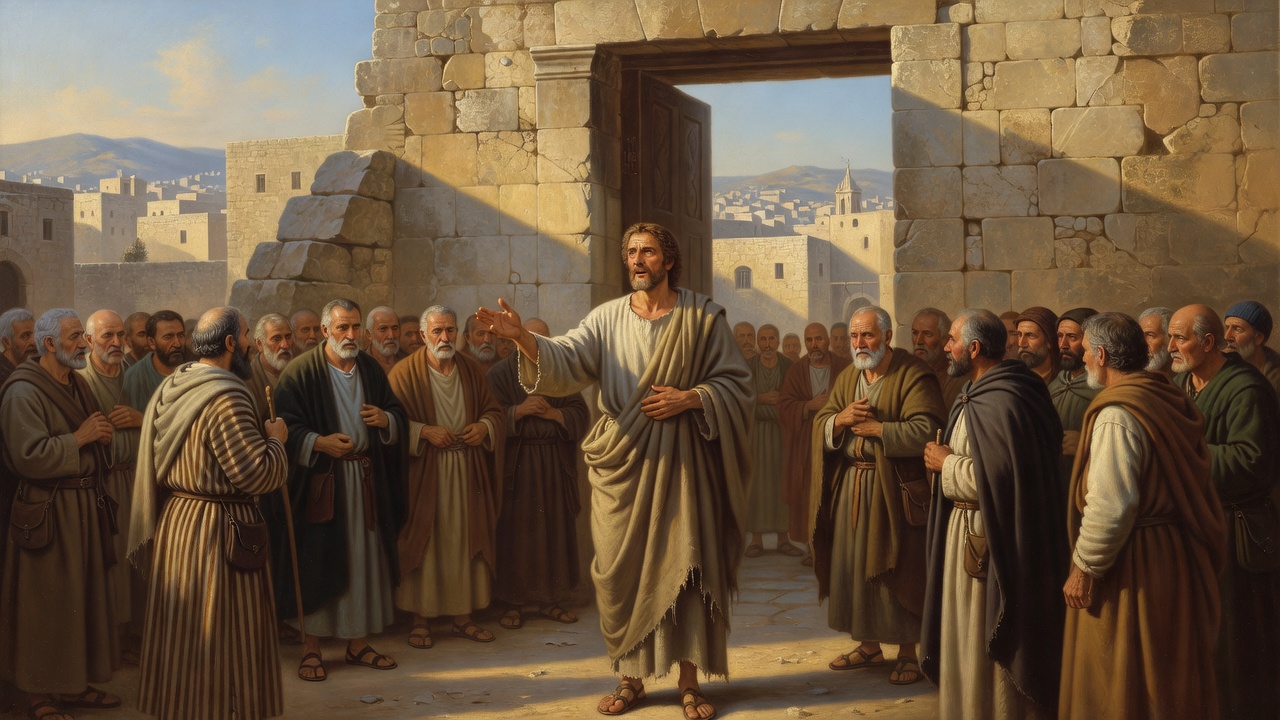
- Jeremiah was instructed to proclaim God's word at the gates of Jerusalem, specifically forbidding the carrying of commercial loads on the Sabbath. Keeping the Sabbath holy promised the continuation of kings on the throne of David and the arrival of worshippers from the territory of Benjamin, Judah, and the arid Negev.Sources: the Bible text itself · David · Benjamin (patriarch) · Jerusalem
Notes written with AI assistance from open sources (Theographic Bible Metadata, CC BY-SA 4.0; Easton’s Bible Dictionary, public domain) and reviewed before publishing.
Places in this chapter
- Arabah · 30.417, 35.151 · verse 6
- Jerusalem · 31.777, 35.234 · verses 19, 20, 21, 25, 26, 27
- People’s Gate · Today: in Jerusalem · 31.777, 35.234 · verse 19
- Negeb · 31.245, 34.841 · verse 26
- Shephelah · 31.692, 34.875 · verse 26
Only places identified with high confidence are shown (90% or more according to the scholarly sources compiled by OpenBible). Period map: DARE (Digital Atlas of the Roman Empire), CC BY 4.0; modern map: © OpenStreetMap contributors; places: OpenBible.info (CC BY 4.0).
Credits and license for this translation
Gumatj Bible
The Holy Bible in the Gumatj language of Australia
copyright © 1989, 2017 Bible Society of Australia
Language: Gumatj
Old Testament published 1989; New Testament published 2017
This translation is made available to you under the terms of the
Creative Commons Attribution-Noncommercial-No Derivatives license 4.0.
You may share and redistribute this Bible translation or extracts from it in any format, provided that:
You include the above copyright and source information.
You do not sell this work for a profit.
You do not change any of the words or punctuation of the Scriptures.
Pictures included with Scriptures and other documents on this site are licensed just for use with those Scriptures and documents.
For other uses, please contact the respective copyright owners.
2025-10-10
Source: http://ebible.org/gnn/ · eBible.org