Ecclesiastes 7
Kitaaba Woyyuu · Tap a verse to see its cross-references.
Qarummaa
1Fiqiree dansa'aa mannaa, maqaa dansaa woyya; guyyaa dhalootaatii mannaa guyyaa du'aa woyya.
2Gara mana nyaataa fi unto'oo dhaqiisaa mannaa, gara mana bowaa dhaqiisa woyya; duuti muummee nama maraa waan teeteef, worri jiraataan tana qalbeeffatuu ti.
3Gaddi qalbeeffatiisaaf dansaa waan te'eef, kollaa mannaa, gadda woyya.
4Nami qaroon marroo gaddaa yaadata; nami gowwaan ammoo marroo gammadaa qofa yaadata.
5Faaruu worra gowwa'aa caqasu'uu mannaa, xixicha nama qaro'oo caqasuu woyya.
6Kolli nama gowwa'aa akka qoree okkotee jalaa xaxa'ittuu ti; tunille bu'aa hin qaddu.
7Cunqursiisi nama qaroo gowwaa gooti; safuun qalbii nama balleessiti.
8Jalqaba waan tokkootii mannaa, muummee isi'ii woyya; koora mannaa, ossata woyya.
9Aariin bobaa gowwa'aa keessa waan jirtuuf, ati ariifattee hin aarin.
10Gaaffiin akkasii gaaffii nama qaro'oo waan hin te'iniif, «Bara ammaatii mannaa, maaf bara durii woyya?» jettee hin gaafatin.
11Qarummaan akkuma dhalaa dansa'a; worra lafa irra le'uuf bu'aa qaddi. 12Akkuma beeseen gollaa namaaf teetu, qarummaalle gollaa namaaf teeti; irra caalaa ammoo qarummaan jiruu nama isii qabuu hin eeddi.
13Me waan Waaqi godhe ilaali! Waan Waaqi dasse eentu qajeelchuu dande'a ree? 14Barri dansaa yennaa te'e, gammadi; barri badaa yennaa te'e ammoo, hubadhu; Waaqi akkuma waan tokko dade, waan dhibiille dade; tanaaf nami waan gara duraa te'u hin beeku. 15Ani bara jiruu tiyyaa ka bu'aa hin qanne kana keessa, nami balchaan tokko adoo balchaa te'eeruu du'uun, nami hamaan tokko adoo hamaa te'eeruu bara dheeraa le'uun, waan lamaan kana dhaggeera. 16Ati akka malee balchaa, akka malee qaroolle hin te'in. Yoo akkas teete ifi balleessita. 17Yennaa teeti malee akka hin duuneef, akka malee hamaa, akka maleelle gowwaa hin te'in. 18Waan tokko qabatanee, ta dhibiille lakkisuu dhabiis dansa'a. Nami Waaqa sodaatu waan mara irra haga taree hin deemu.
19Bulchitoota kudhan qachaa tokko keessa jiranu caalaa, qarummaan nama qaroo tokkoof jabeenna kenniti.
20Nami balchaan yennaa mara waan dansaa huju, cubbuulle ka ijjumaa hin hunye, lafa irra hin jiru.
21Tajaajilaan keeti si abaaruun akka hin dhageenneef, jecha kolbaan jettu mara hin caqasin; 22atinuu yennaa hedduu worra dhibii akka abaarte, gadhaan keeti hin beeka.
23Ani qarumma'aan waan kana mara haga ilaalee, «Ani qaroo hin te'a» jedhee yaade. Qarummaan ammoo na irraa fagaatte. 24Qarummaan waan teetelle teetu, waan fagoo jirtu; waan guddoo gad fagaatteertulle'e. Eentu barbaadee isii dhagguu dande'a? 25Tanaaf ani qalbii tiyya gara beekkumsaa, gara wo qorqoriisaa, gara qarummaa barbaadiisaa, gara hiikkaa hundee waan mara barbaadiisaa, gara dadhabbii worra gowwoole'ee hubatiisaatii fi gowwummaan maraatiisa akka teete hubatiisaa deebifadhe.
26Ani dubartii akka tiyyo'oo, ta yaad isi'ii akka fonxoro'oo, ta harki isi'ii akka haachabaa, ta du'a caalaa hadhoottu dhagge. Nami Waaqaa isii jalaa hin miliqa; cubbicha ammoo akka tiyyo'oo hin qabatti. 27Lallabaan sun, «Kunoo, wonni ani qorqore tana: hundee waan maraa qorqoriisaaf, waan tokko waan dhibii irratti ede'ee, 28adoo barbaadiisatti jiruu ammoo ammalle hin dhaggine. Namoota kuma oddu'utti namicha yaada qajeelaa qabu tokkocha dhaggeera; isaan mara oddu'utti ammoo dubartii qajeeltuu takkattiille hin dhaggine. 29Ani tana callaa dhagge: Waaqi nama yaada qajeelaa qabu dade; namooti ammoo mala hedduu barbaadane» jedha.
Did you know?
Wisdom, Mortality, and the Limits of Understanding
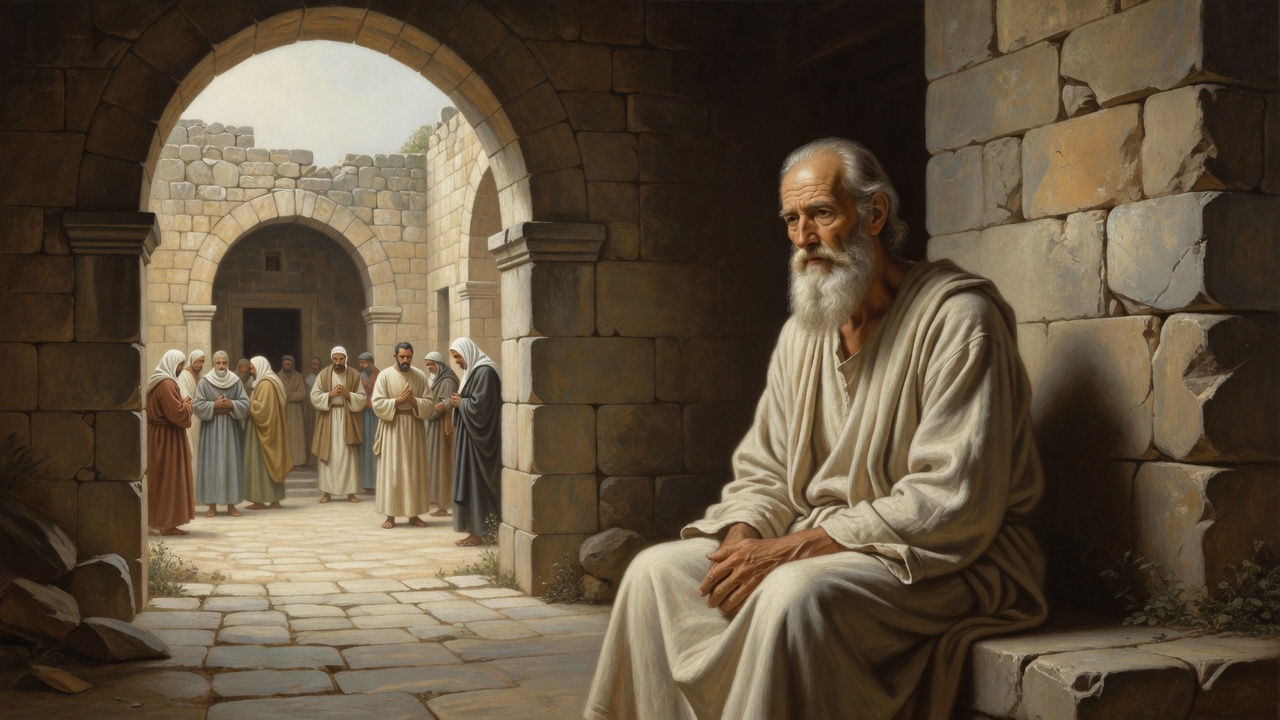
- Ecclesiastes 7 begins with a series of comparative proverbs arguing that moments of solemn reflection, such as visiting a house of mourning or facing sorrow, provide greater insight into life than superficial laughter and feast houses.Sources: the Bible text itself
- The Teacher reflects on the reality of human experience, noting that God has appointed both prosperous and adverse days so that humans cannot foresee their future, and that righteous people sometimes perish while the wicked live long.Sources: the Bible text itself
- The chapter highlights the universal limitation of human goodness, observing that there is no one on earth who does good and never sins, and concluding that while God created humanity upright, people pursue many complex schemes.Sources: the Bible text itself
Notes written with AI assistance from open sources (Theographic Bible Metadata, CC BY-SA 4.0; Easton’s Bible Dictionary, public domain) and reviewed before publishing.
Credits and license for this translation
Kitaaba Woyyuu
Oromo, Borana-Arsi-Guji: Kitaaba Woyyuu (Bible)
copyright © 2025 The Word for the World International
Language: gujii
Contributor: Bible Society of Ethiopia
This translation is made available to you under the terms of the
Creative Commons Attribution Share-Alike license 4.0.
You have permission to share and redistribute this Bible translation in any format and to make reasonable revisions and adaptations of this translation, provided that:
You include the above copyright and source information.
If you make any changes to the text, you must indicate that you did so in a way that makes it clear that the original licensor is not necessarily endorsing your changes.
If you redistribute this text, you must distribute your contributions under the same license as the original.
Pictures included with Scriptures and other documents on this site are licensed just for use with those Scriptures and documents.
For other uses, please contact the respective copyright owners.
Note that in addition to the rules above, revising and adapting God's Word involves a great responsibility to be true to God's Word. See Revelation 22:18-19.
2025-05-02
Source: http://ebible.org/gax/ · eBible.org