Matthew 12
Aadi keyri: linjiila iisaa almasiihu · Tap a verse to see its cross-references.
Haala ɲalaande fowteteende
1Oon wakkati, Iisaa e taalibaaɓe mum ana ceeka gese ley ɲalaande fowteteende. Taalibaaɓe makko njolbi, ana kelta butaali ana ƴakka. 2Nde Farisa'en ɓee njii ɗum ndee, ndarii ana mbiya mo:
—Ƴeew, taalibaaɓe maa ɓee ana ngolla ko dagaaki gollude ɲalaande fowteteende!
3O jaabii ɓe, o wii:
—Tama on njanngaali ko Daawuuda waɗi nde yolbunoo, kaɲum e yimɓe mum? 4O naati e ley hukkum ceniiɗo oo, kanko e yimɓe makko, ɓe ɲaami buuru cakkaaɗo oo. Haya, ɓe nduŋanaaka ɲaamde mo, yottinooɓe sadaka tan njey ɲaamde mo. 5Naa duu, on njanngaali e ley Tawreeta Muusaa, nde wonnoo yottinooɓe sadaka ɓee ana ngolla ley Suudu Dewal Mawndu nduu fay ɲalaande fowteteende? Kamɓe nee, eɓe comna ɲalaande fowteteende ndee, kaa ɗum felataa ɓe. 6Miɗo wiya on: ko ɓuri Suudu Dewal Mawndu ana ɗoo. 7Sinndo oɗon anndunoo ko kaa haala Laamɗo firritata: «Yurmeende woni ko njiɗu-mi, wanaa sadaka duppeteeɗo», on carataano ɓee laaɓuɓe. 8Sabi Ɓii Neɗɗo oo jey ɲalaande fowteteende ndee.
No Iisaa selliniri gorko mo junngo mum waati
9Iisaa iwi ɗon naatoyi suudu maɓɓe waajordu. 10Gorko mo junngo mum waati ana wonnoo ɗon. Wonnooɓe ɗon ɓee tuufani Iisaa yalla ana keɓa no kappira ɗum. Saabe ɗum, ɓe lamndii mo ɗum ɗoo:
—Sariya meeɗen oo hokkii en sellinde neɗɗo ɲalaande fowteteende naa?
11O jaabii ɓe, o wii:
—So won e mon jogiiɗo mbaalu, so oon mbaalu saamii e luggere ɲalaande fowteteende, wanaa joomum yaltinoyan mo naa? 12Oɗon anndi neɗɗo ana ɓuri mbaalu ɗo woɗɗi! Ndennoo, ana dagoo waɗande neɗɗo ko moƴƴi ɲalaande fowteteende.
13Caggal ɗum, o wii gorko oo:
—Fooccu junngo maa!
Oon foocci ngo tan, ngo selli faa ngo warti hono no wonngo ngoo nii. 14Farisa'en ɓee njalti, njooɗoyii faa ndawrida no mbarda Iisaa.
No Laamɗo suɓorii kaadime mum Iisaa
15Nde Iisaa nani ɗum ndee, iwi e oon nokku, yimɓe heewɓe njokki e makko. O sellini ɲawɓe ɓee fuu, 16o daalii ɓeen pati kumpita fay gooto kabaaru makko. 17Ɗum waɗirii non yalla haala ka Laamɗo yottinirnoo annabi Esaaya kaa ana tabita nde oon wii:
18«Annii kaadime am mo cuɓii-mi.
Kanko korsin-mi,
kanko welni ɓernde am.
Mi jippinan e makko Ruuhu am,
o ooynanto leɲi ɗii laawol fooccitaare.
19O falondirtaake, o dukataa,
daande makko nanataake e mbeddaaji.
20O helataa kuɗol ooɲiingol,
o ɲifataa moottila mo pooyel mum famɗi
faa ɲannde o hokki fooccitaare jaalogal.
21Leɲi ɗii fuu pawan jikke mum'en e makko.»
No Iisaa fenniri ko happaa koo
22Nden, Iisaa waddanaa gorko bumɗo muumo, sabi oon yo laddaaɗo. O sellini ɗum faa watti haalde e yiide. 23Haaynii yimɓe ɓee fuu, ndarii ana mbiya:
—Ɗum nee, taanii Daawuuda oo woni ɗoo naa?
24Kaa nde Farisa'en ɓee nani ɗum ndee, mbii:
—E baawɗe «Beelsebul» hooreejo seyɗaani'en o ribbirta seyɗaani'en ɓee.
25Nde wonnoo Iisaa anndii miilooji maɓɓe, o wii ɓe:
—Laamu fuu pecciiɗo ana haɓa e hoore mum, bonan. Ngeenndi naa galle fuu pecciiɗo ana haɓa e hoore mum, heddataako. 26So Ibiliisa ribbii seyɗaani'en mum, feccii hoore mum. Ndennoo, hono laamu mum heddortoo? 27So tawii «Beelsebul» ndibbiran-mi seyɗaani'en, yimɓe mon ɓee nee, homo ndibbirta ɓe? Yimɓe mon ɓee jaati kollata on ngalaa e goonga! 28Kaa so Ruuhu Laamɗo ndibbiran-mi seyɗaani'en, ɗum ana holla Laamu Laamɗo warii e mon.
29Iisaa ɓeydi hen, wii:
—Fay gooto waawaa naatude e galle gorko jom semmbe teeta jawdi mum tawee haɓɓaali joomum tafon. Kaa so haɓɓii joomum faa teeŋii, ana waawi naɓude ko woni e galle mum fuu.
30Mo waldaa e am fuu yo gaɲo am. Mo mooɓtidataa e am fuu yo caakoowo. 31Saabe ɗum, miɗo wiya on: yimɓe ana mbaawi yaafeede luutti mum'en fuu, kaɲum e bonkaaji fuu. Kaa bonkiiɗo Ruuhu Ceniiɗo oo yaafataake. 32Neɗɗo fuu kaalɗo ko boni e Ɓii Neɗɗo, ana waawi yaafeede, kaa neɗɗo fuu kaalɗo ko boni e Ruuhu Ceniiɗo, yaafataake jooni, yaafataake wakkati garoyoowo.
No lekki annditirtee ɓiɗɗe mum
33—So lekki ana moƴƴi, ɓiɗɗe mum moƴƴan, so lekki moƴƴaa, ɓiɗɗe mum moƴƴataa, sabi lekki ɓiɗɗe mum annditirtee. 34Ɓiɓɓe bolle bonɗe! Hono hen mbaawirton haalde ko moƴƴi tawee on bonɓe? Sabi ko woni e ɓernde, ɗum yaltata e hunduko. 35Neɗɗo moƴƴo, ko moƴƴi iwata e ndesaari ngonndi ley ɓernde mum. Neɗɗo bonɗo, ko boni iwata e ndesaari ngonndi ley ɓernde mum. 36Miɗo wiya on: ɲannde darngal yimɓe kaaltan haalaaji laaliiɗi ɗi kaalnoo fuu. 37Sabi neɗɗo haalaaji mum sarirtee pooccitiiɗo naa jukketeeɗo.
No Farisa'en ndaardiri taagumansa
38Caggal ɗum, yoga e dunkee'en Sariya, kaɲum e Farisa'en mbii Iisaa:
—Moobbo, miɗen njiɗi kollaa min taagumansa Laamɗo nel maa.
39O jaabii ɓe, o wii:
—Jamaanu jooni bonɗo coɓuɗo oo ana ndaara holleede taagumansa, kaa taagumansa fuu o hollataake so wanaa taagumansa annabi Yuunusa oo. 40Sabi, no Yuunusa waɗiri balɗe tati jemma e ɲalooma ley reedu liingu mawɗo oo nii, hono non Ɓii Neɗɗo waɗirta balɗe tati jemma e ɲalooma ley yanaande. 41Ɲannde darngal, worɓe Niniwe immodoto e yimɓe jamaanu jooni ɓee, liɓa ɗum'en. Sabi worɓe Niniwe tuubii nde nannoo waaju Yuunusa oo ndee. Haya, ɓurɗo Yuunusa ana ɗoo! 42Ɲannde darngal, kaananke debbo leydi ɓaleeri oo immodoto e yimɓe jamaanu jooni ɓee, liɓa ɗum'en. Sabi o iwriino faa hoore leydi, warde hettindaade haalaaji Suleymaana kebbinaaɗi hakkilantaaku ɗii. Haya, ɓurɗo Suleymaana ana ɗoo!
Haala wirfitagol seyɗaani
43—So seyɗaani yaltii e neɗɗo, seyɗaani oo yiiloyto e nokkuuje joorɗe tewta ɗo ŋoottinoo, kaa ŋoottere fuu o heɓataa. 44Nden kaa, o wiya: «Miɗo nii wirfitoo galle am mo eggunoo-mi e mum oo.» So o wirfitike, o tawan galle oo yo ɓolo, ana wuuwaa, ana moƴƴinaa faa wooɗi. 45Nden, o wirfitoo, o waddoya seyɗaani'en njeɗɗon woɓɓe ɓurɓe mo bonde. Ɓe naata e galle oo, ɓe koɗa e mum. Nii battane oo neɗɗo ɓurdata arannde mum bonde. Nii yimɓe ndee fedde bonnde duu laatoytoo.
Inna Iisaa e miɲiraaɓe Iisaa
46Nde Iisaa haaldannoo e jamaa oo ndee, inna makko e miɲiraaɓe makko worɓe njottii. Ɓe ndarii sella, eɓe njiɗi yiide mo. 47Won biiɗo mo:
—Inna maa e miɲiraaɓe maa ana ndarii sella ana njiɗi yiide ma.
48O jaabii oon neɗɗo, o wii ɗum:
—Homo woni innam? Hoɓe ngoni miɲiraaɓe am?
49O sappii taalibaaɓe makko ɓee, o wii:
—Innam e miɲiraaɓe am annii. 50Sabi miɲam naa innam yo neɗɗo gaɗoowo sago Baabiraaɗo am gonɗo dow kammu oo.
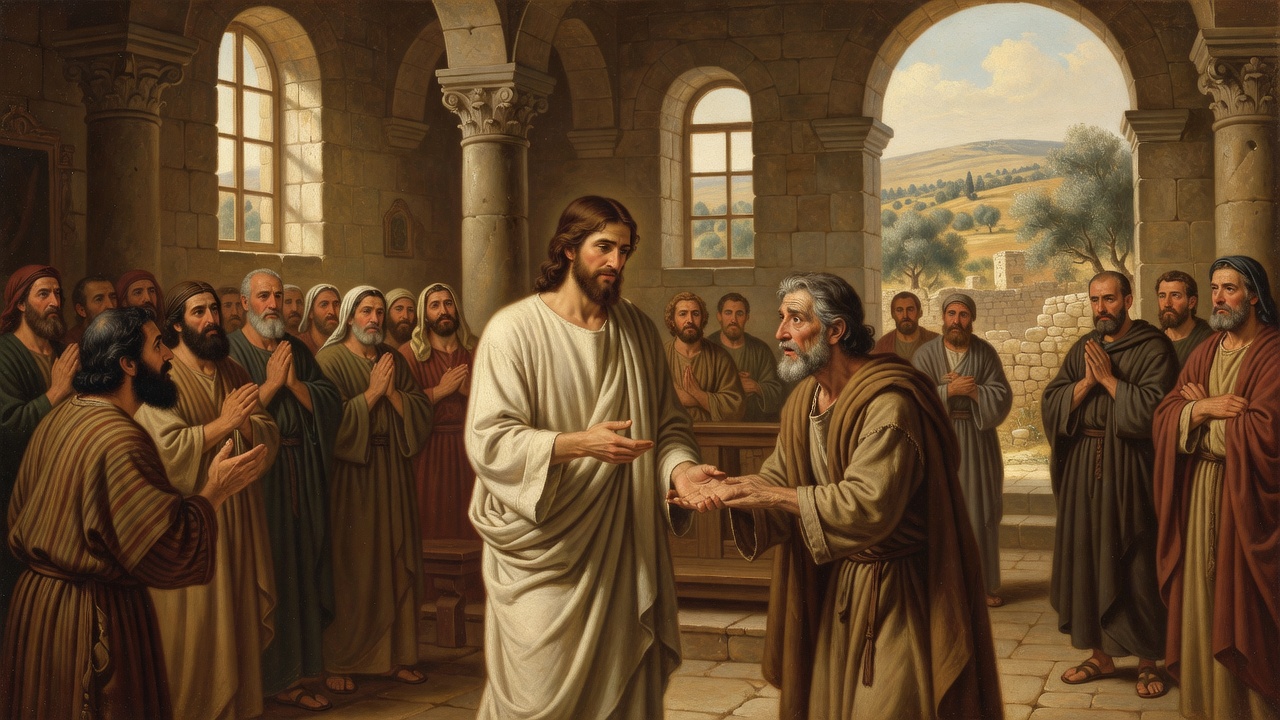
Did you know?
Lord of the Sabbath and Signs of the Kingdom
- When challenged by the Pharisees for plucking grain on the Sabbath, Jesus cited the Old Testament account of David eating the consecrated bread when he was hungry. He argued that human need and doing good take precedence over ritual regulations, declaring himself Lord of the Sabbath.Sources: the Bible text itself · David
- After casting out a demon from a blind and mute man, Jesus was accused of operating through Beelzebul, the prince of demons. Jesus rejected the charge, explaining that a divided kingdom or household cannot stand and that casting out demons by the Spirit of God demonstrates the arrival of God's kingdom.Sources: the Bible text itself · Satan
- In response to requests for a miraculous sign, Jesus pointed to the prophet Jonah, comparing Jonah's three days in the fish's belly to his own impending death and burial. He warned that the citizens of Nineveh and the Queen of the South would judge his generation because they responded to Jonah and Solomon, whereas someone greater was now present.Sources: the Bible text itself · Jonah · Nineveh · Solomon
Notes written with AI assistance from open sources (Theographic Bible Metadata, CC BY-SA 4.0; Easton’s Bible Dictionary, public domain) and reviewed before publishing.
Places in this chapter
Only places identified with high confidence are shown (90% or more according to the scholarly sources compiled by OpenBible). Period map: DARE (Digital Atlas of the Roman Empire), CC BY 4.0; modern map: © OpenStreetMap contributors; places: OpenBible.info (CC BY 4.0).
Credits and license for this translation
Aadi keyri: linjiila iisaa almasiihu
New Testament in Fulfulde, Maasina
copyright © 2005 Wycliffe Bible Translators, Inc.
Language: Maasina Fulfulde (Fulfulde, Maasina)
Translation by: Wycliffe Bible Translators
Contributor: Wycliffe Bible Translators, Inc.
Copyright Information
© 2005,Wycliffe Bible Translators, Inc. All rights reserved.
This translation text is made available to you under the terms of the Creative Commons
License: Attribution-Noncommercial-No Derivative Works. ( http://creativecommons.org/licenses/by-nc-nd/3.0/ ) In addition, you have permission to
port the text to different file formats, as long as you do not change any of the text or
punctuation of the Bible.
You may share, copy, distribute, transmit, and extract portions or quotations from this work,
provided that you include the above copyright information:
You must give Attribution to the work.
You do not sell this work for a profit.
You do not make any derivative works that change any of the actual words or punctuation of
the Scriptures.
Permissions beyond the scope of this license may be available if you contact us with your
request.
The New Testament
in Fulfulde, Maasina
© 2005, Wycliffe Bible Translators, Inc. All rights
reserved.
This translation is made available to you under the terms of the
Creative Commons Attribution-Noncommercial-No Derivatives license 4.0.
You may share and redistribute this Bible translation or extracts from it in any format, provided that:
You include the above copyright and source information.
You do not sell this work for a profit.
You do not change any of the words or punctuation of the Scriptures.
Pictures included with Scriptures and other documents on this site are licensed just for use with those Scriptures and documents.
For other uses, please contact the respective copyright owners.
2015-03-17
Source: http://ebible.org/ffm/ · eBible.org