Luke 7
Aadi keyri: linjiila iisaa almasiihu · Tap a verse to see its cross-references.
No Iisaa selliniri kaadime hooreejo sordaasi'en
1Nde Iisaa tilii waajaade hettindotooɓe ɓee ndee, yehi Kafarnahum. 2Hooreejo sordaasi'en gooto, kaadime mum korsuɗo ɲawi faa ana haɓana yonki. 3Hooreejo oo nani haala Iisaa ana haalee, neli e makko mawɓe Yahuudiyankooɓe, o wara o dannda kaadime mum oo. 4Ɓe ngari e Iisaa, ɓe ndaardi ɗum sanne sanne, eɓe mbiya:
—Omo haani waɗaneede ɗum, 5sabi omo yiɗi leɲol men ngol, kasen duu kanko mahi suudu men waajordu nduu.
6Iisaa yaadi e maɓɓe. Kaa nde ɓe ɓadinoo galle oo ndee, hooreejo sordaasi'en oo neli yimɓe mum e makko, wii mo:
—Moobbo, pati tampin hoore maa, sabi miin, mi wanaa fay huunde, fotaa ko ngaraa galle am. 7Ɗum saabii mi taykike miin e hoore am, mi haanaa yaade to maa. Kaa daɲa ko kaal-ɗaa tan, kaadime am oo sellan. 8Miin e hoore am, mi laamaaɗo, miin duu miɗo laamii sordaasi'en. So mi yamirii gooto yaha, yahan, so mi wii goɗɗo wara, waran, so mi wii kaadime am waɗa huunde, waɗan.
9Nde Iisaa nani kaa haala ndee, haaynaa e hooreejo sordaasi'en oo, yeeƴii yimɓe jokkuɓe e mum ɓee, wii:
—Miɗo haalana on, mi yiyaali hono ngal goonɗinal e sellude fay e Israa'iilanke.
10Nde nelaaɓe ɓee mbirfitii galle too ndee, tawi kaadime oo sellii.
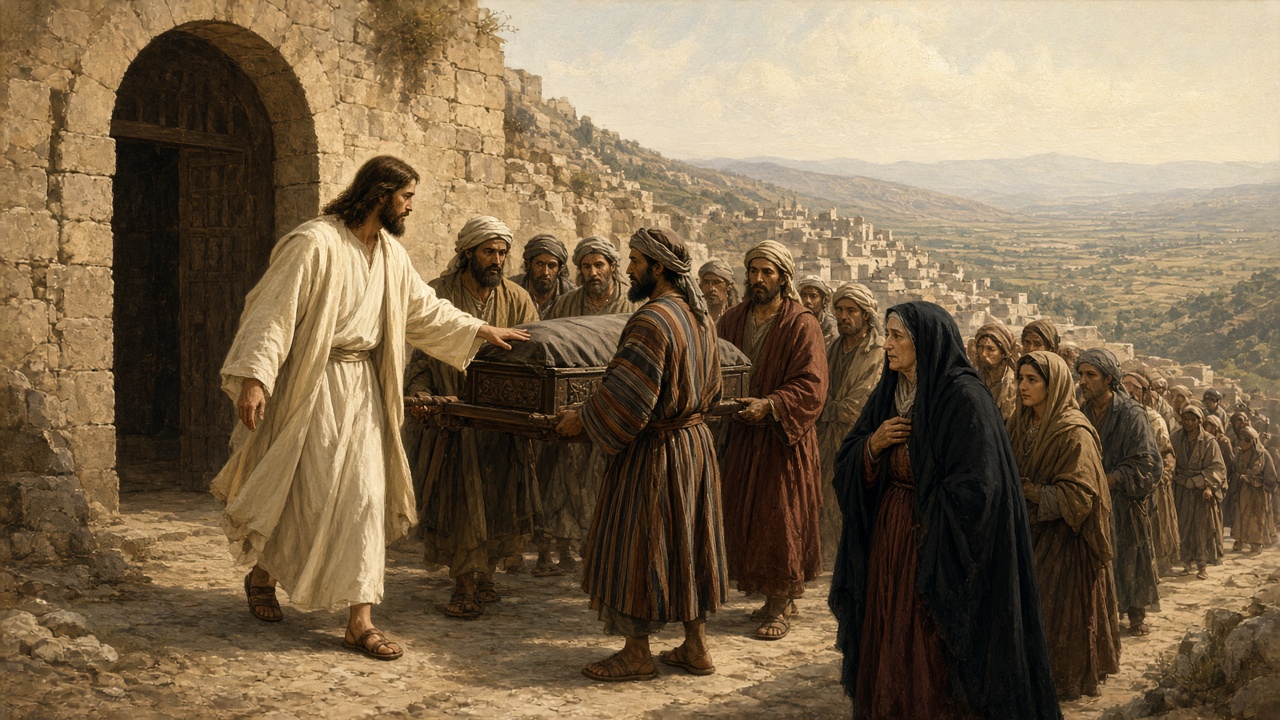
No Iisaa wuurtiniri ɓii debbo mo gorum maayi
11Janngo mum, o yehi ngeenndi mbiyeteendi Nayin, kanko e taalibaaɓe makko e yimɓe heewɓe. 12Nde o ɓadinoo damal ngeenndi ndii ndee, o hawri e mahiidi suka gorko. Oon yo bajjo, abba mum maayii, inna mum ɓamaaka kasen. Yimɓe ngeenndi ndii heewɓe ana njokki e inniraaɗo oo. 13Nde Iisaa yii inniraaɗo oo ndee, yurmii ɗum, wii:
—Pati woy!
14Iisaa ɓadii, memi leggal naɓirgal ngal. Roondinooɓe ɓee ndarii, o wii:
—Suka jokolle, miɗo wiye: imma!
15Nii maayɗo oo immii jooɗii, ana haala. Iisaa totti mo inniiko. 16Kulol nanngi yimɓe ɓee fuu, hedde eɓe njetta Laamɗo, eɓe mbiya:
—Annabaajo mawɗo ɓanngii e ley men! Laamɗo warii faabaade yimɓe mum!
17Oo kabaaru saakii e leydi Yahuudiya e seraaji mum fuu.
Haala nelal ngal Yaayaa neli e Iisaa
18Ko waɗi koo fuu, Yaayaa narrii ɗum taalibaaɓe mum, noddi ɗiɗon maɓɓe, 19neli ɗum'en to Iisaa, ɓe lamndoo ɗum yalla kaɲum woni garoowo oo, naa ɓe ndooman goɗɗo? 20Ɓeen worɓe ɗiɗon ngari e Iisaa, mbii ɗum:
—Yaayaa mo lootogal batisima neli min e maa, min lamnde yalla aan woni kaanɗo warde oo, naa min ndooma goɗɗo?
21E oon wakkati, omo sellina yimɓe heewɓe ɲawuuji ɗi ngaldaa sii, omo ribba seyɗaani'en, omo wumtina wumɓe heewɓe. 22O jaabii ɓe, o wii:
—Njehee njantanoyee Yaayaa ko njii-ɗon e ko nan-ɗon: wumɓe ana mbumta, laƴannooɓe ana njaɓɓa faa gasa, seppaaɓe ana cellinee, faaɗuɓe ana paaɗita, maayɓe ana nguurta. Misikiina'en duu kaalanaama Kabaaru Lobbo oo. 23Oon mo salaaki goonɗinde kam, welii hoore.
24Nde nelaaɓe ɓee kooti ndee, Iisaa fuɗɗi haalande jamaa oo haala Yaayaa, o wii:
—Koɗum ƴeewoyno-ɗon to ladde jeereende too? Kuɗol dimmbotoongol e henndu naa? 25Koɗum ƴeewoyno-ɗon? Neɗɗo pariiɗo naa? Ɓoornotooɓe kaddule lobbe so nguura nguurndam lobbam ɓee, e cuuɗi kaanankooɓe tawetee. 26Koɗum ƴeewoyno-ɗon ndennoo? Annabaajo naa? Goonga! Miɗo haalana on, omo ɓuri annabaajo. 27Kanko woni mo Binndi ɗii mbii e mum:
«Miin Laamɗo, mi ardinante nelaaɗo am moƴƴinanoowo ma laawol.»
28Miɗo haalana on, bammbaade bammbaali ɓurɗo Yaayaa, tawee nee, ɓurɗo lo'ude e Laamu Laamɗo oo ɓuri mo teddude. 29Yimɓe hettindiiɓe mo ɓee fuu, fay duwaaɲe'en ɓee, njaɓii konngol Laamɗo ngol ko Yaayaa looti ɗum'en lootogal batisima koo. 30Kaa Farisa'en e jannginooɓe Sariya mberrike faandaa Laamɗo ko ɓe calii looteede e junngo Yaayaa koo.
31Ndennoo, koɗum nanndinan-mi e yimɓe oo jamaanu? Hoɓe ɓe nanndi? 32Eɓe mba'i hono sukaaɓe jooɗiiɓe e luumo, ana noddondira, ana mbiya:
«Min piyanii on cereeli,
on mbamaali.
Min mboyanii on woondu yurminiindu,
on mboyaali.»
33Sabi Yaayaa mo lootogal batisima warii, ɲaamataa ɓii jalo, yarataa doro, on mbii yo laddaaɗo. 34Kaa Ɓii Neɗɗo oo warii, ana ɲaama ana yara, on mbii ɲaamde e yarde tan woni e hakkille mum, o giɗo duwaaɲe'en e luuttooɓe hono mum'en. 35Kaa Laamɗo hakkilante oo, jaɓuɓe ɗum ɓee fuu njiyan goonga mum.
No Iisaa yaaforii debbo pijoowo
36Gooto e Farisa'en ɓee noddi mo bottaari. O naati galle joomum, omo ɲaamda e mum. 37Debbo pijoowo ana e ngeenndi ndii. Ko o nani Iisaa ana wottoo to galle Farisanke oo koo, o waddi faandu nebam uuroojam, 38o heedi caggal mum sera koyɗe mum, omo woya, omo leefinira koyɗe mum ɗee gonɗi makko, omo soccira ɗe sukundu makko, omo uurnoo ɗe, omo wuja e majje nebam ɗam. 39Nde Farisanke nodduɗo mo oo yii ɗum ndee, wii e ley becce mum: «Sinndo oo yo annabaajo, o anndan debbo memoowo mo oo, o annditan oon yo pijoowo.» 40Iisaa haaldi e Simon Farisanke oo, wii:
—Simon, miɗo haalane huunde wootere.
O jaabii:
—Haal, Moobbo!
41Iisaa wii:
—Ɲamlotooɗo gooto ana rewannoo yimɓe ɗiɗon, gooto oo buuɗi cardi teemeɗe joy, goɗɗo oo buuɗi cardi capanɗe joy. 42Kaa nde mo anndunoo ɓe ngalaa ko ɓe njoɓira mo ndee, o yaafii ɓe ɗiɗon fuu. Jooni, homo e maɓɓe ɓuri yiɗude mo?
43Simon jaabii:
—Miɗo miila mo o yaafii kaalisi keewɗo oo.
Iisaa wii mo:
—A haalii goonga!
44Caggal ɗum, o yeeƴii debbo oo, o wii Simon:
—A yii oo ɗoo debbo naa? Mi naatii galle maa, fay ndiyam ko mi semmbira koyɗe am a hokkaali kam. Kaa kanko, gonɗi makko o leefiniri koyɗe am, o socciri ɗe sukundu makko. 45Aan, a ɓuuccaaki kam, kaa kanko, gila naatu-mi, o ŋoottaali ɓuuccaade koyɗe am. 46A wujaali hoore am nebam, kaa kanko, o wujii e koyɗe am nebam uuroojam. 47Ɗum saabii so miɗo wiye: luutti makko e heewde fuu njaafaama, ndennoo jilli makko ana mawni. Kaa jaafaaɗo seeɗa, jilli seeɗa hollata.
48Caggal ɗum, o wii debbo oo:
—Luutti maa njaafaama.
49Ɲaamdannooɓe e makko ɓee ana mbiya e ko'e mum'en: «Homo woni oo gorko jaafotooɗo fay luutti?»
50Non o wii debbo oo:
—Goonɗinal maa hisinii ma. Yaa e jam.
Did you know?
Faith, compassion, and a prophet's question
- Easton's Bible Dictionary (1897) describes Capernaum as a Galilean town not mentioned in the Old Testament, which became the city Jesus treated as his own after he was expelled from Nazareth and the scene of many episodes in his life. In this chapter he arrives there to find a centurion's highly valued servant near death, and Jewish elders plead that the officer loves their nation and has built their synagogue.Sources: Capernaum · the Bible text itself
- Easton's Bible Dictionary (1897) links the name Nain to a Hebrew word meaning green pastures or lovely, and identifies the town with the village of Nein on the northwestern slope of Jebel ed-Duhy, also called the hill Moreh or Little Hermon, about four miles from Tabor and twenty-five miles southwest of Capernaum, above the plain of Esdraelon. At the town gate Jesus met the funeral of a widow's only son, and awe spread through the crowd.Sources: Nain · the Bible text itself
- John the Baptist is described as the forerunner of the Lord and as a man of priestly descent: his father Zacharias was a priest of the course of Abia, and his mother Elisabeth was one of the daughters of Aaron. His mission is described as the subject of prophecy, and in this chapter Jesus tells the crowds that John is more than a prophet, the messenger sent ahead to prepare the way, while John's disciples ask whether Jesus is the one who was to come.Sources: John the Baptist · the Bible text itself
Notes written with AI assistance from open sources (Theographic Bible Metadata, CC BY-SA 4.0; Easton’s Bible Dictionary, public domain) and reviewed before publishing.
Places in this chapter
Only places identified with high confidence are shown (90% or more according to the scholarly sources compiled by OpenBible). Period map: DARE (Digital Atlas of the Roman Empire), CC BY 4.0; modern map: © OpenStreetMap contributors; places: OpenBible.info (CC BY 4.0).
Credits and license for this translation
Aadi keyri: linjiila iisaa almasiihu
New Testament in Fulfulde, Maasina
copyright © 2005 Wycliffe Bible Translators, Inc.
Language: Maasina Fulfulde (Fulfulde, Maasina)
Translation by: Wycliffe Bible Translators
Contributor: Wycliffe Bible Translators, Inc.
Copyright Information
© 2005,Wycliffe Bible Translators, Inc. All rights reserved.
This translation text is made available to you under the terms of the Creative Commons
License: Attribution-Noncommercial-No Derivative Works. ( http://creativecommons.org/licenses/by-nc-nd/3.0/ ) In addition, you have permission to
port the text to different file formats, as long as you do not change any of the text or
punctuation of the Bible.
You may share, copy, distribute, transmit, and extract portions or quotations from this work,
provided that you include the above copyright information:
You must give Attribution to the work.
You do not sell this work for a profit.
You do not make any derivative works that change any of the actual words or punctuation of
the Scriptures.
Permissions beyond the scope of this license may be available if you contact us with your
request.
The New Testament
in Fulfulde, Maasina
© 2005, Wycliffe Bible Translators, Inc. All rights
reserved.
This translation is made available to you under the terms of the
Creative Commons Attribution-Noncommercial-No Derivatives license 4.0.
You may share and redistribute this Bible translation or extracts from it in any format, provided that:
You include the above copyright and source information.
You do not sell this work for a profit.
You do not change any of the words or punctuation of the Scriptures.
Pictures included with Scriptures and other documents on this site are licensed just for use with those Scriptures and documents.
For other uses, please contact the respective copyright owners.
2015-03-17
Source: http://ebible.org/ffm/ · eBible.org