John 6
Biblica® Se aɖeke mebla Biblia zazã o Agbenya La™ · Tap a verse to see its cross-references.
Yesu na nuɖuɖu ame akpe atɔ̃
1Le esiawo megbe la, Yesu tso Galilea ƒu (si woyɔna hã be Tiberias Ƒu la) yi egodo. 2Ameha gã aɖe nɔ eyome, elabena wokpɔ nukunu siwo wòwɔ heda gbe le dɔnɔwo ŋu. 3Yesu lia togbɛ aɖe, eye eya kple eƒe nusrɔ̃lawo nɔ anyi ɖe afi ma. 4Yudatɔwo ƒe Ŋutitotoŋkekenyui la hã tu aƒe.
5Esi Yesu fɔ ta dzi hekpɔ ameha gã aɖe wogbɔna va egbɔ la, ebia Filipo be, “Afi ka míakpɔ nuɖuɖu le ana ameha gã sia woaɖu?” 6Yesu bia nya sia be yeatsɔ ado Filipo ƒe xɔse akpɔ, elabena eya ŋutɔ nya nu si wɔ ge wòala.
7Filipo ɖo eŋu nɛ be, “Ɣleti ade ƒe fetu gɔ̃ hã mate ŋu aƒle nuɖuɖu wòade na ameha sia o!”
8Eƒe nusrɔ̃lawo dometɔ ɖeka, Andrea, Simɔn Petro nɔvi, gblɔ nɛ be, 9“Ŋutsuvi aɖe le afi sia si si lubolo sue atɔ̃ kple tɔmelã meme eve le, gake nu ka esia ate ŋu awɔ le ameha gã sia ŋuti?”
10Yesu gblɔ na nusrɔ̃lawo be, “Mina ame sia ame nanɔ anyi.” Gbe sɔ gbɔ ɖe teƒe sia. Ale ame siwo ƒe xexlẽme anɔ akpe atɔ̃ (5,000) la nɔ anyi ɖe gbeawo dzi. 11Yesu tsɔ aboloawo, eye wòdo gbe ɖa heda akpe ɖe wo ta. Emegbe la, etsɔe na eƒe nusrɔ̃lawo be woama na ameawo. Edo gbe ɖa ɖe tɔmelã meme eveawo hã ta, eye wòtsɔe na ameawo.
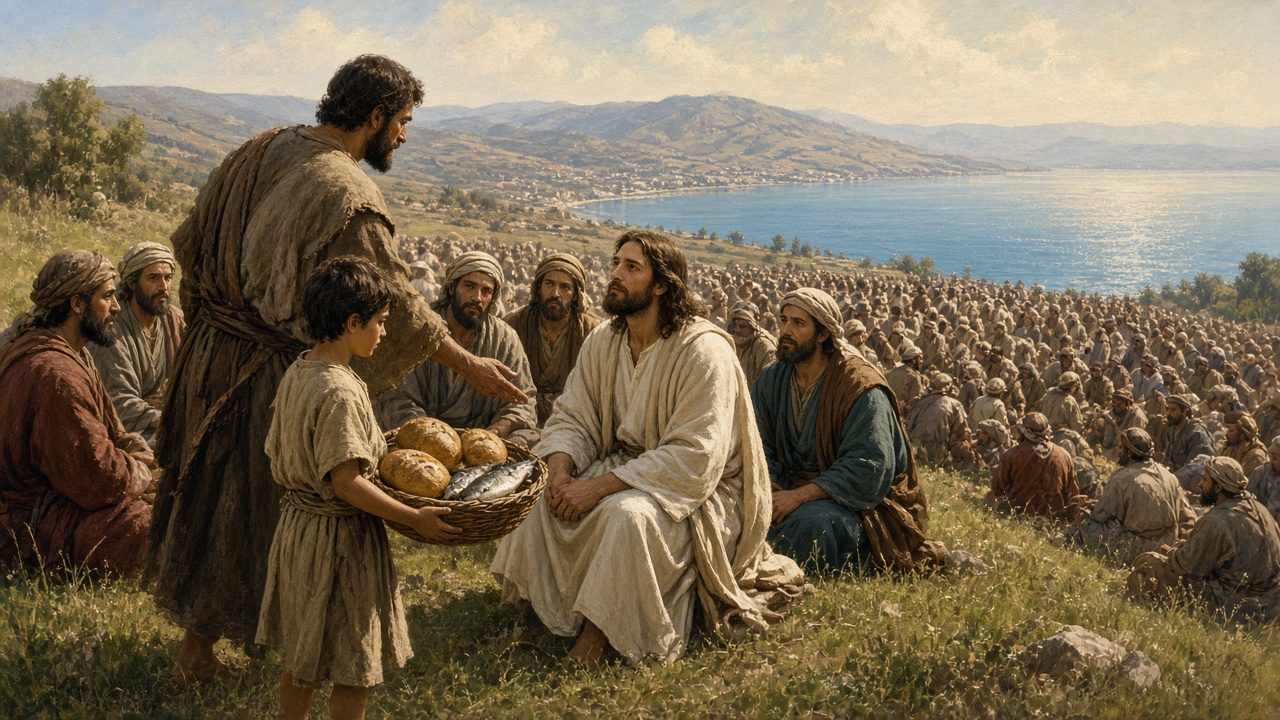
12Esi ame sia ame ɖu nu ɖi ƒo nyuie vɔ la, Yesu gblɔ na nusrɔ̃lawo be, “Miƒo abolo wuwlui siwo katã susɔ la nu ƒu be womagaɖi vlo o.” 13Ale woƒo abolo wuwluiawo katã nu ƒu, eye wòyɔ kusi wuieve sɔŋ.
14Esi ameawo kpɔ nukunu gã si Yesu wɔ la, wodo ɣli gblɔ be, “Le nyateƒe me la, ame siae nye Nyagblɔɖila si míele mɔ kpɔm na le xexe sia me.”
15Yesu kpɔe dze sii be ameawo nɔ didim be yewoalé ye aɖo fiae sesẽtɔe, eya ta ewɔ dzaa galia togbɛ la, eye wòdzo le wo gbɔ.
Yesu zɔ atsiaƒu dzi
16Le fiẽ me la, nusrɔ̃lawo yi ƒuta ɖanɔ elalam le afi ma. 17Zã do vɔ keŋ, gake Yesu medo ta ɖa o, eya ta nusrɔ̃lawo ge ɖe ʋu aɖe me, eye wokui ɖo ta Kapernaum. 18Ya sesẽ aɖe de asi ƒoƒo me, eye ƒu la dze agbo. 19Esi woku ʋu la abe agbadroƒe etɔ̃ alo ene ko ene la, wokpɔ Yesu wònɔ tetem ɖe ʋu la ŋuti, enɔ ƒu la dzi zɔm, eye vɔvɔ̃ ɖo wo, 20ke egblɔ na wo be, “Nyee, migavɔ̃ o.” 21Wodi be yewoakɔe ade ʋu la me, gake enumake la, ʋu la de tɔkɔ, afi si yim wonɔ la.
22Esi ŋu ke la, ameha si nɔ tsitre ɖe ƒu la ƒe go kemɛ dzi la de dzesii be ʋu ɖeka koe nɔ afi ma. Wokpɔ hã be, Yesu meɖo ʋu la kple eƒe nusrɔ̃lawo o, ke boŋ woawo ɖeɖe koe yi. 23Tete ʋu bubu aɖewo tso Tiberia va ɖo afi si ameawo ɖu abolo si Aƒetɔ la yra kple akpedada le. 24Esi ameawo kpɔ be Yesu alo eƒe nusrɔ̃lawo menɔ afi ma o la, woɖo ʋuawo heyi Kapernaum be yewoaɖadi Yesu.
Yesu, agbebolo la
25Esi woɖo Kapernaum la, wokpɔ Yesu, eye wobiae be, “Nufiala, ɣe ka ɣi nèva ɖo afi sia?” 26Yesu ɖo eŋu na wo be, “Le nyateƒe me la, miele diyem, menye ɖe esi miekpɔ nukunuwo ta o, ke boŋ le nuɖuɖu si mena mi etsɔ la ta. 27Migawɔ dɔ ɖe nuɖuɖu si gblẽna la ta o, ke boŋ ɖe nuɖuɖu si kplɔa ame yina ɖe agbe mavɔ me si Nye, Amegbetɔ Vi la mana mi la ta. Eya dzie Mawu Fofo la da asi ɖo.”
28Ameawo biae be, “Nu ka míawɔ be míawɔ dɔ siwo Mawu di?”
29Yesu ɖo eŋu be, “Enye Mawu ƒe didi be miaxɔ ame si wòɖo ɖa la dzi ase.”
30Tete ameawo biae be, “Nukunu ka nàwɔ míakpɔ be míaxɔ dziwò ase? Nu ka nàwɔ? 31Mía fofowo ɖu mana le gbea dzi abe ale si woŋlɔe ɖi ene be, ‘Ena abolo wo tso dziƒo be woaɖu.’ ”
32Yesu gblɔ na wo be, “Nyateƒe gblɔm mele na mi be, menye Mosee na abolo tso dziƒo mi o, ke boŋ Fofonyee. 33Abolo si Mawu na lae nye ame si tso dziƒo va, eye wòna agbe xexea me.”
34Ameawo gblɔ be, “Aƒetɔ, tso fifia heyi la, na abolo sia mí.”
35Yesu gblɔ be, “Nyee nye agbebolo la. Ame si ava gbɔnye la, dɔ magawui akpɔ o, eye ame si xɔ dzinye se la, tsikɔ magawui gbeɖe o. 36Gake abe ale si megblɔ do ŋgɔe ene la, miekpɔm, gake miexɔ dzinye se o. 37Ame siwo katã Fofo la tsɔ nam la, woava gbɔnye, eye nyemagbe wo xɔxɔ gbeɖe o. 38Elabena nyemetso dziƒo va be mawɔ nye lɔlɔ̃nu o, ke boŋ be mawɔ ame si dɔm ɖa la ƒe lɔlɔ̃nu. 39Eye esiae nye ame si dɔm la ƒe lɔlɔ̃nu be magabu ame siwo wòtsɔ nam la dometɔ aɖeke o, ke boŋ be mana woatsi tsitre le nuwuwuŋkeke la dzi. 40Elabena Fofonye ƒe lɔlɔ̃nue nye be ame sia ame si kpɔa Via dzi, eye wòxɔ edzi se la, akpɔ agbe mavɔ, eye mafɔe ɖe tsitre le nuwuwuŋkeke la dzi.”
41Azɔ Yudatɔwo de asi liʋĩliʋĩlilĩ me le eŋu, le esi wògblɔ be yee nye abolo si tso dziƒo va la ta.
42Wogblɔ be, “Nu ka! Menye ame siae nye Yesu, Yosef ƒe vi la oa? Míenya fofoa kple dadaa ɖe! Nu ka ta wòle gbɔgblɔm na mí fifia be, ‘Metso dziƒo va ɖo?’ ”
43Yesu ɖo eŋu na wo be, “Migalĩ liʋĩliʋĩ be megblɔ nya sia o. 44Ame aɖeke mate ŋu ava gbɔnye o, negbe Fofo si dɔm ɖa la hee ɖe ŋunye, eye le nuwuwuŋkeke la dzi la, mana ame siawo natsi tsitre. 45Abe ale si woŋlɔe ɖe Nyagblɔɖilawo ƒe agbalẽ me ene la, ‘Mawu afia nu wo katã.’ Ame siwo katã ɖo to Fofo la, eye wosrɔ̃ nyateƒe la le egbɔ la vaa gbɔnye. 46Ame aɖeke mekpɔ Mawu kpɔ o, negbe ame si tso Mawu gbɔ la koe kpɔ Fofo la.
47“Mele egblɔm na mi nyateƒetɔe be, ame si xɔ dzinye se la, agbe mavɔ le esi! 48Nyee nye agbebolo la! 49Togbɔ be mia fofowo ɖu mana si tso dziƒo hã la, woku. 50Ke esiae nye abolo si tso dziƒo va, esi ame aɖu, eye maku o. 51Nyee nye agbebolo si tso dziƒo va. Ne ame aɖe ɖu abolo sia la, anɔ agbe tegbee. Abolo siae nye nye ŋutilã si matsɔ ana ɖe xexea me ƒe agbe ta.”
52Azɔ ʋiʋli gaɖo Yudatɔwo dome ɖe nya si Yesu gblɔ la ta. Wobia wo nɔewo be, “Aleke ŋutsu sia atsɔ eƒe ŋutilã na mí be míaɖu?”
53Yesu gblɔ na wo be, “Nyateƒe gblɔm mele na mi be, ne ame aɖe meɖu Amegbetɔ Vi la ƒe ŋutilã, eye wòno eƒe ʋu o la, agbe manɔ eme o. 54Ame si ɖu nye ŋutilã, eye wòno nye ʋu la, agbe mavɔ le esi, eye mafɔe ɖe tsitre le nuwuwuŋkeke la dzi. 55Elabena nye ŋutilã nye nuɖuɖu vavã, eye nye ʋu nye nunono vavã. 56Ame si ɖua nye ŋutilã, eye wònoa nye ʋu la nye ame si le menye, eye nye hã mele eme. 57Abe ale si Fofo gbagbe la dɔm ɖa, eye mele agbe le Fofo la ta ene la, nenema ke ame si ɖua nye ŋutilã la anɔ agbe, elabena mena agbe wo. 58Nyee nye abolo tso dziƒo va. Mia fofowo ɖu mana, eye woku, ke ame si aɖu abolo sia ƒe ɖe la, anɔ agbe tso mavɔ me yi mavɔ me.” 59Yesu gblɔ nya siawo esime wònɔ nu fiam le Yudatɔwo ƒe ƒuƒoƒe le Kapernaum.
Nusrɔ̃la geɖewo dzo le Yesu gbɔ
60Esi Yesu ƒe nusrɔ̃lawo se nya sia la, wo dometɔ geɖewo gblɔ be, “Nufiafia sia sesẽ. Ame kae ate ŋu awɔ nu siawo?”
61Yesu de dzesii be yeƒe nusrɔ̃lawo le liʋĩliʋĩ lĩm, eya ta egblɔ na wo be, “Ɖe nye nyawo ɖia mia nua? 62Ekema miekpɔ Amegbetɔ Vi la wòyina ɖe dziƒo, afi si wòtso va ɖe! 63Gbɔgbɔ la naa agbe; wɔna aɖeke mele ŋutilã ya ŋu o. Nya siwo megblɔ na mi la nye Gbɔgbɔ kple agbe. 64Gake mia dometɔ aɖewo mexɔ dzinye se o.” Ke Yesu nya ame siwo mexɔ edzi se o, kple ame si le ede ge asi la tso gɔmedzedzea me ke. 65Yesu gagblɔ be, “Esia ta megblɔ na mi be ame aɖeke mate ŋu ava gbɔnye o, negbe Fofo la ŋutɔe hee ɖe ŋunye.”
66Tso esia dzi la, eƒe nusrɔ̃la geɖewo trɔ dzo le egbɔ, eye womegadzea eyome o.
67Yesu bia nusrɔ̃la wuieveawo be, “Miawo hã, miedi be yewoadzoa?”
68Simɔn Petro ɖo eŋu nɛ be, “Aƒetɔ, ame ka gbɔ míadzo ayi? Agbe mavɔ nyawo le asiwò. 69Míexɔe se, eye mienyae be wòe nye Mawu ƒe Vi Kɔkɔe la.”
70Yesu gblɔ nɛ be, “Mi ame wuievee metia, gake mia dometɔ ɖeka nye Abosam!” 71(Yesu gblɔ nya sia tso Yuda, Simɔn Iskariɔt ƒe vi, ame si nye ame wuieveawo dometɔ ɖeka, ame si afia eyomemɔ emegbe la ŋu.)
Did you know?
The Bread of Life
- In this chapter John calls the lake both the Sea of Galilee and the Sea of Tiberias. Easton's Bible Dictionary describes it as twelve and a half miles long and from four to seven and a half miles wide, with its surface 682 feet below the Mediterranean. Tiberias, on the western shore, is said to have been founded by Herod Antipas in A.D. 16 and named for the emperor Tiberius; some boats from that city landed near the place where the people had eaten the bread.Sources: the Bible text itself · Sea of Galilee · Tiberias
- That evening the disciples set out by boat for Capernaum, and the next day the crowd crossed and found Jesus there. He delivered the teaching about the bread of life in the synagogue at Capernaum. Easton's Bible Dictionary notes that the city, not mentioned in the Old Testament, became Jesus' own city after his expulsion from Nazareth and was the scene of many episodes in his ministry.Sources: the Bible text itself · Capernaum
- As the crowd drew near, Jesus asked Philip where they could buy bread, a question the narrative says was meant to test him, for Jesus already knew what he would do. Philip, like Andrew and Peter, was from Bethsaida; he answered that two hundred denarii would not buy enough for each person to have a small piece. Andrew, Peter's brother, then pointed out a boy with five barley loaves and two small fish, and Easton's Bible Dictionary, citing this exchange among other passages, says Philip seems to have held a prominent place among the apostles.Sources: the Bible text itself · Phillip the Apostle · Andrew · Simon Peter
Notes written with AI assistance from open sources (Theographic Bible Metadata, CC BY-SA 4.0; Easton’s Bible Dictionary, public domain) and reviewed before publishing.
Places in this chapter
Only places identified with high confidence are shown (90% or more according to the scholarly sources compiled by OpenBible). Period map: DARE (Digital Atlas of the Roman Empire), CC BY 4.0; modern map: © OpenStreetMap contributors; places: OpenBible.info (CC BY 4.0).
Credits and license for this translation
Biblica® Se aɖeke mebla Biblia zazã o Agbenya La™ Éwé: Biblica® Se aɖeke mebla Biblia zazã o Agbenya La™ (Bible) of Ghana copyright © 1988, 2006, 2020 Biblica, Inc. Language: eʋegbe Contributor: Biblica, Inc. Dɔwɔƒe si na wò asi ka agbalẽ sia lae nye Creative Commons Attribution-ShareAlike 4.0 International License (CC BY-SA). Ne èdi be yeakpɔ laisensi alo mɔɖegbalẽ sia la, yi ɖe http://creativecommons.org/licenses/by-sa/4.0 alo ŋlɔ agbalẽ na Creative Commons Dɔwɔƒea to adrɛsi sia dzi: Creative Commons, PO Box 1866, Mountain View, CA 94042, USA. Biblica, Inc. na wode Biblica® kple eƒe dzesidenu agbalẽ me, eye woaŋlɔ agbalẽ axɔ mɔɖeɖe tso Biblica, Inc. gbɔ hafi woawɔ Biblica® ƒe dzesidenu la ŋu dɔ. Le CC BY-SA ƒe mɔɖeɖe ƒe sewo nu la, àte ŋu azã agbalẽ sia me nyawo le dɔ bubuwo wɔwɔ me gake ele be nàde dzesi Biblica ƒe dzesidenu la abe ale si wòle ene. Ne ètrɔ asi le agbalẽ sia ŋu alo zãe le mɔ bubu nu la, ele be nàɖe Biblica® ƒe dzesidenu la ɖa. Ele be nàde dzesi tɔtrɔ siwo nèwɔ la ɖe agbalẽ la me eye nàde dzesii be: “Àte ŋu akpɔ Biblica, Inc. ƒe dɔ gbãtɔ le www.biblica.com kple open.bible femaxee.” Ele be nutɔnyenye ƒe dzeside nadze le agbalẽ la ƒe axa si tanya alo nutɔnyenye ƒe dzesi nɔna la ale: Biblica® Se aɖeke mebla Biblia zazã o Agbenya La™ Nutɔnyenye © 1988, 2006, 2020 Biblica, Inc. Biblica® Open Ewe Contemporary Scriptures™ Copyright © 1988, 2006, 2020 by Biblica, Inc. Biblica, Inc. na Dɔwɔƒe si Kpɔa Nutɔnyenye kple Adzɔdodo ƒe Nyawo dzi le Amerika la de “Biblica” kple eƒe dzesidenu agbalẽ me. Woaxɔ mɔɖeɖe na ezazã. “Biblica” is a trademark registered in the United States Patent and Trademark Office by Biblica, Inc. Used with permission. Ele be nàna míaƒe asi naka wò agbalẽ la le laisensi alo mɔɖeɖe ƒe se (CC BY-SA) sia nu. Ne èdi be yeana nyanya Biblica, Inc. tso agbalẽ sia zazã ŋu la, anyo be nàdo ta ɖe mía gbɔ le https://open.bible/contact-us. This work is made available under the Creative Commons Attribution-ShareAlike 4.0 International License (CC BY-SA). To view a copy of this license, visit http://creativecommons.org/licenses/by-sa/4.0 or send a letter to Creative Commons, PO Box 1866, Mountain View, CA 94042, USA. Biblica® is a trademark registered by Biblica, Inc., and use of the Biblica® trademark requires the written permission of Biblica, Inc. Under the terms of the CC BY-SA license, you may copy and redistribute this unmodified work as long as you keep the Biblica® trademark intact. If you modify a copy or translate this work, thereby creating a derivative work, you must remove the Biblica® trademark. On the derivative work, you must indicate what changes you have made and attribute the work as follows: “The original work by Biblica, Inc. is available for free at www.biblica.com and open.bible.” Notice of copyright must appear on the title or copyright page of the work as follows: Biblica® Se aɖeke mebla Biblia zazã o Agbenya La™ Nutɔnyenye © 1988, 2006, 2020 Biblica, Inc. Biblica® Open Ewe Contemporary Scriptures™ Copyright © 1988, 2006, 2020 by Biblica, Inc. Biblica, Inc. na Dɔwɔƒe si Kpɔa Nutɔnyenye kple Adzɔdodo ƒe Nyawo dzi le Amerika la de “Biblica” kple eƒe dzesidenu agbalẽ me. Woaxɔ mɔɖeɖe na ezazã. “Biblica” is a trademark registered in the United States Patent and Trademark Office by Biblica, Inc. Used with permission. You must also make your derivative work available under the same license (CC BY-SA). If you would like to notify Biblica, Inc. regarding your translation of this work, please contact us at https://open.bible/contact-us. This translation is made available to you under the terms of the Creative Commons Attribution Share-Alike license 4.0. You have permission to share and redistribute this Bible translation in any format and to make reasonable revisions and adaptations of this translation, provided that: You include the above copyright and source information. If you make any changes to the text, you must indicate that you did so in a way that makes it clear that the original licensor is not necessarily endorsing your changes. If you redistribute this text, you must distribute your contributions under the same license as the original. Pictures included with Scriptures and other documents on this site are licensed just for use with those Scriptures and documents. For other uses, please contact the respective copyright owners. Note that in addition to the rules above, revising and adapting God's Word involves a great responsibility to be true to God's Word. See Revelation 22:18-19. 2025-05-01
Source: http://ebible.org/ewe/ · eBible.org