1 Kings 1
Biblica® Se aɖeke mebla Biblia zazã o Agbenya La™ · Tap a verse to see its cross-references.

About this book
About 1 Kings
- Easton's Bible Dictionary (1897) treats the authorship of the books of Kings as uncertain. A tradition that Jeremiah wrote them is, in Easton's view, supported by passages almost identical with parts of Jeremiah and by events Jeremiah knew personally, yet Easton thinks it more probable that Ezra, after the Captivity, compiled the books from earlier documents, perhaps written by David, Solomon, Nathan, Gad, and Iddo. Easton dates the composition between 561 B.C., when Jehoiachin was released from captivity by Evil-merodach, and 538 B.C., the decree of Cyrus.Sources: Easton: Kings, The Books of
- Easton says these books contain the annals of the kingdom from Solomon's accession until Nebuchadnezzar and the Babylonians subdued it, a period he estimates at about 453 years. 1 Kings opens while David is dying: Adonijah, his fourth son, who had become heir-apparent to the throne after the deaths of Amnon and Absalom, has himself proclaimed king, but Nathan and Bathsheba persuade David to enthrone Solomon at once. Solomon, David's son by Bathsheba, whose history is recorded in 1 Kings 1-11, came to the throne, Easton suggests, at about sixteen or eighteen.Sources: Easton: Kings, The Books of · Adonijah · Solomon
- In the Hebrew Scriptures the two books of Kings originally formed one book; the Septuagint first divided them and, with the Vulgate, numbers them as the third and fourth books of Kings, the books of Samuel being the first and second. Easton notes that Chronicles gives greater prominence to the priestly or Levitical office, while Kings gives greater prominence to the royal office, and that in the threefold division of the Scriptures by the Jews these books are ranked among the Prophets. The narrative points to earlier sources: the book of the acts of Solomon and the chronicles of the kings of Judah and of Israel.Sources: Easton: Kings, The Books of
- After Solomon's death the ten tribes revolted and invited Jeroboam, son of Nebat, to be their king; Easton calls him the first king of those tribes and dates his reign from 976 to 945 B.C. He had fled to Egypt under the protection of Shishak I, and later moved his residence from Shechem, his first capital, to Tirzah, which remained the chief residence of Israel's kings until Omri bought the hill of Shomeron from Shemer for two talents of silver and built Samaria. The later narrative includes Ahab, Omri's son and the seventh king of Israel, whose wife was Jezebel: to the calf worship introduced by Jeroboam he added the worship of Baal, and he was severely admonished by the prophet Elijah.Sources: Jeroboam · Tirzah · Samaria · Ahab
Notes written with AI assistance from open sources (Theographic Bible Metadata, CC BY-SA 4.0; Easton’s Bible Dictionary, public domain) and reviewed before publishing.
Adoniya ɖo eɖokui fiae
1Esi Fia David tsi xɔ ƒe geɖe la, vuvɔ wɔnɛ ale gbegbe be, ne wotsyɔ avɔ geɖe nɛ hã la, vuvɔ gawɔnɛ kokoko. 2Esia ta eƒe dɔlawo gblɔ nɛ be, “Na míadi ɖetugbi si menya ŋutsu o la ne wòanɔ fia la gbɔ anɔ edzi kpɔm. Ate ŋu amlɔ egbɔ ale be wòade dzo lãme na míaƒe aƒetɔ, fia la.”
3Wodi nyɔnuvi dzetugbe aɖe le Israelnyigba blibo la dzi, wokpɔ Abisag, Sunamitɔ la eye wokplɔe vɛ na fia la. 4Nyɔnuvia dze tugbe ŋutɔ. Elé be na fia la eye wòsubɔe gake fia la medɔ kplii o.
5Le ɣeyiɣi ma me la, David ƒe viŋutsu, Adoniya, ame si dadae nye Hagit la ɖo be yeatsɔ ye ɖokui aɖo fiae ɖe ye fofo amegãɖeɖi la teƒe. Ale wòdi tasiaɖamwo kple sɔdolawo kple ame blaatɔ̃ siwo anɔ du ƒum le fia la ŋgɔ la na eɖokui. 6Azɔ fofoa, David, mehe nya ɖe eŋu kpɔ alo he to nɛ kpɔ le eƒe agbe me o. Enye ɖekakpui dzeɖekɛ aɖe eye eyae dzɔ ɖe Absalom yome.
7Adoniya he Aʋafia Yoab kple nunɔla Abiata ɖe eƒe akpa dzi eye wodo ŋugbe nɛ be, yewoakpe ɖe eŋu wòazu fia. 8Ke ame siwo ganɔ Fia David yome eye womede Adoniya dzi o la dometɔ aɖewoe nye, Zadok kple Benaya, ame siwo nye nunɔlawo, Nyagblɔɖila Natan, Simei, Rei kple David ƒe aʋafiawo.
9Adoniya yi En Rogel eye wòtsɔ alẽwo, nyitsuwo kple gbɔ̃vi damiwo sa vɔe le Sohelet kpe la gbɔ. Ebia tso Fia David ƒe viŋutsu bubuawo katã kple fiaŋume siwo katã nɔ Yuda la si be woava kpɔ ale si woaɖo fia ye la teƒe. 10Ke mekpe Nyagblɔɖila Natan kple Benaya kple aʋafia siwo le David dzi kple nɔvia ŋutsu, Solomo ya o.
11Nyagblɔɖila Natan yi Batseba, Solomo dada gbɔ eye wòbiae be, “Ènya be Hagit ƒe vi, Adoniya, zu fia azɔ eye míaƒe aƒetɔ David menya naneke tso eŋu oa? 12Ne èdi be yeaɖe ye ŋutɔ ƒe agbe kple ye vi Solomo tɔ la, ekema nàwɔ nu si magblɔ na wò la pɛpɛpɛ. 13Yi Fia David gbɔ enumake eye nàbiae be, ‘Nye aƒetɔ, menye wòe do ŋugbe nam be vinye Solomo aɖu fia ɖe ye yome eye wòanɔ yeƒe fiazikpui dzi oa? Ekema nu ka ta Adoniya le fia ɖum?’ 14Ne èle nu ƒom kplii ko la, mava ɖo kpe nya si gblɔm nèle la dzi.”
15Ale Batseba yi fia la ƒe xɔ gã me. Fia la tsi ŋutɔ azɔ eye Abisag nɔ esubɔm. 16Batseba bɔbɔ hede ta agu ɖe fia la ŋkume.
Fia la biae be, “Nu kae hiã wò?”
17Eɖo eŋu nɛ be, “Nye aƒetɔ, wò ŋutɔe ka atam na nye, wò dɔla, le Yehowa, wò Mawu la ƒe ŋkɔ me be, ‘Viwò Solomo aɖu fia ɖe yonyeme eye wòanɔ nye fiazikpui dzi.’ 18Ke Adoniya boŋ va zu fia fifia eye wò, nye aƒetɔ, fia la, mènya naneke tso eŋu gɔ̃ hã o. 19Etsɔ nyitsuwo, nyivi damiwo kple alẽwo sa vɔe le eƒe fiaɖogbe eye wòkpe fia la ƒe viŋutsuwo katã, nunɔla Abiata kple Aʋafia Yoab, ke mekpe Solomo, wò dɔla, ya o. 20Azɔ la, nye aƒetɔ kple fia, Israel blibo la ƒe ŋku le dziwò be woanya ame si anɔ nye aƒetɔ, fia la ƒe fiazikpui dzi aɖu fia ɖe eyome. 21Ne menye nenema o la, ne wotsɔ nye aƒetɔ, fia la mlɔ anyi be wòadzudzɔ le fofoawo gbɔ teti ko la, woawɔ fu nye kple vinye Solomo abe hlɔ̃dolawoe míenye ene.”
22Esi wòganɔ nu ƒom kple fia la ko la, Nyagblɔɖila Natan va do. 23Wogblɔ na fia la bena, “Nyagblɔɖila Natan le diwòm.” Ale wòdo ɖe fia la gbɔ eye wòde ta agu nɛ.
24Natan gblɔ be, “Ɖe wò, nye aƒetɔ, fia ɖe gbeƒã be Adoniya aɖu fia ɖe tewòƒe eye be wòanɔ wò fiazikpui dzia? 25Egbe la, etsɔ nyitsuwo, nyivi damiwo kple alẽwo sa vɔe eye wòkpe fia la ƒe viŋutsuwo katã. Ekpe Aʋafia Yoab kple nunɔla Abiata hã, wole nu ɖum eye wole nu nom kplii fifi laa. Wole ɣli dom be, ‘Fia Adoniya nanɔ agbe tegbee!’ 26Ke mekpe nye, wò dɔla Zadok, nunɔla la kple Benaya, Yehoiada ƒe vi kple wò dɔla Solomo ya o. 27Ɖe esia nye nane si nye aƒetɔ, fia la wɔ, ke mena eƒe dɔlawo nya ame si anɔ nye aƒetɔ ƒe fiazikpui dzi aɖu fia ɖe eteƒe oa?”
David na Salomo zu fia
28Fia la gblɔ be, “Miyɔ Batseba nam!” Ale Batseba gbugbɔ va xɔ la me eye wòtsi tsitre ɖe fia la ŋkume.
29Tete fia la ka atam be, “Esi Yehowa, ame si ɖem tso dzɔgbevɔ̃e ɖe sia ɖe me le agbe la, 30meka atam bena viwò Solomoe aɖu fia ɖe yonyeme eye wòanɔ nye fiazikpui dzi abe ale si meka atam na wò le Yehowa, Israel ƒe Mawu la ŋkume kpɔ ene.”
31Batseba gabɔbɔ, gade ta agu le Fia la ŋkume eye wòdo ɣli be, “Oo, nye aƒetɔ, meda akpe na wò. Nye aƒetɔ, fia la nanɔ agbe tegbee!”
32Fia David ɖe gbe be, “Miyɔ Zadok, nunɔla la kple Natan, nyagblɔɖila la kple Benaya, Yehoiada ƒe vi, ɖa!” Esi wova la, 33egblɔ na wo be, “Kplɔ wò aƒetɔ ƒe subɔlawo, nàtsɔ vinye Solomo ɖo nye ŋutɔ nye tedzi dzi eye nàkplɔe yi Gihon. 34Na Nunɔla Zadok kple Nyagblɔɖila Natan nasi ami na Solomo le afi ma abe Israel fia ene. Ekema miaku kpẽ eye miado ɣli be, ‘Fia Solomo nanɔ agbe tegbee!’ 35Ne miekplɔe gbɔ va ɖo afi sia la, mina wòanɔ anyi ɖe nye fiazikpui dzi abe fia yeye la ene elabena metiae be wòanye fia na Israel kple Yuda.”
36Benaya, Yehoiada ƒe vi, gblɔ be, “Neva eme! Yehowa, wò Mawu la naɖo kpe edzi. 37Yehowa nanɔ kple Solomo abe ale si wònɔ kple wò ene eye Mawu nana Solomo ƒe fiaɖuɖu nadze edzi wu wò ŋutɔ tɔ gɔ̃ hã!”
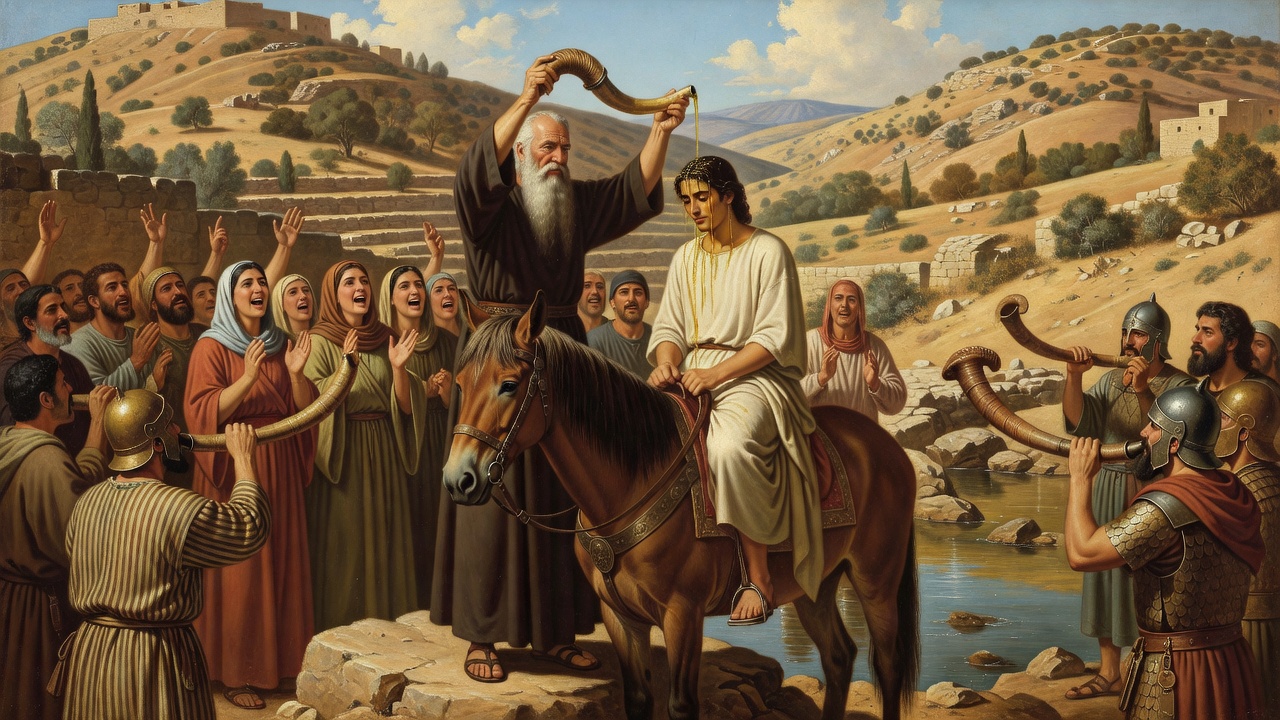
38Ale Nunɔla Zadok, Nyagblɔɖila Natan, Benaya kple David ŋu dzɔlawo kplɔ Solomo yi Gihon eye Solomo do Fia David ƒe tedzisɔ. 39Zadok tsɔ lãdzo si me ami kɔkɔe le la tso Agbadɔ la me yi Gihon eye wòkɔe ɖe tame na Solomo. Woku kpẽawo eye ameawo katã do ɣli be, “Fia Solomo nanɔ agbe tegbee!” 40Le esia megbe la, wo katã wotrɔ va Yerusalem eye wonɔ dzidzɔɣli dom le mɔa dzi.
41Adoniya kple eƒe ame kpekpewo se dzidzɔɣli la esime wonɔ woƒe nuɖuɖu kple nunono la nu wum. Yoab bia be, “Nya kae le dzɔdzɔm? Nu ka ta ɣli le ɖiɖim bobobo ale le dua me?”
42Yoab mekpɔ ɖe nu le nya siawo me hafi Yonatan, nunɔla Abiata ƒe vi, ƒu du va do ɖe wo dzi o. Adoniya gblɔ nɛ be, “Ge ɖe eme elabena ame nyuie nènye. Nya nyui aɖe anya nɔ asiwò kokoko.”
43Yonatan ɖo eŋu na Adoniya be, “Ao! Míaƒe aƒetɔ, Fia David, tsɔ Solomo ɖo fiae. 44Fia la ɖoe ɖa kple nunɔla Zadok, Nyagblɔɖila Natan, Benaya, Yehoiada ƒe vi, Keretitɔwo kple Peletitɔwo eye wodae ɖe fia ƒe tedzisɔ dzi. 45Nunɔla Zadok kple Nyagblɔɖila Natan si ami nɛ heɖoe fiae le Gihon. Wole aseye tsom tso afi ma eye du blibo la hã gli kple aseyetsotso. Eyae nye ɣli si sem miele. 46Gawu la, Solomo nɔ anyi ɖe fiazikpui la dzi. 47Hekpe ɖe esia ŋu la, fiaŋumewo va yra míaƒe aƒetɔ, Fia David eye wogblɔ nɛ be, ‘Wò Mawu nana Solomo ƒe ŋkɔ nade dzi wu tɔwò eye eƒe fiazikpui nali ke wu tɔwò!’ Fia la de ta agu le eƒe aba dzi, subɔ Mawu 48eye wogblɔ be, ‘Woakafu Yehowa, Israel ƒe Mawu, ame si na be nye ŋkuwo kpɔ ame si anɔ nye fiazikpui dzi egbe.’ ”
49Vɔvɔ̃ ɖo Adoniya ƒe ame kpekpewo katã eye wokaka gbẽe. 50Ke Adoniya ƒe vɔvɔ̃ na Solomo na wòyi ɖalé vɔsamlekpui la ƒe dzowo ɖe asi. 51Wogblɔ na Solomo be, “Adoniya le vɔvɔ̃m na Fia Solomo eye wòle sitsoƒe dim le agbadɔ la me. Adoniya gblɔ be, ‘Mina Fia Solomo naka atam nam egbe be yematsɔ yi awu eƒe subɔla o.’ ”
52Fia Solomo gblɔ be, “Ne elé eɖokui nyuie la, ame aɖeke mawɔ nuvevi aɖekee o, ke ne melé eɖokui nyuie o la, aku.” 53Ale Fia Solomo na woyi ɖakplɔe tso vɔsamlekpui la gbɔ vɛ. Esi wòva ɖo la, ebɔbɔ, de ta agu le fia la ŋkume. Solomo gblɔ nɛ kpuie ko be, “Yi wò aƒe me!”
Did you know?
The Succession to David's Throne
- As David's oldest surviving son after the deaths of Amnon and Absalom, Adonijah claimed the royal succession, backed by the military commander Joab and the high priest Abiathar. However, David chose his younger son Solomon, who was supported by the prophet Nathan, the priest Zadok, and the royal bodyguard under Benaiah.Sources: Adonijah · Solomon · the Bible text itself
- Riding the king's own mule was a decisive public declaration of royal authority. By David's explicit instruction, Solomon was escorted down to the spring of Gihon, where Zadok anointed him king with oil taken from the tabernacle to the sound of ram's horns and popular celebration.Sources: Gihon · Zadok · the Bible text itself
- Upon hearing of Solomon's public coronation, Adonijah fled in terror and sought asylum by taking hold of the horns of the sacrificial altar. Solomon granted him conditional clemency, sparing his life so long as he proved himself a worthy man.Sources: Adonijah · the Bible text itself
Notes written with AI assistance from open sources (Theographic Bible Metadata, CC BY-SA 4.0; Easton’s Bible Dictionary, public domain) and reviewed before publishing.
Places in this chapter
- Shunem · Today: Sulam · 32.606, 35.334 · verse 3
- Serpent’s Stone · Today: within 100 m of Bir Ayub · 31.767, 35.236 · verse 9
- Gihon · Today: Gihon Spring · 31.773, 35.236 · verses 33, 38, 44, 45
- Jerusalem · 31.777, 35.234 · verse 40
Only places identified with high confidence are shown (90% or more according to the scholarly sources compiled by OpenBible). Period map: DARE (Digital Atlas of the Roman Empire), CC BY 4.0; modern map: © OpenStreetMap contributors; places: OpenBible.info (CC BY 4.0).
Credits and license for this translation
Biblica® Se aɖeke mebla Biblia zazã o Agbenya La™ Éwé: Biblica® Se aɖeke mebla Biblia zazã o Agbenya La™ (Bible) of Ghana copyright © 1988, 2006, 2020 Biblica, Inc. Language: eʋegbe Contributor: Biblica, Inc. Dɔwɔƒe si na wò asi ka agbalẽ sia lae nye Creative Commons Attribution-ShareAlike 4.0 International License (CC BY-SA). Ne èdi be yeakpɔ laisensi alo mɔɖegbalẽ sia la, yi ɖe http://creativecommons.org/licenses/by-sa/4.0 alo ŋlɔ agbalẽ na Creative Commons Dɔwɔƒea to adrɛsi sia dzi: Creative Commons, PO Box 1866, Mountain View, CA 94042, USA. Biblica, Inc. na wode Biblica® kple eƒe dzesidenu agbalẽ me, eye woaŋlɔ agbalẽ axɔ mɔɖeɖe tso Biblica, Inc. gbɔ hafi woawɔ Biblica® ƒe dzesidenu la ŋu dɔ. Le CC BY-SA ƒe mɔɖeɖe ƒe sewo nu la, àte ŋu azã agbalẽ sia me nyawo le dɔ bubuwo wɔwɔ me gake ele be nàde dzesi Biblica ƒe dzesidenu la abe ale si wòle ene. Ne ètrɔ asi le agbalẽ sia ŋu alo zãe le mɔ bubu nu la, ele be nàɖe Biblica® ƒe dzesidenu la ɖa. Ele be nàde dzesi tɔtrɔ siwo nèwɔ la ɖe agbalẽ la me eye nàde dzesii be: “Àte ŋu akpɔ Biblica, Inc. ƒe dɔ gbãtɔ le www.biblica.com kple open.bible femaxee.” Ele be nutɔnyenye ƒe dzeside nadze le agbalẽ la ƒe axa si tanya alo nutɔnyenye ƒe dzesi nɔna la ale: Biblica® Se aɖeke mebla Biblia zazã o Agbenya La™ Nutɔnyenye © 1988, 2006, 2020 Biblica, Inc. Biblica® Open Ewe Contemporary Scriptures™ Copyright © 1988, 2006, 2020 by Biblica, Inc. Biblica, Inc. na Dɔwɔƒe si Kpɔa Nutɔnyenye kple Adzɔdodo ƒe Nyawo dzi le Amerika la de “Biblica” kple eƒe dzesidenu agbalẽ me. Woaxɔ mɔɖeɖe na ezazã. “Biblica” is a trademark registered in the United States Patent and Trademark Office by Biblica, Inc. Used with permission. Ele be nàna míaƒe asi naka wò agbalẽ la le laisensi alo mɔɖeɖe ƒe se (CC BY-SA) sia nu. Ne èdi be yeana nyanya Biblica, Inc. tso agbalẽ sia zazã ŋu la, anyo be nàdo ta ɖe mía gbɔ le https://open.bible/contact-us. This work is made available under the Creative Commons Attribution-ShareAlike 4.0 International License (CC BY-SA). To view a copy of this license, visit http://creativecommons.org/licenses/by-sa/4.0 or send a letter to Creative Commons, PO Box 1866, Mountain View, CA 94042, USA. Biblica® is a trademark registered by Biblica, Inc., and use of the Biblica® trademark requires the written permission of Biblica, Inc. Under the terms of the CC BY-SA license, you may copy and redistribute this unmodified work as long as you keep the Biblica® trademark intact. If you modify a copy or translate this work, thereby creating a derivative work, you must remove the Biblica® trademark. On the derivative work, you must indicate what changes you have made and attribute the work as follows: “The original work by Biblica, Inc. is available for free at www.biblica.com and open.bible.” Notice of copyright must appear on the title or copyright page of the work as follows: Biblica® Se aɖeke mebla Biblia zazã o Agbenya La™ Nutɔnyenye © 1988, 2006, 2020 Biblica, Inc. Biblica® Open Ewe Contemporary Scriptures™ Copyright © 1988, 2006, 2020 by Biblica, Inc. Biblica, Inc. na Dɔwɔƒe si Kpɔa Nutɔnyenye kple Adzɔdodo ƒe Nyawo dzi le Amerika la de “Biblica” kple eƒe dzesidenu agbalẽ me. Woaxɔ mɔɖeɖe na ezazã. “Biblica” is a trademark registered in the United States Patent and Trademark Office by Biblica, Inc. Used with permission. You must also make your derivative work available under the same license (CC BY-SA). If you would like to notify Biblica, Inc. regarding your translation of this work, please contact us at https://open.bible/contact-us. This translation is made available to you under the terms of the Creative Commons Attribution Share-Alike license 4.0. You have permission to share and redistribute this Bible translation in any format and to make reasonable revisions and adaptations of this translation, provided that: You include the above copyright and source information. If you make any changes to the text, you must indicate that you did so in a way that makes it clear that the original licensor is not necessarily endorsing your changes. If you redistribute this text, you must distribute your contributions under the same license as the original. Pictures included with Scriptures and other documents on this site are licensed just for use with those Scriptures and documents. For other uses, please contact the respective copyright owners. Note that in addition to the rules above, revising and adapting God's Word involves a great responsibility to be true to God's Word. See Revelation 22:18-19. 2025-05-01
Source: http://ebible.org/ewe/ · eBible.org