Ruth 1
Edolo Bible · Tap a verse to see its cross-references.
About this book
About Ruth
- The events are set in the days of the judges. A great famine led Elimelech, a man of the tribe of Judah and a kinsman of Boaz, to leave Bethlehem with his wife Naomi and their sons Mahlon and Chilion and settle in Moab, east of the Jordan and the Dead Sea. There Elimelech and both sons died.Sources: Elimelech · Moab · Mahlon · Chilion
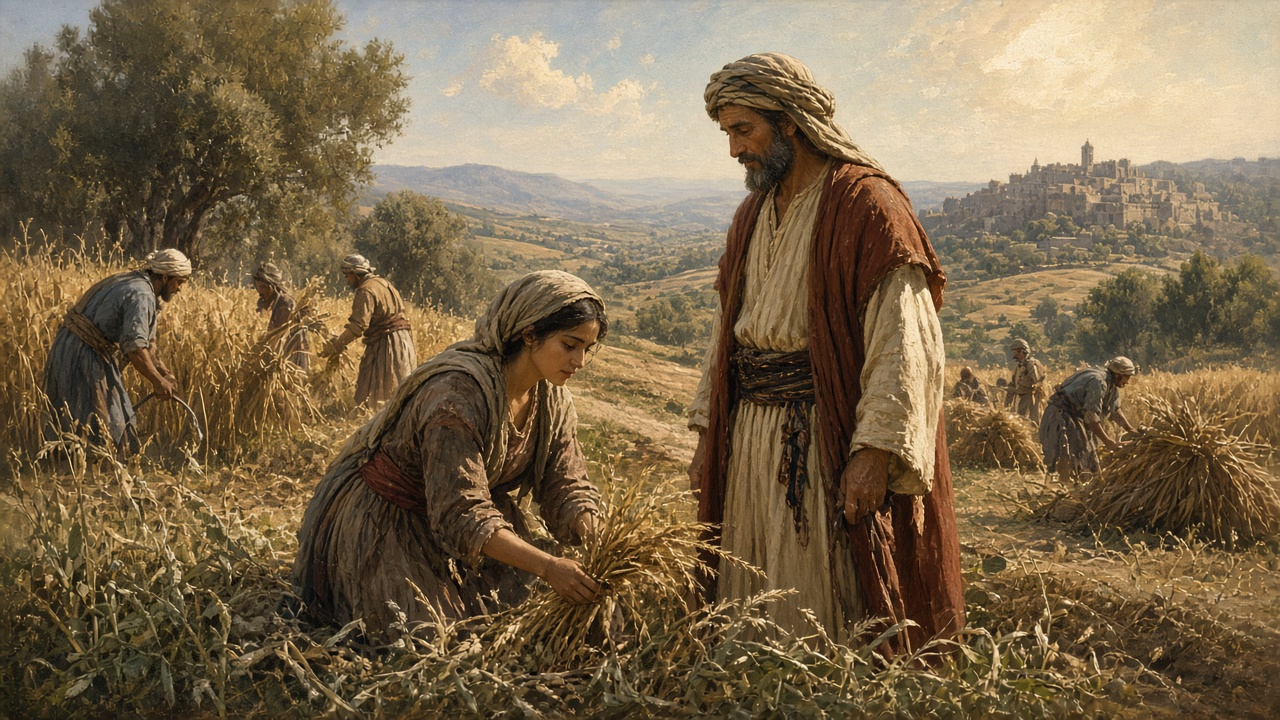
- Naomi then returned to Bethlehem with Ruth, a Moabite and the widow of Mahlon, who refused to leave her. Orpah, Chilion's widow, accompanied Naomi part of the way and then returned to Moab. In the valley east of the town, Ruth gleaned in the fields and was eventually married to Boaz, a wealthy relative.Sources: Easton: Ruth · Orpah · Bethlehem · Boaz
- Easton's Bible Dictionary (1897) says the story of the gleaner Ruth illustrates friendly relations between Boaz and his reapers, the land system, the way property was transferred, and the working of the Mosaic law for the relief of ruined families. By the levirate law, Boaz, a kinsman of Mahlon, took on the duty of marrying Ruth.Sources: Easton: Ruth · Boaz
- Ruth became the mother of Obed, the grandfather of David. The genealogy in Ruth 4:18-22 traces that line, and Matthew 1:5 includes Ruth, a Gentile, among the ancestors of Jesus. Easton also compares her with Tamar and Rahab, who likewise became ancestors of David.Sources: Easton: Ruth · Obed · Ruth
- Bethlehem, in the hill country of Judah, was originally called Ephrath; Ruth 1:2 calls it Bethlehem-Judah and its people Ephrathites. Easton's Bible Dictionary (1897) explains Ruth as meaning a friend, and Naomi as bitter or sad, a symbolic name she gave herself because of her misfortunes.Sources: Bethlehem · Ephrathah · Ruth · Naomi
Notes written with AI assistance from open sources (Theographic Bible Metadata, CC BY-SA 4.0; Easton’s Bible Dictionary, public domain) and reviewed before publishing.
Naëomia yöi melï
Elimelegeïe udiala efegele äudä amolali Moaba asi
1Isilale udia dolö beaha aligilo gini maadeia, gudi mogelo amoliamu beaha nebegi, Yuda segea ami sege eso edefademalä maala sïdë i edefade gelola misi. Amala hamosebegi dolö Yuda fii afädë Bedeleheme ami sulo amo gäheo i odoa sege näiadodi Moaba namolö bobala asi. Dolö asi amoïe udiala ïe dolö malö äudä amola ili biyidia asi.
2Dolö amoïe ëida Elimelege, ïe udiada Naëomi, malö äudä amolele ëida Malonole Gilionole. Ili sosogoda Efalada, Yuda fiiïe gaamu edefade Bedeleheme dibea amilahilä Moaba namolö bobala asi. 3Ili gäheo i nabülasi afädë gadoi ami nelo. Ami nea Elimelege baagoi. Baagosebegi Naëomila, ïe malö äudä amolali, hilido nelo. Hilido nea efegele äudä amolea Moaba udia amogi nii. Dolïsä äudä amolele ëida Obale Uludile. Ele neala ami salea Gilionole Malonole helegela ami baagoi. Egoage efegele äudä amolege baagoibua Naëomi hïdo ami sulo.
Naëomi e Bedeleheme obëgëse amo gadola Uludige bëgëi amo
6Naëomi e ami salea nabelebe Dafidilo Geloia ïe udia dolö neala obeägïlasila dafidi esoi dilo amo fisila molö naha dialeala säi amo nabi. Amo nabalahilä efege idia didalo äudä amola ili Moaba dïgïla moholöla daiai. 7Naëomila efege idia didalo äudä amolali segea ami sulo amo dïgïla, Yuda segea moholö afiai. 8Afiai amo afiahalea gaso, idiafa amila Naëomia efege idia äudä amolema sähalea, Alida hali segea diemebalä samolö obëgëmalo. Alia nemage baagoi amolimage mala hedabi hamosa nelo amo gadola Dafidilo Geloiage alima hedabi hamomolömelë. 9Dafidilo Geloia ali ugila negemäia. Dolö elöma fimolö mosalo. Amala hamoseda, Dafidilo Geloia ali hedabola ugila negemolömelëla säla ïahagola säla ï. Amala säla ïaha nelolahilä, Naëomia udia äudä amole helegela neala mimilahilä, ali hä samialola säla ï. Amala säi amole udia äudä amolea dïisa nea Naëomima gelolafalï sähalea, Alïda made obëgëmolö. Dïe sosogo neebea di awäsego gadola nihïlïgïla moholömelëla säi.
11Amala säsebegi, Naëomia säla obëgësalea, Nïe nidiwi ali-e, alida wila dofä hali mosöa obëgëmäiala helësësamelë. Nebaläda alida edo nea moholö. Ali nimäia na dolö malö elö sogobamolöi gabule. Alida mosöa bahïla obëgëmalo. 12Na walio gasigi dolö fila awäla malö äudä sogobalahilä amea ali nimäiale. Neda sesalebe made gabule. Ali hali segea bahïla obëgëmalo. Malö äudä amea ali nimäialahilä beaha samolöle. Elea ali nimäiala helësëla samolöle. Nïe nidiwi ali-e, Dafidilo Geloia nema edefade baagi ï amo gadola alimage amai amogi bobasësamelëla säi. 14Amala säi amo nabalahilä elea bu elö dïi. Dïisa nelolahilä Obaea egoame sali Naëomi gaula mimilahilä, mosalo, hawiola sälahilä hï segea obëgëi. Uludia egoame sali gaula nea, neda dofä obëgëmolö mademelëla säi. 15Amala säsebegi, Naëomia ema säla obëgësalea, Dïe disama amoda hä hïle sosogo neebeage hïle gode neebeage obëgëi amo gadola dige obëgëmalola säi. 16Amala säsebegi, Uludia säla obëgësalea, Dia ne bahïla obëgëmalola sämabu. Di awäsego gadola ne moholömelë. Di fisebea amige ne samolömelë. Di sosogo neebe amoge ne sosogo namolömelë. Dïe Gode neebe amoge nïe Gode namolömelë. 17Di baagosebea amige ne baagomolömelë. Baagosebea amida baumäiamelë. Baagoeamu alï neala hïdo hïdo hïdolasimäia. Na ado walio säi amo gadola made bëgëla hamoseda, Dafidilo Geloi edefade neebe amea nema yöi ïmäiamelëla säla ï. 18Amala säsebegi, Naëomia beahamelebe, Uludia ebalä moholöla gelosebegi, ea ado säla made, 19amilasilahilä udia äudä amole awäla Bedeleheme besela galai.
Naëomi eda edefademalä bobasëibalä maala, Bedeleheme gaamugi besela galai
Besela galasebegi, Bedeleheme udia dolö nefolalo amolia fudugilahilä udiafalï amolia sähalea, E! Goda Naëomi gabule ma, nowëla säi. 20Amala säsebegi, Naëomia säla obëgësalea, Nema Naëomila sämabu. Nema Malala sämo. Gode Edefade Sulubadelaïe Geloi neebe amea nema gamogai yafie hamola, nihïnege neala gamogalasimelë. 21Amo gala ne wila awähaleada, neda nelebo yafie nobai asi gaso, walio Dafidilo Geloia sigi obëgësaleada, memalä ne badumu misimelë. Gode Dafidilo Sulubadelaïe Geloi neebe amea yöi amo gadoi ï ameada edoïe nïe ëi Naëomila sämolö gabula säla ï.
22Goweda Naëomi efege idia Uludile Moaba sege dïgïla obëgëla misi amoïe ado dialea. Ele Bedeleheme ami besela galasolo amo gala eladi gadoi ëida bali dafidi sagai dilo amo mi gäwila damusa nebegi besela galai.
Did you know?
Naomi and Ruth Return to Bethlehem
- In the days when the judges ruled, famine forced Elimelech and his family from Bethlehem in the hill country of Judah to migrate to the land of Moab, east of the Dead Sea. After the deaths of Elimelech and her two sons, Naomi decided to return to Bethlehem when she heard that food was once again available in Judah.Sources: the Bible text itself · Bethlehem · Moab · Elimelech
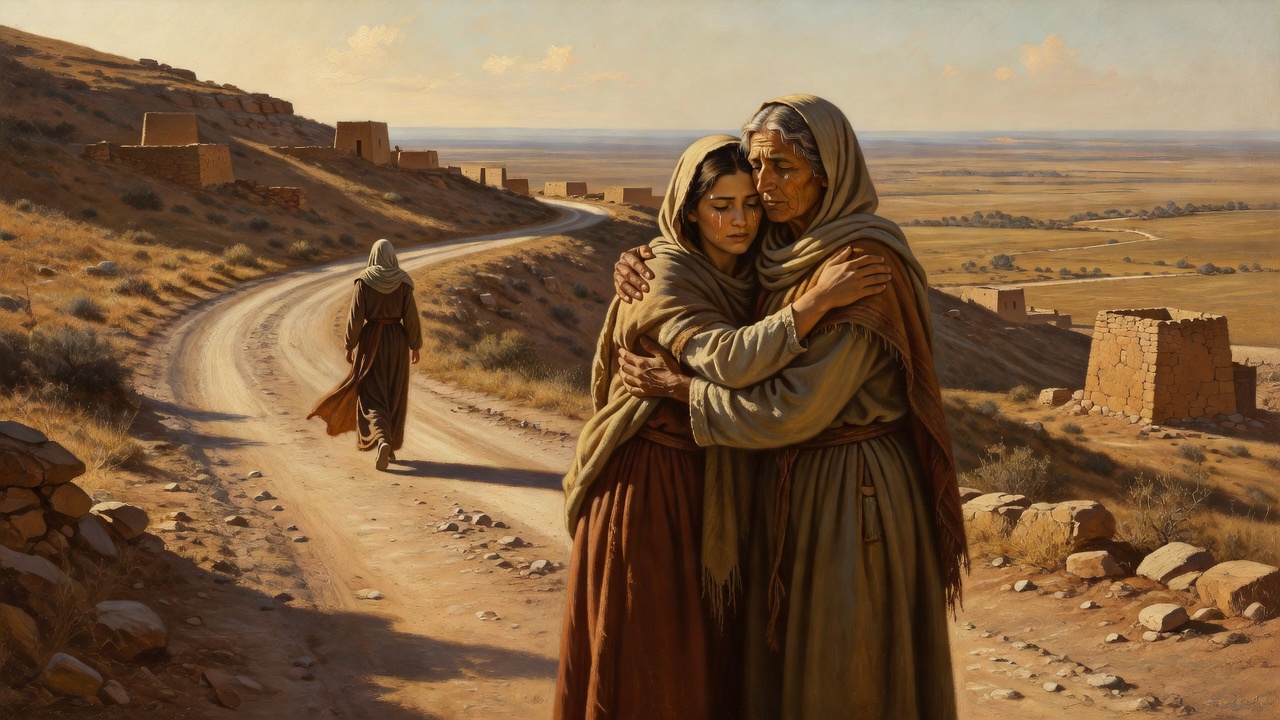
- While Orpah returned to her people and gods in Moab, Ruth clung to her mother-in-law and pledged loyalty to Naomi and her God. Ruth, a Moabite woman, traveled to Bethlehem and would later become an ancestor of King David.Sources: the Bible text itself · Ruth · Orpah
- Upon arriving in Bethlehem at the beginning of the barley harvest, Naomi asked the women of the city to call her Mara, meaning bitter, because she felt the Almighty had dealt bitterly with her. She had departed full with a husband and two sons, but returned empty after their deaths.Sources: the Bible text itself · Naomi
Notes written with AI assistance from open sources (Theographic Bible Metadata, CC BY-SA 4.0; Easton’s Bible Dictionary, public domain) and reviewed before publishing.
Places in this chapter
- Bethlehem · 31.704, 35.208 · verses 1, 2, 19, 22
- Moab · Today: Moab 1 · 31.181, 35.701 · verses 1, 2, 4, 6, 22
Only places identified with high confidence are shown (90% or more according to the scholarly sources compiled by OpenBible). Period map: DARE (Digital Atlas of the Roman Empire), CC BY 4.0; modern map: © OpenStreetMap contributors; places: OpenBible.info (CC BY 4.0).
Credits and license for this translation
Edolo Bible
Ruth and the New Testament in the Edolo Language of Papua New Guinea
Sampela hap Buk Baibel long tokples Edolo long Niugini
copyright © 2010-2022 Wycliffe Bible Translators, Inc.
Language: Edolo
Translation by: Wycliffe Bible Translators
This translation is made available to you under the terms of the
Creative Commons Attribution-Noncommercial-No Derivatives license 4.0.
You may share and redistribute this Bible translation or extracts from it in any format, provided that:
You include the above copyright and source information.
You do not sell this work for a profit.
You do not change any of the words or punctuation of the Scriptures.
Pictures included with Scriptures and other documents on this site are licensed just for use with those Scriptures and documents.
For other uses, please contact the respective copyright owners.
2026-10-01
Source: http://png.bible/etr/ · eBible.org