Job 17
Londona Biblio · Tap a verse to see its cross-references.
1Mia spirito senfortiĝis, miaj tagoj mallongiĝis,
Tomboj estas antaŭ mi.
2Mokado min ĉirkaŭas;
En aflikto pro tio restas mia okulo.
3Estu Vi mem mia garantianto antaŭ Vi;
Alie kiu donos la manon pro mi?
4Ĉar ilian koron Vi kovris kontraŭ prudento;
Tial Vi ne donos al ili triumfon.
5Se iu fanfaronas antaŭ siaj amikoj pri sia parto,
La okuloj de liaj infanoj konsumiĝos.
6Li faris min proverbo por la popoloj;
Kaj mi fariĝis homo, al kiu oni kraĉas en la vizaĝon.
7Mia okulo mallumiĝis de ĉagreno,
Kaj ĉiuj miaj membroj fariĝis kiel ombro.
8La justuloj eksentos teruron pro tio,
Kaj la senkulpulo ekscitiĝos kontraŭ la hipokritulo.
9Tamen la virtulo forte konservos sian vojon,
Kaj la purmanulo pli firmiĝos.
10Kaj kiom ajn vi ĉiuj revenos,
Mi ne trovos inter vi saĝulon.
11Miaj tagoj forpasis, pereis miaj intencoj,
Kiujn havis mia koro.
12La nokton ili volas fari tago,
La lumon alproksimigi al la mallumo.
13Se mi atendas, tamen Ŝeol estas mia domo,
En la mallumo estas pretigita mia lito.
14Al la kavo mi diras: Vi estas mia patro;
La vermojn mi nomas mia patrino kaj mia fratino.
15Kion mi devas atendi?
Kiu atentos mian esperon?
16En la profundon de Ŝeol ĝi malsupreniros,
Ni ambaŭ kune kuŝos en la polvo.
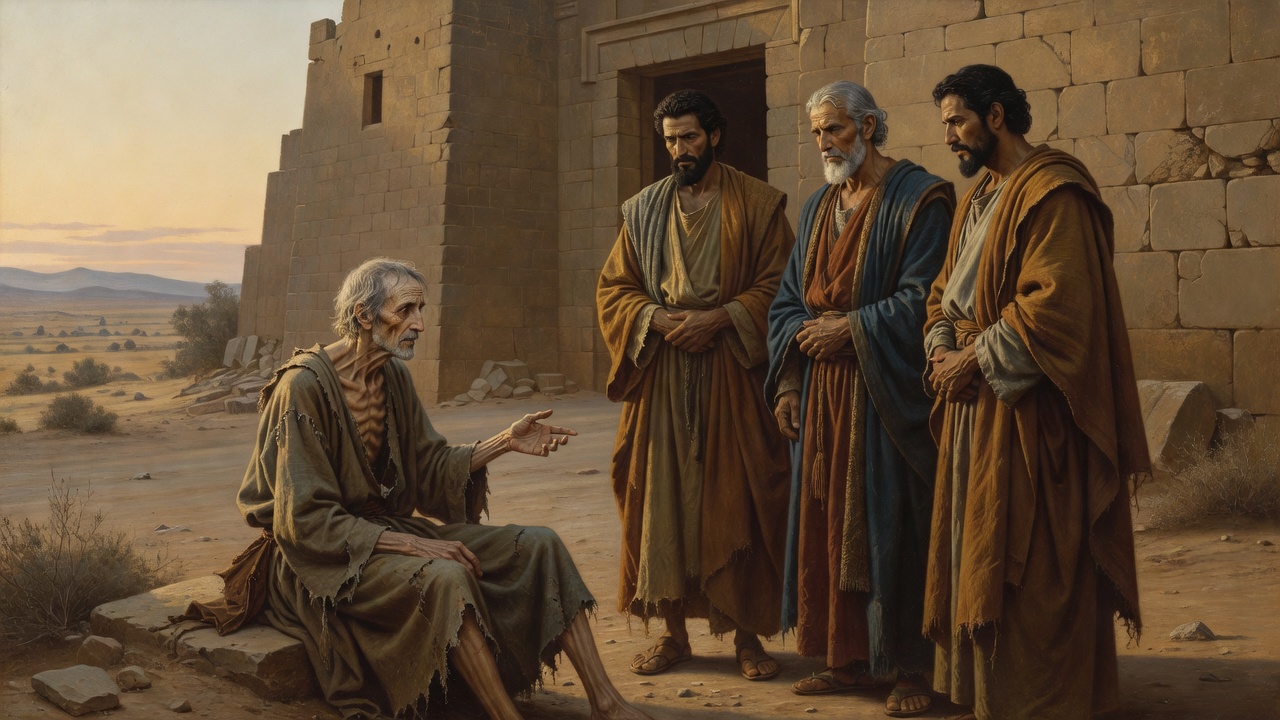
Did you know?
Job's Despair and the Prospect of the Grave
- Job appeals directly to God to act as his pledge or guarantor. In ancient legal practice, a guarantor assumed responsibility for someone accused or indebted, and Job found no human ally willing or able to defend him.Sources: the Bible text itself
- Job describes himself as becoming a byword among the people, a status where an individual's suffering turns into an object of public mockery, contempt, and proverb-like warning.Sources: the Bible text itself
- In his grief, Job speaks of the realm of the dead (Sheol) and the grave as his only remaining home, metaphorically adopting the pit and worms as his closest family members.Sources: the Bible text itself
Notes written with AI assistance from open sources (Theographic Bible Metadata, CC BY-SA 4.0; Easton’s Bible Dictionary, public domain) and reviewed before publishing.
Credits and license for this translation
Londona Biblio
The Holy Bible in Esperanto (1910)
Public Domain
Language: Esperanto
2020-02-13
Source: http://ebible.org/epo/ · eBible.org