Psalms 101
The Orthodox Jewish Bible · Tap a verse to see its cross-references.
I Will Set No Worthless Thing before My Eyes
1(Of Dovid. Mizmor)
1 I will sing of chesed and mishpat;
unto Thee, Hashem, will I sing.
2I will study the derech tamim.
O when wilt Thou come unto me?
I will walk within my bais
with tam levav.
3I will set no devar beliyya'al
before mine eyes;
I hate the work of them that fall away;
it shall not cleave to me.
4A lev ikkesh (perverse heart) shall be far from me;
I will not tolerate rah.
5The one who slandereth ba'seter (in secret) his neighbor,
him will I destroy;
him that hath haughty einayim (eyes) and a proud levav
will I not endure.
6Mine eyes shall be upon the ne'emenei eretz (faithful of the land),
that they may dwell with me;
he that walketh in a derech tamim,
he shall minister to me.
7He that worketh remiyyah (deceit)
shall not dwell within my bais;
he that speaketh shekarim (falsehoods, lies)
shall not continue in my presence.
8In the bokerim I will destroy
all rishei eretz (wicked ones of the land);
that I may cut off all doers of evil
from the Ir Hashem.
Did you know?
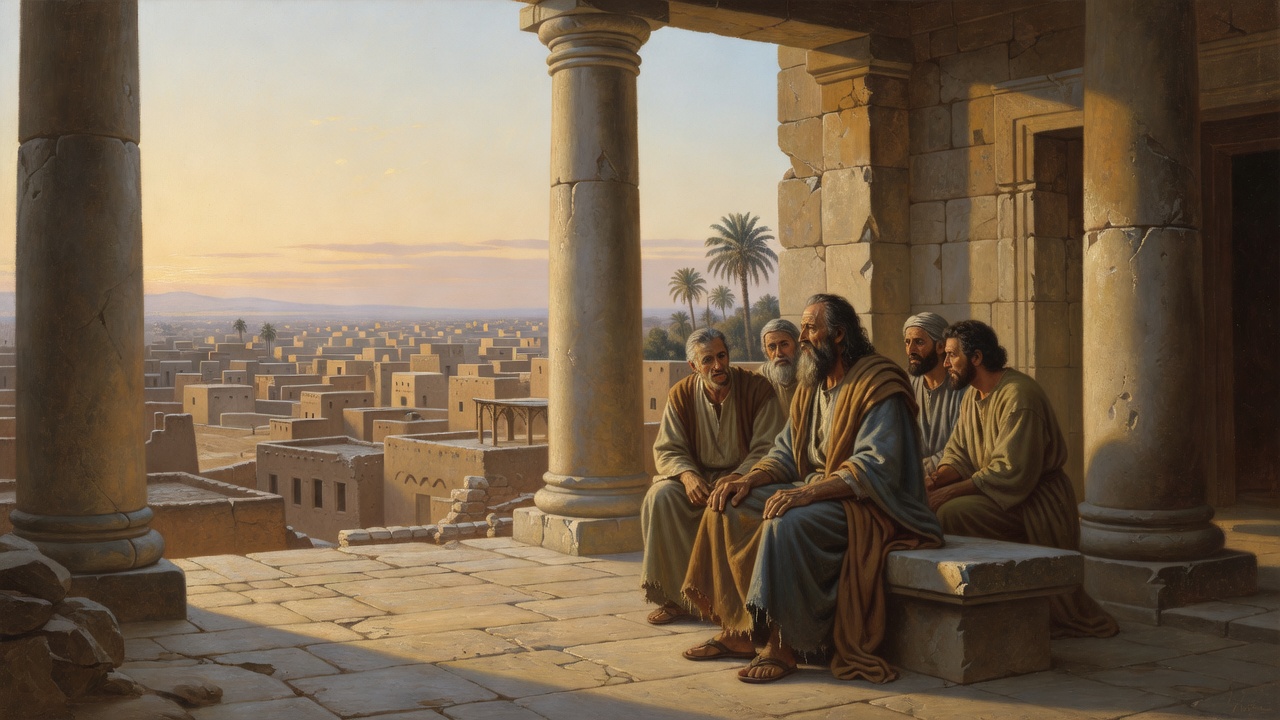
Vows of a Blameless Leader
- The psalm is traditionally attributed to David as a declaration of personal ethics and leadership standards. The speaker pledges to maintain integrity first within his own household and inner circle before extending justice throughout the land.Sources: the Bible text itself
- The phrase about removing the wicked every morning refers to the ancient practice of conducting judicial affairs at the beginning of the day, ensuring corruption and slander were systematically confronted in the city of the Lord.Sources: the Bible text itself
Notes written with AI assistance from open sources (Theographic Bible Metadata, CC BY-SA 4.0; Easton’s Bible Dictionary, public domain) and reviewed before publishing.
Credits and license for this translation
The Orthodox Jewish Bible
The Orthodox Jewish Bible - Tanakh and Orthodox Jewish Brit Chadasha - The Holy Bible
copyright © 2002-2011, 2021, 2024 Artists for Israel International
Language: English
Contributor: Artists for Israel International
THE ORTHODOX JEWISH TANAKH
Artists For Israel Intl Inc.
This version also appears with the Orthodox Yiddish Triglot which presents the Hebrew Yiddish script in Latin script and an English word for word translation, available at afii.org/Torah
To donate PayPal.Me
This translation is made available to you under the terms of the
Creative Commons Attribution license 4.0.
You may share and redistribute this Bible translation or extracts from it in any format, provided that:
You include the above copyright and source information.
If you make any changes to the text, you must indicate that you did so in a way that makes it clear that the original licensor is not necessarily endorsing your changes.
Pictures included with Scriptures and other documents on this site are licensed just for use with those Scriptures and documents.
For other uses, please contact the respective copyright owners.
Note that in addition to the rules above, revising and adapting God's Word involves a great responsibility to be true to God's Word. See Revelation 22:18-19.
2026-01-06
Section headings adapted from the Berean Standard Bible (public domain); they are not part of this translation’s text.
Source: http://ebible.org/engojb/ · eBible.org