Proverbs 28
The Orthodox Jewish Bible · Tap a verse to see its cross-references.
The Boldness of the Righteous
1The rasha flee when none pursueth;
but the tzaddikim are bold as a lion.
2For the peysha eretz (land in rebellion) many are the sarim (rulers) thereof,
but by an adam meiven yodei'a (a man of wisdom and knowledge)
shall be lasting order.
3A gever rahsh (poor man) that oppresseth the dalim (poor ones)
is like a sweeping matar (rain) which leaveth no lechem (food, crop).
4They that forsake the torah praise the rasha,
but such as be shomer over the torah contend against them.
5Anshei rah understand not mishpat,
but they that seek Hashem understand all things.
6Better is the rahsh (poor) that walketh in his integrity,
than he that is perverse in his drakhim (ways), though he be rich.
7He who keepeth torah is a ben meiven,
but he that is a companion of zolelim (gluttons) shameth aviv.
8He that by neshekh (interest) and increase increaseth his substance,
he shall gather it for him that will pity the dalim (poor ones).
9He that turneth away his ozen from mishmo'a torah (heeding torah),
even his tefillah (prayer) shall be to'evah (abomination).
10He who causeth the yesharim (upright ones) to go astray in a derech rah,
he shall fall himself into his own trap,
but the blameless ones shall inherit tov.
11The ish oisher is chacham in his own eyes,
but the dal meiven (poor man with understanding) searcheth him out.
12When tzaddikim do triumph, there is rabbah tiferet (great glory),
but when the resha'im rise, the people go into hiding.
13He that covereth his peysha'im (sins) shall not prosper,
but he who confesseth and forsaketh them
shall find mercy.
14Ashrei adam that is reverent always,
but he that hardeneth his lev shall fall into ra'ah.
15As a roaring ari, and a charging dov (bear),
so is a wicked moshel (ruler) over the am dal (poor people).
16The nagid (ruler) lacking tevunot (understanding) is also a great oppressor,
but he that hateth betza (ill-gotten gain) shall prolong his yamim (days).
17If an adam is burdened with dahm (blood, murder) of any nefesh,
let him be a fugitive ad bor (till the pit, death);
let no ish help him.
18He who walketh tamim (blamelessly) shall be saved,
but he that is perverse in his drakhim shall fall suddenly.
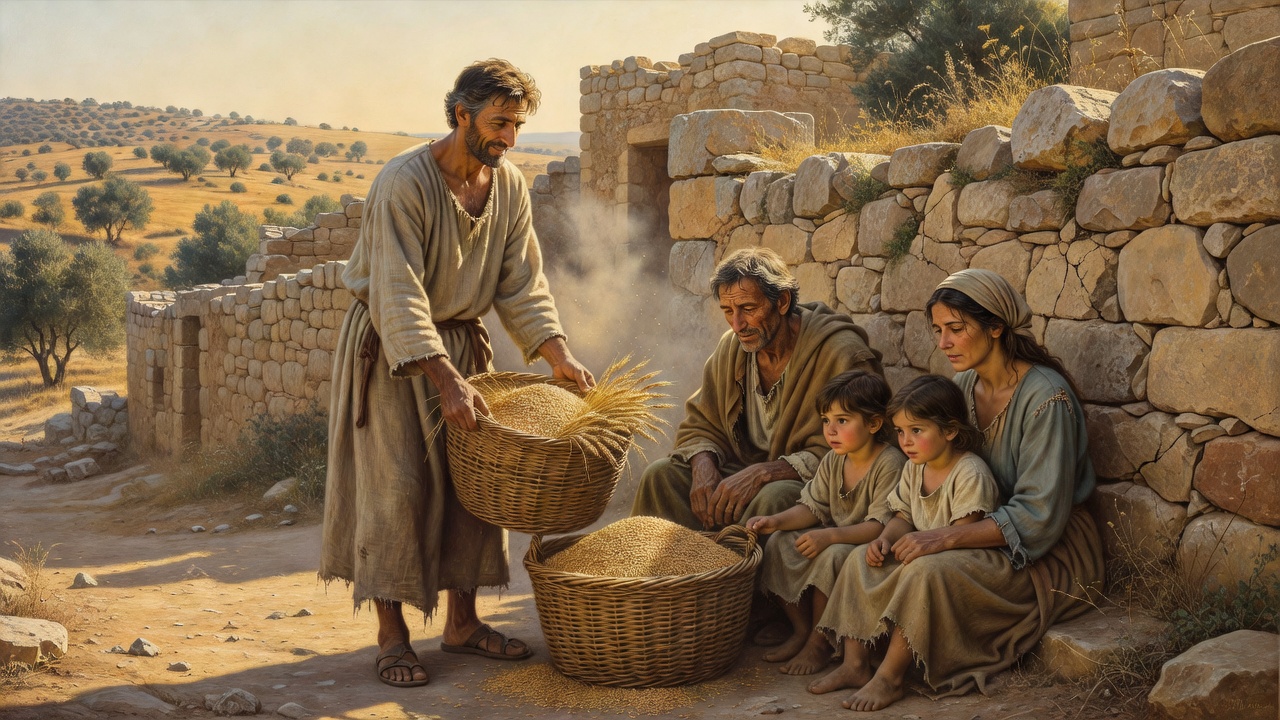
19He that tilleth his adamah shall have plenty of lechem,
but he that chaseth after empty things shall have poverty enough.
20An ish emunot (faithful man, loyal man) shall abound with birkhot,
but he that maketh haste to be rich shall not go unpunished.
21To show partiality is not tov;
for a piece of lechem that gever will transgress.
22He that hasteth to be rich hath a rah ayin,
and considereth not that want shall come upon him.
23He that rebuketh an adam afterwards shall find more chen
(favor) than he that flattereth with the lashon.
24He who robbeth aviv or immo,
and saith, It is no peysha (transgression),
the same is the chaver (fellow, companion) of an ish mashchit (man of destruction).
25The covetous stirreth up strife,
but he that putteth his trust in Hashem shall be prospered.
26He that trusteth in his own lev is a kesil (fool),
but he who walketh in chochmah, he shall be delivered.
27He that giveth unto the rahsh (poor) shall not lack,
but he that hideth his eynayim meeteth many curses.
28When the resha'im rise, adam hide themselves,
but when they perish, the tzaddikim increase.
Did you know?
Justice, Leadership, and Integrity
- Proverbs 28 connects good governance with societal stability, noting that political rebellion multiplies rulers while a person of understanding maintains order. It compares an oppressive, unprincipled ruler over helpless subjects to predatory beasts like a roaring lion or a charging bear.Sources: the Bible text itself
- The chapter highlights the vital link between obedience to the law and spiritual life, warning that turning away from the law makes even one's prayers detestable. In contrast, those who keep the law actively resist wrongdoing and preserve moral discernment.Sources: the Bible text itself
- Several proverbs address economic justice, stating that wealth amassed through exorbitant interest or usury will ultimately pass to someone who shows kindness to the poor. Diligent labor on the land is praised over the pursuit of get-rich-quick fantasies.Sources: the Bible text itself
Notes written with AI assistance from open sources (Theographic Bible Metadata, CC BY-SA 4.0; Easton’s Bible Dictionary, public domain) and reviewed before publishing.
Credits and license for this translation
The Orthodox Jewish Bible
The Orthodox Jewish Bible - Tanakh and Orthodox Jewish Brit Chadasha - The Holy Bible
copyright © 2002-2011, 2021, 2024 Artists for Israel International
Language: English
Contributor: Artists for Israel International
THE ORTHODOX JEWISH TANAKH
Artists For Israel Intl Inc.
This version also appears with the Orthodox Yiddish Triglot which presents the Hebrew Yiddish script in Latin script and an English word for word translation, available at afii.org/Torah
To donate PayPal.Me
This translation is made available to you under the terms of the
Creative Commons Attribution license 4.0.
You may share and redistribute this Bible translation or extracts from it in any format, provided that:
You include the above copyright and source information.
If you make any changes to the text, you must indicate that you did so in a way that makes it clear that the original licensor is not necessarily endorsing your changes.
Pictures included with Scriptures and other documents on this site are licensed just for use with those Scriptures and documents.
For other uses, please contact the respective copyright owners.
Note that in addition to the rules above, revising and adapting God's Word involves a great responsibility to be true to God's Word. See Revelation 22:18-19.
2026-01-06
Section headings adapted from the Berean Standard Bible (public domain); they are not part of this translation’s text.
Source: http://ebible.org/engojb/ · eBible.org