Matthew 6
The Orthodox Jewish Bible · Tap a verse to see its cross-references.
Giving to the Needy
1Be careful that you don't practice your tzedakah (charity giving) before Bnei Adam in order to varf (show off, flaunt) to be seen by Bnei Adam; for then you have no sachar (reward) with your Av sh'ba'Shomayim.
2Therefore, whenever you contribute tzedakah, don't blow the shofar before you, as the tzevuim (hypocrites) do in the shuls and in the streets, in order that they may receive kavod (glory) from Bnei Adam. Omein, truly I say to you, they have their sachar (reward). 3But when you contribute tzedakah, do not let your left hand have da'as (knowledge) of what your right hand is doing, 4so that your tzedakah may be nistar (hidden, in secret), and your Av HaRoeh b'seter (Father, the One seeing in secret) sachar (reward) will give you.
The Lord’s Prayer
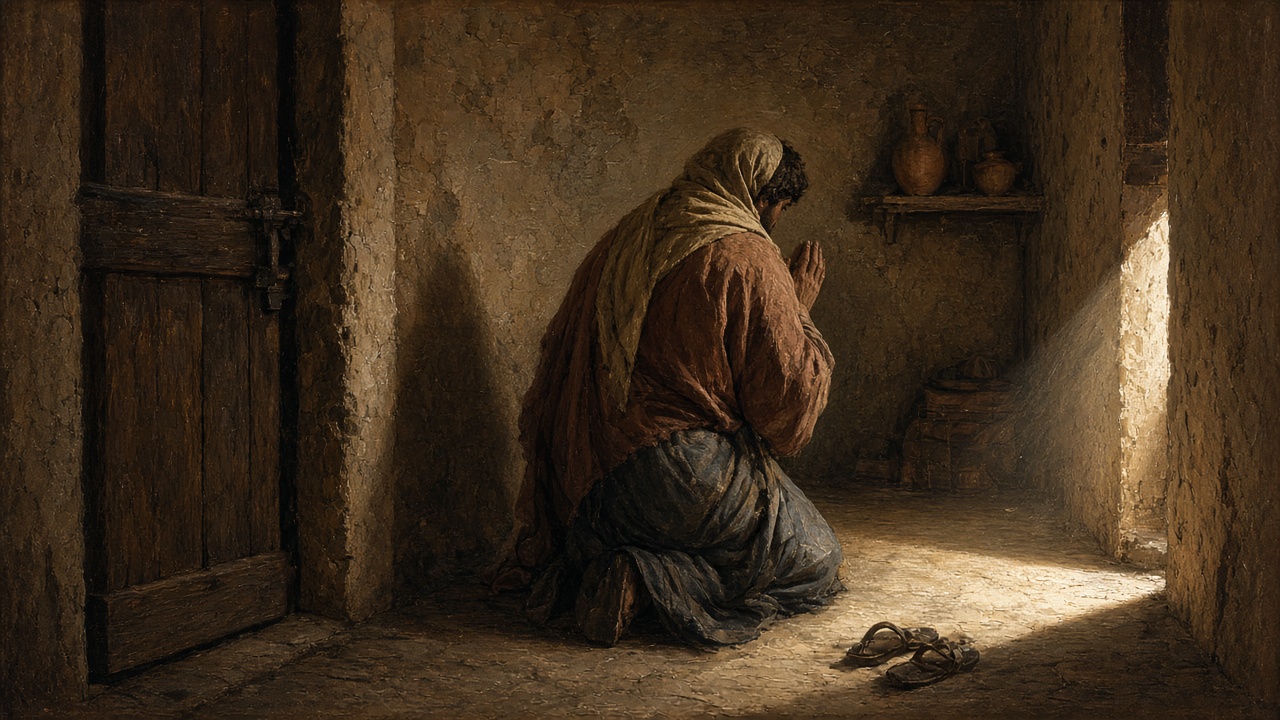
5And whenever you daven (pray), do not be as the tzevuim (hypocrites); for they love to stand and daven in the shuls and on the street corners so that they may be seen by an audience. Omein, truly I say to you, they have their sachar. 6But you, whenever you daven, enter into the secret place, your secret cheder, and, having shut your door, offer tefillos to your Av Asher b'Seter (Father Who is in Secret), and your Av haRoeh b'seter (Father, the One seeing in secret) sachar will give you.
7But when you daven, do not babble on and on maarich (extended, long winded) and vacuously and without kavvanah (heartfelt direction, intention) like the Goyim. For the Goyim think that in their verbosity their techinnah will be heard. 8Therefore, nisht azoi (not so)! Be different, for your Av has daas (knowledge) of what things you have need before you ask Him. 9Therefore, when you offer tefillos, daven like this, in this manner: Avinu sh'ba'Shomayim (Our Father in heaven), yitkadash shmecha (hallowed be your Name). 10Tavo malchutechah (Thy Kingdom come) Ye'aseh rtzonechah (Thy will be done) kmoh vaShomayim ken ba'aretz (on earth as it is in heaven). 11Es lechem chukeinu ten lanu hayom (Give us today our daily bread), 12u-slach lanu es chovoteinu kaasher salachnu (and forgive us our debts as we forgive) gam anachnu lachayaveinu (also our debtors). 13V'al tvi'einu lidey nisayon (And lead us not into temptation), ki im chaltzeinu min harah (but deliver us from evil). 14For if you give men mechila (pardon, forgiveness) for their chattaim (sins), so also your Av sh'ba'Shomayim will give selicha (forgiveness) to you. 15But if you do not give men mechila (forgiveness), neither will your chattaim receive selicha from your Av.
Proper Fasting
16And whenever you undergo a tzom (fast), don't be like the sullen tzevuim (hypocrites), for they disfigure their faces to parade their tzom (fast). Omein, truly I say to you, they have received their sachar (reward). 17But when you undergo a tzom, anoint your rosh with shemen and wash your face, 18so that your tzom is concealed from Bnei Adam but not from your Av Asher b'Seter (Father Who is in Secret). And your Av HaRoeh b'seter (Father the One seeing in secret) will give you sachar.
Treasures in Heaven
19Do not store up for yourselves otzarot (treasures) on haaretz, where moth and rust destroy and where ganavim (thieves) break in and steal. 20But zahmlet aich (collect for yourselves) otzarot (treasures) in Shomayim, where neither moth nor rust destroys; neither do ganavim break in and steal. 21For where your otzar is, there also will be your lev.
The Lamp of the Body
22The eye is the menorah of the basar. Therefore, if your eye is unblurred, then your whole basar will be lighted. 23But if yours is the ayin horo, your kol basar is choshech; if ohr choshech, great choshech!
24No one is able to serve two adonim (masters). For either he will have sinah (hatred) for the one and ahavah (love) for the other, or he will be devoted to the one and despise the other. You cannot serve Hashem and Mammon (Money).
Do Not Worry
25Therefore, I say to you, Do not have a LEV ROGEZ (anxious heart) about your life, what you might wear or what you might drink, nor for your basar, what you might put on. Is not life more than okhel (food) and basar more than malbush (clothing)? 26Look to the OPH HASHOMAYIM (birds of heaven), for they do not sow nor reap nor gather into storehouses, and your Av sh'ba'Shomayim feeds them. Are you yourselves not worth more than they? 27And who among you by a LEV ROGEZ is able to add to his life span one cubit? 28And why have a LEV ROGEZ (anxious heart) about malbush (clothing)? Observe the lilies of the field, how they grow. They do not labor nor spin. 29But I say to you that not even Sh'lomo HaMelech in all his kavod (glory) was clothed as one of these. 30And if Hashem thus clothes the grass of the field that exists today and tomorrow is thrown into a furnace, how much more will he clothe you, you ones of little emunah? 31Therefore, do not have a LEV ROGEZ, saying, What might we eat? or What might we drink? or With what might we clothe ourselves? 32For all these things the Goyim strive. For your Av sh'ba'Shomayim bavorn (anticipates) that you need all these things. 33But seek first the Malchut Hashem and the Tzidkat Hashem, and all these things will be added to you.
34Therefore, do not have a LEV ROGEZ for tomorrow, for makhar (tomorrow) will care for itself. Each day has enough tzoros of its own.
Did you know?
Secret righteousness and trust
- This chapter is part of the Sermon on the Mount. An event listing dates that sermon to AD 28 and records it as lasting one day.Sources: Sermon on the Mount · the Bible text itself
- Jesus says not to sound a trumpet in the synagogues and streets when giving to the needy, as the hypocrites do in order to be honored. He also warns against praying on street corners to be seen and against fasting with a disfigured face; instead, he describes praying in an inner room with the door shut, and fasting with an anointed head and a washed face.Sources: the Bible text itself
- Jesus says that not even Solomon in all his glory was adorned like one of the lilies of the field. A dictionary entry explains that his Hebrew name, Shelomoh, means “Peaceful,” that he was David’s son by Bathsheba, and that Nathan called him Jedidiah, “beloved of the Lord”; his reign is recorded in 1 Kings 1–11 and 2 Chronicles 1–9.Sources: the Bible text itself · Solomon
Notes written with AI assistance from open sources (Theographic Bible Metadata, CC BY-SA 4.0; Easton’s Bible Dictionary, public domain) and reviewed before publishing.
Credits and license for this translation
The Orthodox Jewish Bible
The Orthodox Jewish Bible - Tanakh and Orthodox Jewish Brit Chadasha - The Holy Bible
copyright © 2002-2011, 2021, 2024 Artists for Israel International
Language: English
Contributor: Artists for Israel International
THE ORTHODOX JEWISH TANAKH
Artists For Israel Intl Inc.
This version also appears with the Orthodox Yiddish Triglot which presents the Hebrew Yiddish script in Latin script and an English word for word translation, available at afii.org/Torah
To donate PayPal.Me
This translation is made available to you under the terms of the
Creative Commons Attribution license 4.0.
You may share and redistribute this Bible translation or extracts from it in any format, provided that:
You include the above copyright and source information.
If you make any changes to the text, you must indicate that you did so in a way that makes it clear that the original licensor is not necessarily endorsing your changes.
Pictures included with Scriptures and other documents on this site are licensed just for use with those Scriptures and documents.
For other uses, please contact the respective copyright owners.
Note that in addition to the rules above, revising and adapting God's Word involves a great responsibility to be true to God's Word. See Revelation 22:18-19.
2026-01-06
Section headings adapted from the Berean Standard Bible (public domain); they are not part of this translation’s text.
Source: http://ebible.org/engojb/ · eBible.org