Numbers 1
NET Bible · Tap a verse to see its cross-references.
About this book
About Numbers
- Numbers is the fourth book of the Pentateuch. In Hebrew it is called be-midbar, “in the wilderness”; the Greek Septuagint called it Numbers, the name still usual, because it records a census in the wilderness of Sinai and a later census on the plain of Moab.Sources: Easton: Numbers, Book of
- Easton's Bible Dictionary (1897) presents Numbers, like the other books of the Pentateuch, as written by Moses. The history it contains runs from the second month of the second year after the Exodus to the beginning of the eleventh month of the fortieth year, about thirty-eight years and ten months.Sources: Easton: Numbers, Book of
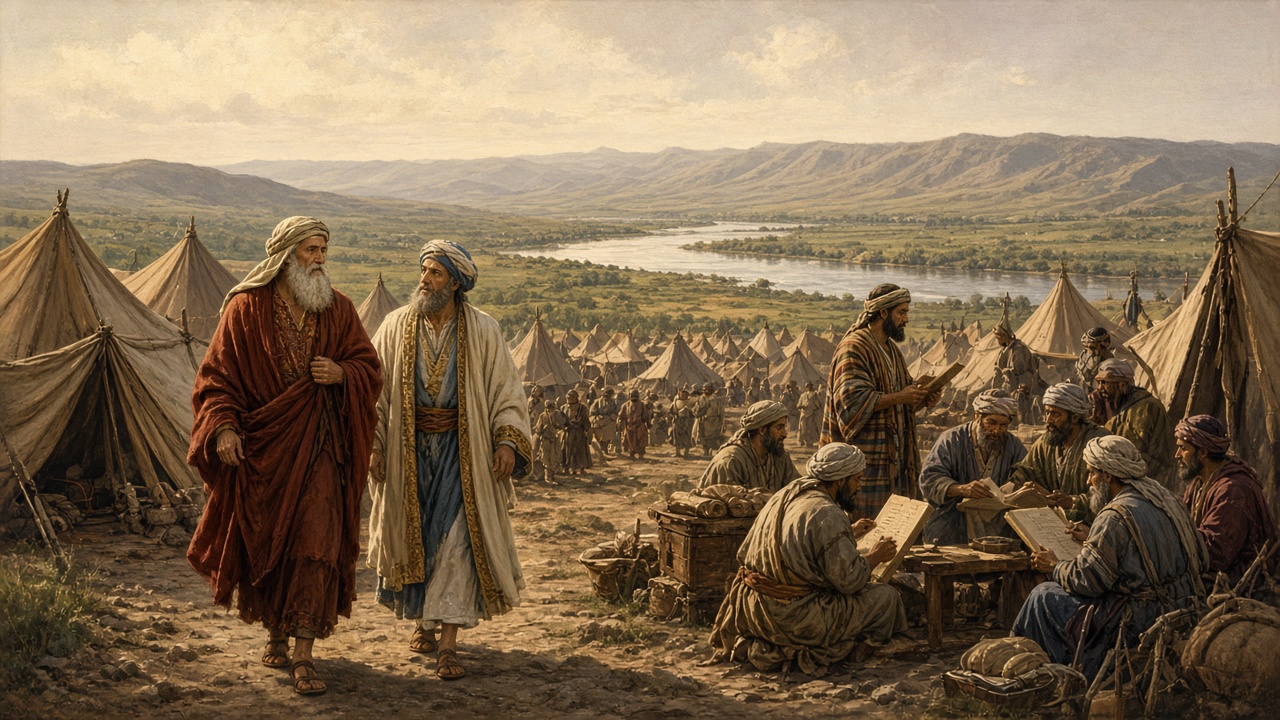
- The narrative begins at Sinai, the mountain district Israel reached in the third month after the Exodus and where they camped for about a year, and follows their route and encampments through the wilderness. It ends on the plains of Moab, east of the Jordan and the Dead Sea, opposite Jericho, their last camp before entering Canaan, the country west of the Jordan. Easton describes those years as a time of wandering in which that generation died in the wilderness, and notes that the people were fewer then than when they left Egypt.Sources: Easton: Numbers, Book of · Sinai · Moab · Canaan
- Easton divides the book into three parts: the census at Sinai and preparations to resume the march, including the Nazirite vow (1–10:10); the journey from Sinai to Moab, the sending of the spies and the report they brought back, and the people’s murmurings, eight times, at the hardships of the way (10:11–21:20); and the events on the plain of Moab before the crossing of the Jordan (21:21–36).Sources: Easton: Numbers, Book of
- While Israel was camped on the plains of Moab, Balak, son of Zippor and king of Moab, fearing them, sent to Pethor in Mesopotamia for Balaam, son of Beor, to curse them; the narrative says Balaam was unable to do so. Numbers 21:14 also cites “the book of the wars of the Lord,” a work that Easton says is uncertain, perhaps a lost writing of Israel or an Amorite record of the victories of their king Sihon.Sources: Easton: Numbers, Book of · Balaam · Balak
Notes written with AI assistance from open sources (Theographic Bible Metadata, CC BY-SA 4.0; Easton’s Bible Dictionary, public domain) and reviewed before publishing.
Organizing the Census of the Israelites
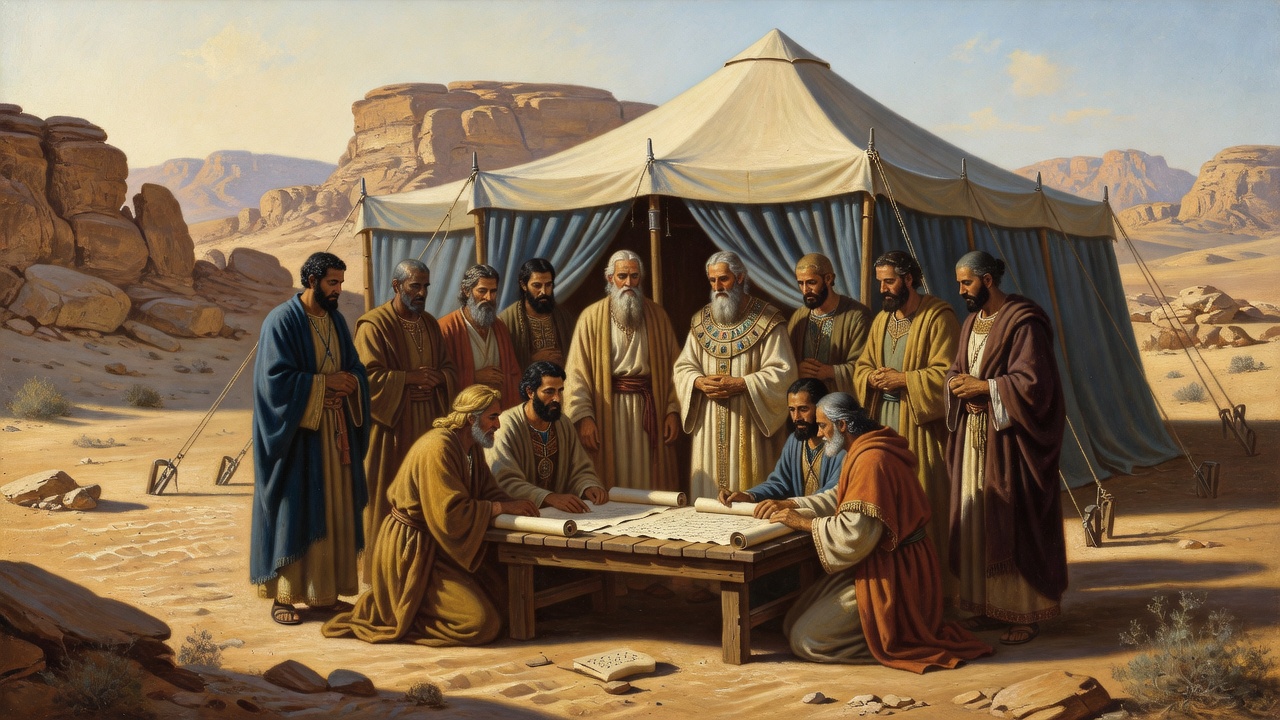
1Now the Lord spoke to Moses in the tent of meeting in the wilderness of Sinai on the first day of the second month of the second year after the Israelites departed from the land of Egypt. He said: 2“Take a census of the entire Israelite community by their clans and families, counting the name of every individual male. 3You and Aaron are to number all in Israel who can serve in the army, those who are twenty years old or older, by their divisions. 4And to help you there is to be a man from each tribe, each man the head of his family. 5Now these are the names of the men who are to help you:
from Reuben, Elizur son of Shedeur;
6from Simeon, Shelumiel son of Zurishaddai;
7from Judah, Nahshon son of Amminadab;
8from Issachar, Nethanel son of Zuar;
9from Zebulun, Eliab son of Helon;
10from the sons of Joseph:
from Ephraim, Elishama son of Ammihud;
from Manasseh, Gamaliel son of Pedahzur;
11from Benjamin, Abidan son of Gideoni;
12from Dan, Ahiezer son of Ammishaddai;
13from Asher, Pagiel son of Ocran;
14from Gad, Eliasaph son of Deuel;
15from Naphtali, Ahira son of Enan.”
The Census of the Tribes
16These were the ones chosen from the community, leaders of their ancestral tribes. They were the heads of the thousands of Israel.
17So Moses and Aaron took these men who had been mentioned specifically by name, 18and they assembled the entire community together on the first day of the second month. Then the people recorded their ancestry by their clans and families, and the men who were twenty years old or older were listed by name individually, 19just as the Lord had commanded Moses. And so he numbered them in the wilderness of Sinai.
20And they were as follows:
The descendants of Reuben, the firstborn son of Israel: According to the records of their clans and families, all the males twenty years old or older who could serve in the army were listed by name individually. 21Those of them who were numbered from the tribe of Reuben were 46,500.
22From the descendants of Simeon: According to the records of their clans and families, all the males numbered of them twenty years old or older who could serve in the army were listed by name individually. 23Those of them who were numbered from the tribe of Simeon were 59,300.
From the descendants of Gad: According to the records of their clans and families, all the males twenty years old or older who could serve in the army were listed by name. 25Those of them who were numbered from the tribe of Gad were 45,650.
26From the descendants of Judah: According to the records of their clans and families, all the males twenty years old or older who could serve in the army were listed by name. 27Those of them who were numbered from the tribe of Judah were 74,600.
28From the descendants of Issachar: According to the records of their clans and families, all the males twenty years old or older who could serve in the army were listed by name. 29Those of them who were numbered from the tribe of Issachar were 54,400.
30From the descendants of Zebulun: According to the records of their clans and families, all the males twenty years old or older who could serve in the army were listed by name. 31Those of them who were numbered from the tribe of Zebulun were 57,400.
32From the sons of Joseph:
From the descendants of Ephraim: According to the records of their clans and families, all the males twenty years old or older who could serve in the army were listed by name. 33Those of them who were numbered from the tribe of Ephraim were 40,500. 34From the descendants of Manasseh: According to the records of their clans and families, all the males twenty years old or older who could serve in the army were listed by name. 35Those of them who were numbered from the tribe of Manasseh were 32,200.
36From the descendants of Benjamin: According to the records of their clans and families, all the males twenty years old or older who could serve in the army were listed by name. 37Those of them who were numbered from the tribe of Benjamin were 35,400.
38From the descendants of Dan: According to the records of their clans and families, all the males twenty years old or older who could serve in the army were listed by name. 39Those of them who were numbered from the tribe of Dan were 62,700.
40From the descendants of Asher: According to the records of their clans and families, all the males twenty years old or older who could serve in the army were listed by name. 41Those of them who were numbered from the tribe of Asher were 41,500.
42From the descendants of Naphtali: According to the records of their clans and families, all the males twenty years old or older who could serve in the army were listed by name. 43Those of them who were numbered from the tribe of Naphtali were 53,400.
44These were the men whom Moses and Aaron numbered along with the twelve leaders of Israel, each of whom was from his own family. 45All the Israelites who were twenty years old or older, who could serve in Israel’s army, were numbered according to their families. 46And all those numbered totaled 603,550.
The Exemption of the Levites
47But the Levites, according to the tribe of their fathers, were not numbered among them. 48The Lord had said to Moses, 49“Only the tribe of Levi you must not number or count with the other Israelites. 50But appoint the Levites over the tabernacle of the testimony, over all its furnishings and over everything in it. They must carry the tabernacle and all its furnishings; and they must attend to it and camp around it. 51Whenever the tabernacle is to move, the Levites must take it down, and whenever the tabernacle is to be reassembled, the Levites must set it up. Any unauthorized person who approaches it must be killed.
52“The Israelites will camp according to their divisions, each man in his camp, and each man by his standard. 53But the Levites must camp around the tabernacle of the testimony, so that the Lord’s anger will not fall on the Israelite community. The Levites are responsible for the care of the tabernacle of the testimony.”
54The Israelites did according to all that the Lord commanded Moses – that is what they did.
Did you know?
The Census in the Wilderness of Sinai
- The census was ordered in the Wilderness of Sinai on the first day of the second month in the second year after the Israelites departed Egypt. It counted every male aged twenty or older who was able to serve in the army, arriving at a total of 603,550 fighting men.Sources: the Bible text itself · Sinai
- Moses and Aaron conducted the registration alongside twelve appointed tribal leaders. Joseph was represented as two distinct tribal divisions named after his sons, Ephraim and Manasseh.Sources: the Bible text itself · Ephraim · Manasseh (son of Joseph)
- The tribe of Levi was entirely exempted from the military count. Instead, the Levites were assigned exclusively to care for, transport, assemble, and guard the tabernacle of the Testimony and its furnishings.Sources: the Bible text itself
Notes written with AI assistance from open sources (Theographic Bible Metadata, CC BY-SA 4.0; Easton’s Bible Dictionary, public domain) and reviewed before publishing.
Places in this chapter
- Egypt · 30.129, 31.308 · verse 1
- Wilderness of Sinai · Today: about 50 km around Jebel Musa · 28.540, 33.973 · verses 1, 19
Only places identified with high confidence are shown (90% or more according to the scholarly sources compiled by OpenBible). Period map: DARE (Digital Atlas of the Roman Empire), CC BY 4.0; modern map: © OpenStreetMap contributors; places: OpenBible.info (CC BY 4.0).
Credits and license for this translation
NET Bible
NET Bible®, New English Translation (NET)
copyright © 1996-2016 Biblical Studies Press, L. L. C.
Please see https://netbible.com/copyright/ for full NET Bible copyright and permissions information. You can also read the NET Bible at http://NETBible.org .
Language: English
Dialect (if applicable): American
Language in English: English
Translation by:
Please see https://netbible.com/copyright/ for full NET Bible copyright and permissions information. You can also read the NET Bible at http://NETBible.org .
The NET Bible (New English Translation) is a completely new translation of the Bible with 58,506 translators’ notes ! It was completed by more than 25 scholars – experts in the original biblical languages – who worked directly from the best currently available Hebrew, Aramaic, and Greek texts. Turn the pages and see the breadth of the translators’ notes, documenting their decisions and choices as they worked.
The translators’ notes make the original languages far more accessible, allowing you to look over the translator’s shoulder at the very process of translation. This level of documentation is a first for a Bible translation, making transparent the textual basis and the rationale for key renderings (including major interpretive options and alternative translations).
This unparalleled level of detail helps connect people to the Bible in the original languages in a way never before possible without years of study of Hebrew, Aramaic, and Greek. It unlocks the riches of the Bible’s truth from entirely new perspectives.
A donation is appreciated. Donate at Bible.org/donations_form so we can continue to provide our material for free for our 16,000+ articles on Bible.org and our world class Bible Study tool at lumina.bible.org .
2026-10-02
Source: http://ebible.org/engnet/ · eBible.org