Leviticus 27
NET Bible · Tap a verse to see its cross-references.
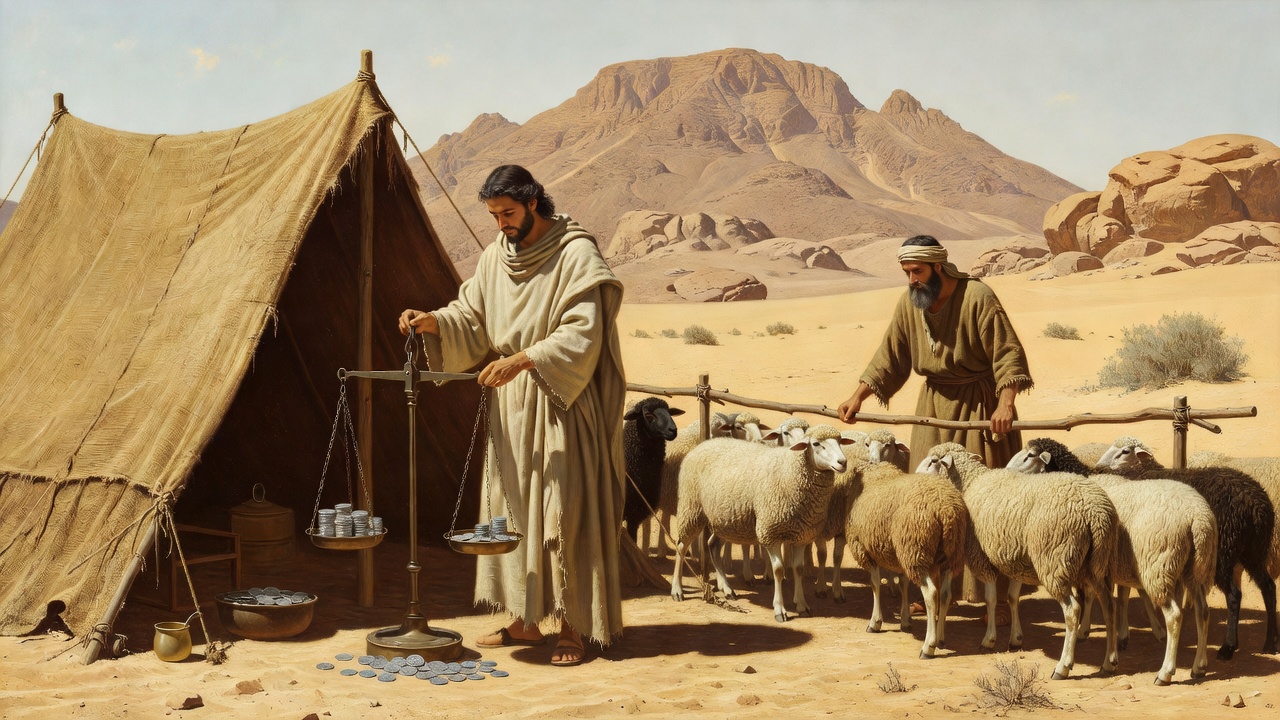
1The Lord spoke to Moses: 2“Speak to the Israelites and tell them, ‘When a man makes a special votive offering based on the conversion value of persons to the Lord, 3the conversion value of the male from twenty years old up to sixty years old is fifty shekels by the standard of the sanctuary shekel. 4If the person is a female, the conversion value is thirty shekels. 5If the person is from five years old up to twenty years old, the conversion value of the male is twenty shekels, and for the female ten shekels. 6If the person is one month old up to five years old, the conversion value of the male is five shekels of silver, and for the female the conversion value is three shekels of silver. 7If the person is from sixty years old and older, if he is a male the conversion value is fifteen shekels, and for the female ten shekels. 8If he is too poor to pay the conversion value, he must stand the person before the priest and the priest will establish his conversion value; according to what the man who made the vow can afford, the priest will establish his conversion value.
Redemption of Vowed Animals
9“‘If what is vowed is a kind of animal from which an offering may be presented to the Lord, anything which he gives to the Lord from this kind of animal will be holy. 10He must not replace or exchange it, good for bad or bad for good, and if he does indeed exchange one animal for another animal, then both the original animal and its substitute will be holy. 11If what is vowed is an unclean animal from which an offering must not be presented to the Lord, then he must stand the animal before the priest, 12and the priest will establish its conversion value, whether good or bad. According to the assessed conversion value of the priest, thus it will be. 13If, however, the person who made the vow redeems the animal, he must add one fifth to its conversion value.
Redemption of Vowed Houses
14“‘If a man consecrates his house as holy to the Lord, the priest will establish its conversion value, whether good or bad. Just as the priest establishes its conversion value, thus it will stand. 15If the one who consecrates it redeems his house, he must add to it one fifth of its conversion value in silver, and it will belong to him.
Redemption of Vowed Fields
16“‘If a man consecrates to the Lord some of his own landed property, the conversion value must be calculated in accordance with the amount of seed needed to sow it, a homer of barley seed being priced at fifty shekels of silver. 17If he consecrates his field in the jubilee year, the conversion value will stand, 18but if he consecrates his field after the jubilee, the priest will calculate the price for him according to the years that are left until the next jubilee year, and it will be deducted from the conversion value. 19If, however, the one who consecrated the field redeems it, he must add to it one fifth of the conversion price and it will belong to him. 20If he does not redeem the field, but sells the field to someone else, he may never redeem it. 21When it reverts in the jubilee, the field will be holy to the Lord like a permanently dedicated field; it will become the priest’s property.
22“‘If he consecrates to the Lord a field he has purchased, which is not part of his own landed property, 23the priest will calculate for him the amount of its conversion value until the jubilee year, and he must pay the conversion value on that jubilee day as something that is holy to the Lord. 24In the jubilee year the field will return to the one from whom he bought it, the one to whom it belongs as landed property. 25Every conversion value must be calculated by the standard of the sanctuary shekel; twenty gerahs to the shekel.
Redemption of the Firstborn
26“‘Surely no man may consecrate a firstborn that already belongs to the Lord as a firstborn among the animals; whether it is an ox or a sheep, it belongs to the Lord. 27If, however, it is among the unclean animals, he may ransom it according to its conversion value and must add one fifth to it, but if it is not redeemed it must be sold according to its conversion value.
Things Permanently Dedicated to the Lord
28“‘Surely anything which a man permanently dedicates to the Lord from all that belongs to him, whether from people, animals, or his landed property, must be neither sold nor redeemed; anything permanently dedicated is most holy to the Lord. 29Any human being who is permanently dedicated must not be ransomed; such a person must be put to death.
Redemption of the Tithe
30“‘Any tithe of the land, from the grain of the land or from the fruit of the trees, belongs to the Lord; it is holy to the Lord. 31If a man redeems part of his tithe, however, he must add one fifth to it. 32All the tithe of herd or flock, everything which passes under the rod, the tenth one will be holy to the Lord. 33The owner must not examine the animals to distinguish between good and bad, and he must not exchange it. If, however, he does exchange it, both the original animal and its substitute will be holy. It must not be redeemed.’”
Final Colophon
34These are the commandments which the Lord commanded Moses to tell the Israelites at Mount Sinai.
Did you know?
Vows, Valuations, and the Sinai Laws
- When Israelites consecrated houses, land, unclean animals, or agricultural tithes to God, they could often redeem them by paying the assessed value plus an additional one-fifth of that price.Sources: the Bible text itself
- Dedicated persons were assigned standard monetary values based on age and sex, calculated using the sanctuary shekel, which was equal to twenty gerahs. If a person making the vow was too poor to pay the fixed amount, the priest set an adjusted price according to their means.Sources: the Bible text itself
- The book of Leviticus concludes by stating that these laws were given to Moses on Mount Sinai, where the Israelites stayed encamped for about a year after the Exodus.Sources: the Bible text itself · Mount Sinai
Notes written with AI assistance from open sources (Theographic Bible Metadata, CC BY-SA 4.0; Easton’s Bible Dictionary, public domain) and reviewed before publishing.
Credits and license for this translation
NET Bible
NET Bible®, New English Translation (NET)
copyright © 1996-2016 Biblical Studies Press, L. L. C.
Please see https://netbible.com/copyright/ for full NET Bible copyright and permissions information. You can also read the NET Bible at http://NETBible.org .
Language: English
Dialect (if applicable): American
Language in English: English
Translation by:
Please see https://netbible.com/copyright/ for full NET Bible copyright and permissions information. You can also read the NET Bible at http://NETBible.org .
The NET Bible (New English Translation) is a completely new translation of the Bible with 58,506 translators’ notes ! It was completed by more than 25 scholars – experts in the original biblical languages – who worked directly from the best currently available Hebrew, Aramaic, and Greek texts. Turn the pages and see the breadth of the translators’ notes, documenting their decisions and choices as they worked.
The translators’ notes make the original languages far more accessible, allowing you to look over the translator’s shoulder at the very process of translation. This level of documentation is a first for a Bible translation, making transparent the textual basis and the rationale for key renderings (including major interpretive options and alternative translations).
This unparalleled level of detail helps connect people to the Bible in the original languages in a way never before possible without years of study of Hebrew, Aramaic, and Greek. It unlocks the riches of the Bible’s truth from entirely new perspectives.
A donation is appreciated. Donate at Bible.org/donations_form so we can continue to provide our material for free for our 16,000+ articles on Bible.org and our world class Bible Study tool at lumina.bible.org .
2026-10-02
Source: http://ebible.org/engnet/ · eBible.org