Ezra 2
NET Bible · Tap a verse to see its cross-references.
The List of Returning Exiles
1These are the people of the province who were going up, from the captives of the exile whom King Nebuchadnezzar of Babylon had forced into exile in Babylon. They returned to Jerusalem and Judah, each to his own city. 2They came with Zerubbabel, Jeshua, Nehemiah, Seraiah, Reelaiah, Mordecai, Bilshan, Mispar, Bigvai, Rehum, and Baanah.
The number of Israelites was as follows:
3the descendants of Parosh: 2,172;
4the descendants of Shephatiah: 372;
5the descendants of Arah: 775;
6the descendants of Pahath-Moab (from the line of Jeshua and Joab): 2,812;
7the descendants of Elam: 1,254;
8the descendants of Zattu: 945;
9the descendants of Zaccai: 760;
10the descendants of Bani: 642;
11the descendants of Bebai: 623;
12the descendants of Azgad: 1,222;
13the descendants of Adonikam: 666;
14the descendants of Bigvai: 2,056;
15the descendants of Adin: 454;
16the descendants of Ater (through Hezekiah): 98;
17the descendants of Bezai: 323;
18the descendants of Jorah: 112;
19the descendants of Hashum: 223;
20the descendants of Gibbar: 95.
21The men of Bethlehem: 123;
22the men of Netophah: 56;
23the men of Anathoth: 128;
24the men of the family of Azmaveth: 42;
25the men of Kiriath Jearim, Kephirah and Beeroth: 743;
26the men of Ramah and Geba: 621;
27the men of Micmash: 122;
28the men of Bethel and Ai: 223;
29the descendants of Nebo: 52;
30the descendants of Magbish: 156;
31the descendants of the other Elam: 1,254;
32the descendants of Harim: 320;
33the men of Lod, Hadid, and Ono: 725;
34the men of Jericho: 345;
35the descendants of Senaah: 3,630.
36The priests: the descendants of Jedaiah (through the family of Jeshua): 973;
37the descendants of Immer: 1,052;
38the descendants of Pashhur: 1,247;
39the descendants of Harim: 1,017.
40The Levites: the descendants of Jeshua and Kadmiel (through the line of Hodaviah): 74.
41The singers: the descendants of Asaph: 128.
42The gatekeepers: the descendants of Shallum, the descendants of Ater, the descendants of Talmon, the descendants of Akkub, the descendants of Hatita, and the descendants of Shobai: 139.
43The temple servants: the descendants of Ziha, the descendants of Hasupha, the descendants of Tabbaoth, 44the descendants of Keros, the descendants of Siaha, the descendants of Padon, 45the descendants of Lebanah, the descendants of Hagabah, the descendants of Akkub, 46the descendants of Hagab, the descendants of Shalmai, the descendants of Hanan, 47the descendants of Giddel, the descendants of Gahar, the descendants of Reaiah, 48the descendants of Rezin, the descendants of Nekoda, the descendants of Gazzam, 49the descendants of Uzzah, the descendants of Paseah, the descendants of Besai, 50the descendants of Asnah, the descendants of Meunim, the descendants of Nephussim, 51the descendants of Bakbuk, the descendants of Hakupha, the descendants of Harhur, 52the descendants of Bazluth, the descendants of Mehida, the descendants of Harsha, 53the descendants of Barkos, the descendants of Sisera, the descendants of Temah, 54the descendants of Neziah, and the descendants of Hatipha.
55The descendants of the servants of Solomon: the descendants of Sotai, the descendants of Hassophereth, the descendants of Peruda, 56the descendants of Jaala, the descendants of Darkon, the descendants of Giddel, 57the descendants of Shephatiah, the descendants of Hattil, the descendants of Pokereth-Hazzebaim, and the descendants of Ami.
58All the temple servants and the descendants of the servants of Solomon: 392.
59These are the ones that came up from Tel Melah, Tel Harsha, Kerub, Addon, and Immer (although they were unable to certify their family connection or their ancestry, as to whether they really were from Israel):
60the descendants of Delaiah, the descendants of Tobiah, and the descendants of Nekoda: 652.
61And from among the priests: the descendants of Hobaiah, the descendants of Hakkoz, and the descendants of Barzillai (who had taken a wife from the daughters of Barzillai the Gileadite and was called by that name). 62They searched for their records in the genealogical materials, but did not find them. They were therefore excluded from the priesthood. 63The governor instructed them not to eat any of the sacred food until there was a priest who could consult the Urim and Thummim.
64The entire group numbered 42,360, 65not counting their male and female servants, who numbered 7,337. They also had 200 male and female singers 66and 736 horses, 245 mules, 67435 camels, and 6,720 donkeys.
Offerings by the Exiles
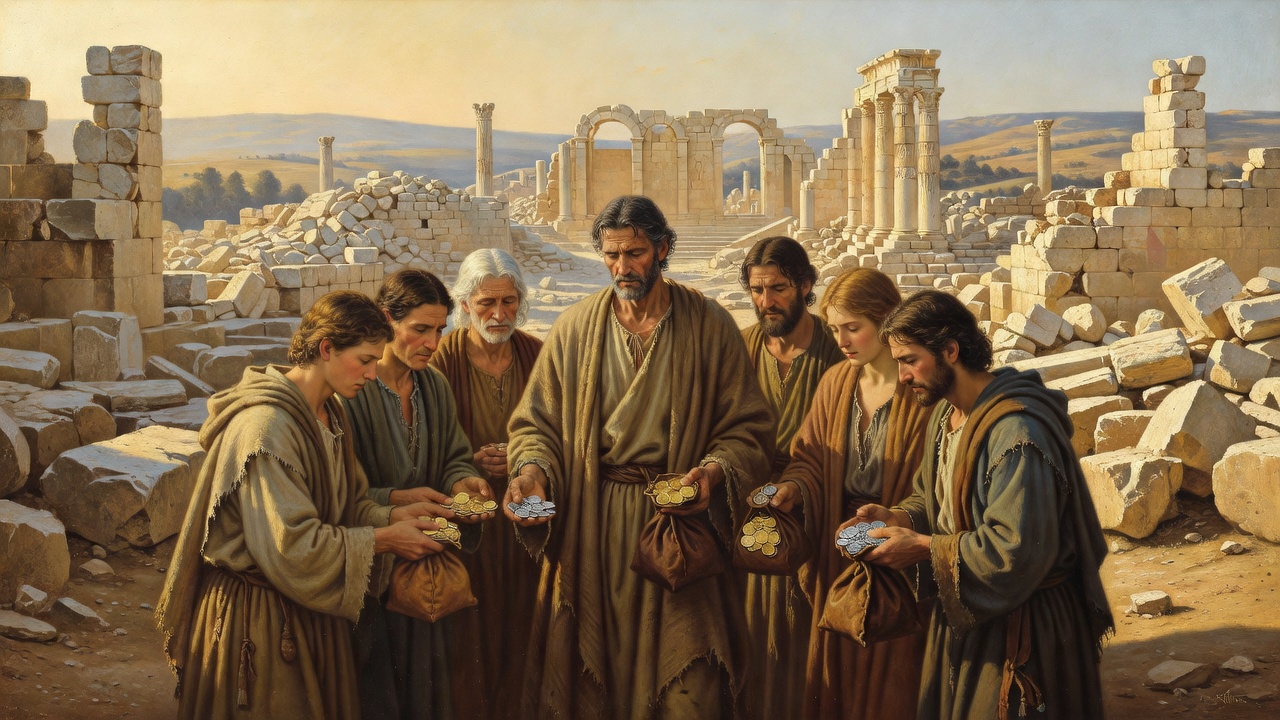
68When they came to the Lord’s temple in Jerusalem, some of the family leaders offered voluntary offerings for the temple of God in order to rebuild it on its site. 69As they were able, they gave to the treasury for this work 61,000 drachmas of gold, 5,000 minas of silver, and 100 priestly robes.
70The priests, the Levites, some of the people, the singers, the gatekeepers, and the temple servants lived in their towns, and all the rest of Israel lived in their towns.
Did you know?
The List of the Returning Exiles
- Under the leadership of figures like Zerubbabel and Jeshua, the first wave of Jewish exiles returned from Babylon to Judah and Jerusalem after their captivity under Nebuchadnezzar. The whole assembly totaled 42,360 people, along with more than 7,000 servants, singers, and their livestock.Sources: the Bible text itself · Zerubbabel · Nebuchadnezzar
- Genealogical records were essential for verifying communal and religious status after the exile. Priests who could not locate their ancestral lineage in the written registers were excluded from priestly duties and forbidden from eating the sacred food until a priest could consult the Urim and Thummim.Sources: the Bible text itself
- Upon reaching the site of the ruined temple in Jerusalem, family leaders presented freewill offerings of gold darics, minas of silver, and priestly robes to fund rebuilding the house of God on its original foundations.Sources: the Bible text itself · Jerusalem
Notes written with AI assistance from open sources (Theographic Bible Metadata, CC BY-SA 4.0; Easton’s Bible Dictionary, public domain) and reviewed before publishing.
Places in this chapter
- Babylon · 32.543, 44.422 · verse 1
- Babylonia · 32.543, 44.422 · verse 1
- Jerusalem · 31.777, 35.234 · verses 1, 68, 70
- Bethlehem · 31.704, 35.208 · verse 21
- Kiriath-jearim · Today: Deir el Azar · 31.809, 35.104 · verse 25
- Lod · 31.950, 34.900 · verse 33
- Jericho · Today: Tell es Sultan · 31.872, 35.445 · verse 34
- Immer · Today: in Babylonia · 32.543, 44.422 · verse 59
- Gilead · Today: Gilead 1 · 32.187, 35.692 · verse 61
Only places identified with high confidence are shown (90% or more according to the scholarly sources compiled by OpenBible). Period map: DARE (Digital Atlas of the Roman Empire), CC BY 4.0; modern map: © OpenStreetMap contributors; places: OpenBible.info (CC BY 4.0).
Credits and license for this translation
NET Bible
NET Bible®, New English Translation (NET)
copyright © 1996-2016 Biblical Studies Press, L. L. C.
Please see https://netbible.com/copyright/ for full NET Bible copyright and permissions information. You can also read the NET Bible at http://NETBible.org .
Language: English
Dialect (if applicable): American
Language in English: English
Translation by:
Please see https://netbible.com/copyright/ for full NET Bible copyright and permissions information. You can also read the NET Bible at http://NETBible.org .
The NET Bible (New English Translation) is a completely new translation of the Bible with 58,506 translators’ notes ! It was completed by more than 25 scholars – experts in the original biblical languages – who worked directly from the best currently available Hebrew, Aramaic, and Greek texts. Turn the pages and see the breadth of the translators’ notes, documenting their decisions and choices as they worked.
The translators’ notes make the original languages far more accessible, allowing you to look over the translator’s shoulder at the very process of translation. This level of documentation is a first for a Bible translation, making transparent the textual basis and the rationale for key renderings (including major interpretive options and alternative translations).
This unparalleled level of detail helps connect people to the Bible in the original languages in a way never before possible without years of study of Hebrew, Aramaic, and Greek. It unlocks the riches of the Bible’s truth from entirely new perspectives.
A donation is appreciated. Donate at Bible.org/donations_form so we can continue to provide our material for free for our 16,000+ articles on Bible.org and our world class Bible Study tool at lumina.bible.org .
2026-10-02
Section headings adapted from the Berean Standard Bible (public domain); they are not part of this translation’s text.
Source: http://ebible.org/engnet/ · eBible.org