Proverbs 29
Updated Brenton English Septuagint · Tap a verse to see its cross-references.
The Flourishing of the Righteous
1A reprover is better than a stiff-necked man:
For when the latter is suddenly set on fire, there shall be no remedy.
2When the righteous are praised, the people will rejoice:
But when the ungodly rule, men mourn.
3When a man loves wisdom, his father rejoices:
But he that keeps harlots will waste wealth.
4A righteous king establishes a country:
But a transgressor destroys it.
5He that prepares a net in the way of his own friend,
Entangles his own feet in it.
6A great snare is spread for a sinner:
But the righteous shall be in joy and gladness.
7A righteous man knows how to judge for the poor:
But the ungodly understands not knowledge;
And the poor man has not an understanding mind.
8Lawless men burn down a city:
But wise men turn away wrath.
9A wise man shall judge nations:
But a worthless man being angry laughs and fears not.
10Bloody men hate a holy person,
But the upright will seek his soul.
11A fool utters all his mind:
But the wise reserves his in part.
12When a king hearkens to unjust language,
All his subjects are transgressors.
13When the creditor and debtor meet together,
The Lord oversees them both.
14When a king judges the poor in truth,
His throne shall be established for a testimony.
15Stripes and reproofs give wisdom:
But an erring child disgraces his parents.
16When the ungodly abound, sins abound:
But when they fall, the righteous are warned.
17Chasten thy son, and he shall give thee rest;
And he shall give honor to thy soul.
18There shall be no interpreter to a sinful nation:
But he that observes the law is blessed.
19A stubborn servant will not be reproved by words:
For even if he understand, still he will not obey.
20If thou see a man hasty in his words,
Know that the fool has hope rather than he.
21He that lives wantonly from a child, shall be a servant,
And in the end shall grieve over himself.
22A furious man stirs up strife,
And a passionate man digs up sin.
23Pride brings a man low,
But the Lord upholds the humble minded with honor.
24He that shares with a thief, hates his own soul:
And if any having heard an oath uttered tell not of it,
25They fearing and reverencing men unreasonably have been overthrown,
But he that trusts in the Lord shall rejoice.
Ungodliness causes a man to stumble:
But he that trusts in his master shall be safe.
26Many wait on the favor of rulers;
But justice comes to a man from the Lord.
27A righteous man is an abomination to an unrighteous man,
And the direct way is an abomination to the sinner.
Did you know?
Justice, Governance, and Self-Restraint
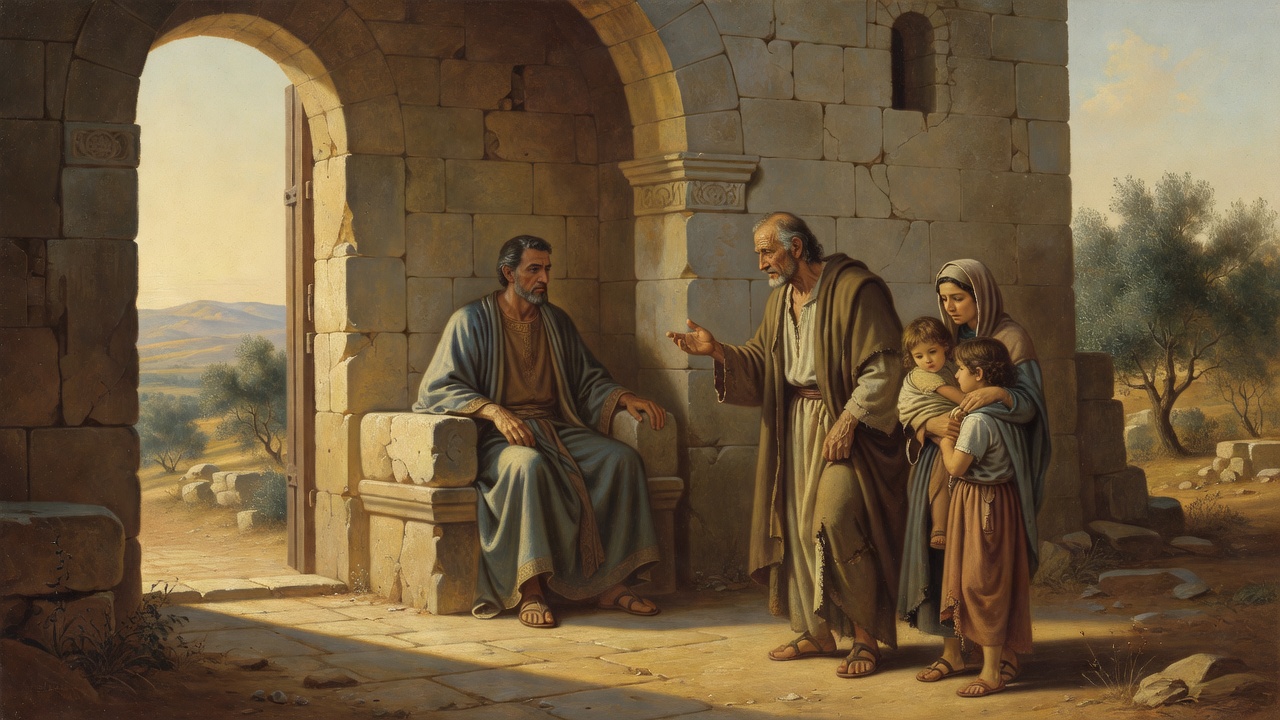
- Proverbs 29 repeatedly links a society's well-being to righteous governance, noting that the people rejoice when the righteous rule but groan under wicked leaders. A king who judges the poor with equity and maintains justice stabilizes the land, while rulers who heed falsehoods corrupt their officials.Sources: the Bible text itself
- The chapter highlights the importance of moral guidance and discipline, observing that without a vision or revelation, people cast off restraint, whereas keeping the Law brings blessing. This principle of instruction and correction is also applied directly to the household and the raising of children.Sources: the Bible text itself
- Self-control in speech and emotion is a central theme: while a fool vents all his rage and speaks in haste, a wise person holds back anger. The text warns that pride brings a person low, but a humble spirit attains honor.Sources: the Bible text itself
Notes written with AI assistance from open sources (Theographic Bible Metadata, CC BY-SA 4.0; Easton’s Bible Dictionary, public domain) and reviewed before publishing.
Credits and license for this translation
Updated Brenton English Septuagint
Spelling and formatting update of the Brenton English Septuagint with Apocrypha
Public Domain
Language: English
Dialect: Mixed
Translation by: Sir Lancelot C. L. Brenton
Contributor: Adam Boyd
Original work was by Sir Lancelot C. L. Brenton in 1851.
CC0 Public Domain dedication on language updates by Adam Boyd in 2020.
2026-02-18
Section headings adapted from the Berean Standard Bible (public domain); they are not part of this translation’s text.
Source: http://ebible.org/englxxup/ · eBible.org