Proverbs 28
Updated Brenton English Septuagint · Tap a verse to see its cross-references.
The Boldness of the Righteous
1The ungodly man flees when no one pursues:
But the righteous is confident as a lion.
2By reason of the sins of ungodly men quarrels arise;
But a wise man will quell them.
3A bold man oppresses the poor by ungodly deeds.
As an impetuous and unprofitable rain,
4So they that forsake the law praise ungodliness;
But they that love the law fortify themselves with a wall.
5Evil men will not understand judgment:
But they that seek the Lord will understand everything.
6A poor man walking in truth is better than a rich liar.
7A wise son keeps the law:
But he that keeps up debauchery dishonors his father.
8He that increases his wealth by usuries and unjust gains,
Gathers it for him that pities the poor.
9He that turns away his ear from hearing the law,
Even he has made his prayer abominable.
10He that causes upright men to err in an evil way,
Himself shall fall into destruction:
Transgressors also shall pass by prosperity,
But shall not enter into it.
11A rich man is wise in his own conceit;
But an intelligent poor man will condemn him.
12By reason of the help of righteous men great glory arises:
But in the places of the ungodly men are caught.
13He that covers his own ungodliness shall not prosper:
But he that blames himself shall be loved.
14Blessed is the man who religiously fears always:
But the hard of heart shall fall into mischiefs.
15A hungry lion and a thirsty wolf is he,
Who, being poor, rules over a poor nation.
16A king in need of revenues is a great oppressor:
But he that hates injustice shall live a long time.
17He that becomes surety for a man charged with murder
Shall be an exile, and not in safety.
17Chasten thy son, and he shall love thee,
And give honor to thy soul:
He shall not obey a sinful nation.
18He that walks justly is assisted:
But he that walks in crooked ways shall be entangled therein.
19He that tills his own land shall be satisfied with bread:
But he that follows idleness shall have plenty of poverty.
20A man worthy of credit shall be much blessed:
But the wicked shall not be unpunished.
21He that reverences not the persons of the just is not good:
Such a one will sell a man for a morsel of bread.
22An envious man makes haste to be rich,
And knows not that the merciful man will have the mastery over him.
23He that reproves a man’s ways
Shall have more favor than he that flatters with the tongue.
24He that casts off father or mother, and thinks he sins not;
The same is partaker with an ungodly man.
25An unbelieving man judges rashly:
But he that trusts in the Lord will act carefully.
26He that trusts to a bold heart, such a one is a fool:
But he that walks in wisdom shall be safe.
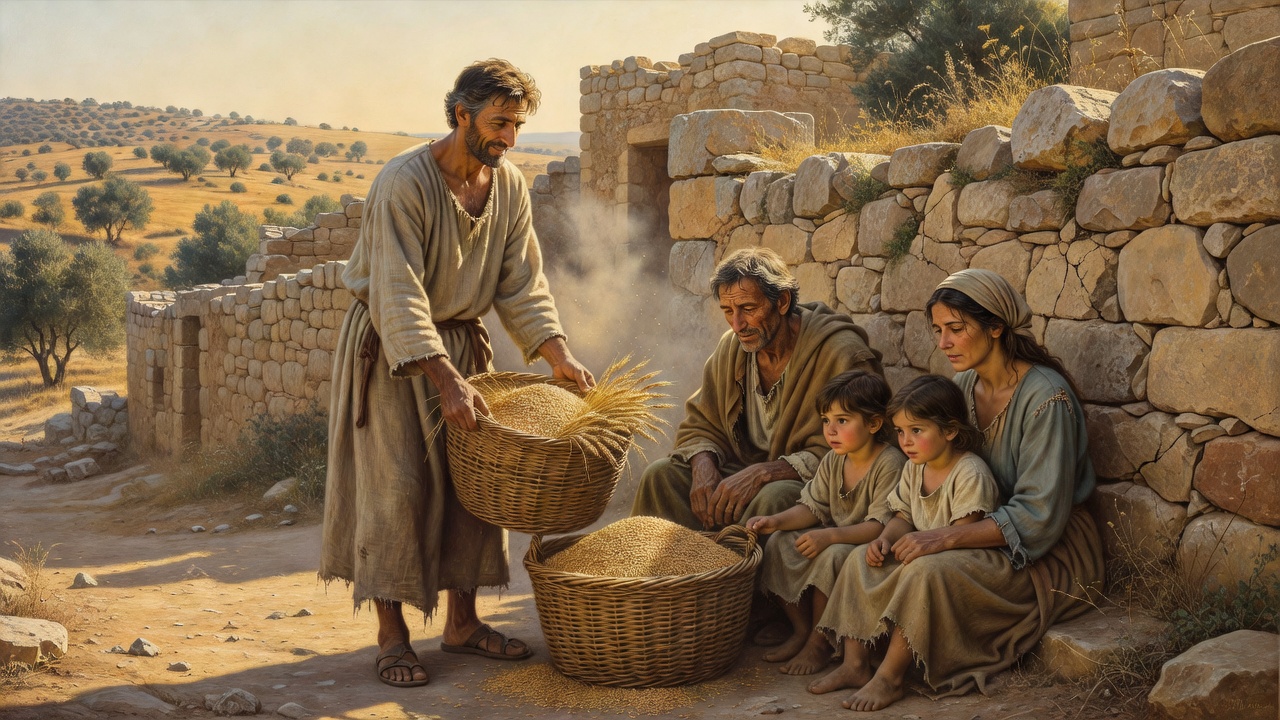
27He that gives to the poor shall not be in want:
But he that turns away his eye from him shall be in great distress.
28In the places of ungodly men the righteous mourn:
But in their destruction the righteous shall be multiplied.
Did you know?
Justice, Leadership, and Integrity
- Proverbs 28 connects good governance with societal stability, noting that political rebellion multiplies rulers while a person of understanding maintains order. It compares an oppressive, unprincipled ruler over helpless subjects to predatory beasts like a roaring lion or a charging bear.Sources: the Bible text itself
- The chapter highlights the vital link between obedience to the law and spiritual life, warning that turning away from the law makes even one's prayers detestable. In contrast, those who keep the law actively resist wrongdoing and preserve moral discernment.Sources: the Bible text itself
- Several proverbs address economic justice, stating that wealth amassed through exorbitant interest or usury will ultimately pass to someone who shows kindness to the poor. Diligent labor on the land is praised over the pursuit of get-rich-quick fantasies.Sources: the Bible text itself
Notes written with AI assistance from open sources (Theographic Bible Metadata, CC BY-SA 4.0; Easton’s Bible Dictionary, public domain) and reviewed before publishing.
Credits and license for this translation
Updated Brenton English Septuagint
Spelling and formatting update of the Brenton English Septuagint with Apocrypha
Public Domain
Language: English
Dialect: Mixed
Translation by: Sir Lancelot C. L. Brenton
Contributor: Adam Boyd
Original work was by Sir Lancelot C. L. Brenton in 1851.
CC0 Public Domain dedication on language updates by Adam Boyd in 2020.
2026-02-18
Section headings adapted from the Berean Standard Bible (public domain); they are not part of this translation’s text.
Source: http://ebible.org/englxxup/ · eBible.org