Obadiah 1
Berean Standard Bible · Tap a verse to see its cross-references.
About this book
About Obadiah
- The book bears the name Obadiah; the sources here give no further account of the prophet. Easton's Bible Dictionary (1897) dates the prophecies to the year, or about the year, when Jerusalem was taken and destroyed by the Babylonians under Nebuchadnezzar, which it places in 586 B.C., because Obadiah 1:11-14 speaks of that capture as already past.Sources: Obadiah · Easton: Obadiah, Book of
- Easton understands the prophet as seeing the calamity already come upon Jerusalem, and the Edomites as joining the Chaldeans in Israel's degradation and ruin. He notes that the texts do not actually record such participation, though he thinks it probable, and he distinguishes this fall from three earlier captures of the city: by Shishak in the reign of Rehoboam, by the Philistines and Arabians in the reign of Jehoram, and by Joash, king of Israel, in the reign of Amaziah.Sources: Easton: Obadiah, Book of
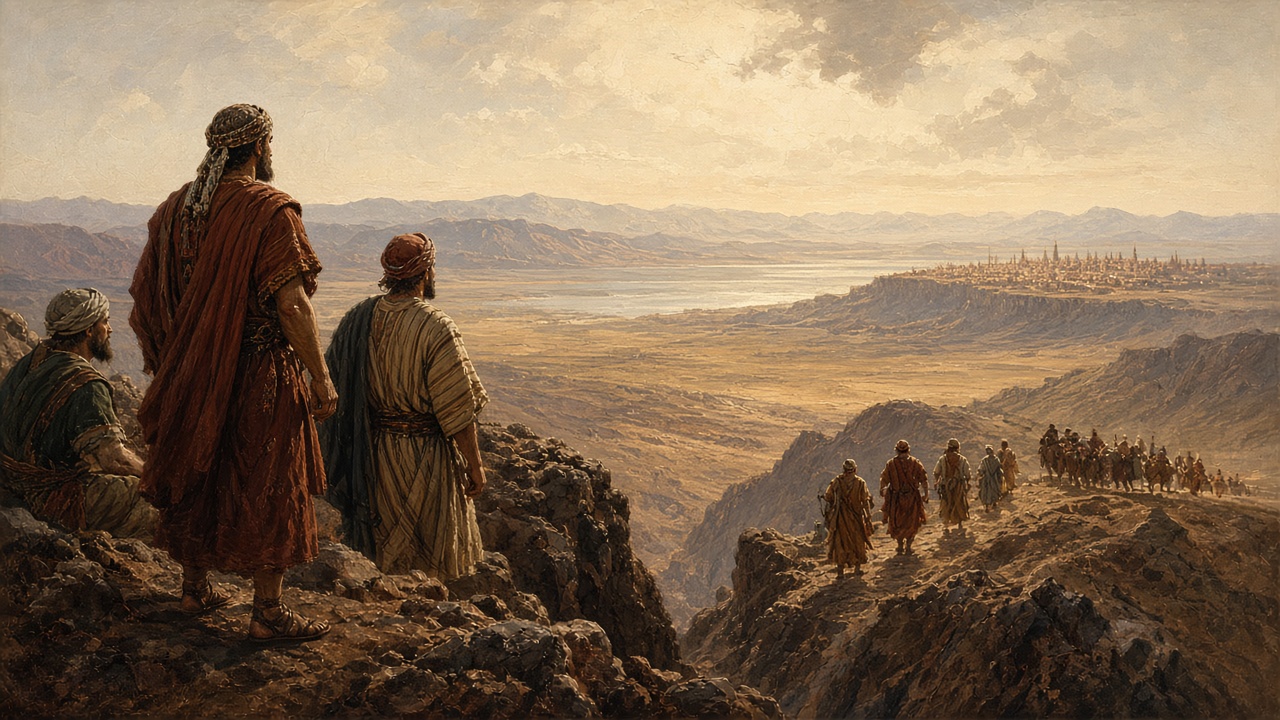
- Edom, also called Idumea, was mountainous country, the rough hills of Seir east of the Arabah, extending from the head of the Gulf of Akabah to the foot of the Dead Sea: a wild region crossed by fruitful valleys, with Bozrah as its old capital and, among its cities, the rock-hewn Sela, generally known by the Greek name Petra. The name Edom, meaning red, was also given to Esau, Rebekah's firstborn twin, from the red lentil stew for which he sold his birthright, and that account says the circumstances of his birth foreshadowed the later enmity between the twin brothers and the nations they founded.Sources: Edom · Esau (Edom)
- The book consists of one chapter, the shortest in the Old Testament, and Easton describes it as concerning Edom: impending doom in 1:1-16, and the restoration of Israel in 1:17-21. He also presents Edom as a type of Israel's and of God's last foe; such foes, he says, will finally all be vanquished, and the kingdom will be the Lord's.Sources: Easton: Obadiah, Book of
- Teman, a place in southern Idumea, the land of the sons of the east, was noted for the wisdom of its inhabitants. Obadiah 1:8 is among the passages that mention it, and the low plain of the Arabah divided it from the hills of Paran.Sources: Teman
Notes written with AI assistance from open sources (Theographic Bible Metadata, CC BY-SA 4.0; Easton’s Bible Dictionary, public domain) and reviewed before publishing.
The Destruction of Edom
1This is the vision of Obadiah:
This is what the Lord GOD says about Edom—
We have heard a message from the LORD;
an envoy has been sent among the nations
to say, “Rise up,
and let us go to battle against her!”—
2“Behold, I will make you small among the nations;
you will be deeply despised.
3The pride of your heart has deceived you,
O dwellers in the clefts of the rocks
whose habitation is the heights,
who say in your heart,
‘Who can bring me down to the ground?’
4Though you soar like the eagle
and make your nest among the stars,
even from there I will bring you down,”
declares the LORD.
5“If thieves came to you,
if robbers by night—
oh, how you will be ruined—
would they not steal only what they wanted?
If grape gatherers came to you,
would they not leave some gleanings?
6But how Esau will be pillaged,
his hidden treasures sought out!
7All the men allied with you
will drive you to the border;
the men at peace with you
will deceive and overpower you.
Those who eat your bread
will set a trap for you
without your awareness of it.
8In that day, declares the LORD,
will I not destroy the wise men of Edom
and the men of understanding
in the mountains of Esau?
9Then your mighty men, O Teman,
will be terrified,
so that everyone in the mountains of Esau
will be cut down in the slaughter.
10Because of the violence against your brother Jacob,
you will be covered with shame
and cut off forever.
11On the day you stood aloof
while strangers carried off his wealth
and foreigners entered his gate
and cast lots for Jerusalem,
you were just like one of them.
12But you should not gloat in that day,
your brother’s day of misfortune,
nor rejoice over the people of Judah
in the day of their destruction,
nor boast proudly
in the day of their distress.
13You should not enter the gate of My people
in the day of their disaster,
nor gloat over their affliction
in the day of their disaster,
nor loot their wealth
in the day of their disaster.
14Nor should you stand at the crossroads
to cut off their fugitives,
nor deliver up their survivors
in the day of their distress.
The Deliverance of Israel
15For the Day of the LORD is near
for all the nations.
As you have done, it will be done to you;
your recompense will return upon your own head.
16For as you drank on My holy mountain,
so all the nations will drink continually.
They will drink and gulp it down;
they will be as if they had never existed.
17But on Mount Zion there will be deliverance,
and it will be holy,
and the house of Jacob
will reclaim their possession.
18Then the house of Jacob will be a blazing fire,
and the house of Joseph a burning flame;
but the house of Esau will be stubble—
Jacob will set it ablaze and consume it.
Therefore no survivor will remain
from the house of Esau.”
For the LORD has spoken.
19Those from the Negev will possess the mountains of Esau;
those from the foothills will possess the land of the Philistines.
They will occupy the fields of Ephraim and Samaria,
and Benjamin will possess Gilead.
20And the exiles of this host of the Israelites
will possess the land of the Canaanites as far as Zarephath;
and the exiles from Jerusalem who are in Sepharad
will possess the cities of the Negev.
21The deliverers will ascend Mount Zion
to rule over the mountains of Esau.
And the kingdom will belong to the LORD.
Did you know?
Judgment on Edom
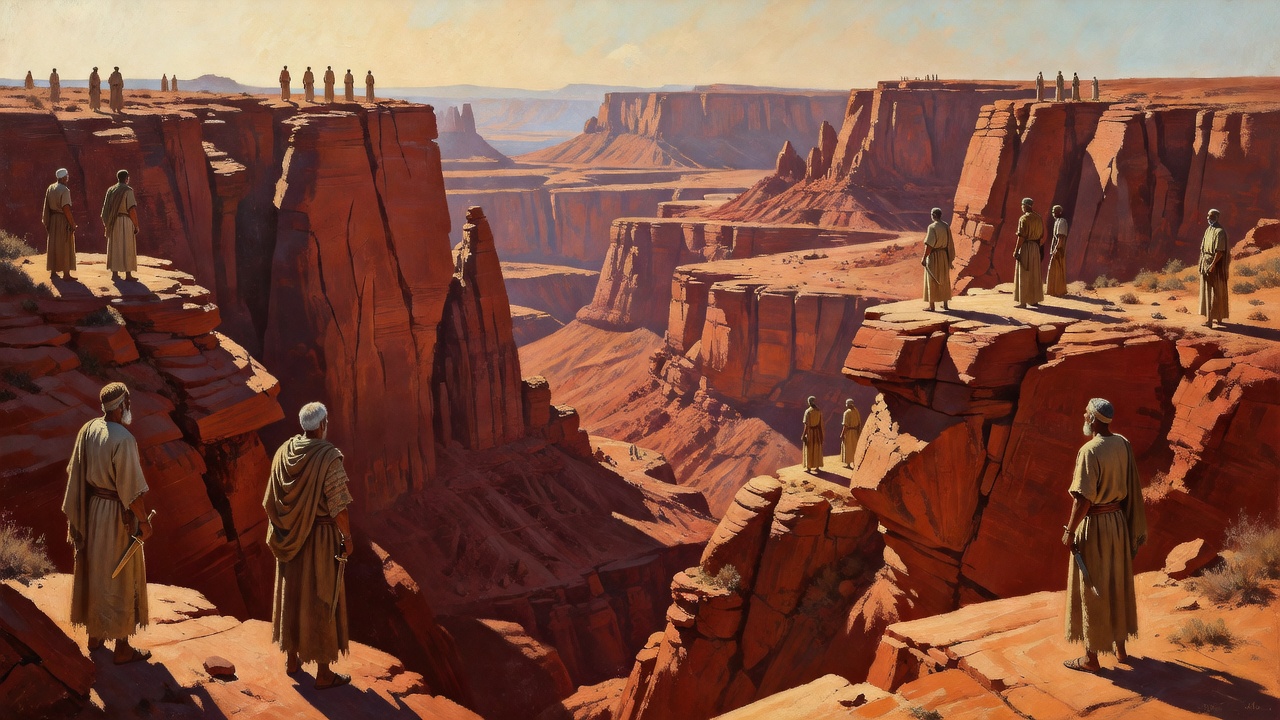
- The prophecy against Edom highlights its rugged, mountainous terrain east of the Arabah. Living among high sandstone cliffs and rock clefts, the Edomites considered their mountain strongholds impregnable, a sense of security the prophet condemned as prideful self-deception.Sources: Edom · the Bible text itself
- The conflict between Edom and Israel was framed as a family betrayal, because the two nations traced their ancestry to the twin brothers Esau and Jacob. Obadiah specifically condemns Edom for gloating over Jerusalem's fall, looting its wealth, and capturing fleeing Israelites at crossroads.Sources: Esau (Edom) · Jacob (Israel) · the Bible text itself
- Teman, a prominent region in southern Edom, was renowned throughout the ancient Near East for its sages and counselors. The prophecy announces that even this famed wisdom and military might would fail to save Edom in the day of its judgment.Sources: Teman · the Bible text itself
Notes written with AI assistance from open sources (Theographic Bible Metadata, CC BY-SA 4.0; Easton’s Bible Dictionary, public domain) and reviewed before publishing.
Places in this chapter
- Edom · 30.746, 35.604 · verses 1, 2, 6, 8, 18
- Mount Esau · Today: region around Jebel esh Shera · 30.184, 35.317 · verses 8, 9, 19, 21
- Jerusalem · 31.777, 35.234 · verses 11, 20, 21
- Mount Zion · 31.772, 35.229 · verses 17, 21
- Gilead · Today: Gilead 1 · 32.187, 35.692 · verse 19
- Negeb · 31.245, 34.841 · verses 19, 20
- Philistia · 31.664, 34.546 · verse 19
- Samaria · 32.276, 35.195 · verse 19
- Shephelah · 31.692, 34.875 · verse 19
- Canaan · 32.767, 35.333 · verse 20
- Zarephath · Today: Sarepta · 33.464, 35.295 · verse 20
Only places identified with high confidence are shown (90% or more according to the scholarly sources compiled by OpenBible). Period map: DARE (Digital Atlas of the Roman Empire), CC BY 4.0; modern map: © OpenStreetMap contributors; places: OpenBible.info (CC BY 4.0).
Credits and license for this translation
Berean Standard Bible
The Holy Bible in English: Berean Standard Bible
Public Domain
Language: English
Contributor: BSB Publishing, LLC
2026-10-02
Source: http://ebible.org/engbsb/ · eBible.org