Nahum 1
Berean Standard Bible · Tap a verse to see its cross-references.
About this book
About Nahum
- Easton's Bible Dictionary presents this book as the prophecy of Nahum. His birthplace is Elkosh (Nahum 1:1); the article on Elkosh says it was probably in Galilee, though nothing definite is known of it.Sources: Easton: Nahum, Book of · Elkosh
- The date is disputed. Easton's Bible Dictionary (1897) reports that some place Nahum's prophecy at the beginning of Ahaz's reign (743 B.C.), while others refer it to the latter half of Hezekiah's reign (about 709 B.C.). Easton calls the later view more probable on internal evidence and thinks the book was probably written in Jerusalem soon after 709 B.C., after Nahum had witnessed Sennacherib's invasion and the destruction of his army.Sources: Easton: Nahum, Book of
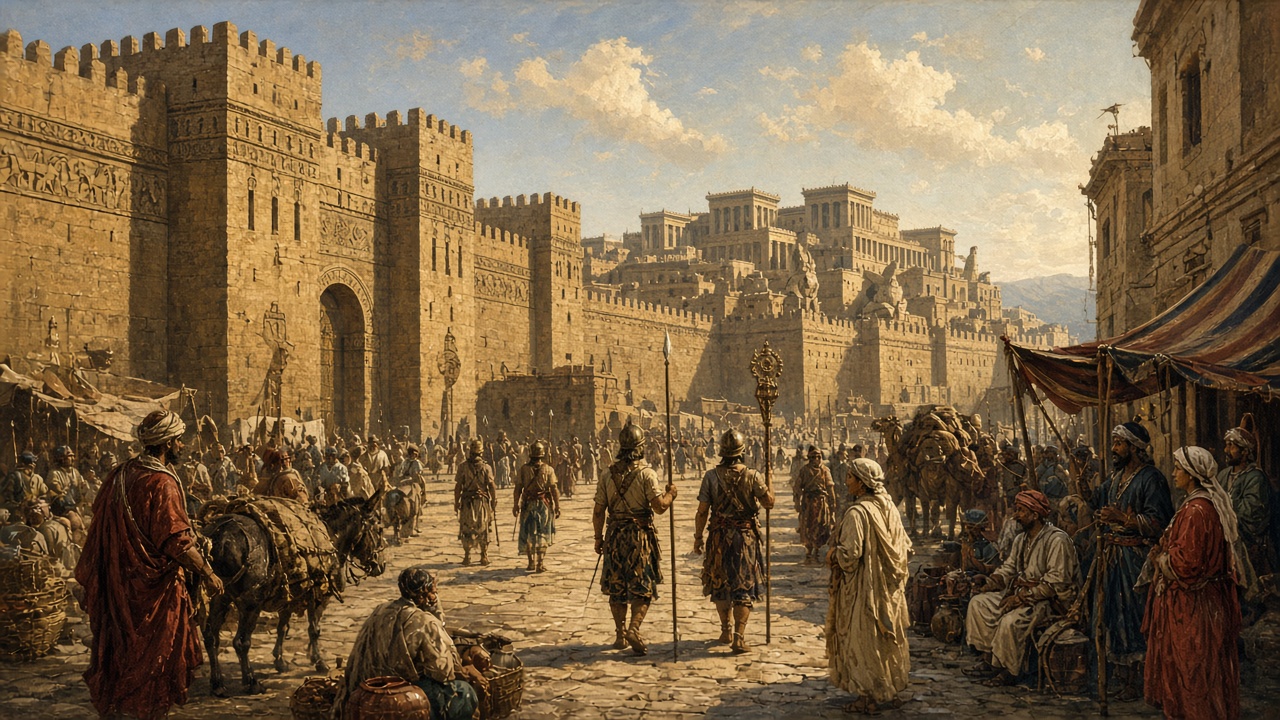
- Nineveh is first mentioned in Genesis 10:11, which the Revised Version renders as Nimrod going into Assyria and building the city; it is not noticed again until Jonah, when it was a great and populous capital. Describing the prophecy's setting, Easton says Assur-bani-pal was at the height of his glory, and that vast, strongly fortified Nineveh, a center of the world's civilization and commerce, was to be utterly destroyed for its inhabitants' wickedness.Sources: Nineveh · Easton: Nahum, Book of
- Easton quotes Nahum 3:1, which calls Nineveh a "bloody city all full of lies and robbery," for it had plundered the neighboring nations. The article on Nineveh says the book is almost exclusively prophetic denunciation of the city, foretelling its ruin and utter desolation. Jonah had already delivered a warning, and Nahum was followed by Zephaniah, who also predicted the city's destruction.Sources: Easton: Nahum, Book of · Nineveh
- Easton's Bible Dictionary (1897) dates Nineveh's fall to 625 B.C., when the city was destroyed apparently by fire and the Assyrian empire came to an end, an event the dictionary says changed the face of Asia.Sources: Easton: Nahum, Book of
Notes written with AI assistance from open sources (Theographic Bible Metadata, CC BY-SA 4.0; Easton’s Bible Dictionary, public domain) and reviewed before publishing.
The Burden against Nineveh
1This is the burden against Nineveh, the book of the vision of Nahum the Elkoshite:
2The LORD is a jealous and avenging God;
the LORD is avenging and full of wrath.
The LORD takes vengeance on His foes
and reserves wrath for His enemies.
3The LORD is slow to anger
and great in power;
the LORD will by no means
leave the guilty unpunished.
His path is in the whirlwind and storm,
and clouds are the dust beneath His feet.
4He rebukes the sea and dries it up;
He makes all the rivers run dry.
Bashan and Carmel wither,
and the flower of Lebanon wilts.
5The mountains quake before Him,
and the hills melt away;
the earth trembles at His presence—
the world and all its dwellers.
6Who can withstand His indignation?
Who can endure His burning anger?
His wrath is poured out like fire;
even rocks are shattered before Him.
7The LORD is good,
a stronghold in the day of distress;
He cares for those who trust in Him.
8But with an overwhelming flood
He will make an end of Nineveh
and pursue His enemies into darkness.
9Whatever you plot against the LORD,
He will bring to an end.
Affliction will not rise up
a second time.
10For they will be entangled as with thorns
and consumed like the drink of a drunkard—
like stubble that is fully dry.
11From you, O Nineveh, comes forth
a plotter of evil against the LORD,
a counselor of wickedness.
12This is what the LORD says:
“Though they are allied and numerous,
yet they will be cut down and pass away.
Though I have afflicted you, O Judah,
I will afflict you no longer.
13For I will now break their yoke from your neck
and tear away your shackles.”
14The LORD has issued a command concerning you, O Nineveh:
“There will be no descendants
to carry on your name.
I will cut off the carved image and cast idol
from the house of your gods;
I will prepare your grave,
for you are contemptible.”
15Look to the mountains—
the feet of one who brings good news,
who proclaims peace!
Celebrate your feasts, O Judah;
fulfill your vows.
For the wicked will never again march through you;
they will be utterly cut off.
Did you know?
Divine Judgment and Nineveh's Fall
- Nahum is introduced as an Elkoshite, referencing his birthplace of Elkosh. Although it was probably situated in Galilee, no definitive location has been identified.Sources: Elkosh · the Bible text itself
- The chapter opens as an oracle against Nineveh, the flourishing capital of the Assyrian Empire. Nahum foretells the complete ruin of the city and its idols, announcing that God will shatter Assyria's oppressive yoke over Judah.Sources: Nineveh · the Bible text itself
- To portray divine majesty and authority over nature, the text describes the withering of Bashan, Carmel, and the lofty heights of Lebanon—regions celebrated in the ancient world for their lush vegetation and fertility.Sources: Bashan · Carmel · Lebanon · the Bible text itself
Notes written with AI assistance from open sources (Theographic Bible Metadata, CC BY-SA 4.0; Easton’s Bible Dictionary, public domain) and reviewed before publishing.
Places in this chapter
- Nineveh · 36.359, 43.153 · verses 1, 8, 11, 14
- Bashan · 32.781, 35.935 · verse 4
- Lebanon · 33.540, 35.584 · verse 4
- Mount Carmel · 32.672, 35.023 · verse 4
- Assyria · 36.359, 43.153 · verse 13
Only places identified with high confidence are shown (90% or more according to the scholarly sources compiled by OpenBible). Period map: DARE (Digital Atlas of the Roman Empire), CC BY 4.0; modern map: © OpenStreetMap contributors; places: OpenBible.info (CC BY 4.0).
Credits and license for this translation
Berean Standard Bible
The Holy Bible in English: Berean Standard Bible
Public Domain
Language: English
Contributor: BSB Publishing, LLC
2026-10-02
Source: http://ebible.org/engbsb/ · eBible.org