Micah 1
Berean Standard Bible · Tap a verse to see its cross-references.
About this book
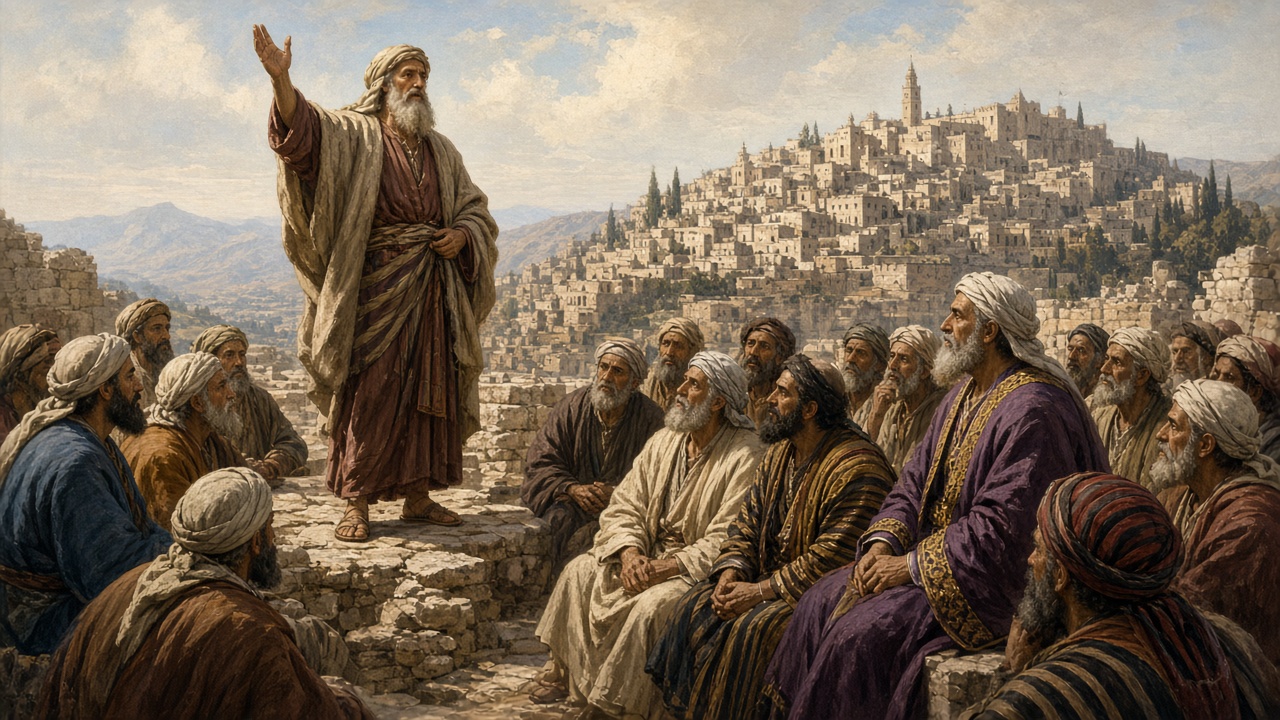
About Micah
- According to the superscription, as Easton's Bible Dictionary (1897) records it, Micah exercised his office in the reigns of Jotham, Ahaz, and Hezekiah. Easton offers two ways of reckoning that ministry: from the beginning of Jotham's reign to the end of Hezekiah's (B.C. 759-698), about fifty-nine years, or from Jotham's death to Hezekiah's accession (B.C. 743-726), only sixteen years.Sources: Easton: Micah, Book of
- Easton's entry on Micah calls him the Morasthite, to distinguish him from Micaiah the son of Imlah. It describes him as a prophet of Judah, a contemporary of Isaiah, and a native of Moresheth of Gath, and notes that very little is known of the circumstances of his life.Sources: Micah
- The kings named in the superscription ruled Judah in succession. Easton says that Jotham, son of Uzziah, reigned in the fear of God and prospered; that Ahaz turned to idolatry and appealed to Tiglath-pileser of Assyria against Rezin of Damascus and Pekah of Israel; and that Hezekiah, Ahaz's son, carried out a reformation to abolish idolatry in Judah, including worship of the bronze serpent.Sources: Jotham · Ahaz · Hezekiah
- Easton's Bible Dictionary (1897) places the book sixth among the so-called minor prophets and describes three sections, each opening with a rebuke, "Hear ye," and closing with a promise: chapters 1-2; chapters 3-5, addressed especially to the princes and heads of the people; and chapters 6-7, in which Jehovah is represented as holding a controversy with his people. The whole concludes with a song of triumph over the great deliverance the Lord will achieve for his people.Sources: Easton: Micah, Book of
- Easton notes that the book opens with words also spoken by Micaiah the son of Imlah: "Hearken, O people, every one of you." He records that the prediction in Micah 5:2 about the place where Christ should be born is quoted in Matthew 2:6, and lists further links: Micah 5:2 with John 7:42, Micah 7:6 with Matthew 10:21, 35-36, and the closing verse, Micah 7:20, with the song of Zacharias in Luke 1:72-73.Sources: Easton: Micah, Book of
Notes written with AI assistance from open sources (Theographic Bible Metadata, CC BY-SA 4.0; Easton’s Bible Dictionary, public domain) and reviewed before publishing.
Judgment to Come
1This is the word of the LORD that came to Micah the Moreshite in the days of Jotham, Ahaz, and Hezekiah, kings of Judah—what he saw regarding Samaria and Jerusalem:
2Hear, O peoples, all of you;
listen, O earth, and everyone in it!
May the Lord GOD bear witness against you,
the Lord from His holy temple.
3For behold, the LORD comes forth
from His dwelling place;
He will come down and tread
on the high places of the earth.
4The mountains will melt beneath Him,
and the valleys will split apart,
like wax before the fire,
like water rushing down a slope.
5All this is for the transgression of Jacob
and the sins of the house of Israel.
What is the transgression of Jacob?
Is it not Samaria?
And what is the high place of Judah?
Is it not Jerusalem?
6Therefore I will make Samaria
a heap of rubble in the open field,
a planting area for a vineyard.
I will pour her stones into the valley
and expose her foundations.
7All her carved images will be smashed to pieces;
all her wages will be burned in the fire,
and I will destroy all her idols.
Since she collected the wages of a prostitute,
they will be used again on a prostitute.
Weeping and Mourning
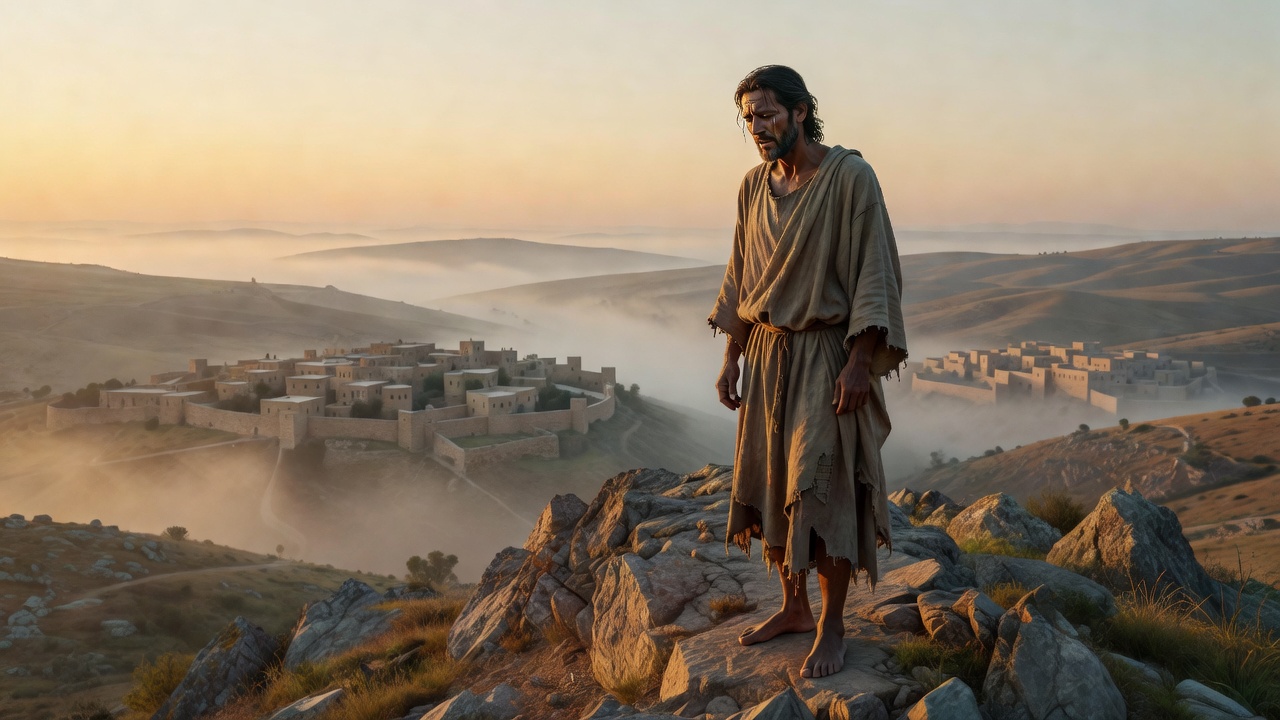
8Because of this I will lament and wail;
I will walk barefoot and naked.
I will howl like a jackal
and mourn like an ostrich.
9For her wound is incurable;
it has reached even Judah;
it has approached the gate of my people,
as far as Jerusalem itself.
10Do not tell it in Gath; do not weep at all.
Roll in the dust in Beth-leaphrah.
11Depart in shameful nakedness,
O dwellers of Shaphir.
The dwellers of Zaanan
will not come out.
Beth-ezel is in mourning;
its support is taken from you.
12For the dwellers of Maroth pined for good,
but calamity came down from the LORD,
even to the gate of Jerusalem.
13Harness your chariot horses,
O dweller of Lachish.
You were the beginning of sin to the Daughter of Zion,
for the transgressions of Israel were found in you.
14Therefore, send farewell gifts to Moresheth-gath;
the houses of Achzib will prove deceptive
to the kings of Israel.
15I will again bring a conqueror against you,
O dweller of Mareshah.
The glory of Israel will come to Adullam.
16Shave yourselves bald and cut off your hair
in mourning for your precious children;
make yourselves as bald as an eagle,
for they will go from you into exile.
Did you know?
Judgment on Samaria and Jerusalem
- Micah was a prophet from the town of Moresheth in Judah who ministered during the reigns of kings Jotham, Ahaz, and Hezekiah. His opening message pronounces impending divine judgment on both Samaria, the capital of the northern kingdom of Israel, and Jerusalem, the capital of Judah.Sources: Micah · the Bible text itself
- The chapter includes a poetic lament over several settlements in the Judean foothills and low country, such as Lachish, Zaanan, and Beth-le-aphrah (meaning house of dust, where inhabitants are told to roll in dust). Micah warns that the devastation reaching Samaria would advance directly to the gates of Jerusalem.Sources: Beth-le-aphrah · the Bible text itself
Notes written with AI assistance from open sources (Theographic Bible Metadata, CC BY-SA 4.0; Easton’s Bible Dictionary, public domain) and reviewed before publishing.
Places in this chapter
- Jerusalem · 31.777, 35.234 · verses 1, 5, 9, 12
- Samaria · 32.276, 35.195 · verses 1, 5, 6, 9
- Lachish · Today: Tell ed Duweir · 31.565, 34.849 · verse 13
- Zion · Today: Jerusalem · 31.777, 35.234 · verse 13
- Mareshah · Today: Tel Maresha · 31.593, 34.898 · verse 15
Only places identified with high confidence are shown (90% or more according to the scholarly sources compiled by OpenBible). Period map: DARE (Digital Atlas of the Roman Empire), CC BY 4.0; modern map: © OpenStreetMap contributors; places: OpenBible.info (CC BY 4.0).
Credits and license for this translation
Berean Standard Bible
The Holy Bible in English: Berean Standard Bible
Public Domain
Language: English
Contributor: BSB Publishing, LLC
2026-10-02
Source: http://ebible.org/engbsb/ · eBible.org