Leviticus 1
Berean Standard Bible · Tap a verse to see its cross-references.
About this book
About Leviticus
- Easton's Bible Dictionary (1897) presents Leviticus as the third book of the Pentateuch and as the third book of Moses. The name, used in the Vulgate following the LXX, reflects the book's chief concern: the Levitical service.Sources: Easton: Leviticus
- Easton states that every ordinance in the book was delivered within one month, the first month of the second year after the Exodus. His entry on Sinai, also called Horeb, says the Hebrews reached that mountain district in the third month after the Exodus and remained encamped for about a whole year, and that the whole of Leviticus records what occurred there.Sources: Easton: Leviticus · Mount Sinai
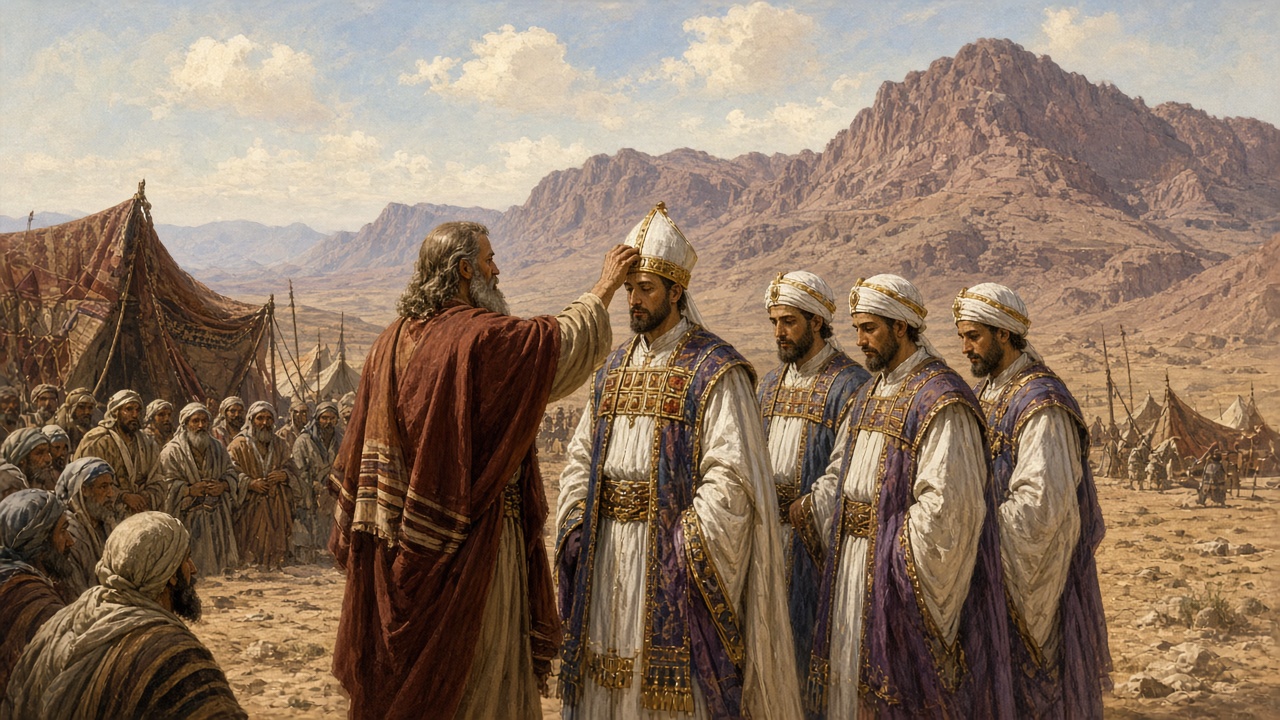
- Chapters 1–7 give laws for burnt offerings, meat offerings, and thank offerings, then for sin offerings and trespass offerings, and for the priests' duties in offering sacrifice. Chapters 8–10 recount the consecration of Aaron and his sons, Aaron's first offering for himself and the people, and the death of Nadab and Abihu, who were struck dead and buried outside the camp after offering strange, or common, fire not taken from the great brazen altar. Chapters 11–16 concern purity and the sacrifices and ordinances for putting impurity away.Sources: Easton: Leviticus · Nadab · Abihu
- Easton describes chapters 17–20 as laws marking the separation between Israel and other peoples. Further laws concern the priests' personal purity and their eating of holy things, offerings without blemish, and the due celebration of the great festivals in chapters 23 and 25. Promises and warnings about obedience follow, the book closes with a section on vows, and Easton notes that God is the direct speaker through almost the whole of it.Sources: Easton: Leviticus
- In the rites of chapter 16, one goat is associated with Azazel, which the Authorized Version renders scapegoat and the Revised Version leaves as Azazel. Easton reports that some Jewish interpreters take it as a place in the wilderness about twelve miles east of Jerusalem, while others take it as an evil spirit or even Satan, and he also notes a root meaning of separation.Sources: Azazel
Notes written with AI assistance from open sources (Theographic Bible Metadata, CC BY-SA 4.0; Easton’s Bible Dictionary, public domain) and reviewed before publishing.
Laws for Burnt Offerings
1Then the LORD called to Moses and spoke to him from the Tent of Meeting, saying, 2“Speak to the Israelites and tell them: When any of you brings an offering to the LORD, you may bring as your offering an animal from the herd or the flock.
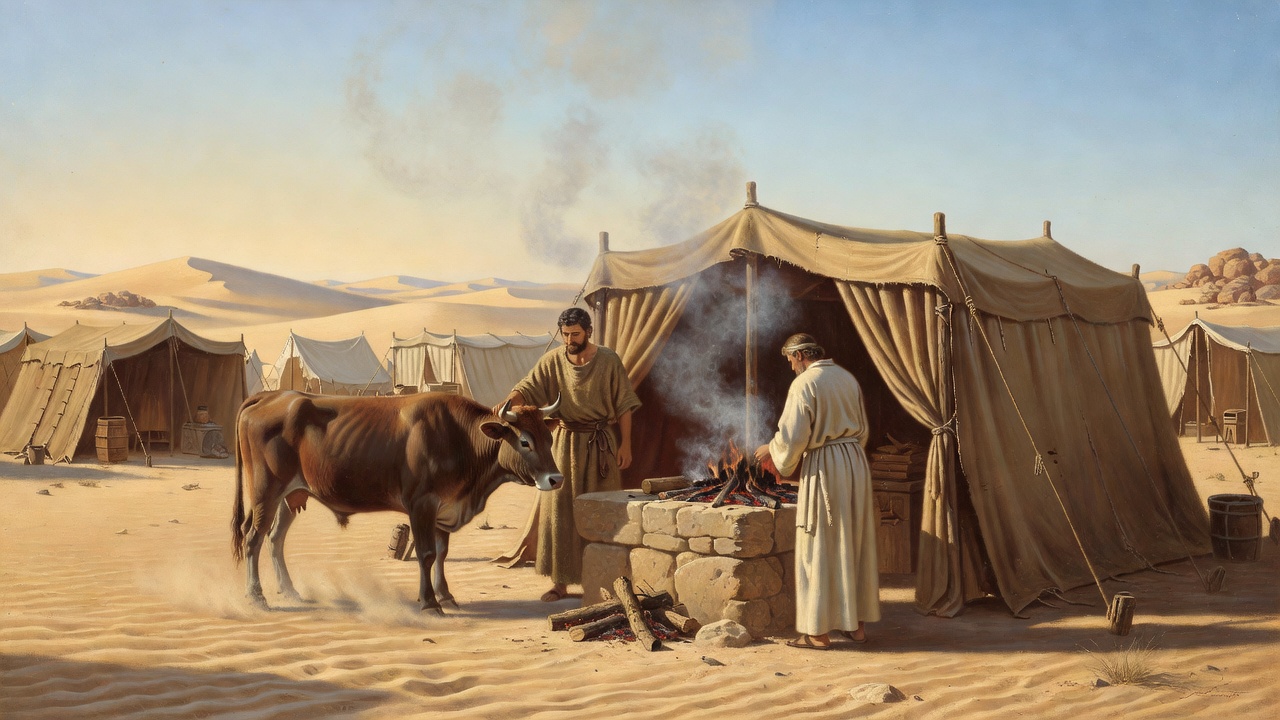
3If one’s offering is a burnt offering from the herd, he is to present an unblemished male. He must bring it to the entrance to the Tent of Meeting for its acceptance before the LORD. 4He is to lay his hand on the head of the burnt offering, so it can be accepted on his behalf to make atonement for him.
5And he shall slaughter the young bull before the LORD, and Aaron’s sons the priests are to present the blood and sprinkle it on all sides of the altar at the entrance to the Tent of Meeting. 6Next, he is to skin the burnt offering and cut it into pieces.
7The sons of Aaron the priest shall put a fire on the altar and arrange wood on the fire. 8Then Aaron’s sons the priests are to arrange the pieces, including the head and the fat, atop the burning wood on the altar. 9The entrails and legs must be washed with water, and the priest shall burn all of it on the altar as a burnt offering, an offering made by fire, a pleasing aroma to the LORD.
10If, however, one’s offering is a burnt offering from the flock—from the sheep or goats—he is to present an unblemished male. 11He shall slaughter it on the north side of the altar before the LORD, and Aaron’s sons the priests are to sprinkle its blood against the altar on all sides. 12He is to cut the animal into pieces, and the priest shall arrange them, including the head and fat, atop the burning wood that is on the altar. 13The entrails and legs must be washed with water, and the priest shall bring all of it and burn it on the altar; it is a burnt offering, an offering made by fire, a pleasing aroma to the LORD.
14If, instead, one’s offering to the LORD is a burnt offering of birds, he is to present a turtledove or a young pigeon. 15Then the priest shall bring it to the altar, twist off its head, and burn it on the altar; its blood should be drained out on the side of the altar. 16And he is to remove the crop with its contents and throw it to the east side of the altar, in the place for ashes. 17He shall tear it open by its wings, without dividing the bird completely. And the priest is to burn it on the altar atop the burning wood. It is a burnt offering, an offering made by fire, a pleasing aroma to the LORD.
Did you know?
The Burnt Offering
- The instructions for the burnt offering accommodate different economic means by allowing offerings from the herd, the flock (sheep or goats), or birds (turtledoves or young pigeons). For livestock, the animal was required to be a male without blemish.Sources: the Bible text itself
- The ritual required a clear division of roles between the worshiper and the priests. The worshiper brought the animal, laid a hand on its head for atonement, slaughtered it, skinned it, and washed its inner parts, while the sons of Aaron sprinkled the blood and burned the entire offering on the altar.Sources: the Bible text itself · Aaron
Notes written with AI assistance from open sources (Theographic Bible Metadata, CC BY-SA 4.0; Easton’s Bible Dictionary, public domain) and reviewed before publishing.
Credits and license for this translation
Berean Standard Bible
The Holy Bible in English: Berean Standard Bible
Public Domain
Language: English
Contributor: BSB Publishing, LLC
2026-10-02
Source: http://ebible.org/engbsb/ · eBible.org