Job 1
Berean Standard Bible · Tap a verse to see its cross-references.
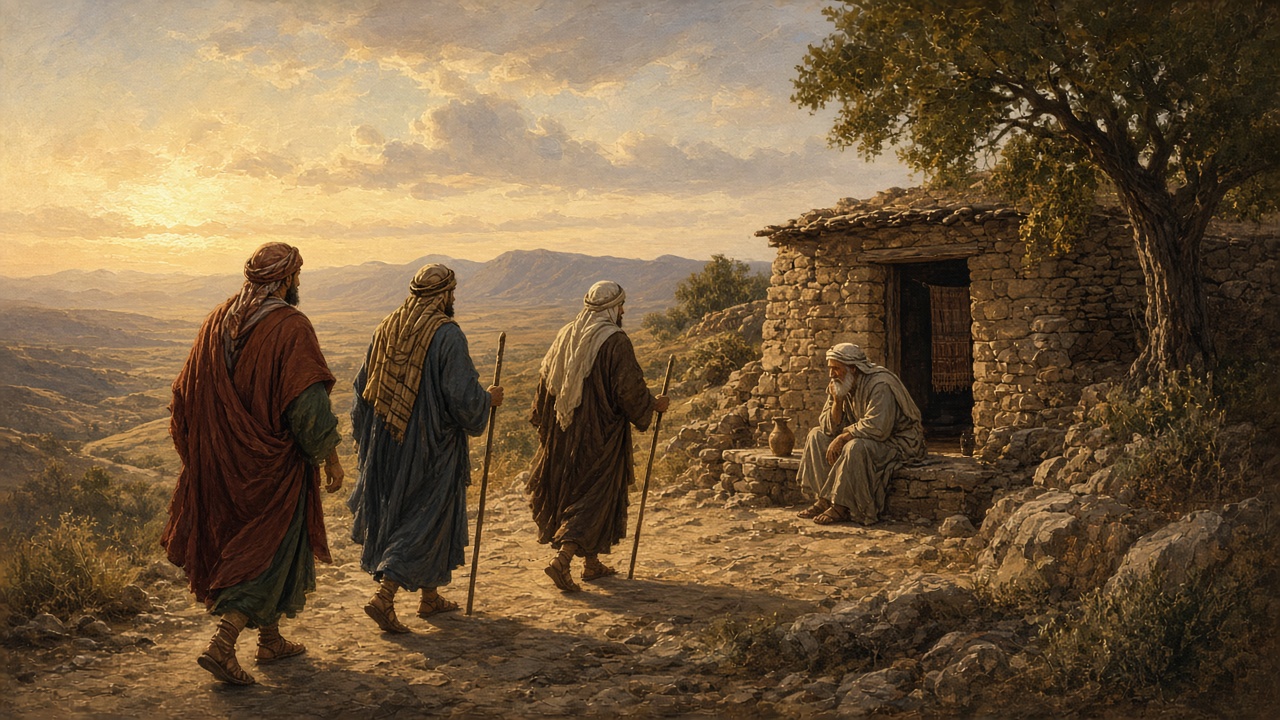
About this book
About Job
- Easton's Bible Dictionary (1897) finds the authorship of Job altogether uncertain, despite many proposals. Some place the book in the time of David and Solomon because of similarities with the Psalms and Proverbs and its interest in wisdom; others have credited it to Job, Elihu, Isaiah, or Moses, who might have heard the story in Midian. Easton also notes that the book was apparently well known by the days of Ezekiel, which he dates to 600 B.C.Sources: Easton: Job, Book of
- Job is presented as an Arabian patriarch who lived in the land of Uz, which Easton places probably east or southeast of Palestine and north of Edom. Uz is mentioned in Scripture only in Job, Jeremiah, and Lamentations.Sources: Job · Uz
- Easton describes the book as a historical poem and a didactic narrative in dramatic form. Prose frames it (chapters 1–2 and 42:7–15); between those sections, poetry carries Job's lament, three rounds of debate with his friends, Elihu's speeches, an address by Jehovah, and Job's confession.Sources: Easton: Job, Book of
- The subject, as Easton states it, is Job's trial: its occasion, its nature, how he endured it, and how it ended. From great prosperity he was suddenly overwhelmed by severe trials, yet he is said to have kept his integrity; afterward he received even greater prosperity and lived another 140 years.Sources: Easton: Job, Book of · Job
- Among those who come to him are Bildad the Shuhite, whom Easton links with Shuah in Arabia, and Zophar the Naamathite, called in the Septuagint king of the Mineans of southern Arabia. After their debate ends, Elihu, son of Barachel the Buzite, appears for the first time and gives his own view. In the opening scenes the figure called Satan bears the Hebrew article, so the name means the adversary or accuser.Sources: Bildad · Zophar · Elihu · Satan
Notes written with AI assistance from open sources (Theographic Bible Metadata, CC BY-SA 4.0; Easton’s Bible Dictionary, public domain) and reviewed before publishing.
Job’s Character and Wealth
1There was a man in the land of Uz whose name was Job. And this man was blameless and upright, fearing God and shunning evil. 2He had seven sons and three daughters, 3and he owned 7,000 sheep, 3,000 camels, 500 yoke of oxen, 500 female donkeys, and a very large number of servants. Job was the greatest man of all the people of the East.
4Job’s sons would take turns holding feasts in their homes, and they would invite their three sisters to eat and drink with them.
5And when the days of feasting were over, Job would send for his children to purify them, rising early in the morning to offer burnt offerings for all of them. For Job thought, “Perhaps my children have sinned and cursed God in their hearts.” This was Job’s regular practice.
Satan’s First Attack
6One day the sons of God came to present themselves before the LORD, and Satan also came with them.
7“Where have you come from?” said the LORD to Satan.
“From roaming through the earth,” he replied, “and walking back and forth in it.”
8Then the LORD said to Satan, “Have you considered My servant Job? For there is no one on earth like him, a man who is blameless and upright, who fears God and shuns evil.”
9Satan answered the LORD, “Does Job fear God for nothing? 10Have You not placed a hedge on every side around him and his household and all that he owns? You have blessed the work of his hands, and his possessions have increased in the land. 11But stretch out Your hand and strike all that he has, and he will surely curse You to Your face.”
12“Very well,” said the LORD to Satan. “Everything he has is in your hands, but you must not lay a hand on the man himself.”
Then Satan went out from the presence of the LORD.
Job Loses His Children and Possessions
13One day, while Job’s sons and daughters were eating and drinking wine in their oldest brother’s house, 14a messenger came and reported to Job: “While the oxen were plowing and the donkeys were grazing nearby, 15the Sabeans swooped down and took them away. They put the servants to the sword, and I alone have escaped to tell you!”
16While he was still speaking, another messenger came and reported: “The fire of God fell from heaven. It burned and consumed the sheep and the servants, and I alone have escaped to tell you!”
17While he was still speaking, another messenger came and reported: “The Chaldeans formed three bands, raided the camels, and took them away. They put the servants to the sword, and I alone have escaped to tell you!”
18While he was still speaking, another messenger came and reported: “Your sons and daughters were eating and drinking wine in their oldest brother’s house, 19when suddenly a mighty wind swept in from the desert and struck the four corners of the house. It collapsed on the young people and they are dead, and I alone have escaped to tell you!”
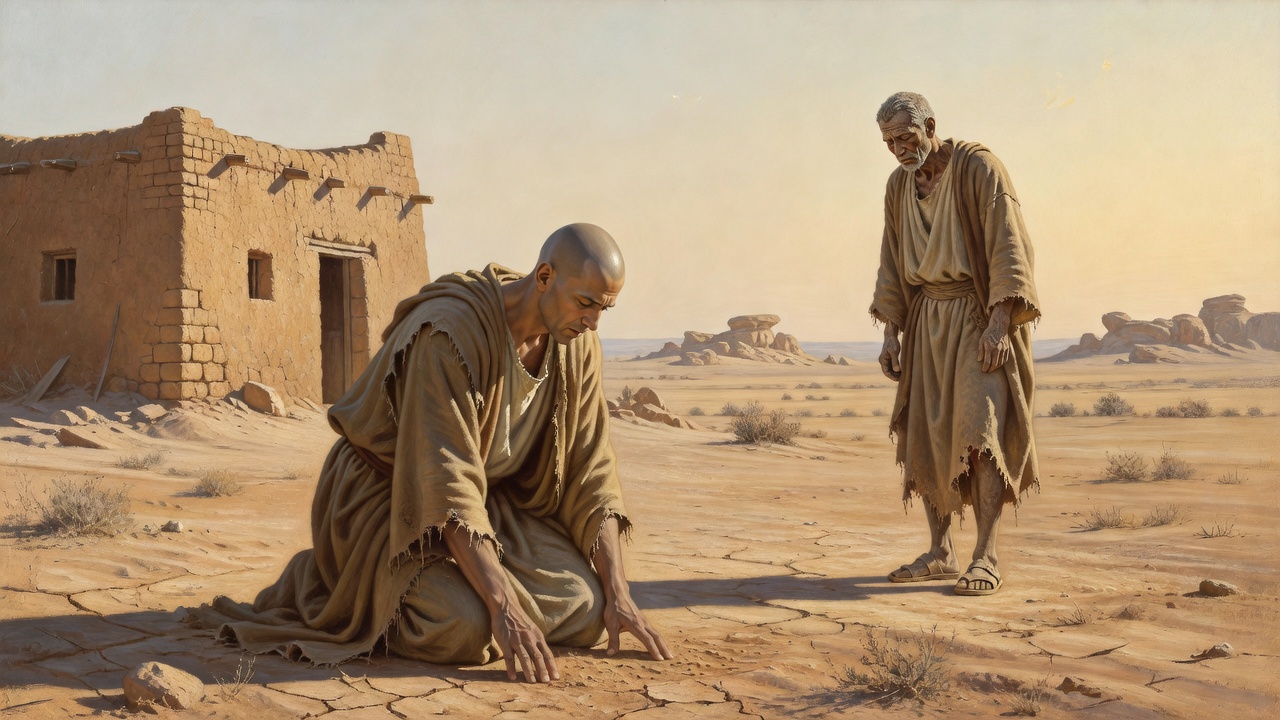
20Then Job stood up, tore his robe, and shaved his head. He fell to the ground and worshiped, 21saying:
“Naked I came from my mother’s womb,
and naked I will return.
The LORD gave, and the LORD has taken away.
Blessed be the name of the LORD.”
22In all this, Job did not sin or charge God with wrongdoing.
Did you know?
Job's Integrity and Initial Testing
- The land of Uz, where Job lived, was located east or southeast of Palestine and north of Edom. In the biblical text, Job is described as the greatest man among all the people of the East, possessing vast herds of sheep, camels, oxen, and donkeys.Sources: Uz · Job · the Bible text itself
- In the Hebrew text of Job 1, the title Satan includes the definite article, designating him as the adversary or the accuser. In the heavenly assembly, he challenges Job's integrity by arguing that Job's devotion exists only because God has protected and enriched him.Sources: Satan · the Bible text itself
- Job served as a priest for his household, regularly rising early to offer burnt offerings for each of his children in case they had sinned in their hearts. When disaster struck his livestock, servants, and children in rapid succession, Job responded by mourning in humility and worshiping God rather than accusing him.Sources: Job · the Bible text itself
Notes written with AI assistance from open sources (Theographic Bible Metadata, CC BY-SA 4.0; Easton’s Bible Dictionary, public domain) and reviewed before publishing.
Places in this chapter
Only places identified with high confidence are shown (90% or more according to the scholarly sources compiled by OpenBible). Period map: DARE (Digital Atlas of the Roman Empire), CC BY 4.0; modern map: © OpenStreetMap contributors; places: OpenBible.info (CC BY 4.0).
Credits and license for this translation
Berean Standard Bible
The Holy Bible in English: Berean Standard Bible
Public Domain
Language: English
Contributor: BSB Publishing, LLC
2026-10-02
Source: http://ebible.org/engbsb/ · eBible.org