Jeremiah 1
Berean Standard Bible · Tap a verse to see its cross-references.
About this book
About Jeremiah
- Easton's Bible Dictionary (1897) presents Jeremiah, son of Hilkiah, a priest of Anathoth, as one of the greater prophets, called to that office while still young, in the thirteenth year of Josiah (628 B.C.). It says his prophecies cover about thirty years and are not recorded in chronological order, and that no one knows when or how the book took its present form. The same entry supposes that, after an interval in Egypt, Jeremiah added three further sections.Sources: Easton: Jeremiah, Book of · Jeremiah
- Easton's Bible Dictionary (1897) says Jeremiah left his native Anathoth for Jerusalem, where he assisted Josiah's reformation, and that he mourned Josiah's death as a national calamity. It dates Jehoiakim's eleven-year reign to 610–599 B.C.: Pharaoh Necho had deposed Jehoahaz and set Eliakim on the throne under the name Jehoiakim, and at the beginning of that reign the people's enmity against Jeremiah broke out in bitter persecution. After the Chaldeans defeated Egypt at Carchemish, the king of Egypt took no further part in Jewish politics.Sources: Jeremiah · Jehoiakim
- Zedekiah, the third son of Josiah, was the last king of Judah. Nebuchadnezzar placed him on the throne as successor to Jehoiachin and changed his name from Mattaniah to Zedekiah; the kingdom was then tributary to Nebuchadnezzar, and Jeremiah was his counsellor. After Jerusalem was destroyed, Nebuchadnezzar left Gedaliah to govern the country as his tributary at Mizpah, some four miles northwest of the city, where about three months later Ishmael killed Gedaliah and the Jews who were with him.Sources: Zedekiah · Gedaliah · Mizpah
- Easton's Bible Dictionary (1897) describes the book as twenty-three separate sections arranged in five books: an introduction, reproofs of the sins of the Jews, a review of the nations, sections picturing hopes of better times, and a conclusion, with historical appendices. It notes the frequent repetition of the same words, phrases, and images. It also records that the Septuagint differs sharply in arrangement and in other details, and omits about 2,700 words.Sources: Easton: Jeremiah, Book of
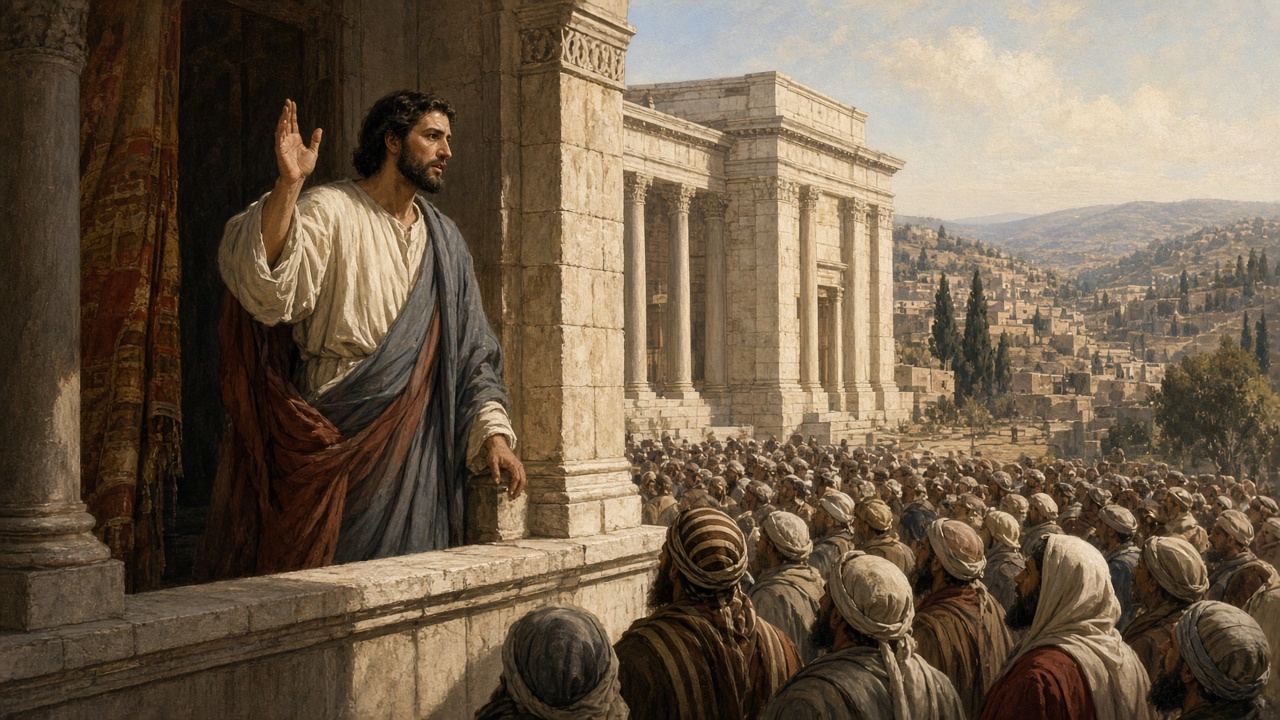
- Baruch, of the tribe of Judah, was Jeremiah's secretary. Jeremiah dictated to him prophecies about the Babylonian invasion and the captivity; in the fourth year of Jehoiakim, Baruch read them to the people from a window in the temple, then to the king's counsellors and to the king himself. After hearing part of the roll, Jehoiakim cut it with a penknife and threw it into the fire of the winter parlour where he was sitting.Sources: Baruch
Notes written with AI assistance from open sources (Theographic Bible Metadata, CC BY-SA 4.0; Easton’s Bible Dictionary, public domain) and reviewed before publishing.
The Call of Jeremiah
1These are the words of Jeremiah son of Hilkiah, one of the priests in Anathoth in the territory of Benjamin.
2The word of the LORD came to Jeremiah in the thirteenth year of the reign of Josiah son of Amon king of Judah, 3and through the days of Jehoiakim son of Josiah king of Judah, until the fifth month of the eleventh year of Zedekiah son of Josiah king of Judah, when the people of Jerusalem went into exile.
4The word of the LORD came to me, saying:
5“Before I formed you in the womb I knew you,
and before you were born I set you apart
and appointed you as a prophet to the nations.”
6“Ah, Lord GOD,” I said, “I surely do not know how to speak, for I am only a child!”
7But the LORD told me:
“Do not say,
‘I am only a child.’
For to everyone I send you,
you must go,
and all that I command you,
you must speak.
8Do not be afraid of them,
for I am with you to deliver you,”
declares the LORD.
9Then the LORD reached out His hand, touched my mouth, and said to me:
“Behold, I have put My words
in your mouth.
10See, I have appointed you today
over nations and kingdoms
to uproot and tear down,
to destroy and overthrow,
to build and plant.”
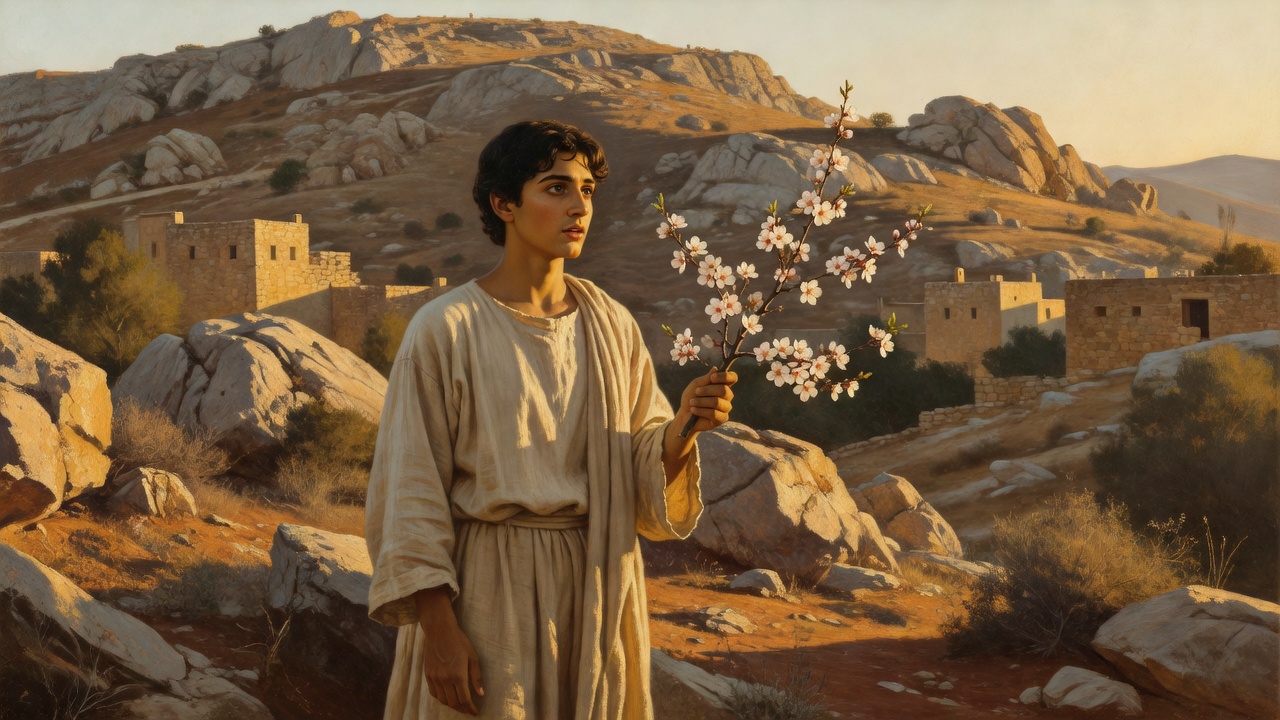
11And the word of the LORD came to me, asking, “Jeremiah, what do you see?”
“I see a branch of an almond tree,” I replied.
12“You have observed correctly,” said the LORD, “for I am watching over My word to accomplish it.”
13Again the word of the LORD came to me, asking, “What do you see?”
“I see a boiling pot,” I replied, “and it is tilting toward us from the north.”
14Then the LORD said to me, “Disaster from the north will be poured out on all who live in the land. 15For I am about to summon all the clans and kingdoms of the north,” declares the LORD.
“Their kings will come and set up their thrones
at the entrance of the gates of Jerusalem.
They will attack all her surrounding walls
and all the other cities of Judah.
16I will pronounce My judgments against them
for all their wickedness,
because they have forsaken Me
to burn incense to other gods
and to worship the works of their own hands.
17Get yourself ready. Stand up and tell them everything that I command you. Do not be intimidated by them, or I will terrify you before them. 18Now behold, this day I have made you like a fortified city, an iron pillar, and bronze walls against the whole land—against the kings of Judah, its officials, its priests, and the people of the land. 19They will fight against you but will never overcome you, since I am with you to deliver you,” declares the LORD.
Did you know?
The Call and Commission of Jeremiah
- Jeremiah was the son of Hilkiah, belonging to a family of priests living in Anathoth, a priestly town located in the territory of the tribe of Benjamin near Jerusalem.Sources: Jeremiah · Anathoth · the Bible text itself
- Jeremiah received his prophetic calling in the thirteenth year of the reign of King Josiah of Judah, and his ministry spanned several decades through the reigns of Jehoiakim and Zedekiah until the exile of Jerusalem.Sources: Jeremiah · Zedekiah · the Bible text itself
- His commissioning included two symbolic visions: an almond branch, signifying that God is actively watching over his word to accomplish it, and a boiling pot tilting from the north, portraying approaching foreign invaders against Judah.Sources: the Bible text itself
Notes written with AI assistance from open sources (Theographic Bible Metadata, CC BY-SA 4.0; Easton’s Bible Dictionary, public domain) and reviewed before publishing.
Places in this chapter
Only places identified with high confidence are shown (90% or more according to the scholarly sources compiled by OpenBible). Period map: DARE (Digital Atlas of the Roman Empire), CC BY 4.0; modern map: © OpenStreetMap contributors; places: OpenBible.info (CC BY 4.0).
Credits and license for this translation
Berean Standard Bible
The Holy Bible in English: Berean Standard Bible
Public Domain
Language: English
Contributor: BSB Publishing, LLC
2026-10-02
Source: http://ebible.org/engbsb/ · eBible.org