James 1
Berean Standard Bible · Tap a verse to see its cross-references.
About this book
About James
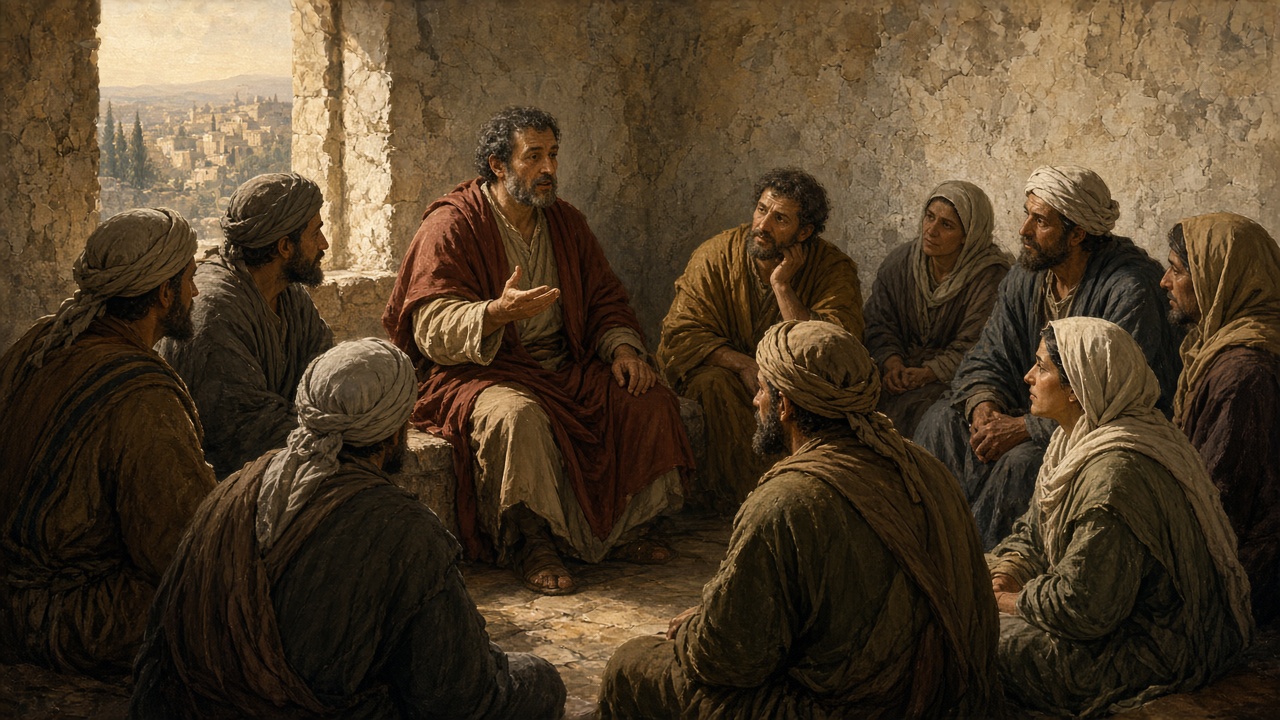
- Easton's Bible Dictionary (1897) identifies the author as James the Less, the Lord's brother and one of the twelve apostles, and as one of the three pillars of the Church. A related entry calls him the son of Alphaeus, or Cleopas, a near kinsman of Jesus, nicknamed "the Less" or "the Little," probably because he was short, and states that this James wrote the letter that bears his name.Sources: Easton: James, Epistle of · James (Brother of Jesus)
- Easton's Bible Dictionary (1897) places the writing in Jerusalem, where James was living, and, from internal evidence, in the period between Paul's two imprisonments in Rome, probably about A.D. 62.Sources: Easton: James, Epistle of
- The letter is addressed to the Jews of the dispersion, "the twelve tribes scattered abroad." The same James is described as head of the church at Jerusalem, where he presided at the council that considered the case of the Gentiles.Sources: Easton: James, Epistle of · James (Brother of Jesus)
- According to Easton, the writer sought to press the practical duties of the Christian life, warning against formalism, fanaticism, fatalism, bowing before the rich, false use of words and oaths, partisanship, evil speaking, boasting, and oppression. He presents the great lesson as patience in trial, in good works, and under provocation, oppression, and persecution, grounded in the near coming of the Lord, who would set wrongs right.Sources: Easton: James, Epistle of
- An entry on Job cites him, in connection with this letter, as an example for later generations of integrity and of submissive patience under the sorest calamities.Sources: Job
Notes written with AI assistance from open sources (Theographic Bible Metadata, CC BY-SA 4.0; Easton’s Bible Dictionary, public domain) and reviewed before publishing.
A Greeting from James
1James, a servant of God and of the Lord Jesus Christ,
To the twelve tribes of the Dispersion:
Greetings.
Rejoicing in Trials
2Consider it pure joy, my brothers, when you encounter trials of many kinds, 3because you know that the testing of your faith develops perseverance. 4Allow perseverance to finish its work, so that you may be mature and complete, not lacking anything.
5Now if any of you lacks wisdom, he should ask God, who gives generously to all without finding fault, and it will be given to him. 6But he must ask in faith, without doubting, because he who doubts is like a wave of the sea, blown and tossed by the wind. 7That man should not expect to receive anything from the Lord. 8He is a double-minded man, unstable in all his ways.
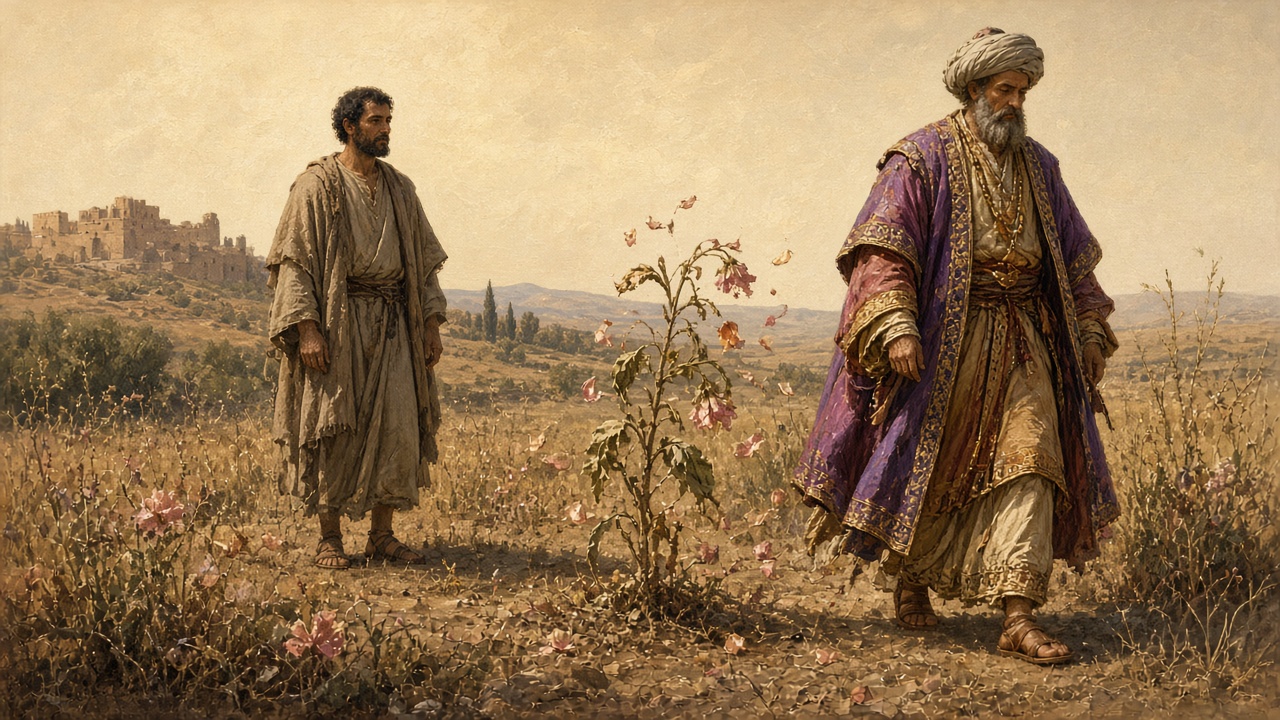
9The brother in humble circumstances should exult in his high position. 10But the one who is rich should exult in his low position, because he will pass away like a flower of the field. 11For the sun rises with scorching heat and withers the plant; its flower falls and its beauty is lost. So too, the rich man will fade away in the midst of his pursuits.
12Blessed is the man who perseveres under trial, because when he has stood the test, he will receive the crown of life that God has promised to those who love Him.
Good and Perfect Gifts
13When tempted, no one should say, “God is tempting me.” For God cannot be tempted by evil, nor does He tempt anyone. 14But each one is tempted when by his own evil desires he is lured away and enticed. 15Then after desire has conceived, it gives birth to sin; and sin, when it is full-grown, gives birth to death.
16Do not be deceived, my beloved brothers. 17Every good and perfect gift is from above, coming down from the Father of the heavenly lights, with whom there is no change or shifting shadow. 18He chose to give us birth through the word of truth, that we would be a kind of firstfruits of His creation.
Hearing and Doing
19My beloved brothers, understand this: Everyone should be quick to listen, slow to speak, and slow to anger, 20for man’s anger does not bring about the righteousness that God desires. 21Therefore, get rid of all moral filth and every expression of evil, and humbly accept the word planted in you, which can save your souls.
22Be doers of the word, and not hearers only. Otherwise, you are deceiving yourselves. 23For anyone who hears the word but does not carry it out is like a man who looks at his face in a mirror, 24and after observing himself goes away and immediately forgets what he looks like. 25But the one who looks intently into the perfect law of freedom, and continues to do so—not being a forgetful hearer, but an effective doer—he will be blessed in what he does.
26If anyone considers himself religious and yet does not bridle his tongue, he deceives his heart and his religion is worthless. 27Pure and undefiled religion before our God and Father is this: to care for orphans and widows in their distress, and to keep oneself from being polluted by the world.
Did you know?
Trials and Pure Religion
- The letter opens in the name of “James, a servant of God and of the Lord Jesus Christ.” A traditional account identifies him as the son of Alphaeus, or Cleopas, called James “the Less” or “the Little,” probably because he was of low stature, and as a brother, near kinsman, or cousin of Jesus. That account says he appears to have headed the church in Jerusalem and that he presided at the council held to consider the case of the Gentiles.Sources: James (Brother of Jesus) · the Bible text itself
- He addresses “the twelve tribes of the Dispersion” and greets them as brothers. He treats trials of many kinds as a testing of faith that develops perseverance, but he warns that no one who is tempted should say, “God is tempting me,” because God tempts no one.Sources: the Bible text itself
- The rich man, he says, should exult in his low position, because he will pass away like a flower of the field when the sun rises with scorching heat and withers the plant. Pure and undefiled religion, in his words, is to care for orphans and widows in their distress and to keep oneself from being polluted by the world.Sources: the Bible text itself
Notes written with AI assistance from open sources (Theographic Bible Metadata, CC BY-SA 4.0; Easton’s Bible Dictionary, public domain) and reviewed before publishing.
Credits and license for this translation
Berean Standard Bible
The Holy Bible in English: Berean Standard Bible
Public Domain
Language: English
Contributor: BSB Publishing, LLC
2026-10-02
Source: http://ebible.org/engbsb/ · eBible.org