Hebrews 1
Berean Standard Bible · Tap a verse to see its cross-references.
About this book
About Hebrews
- The entries used here do not name the author of the Epistle to the Hebrews or date the letter. Easton's article on Melchisedec speaks of the writer of chapter 7 simply as "the apostle," without naming him.Sources: Melchisedec
- As a word, "Hebrews," in Easton's explanation of Acts 6:1, meant the Hebrew-speaking Jews, as distinguished from those who spoke Greek.Sources: Easton: Hebrews
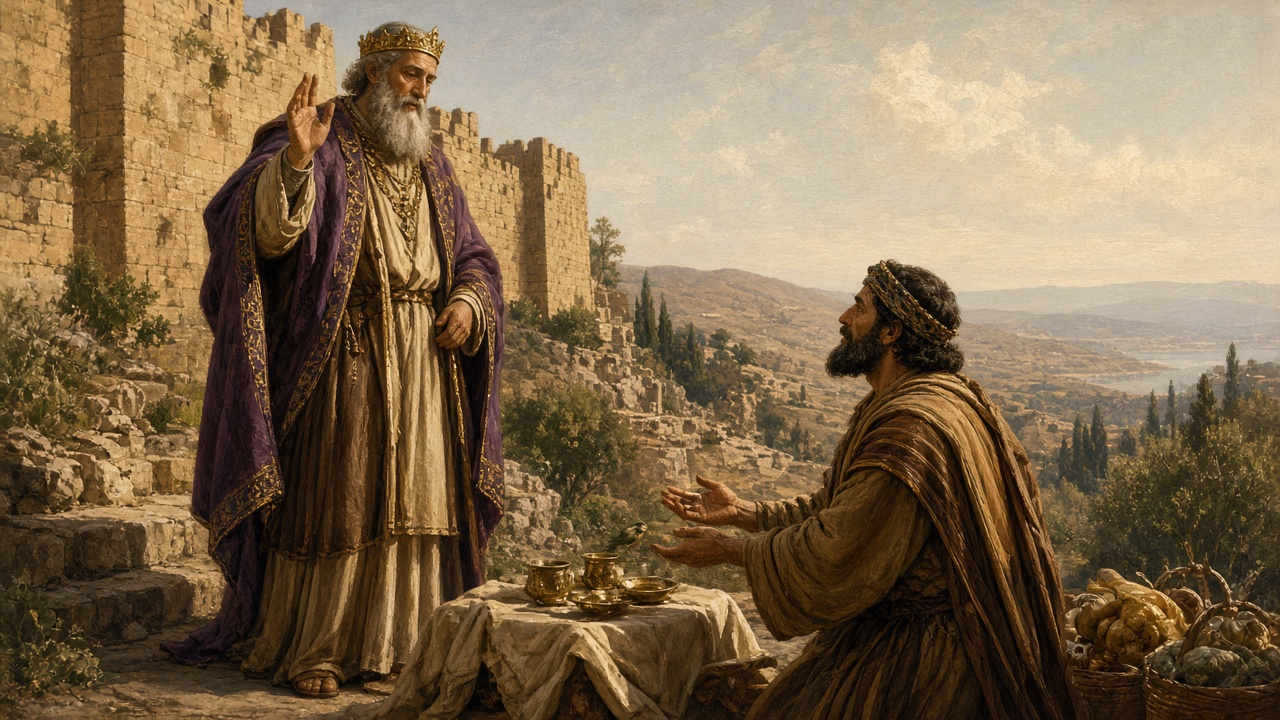
- Easton's Bible Dictionary says that the typical significance of Melchisedec, king of Salem and called king of righteousness, is set forth in detail in Hebrews 7. It summarizes the chapter as pointing out the superiority of his priesthood to Aaron's: Abraham paid him tithes and was blessed by him; Levi, still unborn, paid tithes in the person of Abraham; and he is the type of a priest who lives for ever, a permanence in Christ said to imply the abrogation of the Levitical system.Sources: Melchisedec
- Hebrews 9:2 is cited for the Holy Place, one of the two portions of the tabernacle. Easton describes it as twenty cubits long and ten in height and breadth, lit only by the golden candlestick because it had no opening for light, holding the table of showbread and the golden altar of incense, and divided from the holy of holies by a veil of costly materials and the brightest colors; the temple, he notes, followed the same arrangement.Sources: Holy Place
- Salem, which Easton renders "peace," is commonly supposed to be another name for Jerusalem, and Hebrews 7:1-2 is among the passages he cites. He also calls Jerusalem the "city of God" and the "holy city," and says that its name in the original is dual, meaning "possession of peace" or "foundation of peace," probably referring to the hills of Zion and Moriah or to the upper and lower city.Sources: Salem · Jerusalem
Notes written with AI assistance from open sources (Theographic Bible Metadata, CC BY-SA 4.0; Easton’s Bible Dictionary, public domain) and reviewed before publishing.
The Supremacy of the Son
1On many past occasions and in many different ways, God spoke to our fathers through the prophets. 2But in these last days He has spoken to us by His Son, whom He appointed heir of all things, and through whom He made the universe.
3The Son is the radiance of God’s glory and the exact representation of His nature, upholding all things by His powerful word. After He had provided purification for sins, He sat down at the right hand of the Majesty on high. 4So He became as far superior to the angels as the name He has inherited is excellent beyond theirs. 5For to which of the angels did God ever say:
“You are My Son;
today I have become Your Father”?
Or again:
“I will be His Father,
and He will be My Son”?
6And again, when God brings His firstborn into the world, He says:
“Let all God’s angels worship Him.”
7Now about the angels He says:
“He makes His angels winds,
His servants flames of fire.”
8But about the Son He says:
“Your throne, O God, endures forever and ever,
and justice is the scepter of Your kingdom.
9You have loved righteousness
and hated wickedness;
therefore God, Your God, has anointed You
above Your companions with the oil of joy.”
10And:
“In the beginning, O Lord, You laid the foundations of the earth,
and the heavens are the work of Your hands.
11They will perish, but You remain;
they will all wear out like a garment.
12You will roll them up like a robe;
like a garment they will be changed;
but You remain the same,
and Your years will never end.”
13Yet to which of the angels did God ever say:
“Sit at My right hand
until I make Your enemies a footstool for Your feet”?
14Are not the angels ministering spirits sent to serve those who will inherit salvation?
Did you know?
The Son Superior to the Angels
- The chapter opens by contrasting the many past occasions when God spoke to our fathers through the prophets with these last days, when he has spoken by his Son. The Son is appointed heir of all things and is the one through whom God made the universe.Sources: the Bible text itself
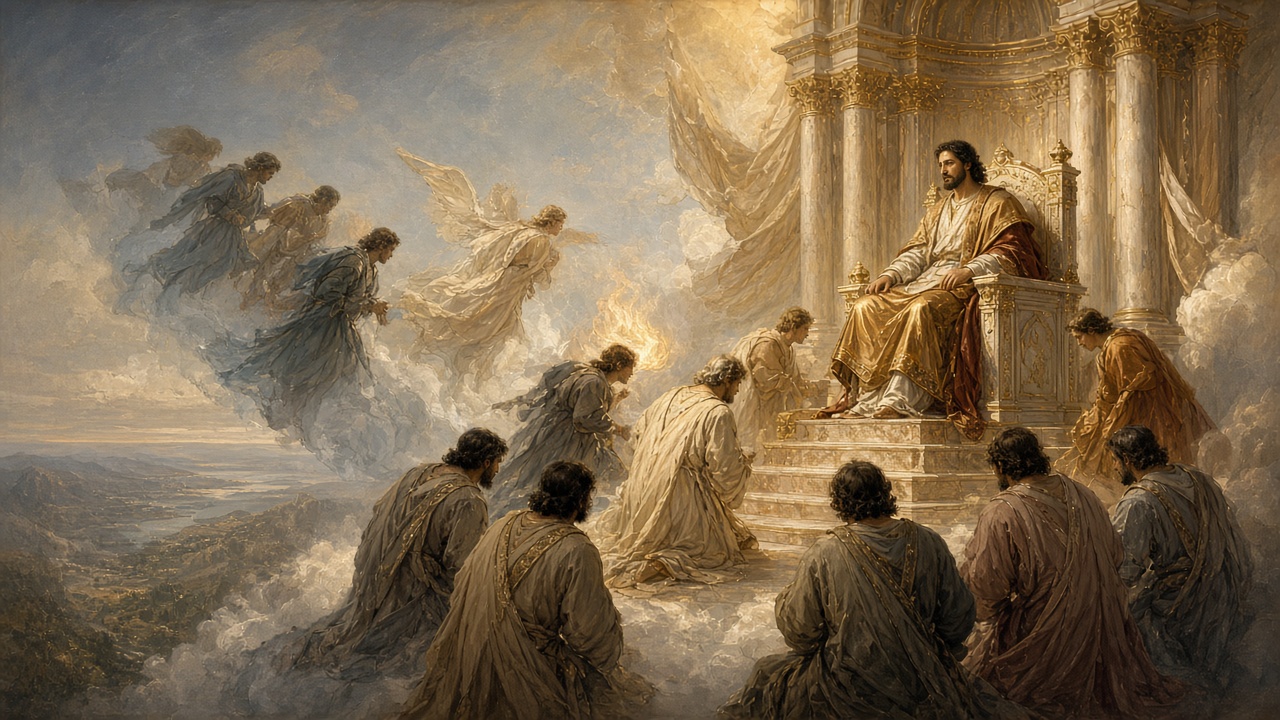
- The Son’s superiority to the angels is set out through words the chapter attributes to God. No angel is said to have been addressed as Son in this way; the angels are told to worship the firstborn, while the Son is addressed as God, with a throne that endures forever, and as Lord, who laid the foundations of the earth.Sources: the Bible text itself
- Angels are described as winds and as flames of fire, and as ministering spirits sent to serve those who will inherit salvation. After providing purification for sins, the Son is said to have sat down at the right hand of the Majesty on high, a place the chapter says was never offered to any angel.Sources: the Bible text itself
Notes written with AI assistance from open sources (Theographic Bible Metadata, CC BY-SA 4.0; Easton’s Bible Dictionary, public domain) and reviewed before publishing.
Credits and license for this translation
Berean Standard Bible
The Holy Bible in English: Berean Standard Bible
Public Domain
Language: English
Contributor: BSB Publishing, LLC
2026-10-02
Source: http://ebible.org/engbsb/ · eBible.org