Ecclesiastes 1
Berean Standard Bible · Tap a verse to see its cross-references.
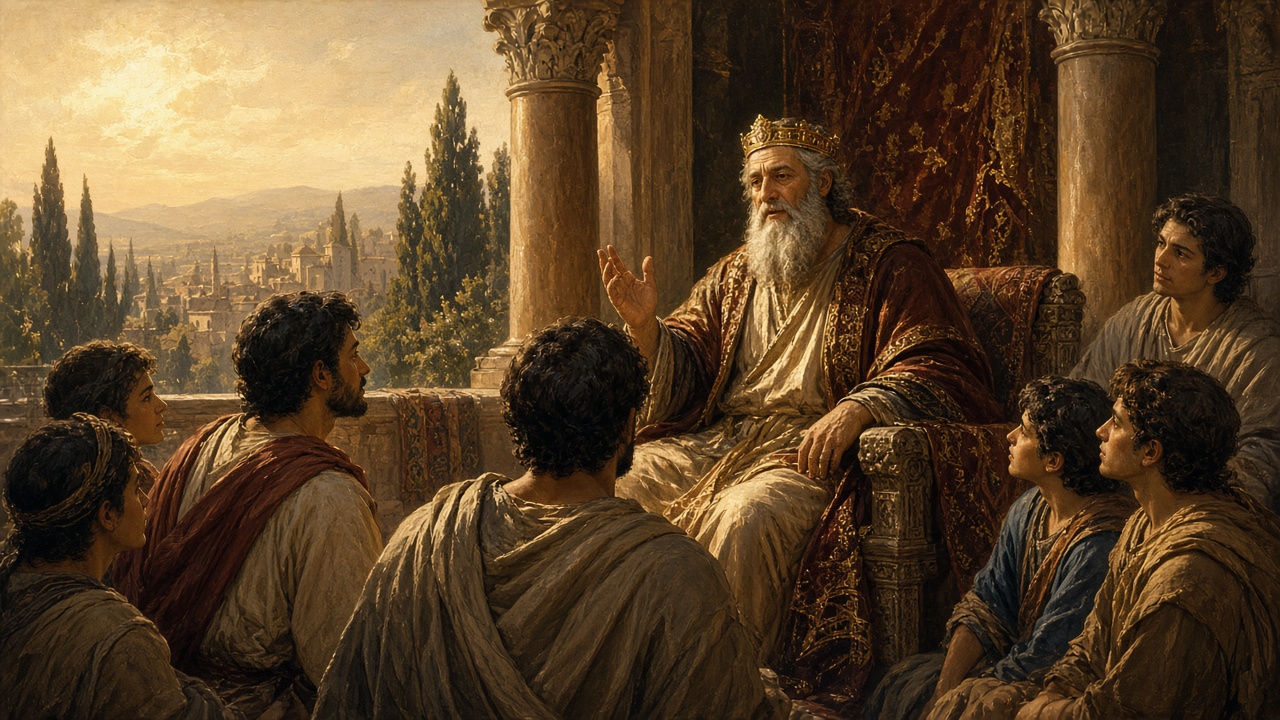
About this book
About Ecclesiastes
- Ecclesiastes is the Greek rendering of the Hebrew Koheleth, which means “Preacher.”Sources: Easton: Ecclesiastes
- The old and traditional view attributes the book to Solomon, and the writer represents himself implicitly as Solomon (1:12). Others date it from the Captivity.Sources: Easton: Ecclesiastes
- It has been styled “The Confession of King Solomon.” Its keynote, in chapter 1 verse 2, is “Vanity of vanities! saith the Preacher, Vanity of vanities! all is vanity!” Easton's Bible Dictionary (1897) explains this as meaning that all human efforts to find happiness apart from God are without result.Sources: Easton: Ecclesiastes
- Easton's Bible Dictionary (1897) describes the writer as a man who gave way to selfishness and sensuality, paid the penalty of that sin in satiety and weariness of life, and yet, under the discipline of a divine education, learned the lesson God meant to teach him. The writer concludes that the secret of a true life is that a man should consecrate the vigor of his youth to God.Sources: Easton: Ecclesiastes
Notes written with AI assistance from open sources (Theographic Bible Metadata, CC BY-SA 4.0; Easton’s Bible Dictionary, public domain) and reviewed before publishing.
Everything Is Futile
1These are the words of the Teacher, the son of David, king in Jerusalem:
2“Futility of futilities,”
says the Teacher,
“futility of futilities!
Everything is futile!”
3What does a man gain from all his labor,
at which he toils under the sun?
4Generations come and generations go,
but the earth remains forever.
5The sun rises and the sun sets;
it hurries back to where it rises.
6The wind blows southward,
then turns northward;
round and round it swirls,
ever returning on its course.
7All the rivers flow into the sea,
yet the sea is never full;
to the place from which the streams come,
there again they flow.
8All things are wearisome,
more than one can describe;
the eye is not satisfied with seeing,
nor the ear content with hearing.
9What has been will be again,
and what has been done will be done again;
there is nothing new under the sun.
10Is there a case where one can say,
“Look, this is new”?
It has already existed
in the ages before us.
11There is no remembrance
of those who came before,
and those yet to come will not be remembered
by those who follow after.
With Wisdom Comes Sorrow
12I, the Teacher, was king over Israel in Jerusalem. 13And I set my mind to seek and explore by wisdom all that is done under heaven. What a heavy burden God has laid upon the sons of men to occupy them!
14I have seen all the things that are done under the sun, and have found them all to be futile, a pursuit of the wind.
15What is crooked cannot be straightened,
and what is lacking cannot be counted.
16I said to myself, “Behold, I have grown and increased in wisdom beyond all those before me who were over Jerusalem, and my mind has observed a wealth of wisdom and knowledge.”
17So I set my mind to know wisdom and madness and folly; I learned that this, too, is a pursuit of the wind.
18For with much wisdom comes much sorrow,
and as knowledge grows, grief increases.
Did you know?
The Search for Meaning and the Cycles of Life
- The speaker introduces himself as the Teacher, identified as a son of David and king ruling in Jerusalem. In the biblical narrative, King David's line ruled from Jerusalem, a fortified mountain city often associated with wisdom and royal authority.Sources: the Bible text itself · David · Jerusalem
- To illustrate the repetitive and wearisome nature of human toil, the author points to ongoing natural cycles, such as the rising and setting of the sun, shifting wind patterns, and rivers flowing into the sea without ever filling it.Sources: the Bible text itself
- Although the speaker sets his mind to explore all human actions through extensive wisdom and knowledge, he concludes that gaining deeper understanding also brings increased sorrow and grief.Sources: the Bible text itself
Notes written with AI assistance from open sources (Theographic Bible Metadata, CC BY-SA 4.0; Easton’s Bible Dictionary, public domain) and reviewed before publishing.
Places in this chapter
Only places identified with high confidence are shown (90% or more according to the scholarly sources compiled by OpenBible). Period map: DARE (Digital Atlas of the Roman Empire), CC BY 4.0; modern map: © OpenStreetMap contributors; places: OpenBible.info (CC BY 4.0).
Credits and license for this translation
Berean Standard Bible
The Holy Bible in English: Berean Standard Bible
Public Domain
Language: English
Contributor: BSB Publishing, LLC
2026-10-02
Source: http://ebible.org/engbsb/ · eBible.org