2 Corinthians 1
Berean Standard Bible · Tap a verse to see its cross-references.
About this book
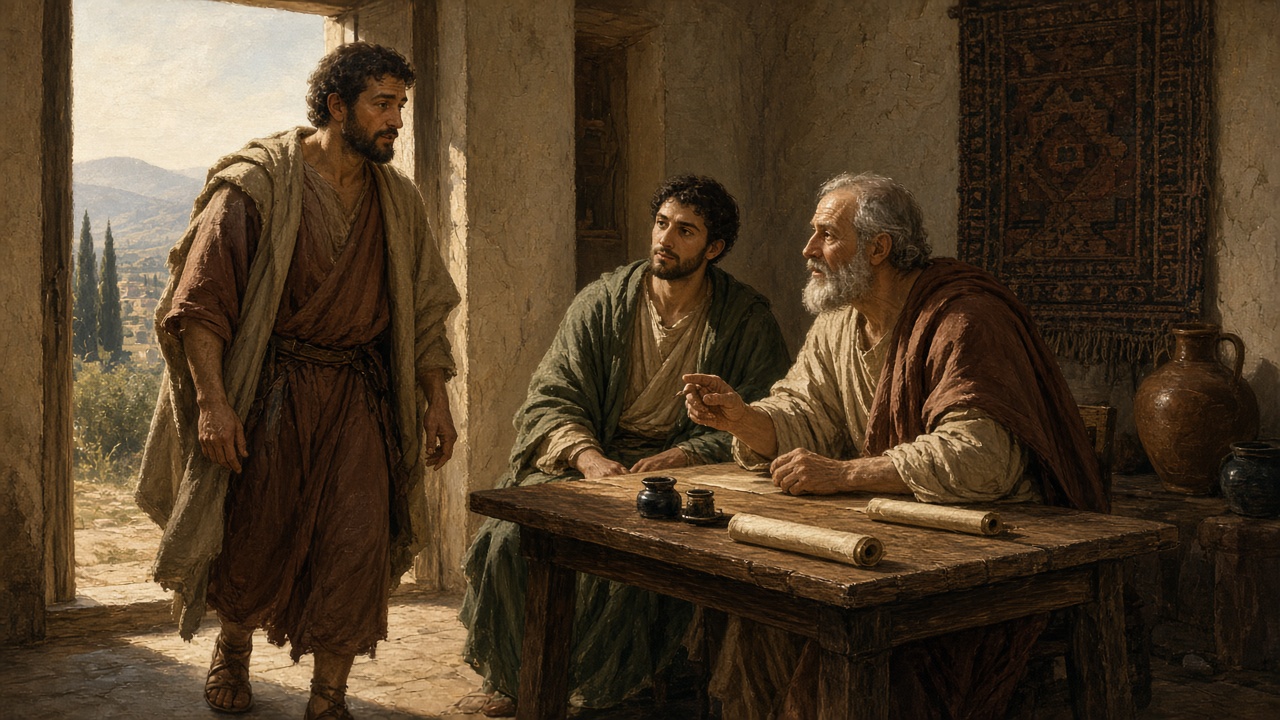
About 2 Corinthians
- Easton's Bible Dictionary (1897) dates the letter early in A.D. 58 and presents it as written by Paul, probably at Philippi or, as some think, at Thessalonica, and sent to Corinth by Titus.Sources: Easton: Corinthians, Second Epistle to the
- Shortly after his first letter, Paul left Ephesus, where intense excitement had been aroused against him, and followed the usual route to Troas, the port of departure for Europe, expecting to meet Titus with news of that letter's effect. Disappointed, he went on to Macedonia; at Philippi he was soon joined by Titus, who brought a favourable report from Corinth, and also by Timothy, and this second letter was written under the influence of that news.Sources: Easton: Corinthians, Second Epistle to the
- The letter is addressed not only to the church in Corinth but also to the saints in all Achaia, that is, in Athens, Cenchrea, and other cities in Greece. Corinth, about 48 miles west of Athens, was noted for its wealth; the city mentioned in the New Testament had been rebuilt and peopled by a colony of freedmen from Rome, and under the Romans it was the seat of government for southern Greece, or Achaia, one of the two provinces into which the Romans divided the country.Sources: Easton: Corinthians, Second Epistle to the · Corinth · Achaia
- Easton arranges the letter in three parts: Paul speaks of his spiritual labours and course of life and expresses warm affection toward the Corinthians (chapters 1–7); he gives directions for a collection for their poor brethren in Judea (chapters 8–9); and he defends his apostolic claim and answers the charges and insinuations of the false teacher and that teacher's adherents (chapters 10–13).Sources: Easton: Corinthians, Second Epistle to the
- Easton remarks that this letter shows the apostle's individuality more than any other. There is no definite information about its effect on the Corinthian church, though Paul visited Corinth after writing it and stayed three months, and from there, in his letter to Rome, sent greetings from some of the church's principal members.Sources: Easton: Corinthians, Second Epistle to the
Notes written with AI assistance from open sources (Theographic Bible Metadata, CC BY-SA 4.0; Easton’s Bible Dictionary, public domain) and reviewed before publishing.
Paul Greets the Corinthians
1Paul, an apostle of Christ Jesus by the will of God, and Timothy our brother,
To the church of God in Corinth, together with all the saints throughout Achaia:
2Grace and peace to you from God our Father and the Lord Jesus Christ.
The God of All Comfort
3Blessed be the God and Father of our Lord Jesus Christ, the Father of compassion and the God of all comfort, 4who comforts us in all our troubles, so that we can comfort those in any trouble with the comfort we ourselves have received from God. 5For just as the sufferings of Christ overflow to us, so also through Christ our comfort overflows.
6If we are afflicted, it is for your comfort and salvation; if we are comforted, it is for your comfort, which accomplishes in you patient endurance of the same sufferings we experience. 7And our hope for you is sure, because we know that just as you share in our sufferings, so also you will share in our comfort.
8We do not want you to be unaware, brothers, of the hardships we encountered in the province of Asia. We were under a burden far beyond our ability to endure, so that we despaired even of life. 9Indeed, we felt we were under the sentence of death, in order that we would not trust in ourselves, but in God, who raises the dead.
10He has delivered us from such a deadly peril, and He will deliver us. In Him we have placed our hope that He will yet again deliver us, 11as you help us by your prayers. Then many will give thanks on our behalf for the favor shown us in answer to their prayers.
Paul’s Change of Plans
12And this is our boast: Our conscience testifies that we have conducted ourselves in the world, and especially in relation to you, in the holiness and sincerity that are from God—not in worldly wisdom, but in the grace of God. 13For we do not write you anything that is beyond your ability to read and understand. And I hope that you will understand us completely, 14as you have already understood us in part, so that you may boast of us just as we will boast of you in the day of our Lord Jesus.
15Confident of this, I planned to visit you first, so that you might receive a double blessing. 16I wanted to visit you on my way to Macedonia, and to return to you from Macedonia, and then to have you help me on my way to Judea.
17When I planned this, did I do it carelessly? Or do I make my plans by human standards, so as to say “Yes, yes” when I really mean “No, no”? 18But as surely as God is faithful, our message to you is not “Yes” and “No.” 19For the Son of God, Jesus Christ, who was proclaimed among you by me and Silvanus and Timothy, was not “Yes” and “No,” but in Him it has always been “Yes.” 20For all the promises of God are “Yes” in Christ. And so through Him, our “Amen” is spoken to the glory of God.
21Now it is God who establishes both us and you in Christ. He anointed us, 22placed His seal on us, and put His Spirit in our hearts as a pledge of what is to come. 23I call God as my witness that it was in order to spare you that I did not return to Corinth. 24Not that we lord it over your faith, but we are fellow workers with you for your joy, because it is by faith that you stand firm.
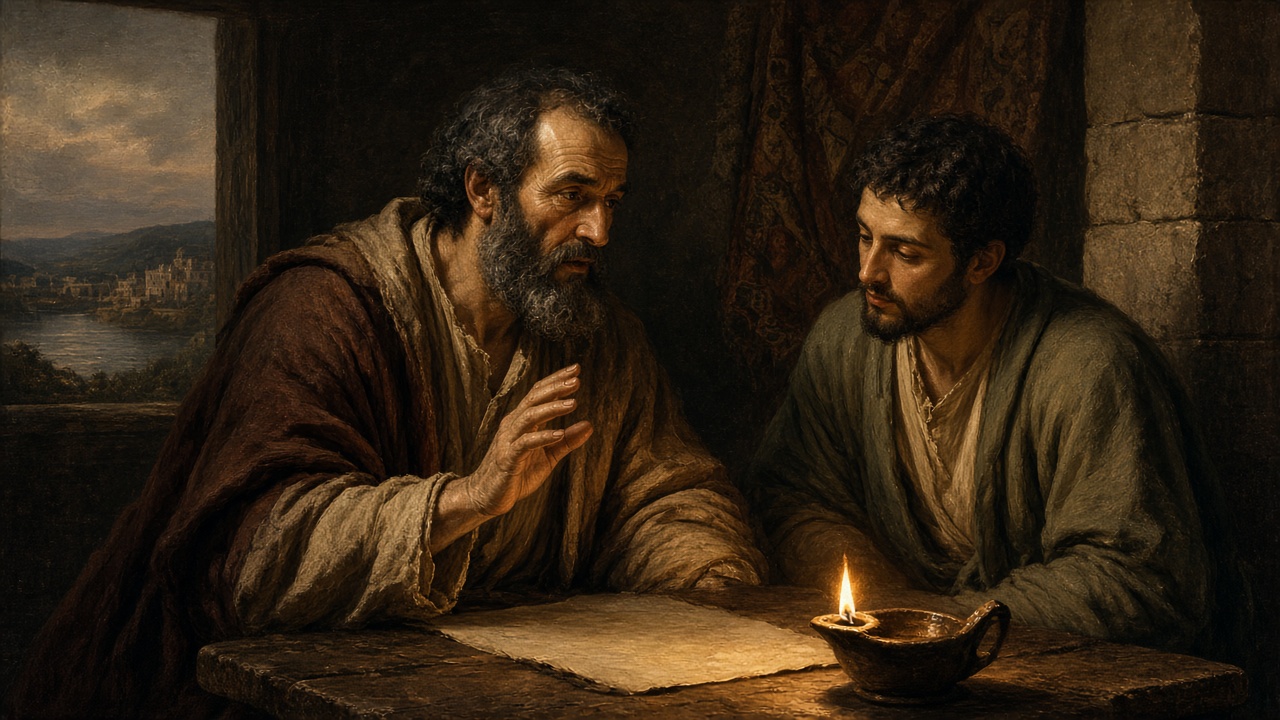
Did you know?
Comfort in Affliction and a Changed Visit
- The letter is addressed to the church of God in Corinth and to all the saints throughout Achaia. Corinth stood on the isthmus joining the Peloponnesus to mainland Greece, about forty-eight miles west of Athens. The city of New Testament times had been rebuilt about a century after the Romans destroyed the ancient city in 146 B.C., was peopled by a colony of freedmen from Rome, and became the Roman seat of government for Achaia, the province covering southern Greece.Sources: the Bible text itself · Corinth · Achaia
- Paul writes that he and his companions met hardships in the province of Asia that were far beyond their ability to endure, so that they despaired even of life and felt they were under a sentence of death. In this sense, Asia is Proconsular Asia, a Roman province in the western part of Asia Minor, of which Ephesus was the capital.Sources: the Bible text itself · Asia
- He had planned to visit Corinth on the way to Macedonia, return from Macedonia, and then have the Corinthians help him on to Judea, but he says he did not return to Corinth in order to spare them. Macedonia was the Roman province north of Greece, while, under the Romans in the time of Christ, Judea was the southernmost of the three divisions of Palestine and part of the province of Syria. Timothy is named with Paul as a sender of the letter, and the chapter recalls that Jesus Christ was proclaimed in Corinth by Paul, Silvanus, and Timothy; Silvanus is the name used in the epistles for Silas, a prominent member of the church in Jerusalem and a companion of Paul.Sources: the Bible text itself · Macedonia · Judea · Silas
Notes written with AI assistance from open sources (Theographic Bible Metadata, CC BY-SA 4.0; Easton’s Bible Dictionary, public domain) and reviewed before publishing.
Places in this chapter
- Achaia · 38.720, 22.540 · verse 1
- Corinth · 37.906, 22.879 · verses 1, 23
- Asia · 38.400, 28.300 · verse 8
- Judea · Today: Judea 1 · 31.777, 35.234 · verse 16
- Macedonia · 41.600, 22.540 · verse 16
Only places identified with high confidence are shown (90% or more according to the scholarly sources compiled by OpenBible). Period map: DARE (Digital Atlas of the Roman Empire), CC BY 4.0; modern map: © OpenStreetMap contributors; places: OpenBible.info (CC BY 4.0).
Credits and license for this translation
Berean Standard Bible
The Holy Bible in English: Berean Standard Bible
Public Domain
Language: English
Contributor: BSB Publishing, LLC
2026-10-02
Source: http://ebible.org/engbsb/ · eBible.org