Numbers 1
Wycliffe Bible · Tap a verse to see its cross-references.
About this book
About Numbers
- Numbers is the fourth book of the Pentateuch. In Hebrew it is called be-midbar, “in the wilderness”; the Greek Septuagint called it Numbers, the name still usual, because it records a census in the wilderness of Sinai and a later census on the plain of Moab.Sources: Easton: Numbers, Book of
- Easton's Bible Dictionary (1897) presents Numbers, like the other books of the Pentateuch, as written by Moses. The history it contains runs from the second month of the second year after the Exodus to the beginning of the eleventh month of the fortieth year, about thirty-eight years and ten months.Sources: Easton: Numbers, Book of
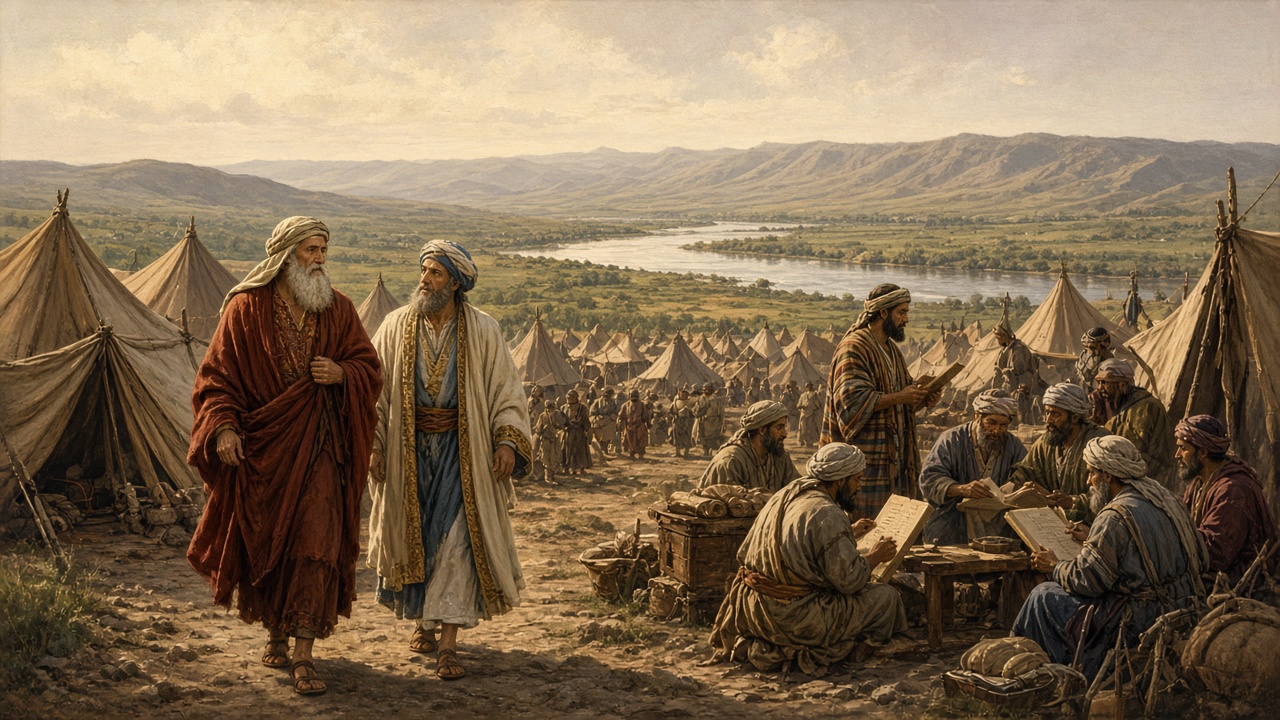
- The narrative begins at Sinai, the mountain district Israel reached in the third month after the Exodus and where they camped for about a year, and follows their route and encampments through the wilderness. It ends on the plains of Moab, east of the Jordan and the Dead Sea, opposite Jericho, their last camp before entering Canaan, the country west of the Jordan. Easton describes those years as a time of wandering in which that generation died in the wilderness, and notes that the people were fewer then than when they left Egypt.Sources: Easton: Numbers, Book of · Sinai · Moab · Canaan
- Easton divides the book into three parts: the census at Sinai and preparations to resume the march, including the Nazirite vow (1–10:10); the journey from Sinai to Moab, the sending of the spies and the report they brought back, and the people’s murmurings, eight times, at the hardships of the way (10:11–21:20); and the events on the plain of Moab before the crossing of the Jordan (21:21–36).Sources: Easton: Numbers, Book of
- While Israel was camped on the plains of Moab, Balak, son of Zippor and king of Moab, fearing them, sent to Pethor in Mesopotamia for Balaam, son of Beor, to curse them; the narrative says Balaam was unable to do so. Numbers 21:14 also cites “the book of the wars of the Lord,” a work that Easton says is uncertain, perhaps a lost writing of Israel or an Amorite record of the victories of their king Sihon.Sources: Easton: Numbers, Book of · Balaam · Balak
Notes written with AI assistance from open sources (Theographic Bible Metadata, CC BY-SA 4.0; Easton’s Bible Dictionary, public domain) and reviewed before publishing.
The First Census of Israel
1And the Lord spak to Moises in the deseert of Synay, in the tabernacle of the boond of pees, in the firste day of the secounde monethe, in the tother yeer of her goyng out of Egipt, 2and seide, Take ye `the summe of al the congregacioun of the sones of Israel, bi her kynredis, and howsis, and `the names of alle bi hem silf, what 3euer thing is of male kynde fro the twentithe yeere and aboue, of alle the stronge men of Israel; and thou and Aaron schulen noumbre hem bi her cumpanies. 4And the princes of lynagis and of housis, in her kynredis, schulen be with you,
The Leaders of the Tribes
5of whiche princes these ben the names; of Ruben, Elisur, the sone of Sedeur; 6of Symeon, Salamyel, the sone of Suri Sadday; 7of Juda, Naason, the sone of Amynadab; of Ysacar, 8Nathanael, the sone of Suar; 9of Zabulon, Eliab, the sone of Elon; sotheli of the sones of Joseph, 10of Effraym, Elisama, the sone of Amyud; of Manasses, Gamaliel the sone of Phadussur; 11of Beniamyn, Abidan, the sone of Gedeon; 12of Dan, Aiezer, the sone of Amysadday; 13of Aser, Fegiel, the sone of Ochran; 14of Gad, Elisaphan, the sone of Duel; 15of Neptalym, Hayra, the sone of Henam. 16These weren the noblest princes of the multitude, bi her lynagis, and kynredis, and the heedis of the oost of Israel,
The Number of Every Tribe
17whiche pryncis Moises and Aaron token, with al the multitude of the comyn puple. 18And thei gaderiden in the firste dai of the secounde monethe, and telden hem bi kynredis, and housis, and meynees, and heedis, and names of alle by hem silf, fro the twentithe yeer and aboue, 19as the Lord comaundide to Moises. 20And of Ruben the firste gendrid of Israel weren noumbrid, in the deseert of Synai, bi her generaciouns, and meynees, and housis, and bi the names of alle heedis, al thing that is of male kynde, fro `the twentithe yeer and aboue, of men goynge forth to batel, 21sixe and fourti thousynd and fyue hundrid. 22Of the sones of Symeon, bi her generaciouns, and meynees, and housis of her kyneredis, weren noumbrid, bi the names and heedis of alle, al that is of male kynde, fro `the twentithe yeer and aboue, of men goynge forth to batel, 23nyn and fifty thousand and thre hundrid. 24Of the sones of Gad, by generaciouns, and meynees, and housis of her kynredis, weren noumbrid, bi the names of alle, fro twenti yeer and aboue, alle men that yeden forth to batels, 25fyue and fourti thousand sixe hundrid and fifti. 26Of the sones of Juda, bi generaciouns, and meynees, and housis of her kynredis, by the names of alle, fro `the twentithe yeer and aboue, alle men that miyten go to batels, 27weren noumbrid foure and seuenti thousand and sixe hundrid. 28Of the sones of Ysacar, bi generaciouns, and meynees, and housis of her kynredis, bi the names of alle, fro `the twentithe yeer and aboue, alle men that yeden forth to batels, 29weren noumbrid foure and fifti thousande and foure hundrid. 30Of the sones of Zabulon, bi generaciouns, and meynees, and housis of her kynredis, weren noumbrid, bi the names of alle, fro `the twentithe yeer and aboue, alle men that myyten go forth to batels, 31seuene and fifti thousynde and foure hundrid. 32Of the sones of Joseph, of the sones of Effraym, bi generaciouns, and meynees, and housis of her kynredis, weren noumbrid, bi the names of alle, fro `the twentithe yeer and aboue, alle men that myyten go forth to batels, 33fourti thousynde and fyue hundrid. 34Forsothe of the sones of Manasses, bi generaciouns, and meynees, and housis of her kynredis, weren noumbrid, bi the names of alle, fro the twentithe yeer and aboue, alle men that myyten go forth to batels, 35two and thretti thousynd and two hundrid. 36Of the sones of Beniamyn, bi generaciouns, and meynees, and housis of her kynredis, weren noumbrid, bi the names of alle, fro twenti yeer and aboue, alle men that miyten go forth to batels, 37fyue and thretti thousinde and foure hundrid. 38Of the sones of Dan, bi generaciouns, and meynees, and housis of her kynredis, weren noumbrid, bi the names of alle, fro `the twentithe yere and aboue, alle men that myyten go forth to batels, 39two and sixti thousynde and seuene hundrid. 40Of the sones of Aser, bi generaciouns, and meynees, and housis of her kynredis, weren noumbrid, bi the names of alle, fro `the twentithe yeer and aboue, alle men that myyten go forth to batels, 41fourti thousynde and a thousynde and fyue hundrid. 42Of the sones of Neptalym, bi generaciouns, and meynees, and housis of her kynredis, weren noumbrid, bi the names of alle, fro `the twentithe yeer and aboue, alle men that myyten go forth to batels, 43thre and fifty thousynde and foure hundrid. 44These men it ben, whiche Moises and Aaron and the twelue princes of Israel noumbriden, alle bi the housis `of her kynredis. 45And alle men of the sones of Israel bi her housis, and meynees, fro `the twentithe yeer and aboue, that myyten go forth to batels, weren togidere 46sixe hundrid thousynde and thre thousynde of men, fyue hundred and fifti.
The Exemption of the Levites
47Sotheli the dekenes in the lynage of her meynes weren not noumbrid with hem. 48And the Lord spak to Moises, and seide, `Nyle thou noumbre the lynage of Leuy, 49nether sette thou the summe of hem with the sones of Israel; 50but thou schalt ordeyne hem on the tabernacle of witnessing, and on alle the vessels therof, and what euer thing perteyneth to cerymonyes ether sacrifices. Thei schulen bere the tabernacle, and alle purtenaunces therof, and thei schulen be in seruyce, and schulen sette tentis bi the cumpas of the tabernacle. 51Whanne me schal go, the dekenes schulen do doun the tabernacle; whanne the tentis schulen be sette, thei schulen `reise the tabernacle. Who euer of straungeris neiyeth, he schal be slayn. 52Sotheli the sones of Israel schulen sette tentis, ech man bi cumpenyes, and gaderyngis, and his oost; 53forsothe the dekenes schulen sette tentis bi the cumpas of the tabernacle, lest indignacioun be maad on the multitude of the sones of Israel; and thei schulen wake in the kepyngis of the `tabernacle of witnessyng. 54Therfor the sones of Israel diden bi alle thingis whiche the Lord comaundide to Moises.
Did you know?
The Census in the Wilderness of Sinai
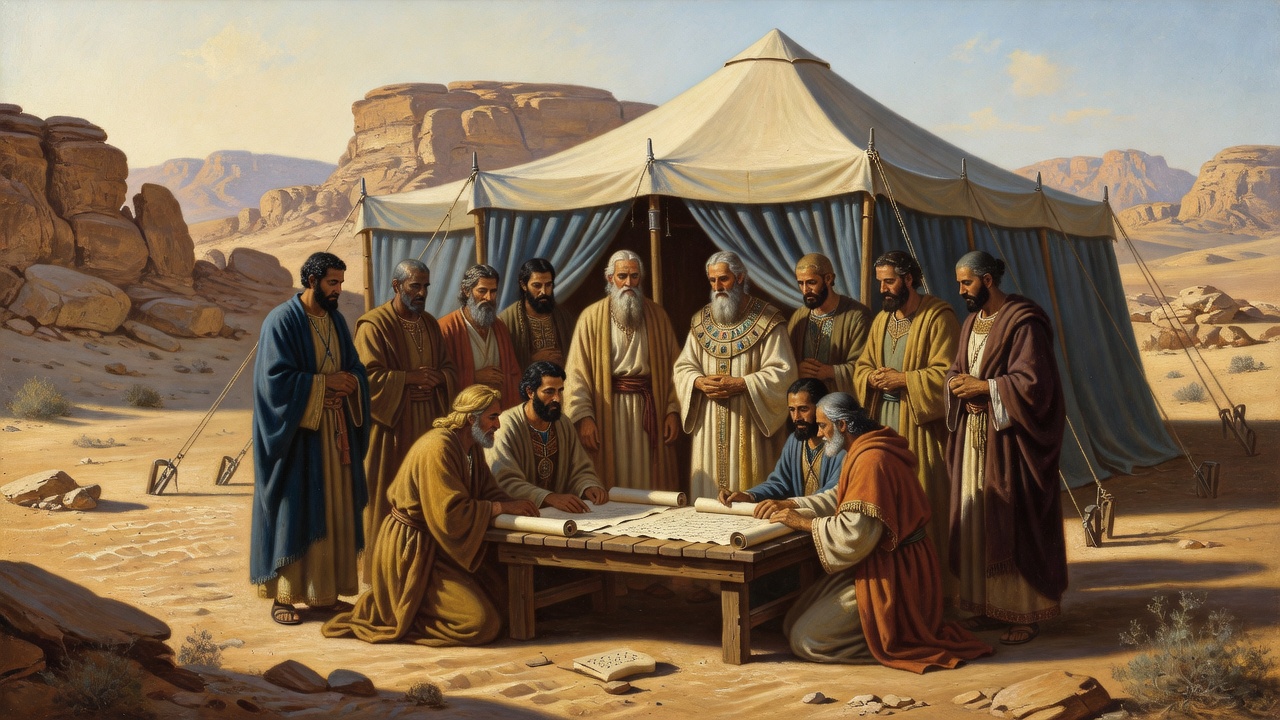
- The census was ordered in the Wilderness of Sinai on the first day of the second month in the second year after the Israelites departed Egypt. It counted every male aged twenty or older who was able to serve in the army, arriving at a total of 603,550 fighting men.Sources: the Bible text itself · Sinai
- Moses and Aaron conducted the registration alongside twelve appointed tribal leaders. Joseph was represented as two distinct tribal divisions named after his sons, Ephraim and Manasseh.Sources: the Bible text itself · Ephraim · Manasseh (son of Joseph)
- The tribe of Levi was entirely exempted from the military count. Instead, the Levites were assigned exclusively to care for, transport, assemble, and guard the tabernacle of the Testimony and its furnishings.Sources: the Bible text itself
Notes written with AI assistance from open sources (Theographic Bible Metadata, CC BY-SA 4.0; Easton’s Bible Dictionary, public domain) and reviewed before publishing.
Places in this chapter
- Egypt · 30.129, 31.308 · verse 1
- Wilderness of Sinai · Today: about 50 km around Jebel Musa · 28.540, 33.973 · verses 1, 19
Only places identified with high confidence are shown (90% or more according to the scholarly sources compiled by OpenBible). Period map: DARE (Digital Atlas of the Roman Empire), CC BY 4.0; modern map: © OpenStreetMap contributors; places: OpenBible.info (CC BY 4.0).
Credits and license for this translation
Wycliffe Bible
This is the Pentateuch and Gospels from The Holy Bible, containing the Old and New Testaments, with the apocryphal books, in the earliest English version made from the latin Vulgate by John Wycliffe and his followers. c.1395
Public Domain
Language: Middle English (English)
Dialect: Middle
Translation by: John Wycliffe
2016-11-08
Section headings adapted from the Berean Standard Bible (public domain); they are not part of this translation’s text.
Source: http://ebible.org/engWycliffe/ · eBible.org