Leviticus 27
Wycliffe Bible · Tap a verse to see its cross-references.
Rules about Valuations
1And the Lord spak to Moises and seide, Speke thou to the sones of Israel, 2and thou schalt seye to hem, A man that makith avow, and bihetith his soule to God, schal yyue the priys vndur valu, ether preisyng. 3If it is a male, fro the twentithe yeer `til to the sixtithe yeer, he schal yyue fifti siclis of siluer, at the mesure of seyntuarie, if it is a womman, 4sche schal yyue thretti siclis; 5forsothe fro the fifthe yeer `til to the twentithe yeer, a male schal yyue twenti cyclis, a womman schal yyue ten ciclis; 6fro o monethe `til to the fifthe yeer, fyue ciclis schulen be youun for a male, thre ciclis for a womman; 7a male of sixti yeer and ouer schal yyue fiftene ciclis, a womman schal yyue ten cyclis. 8If it is a pore man, and may not yelde the valu, he schal stonde bifor the preest, and as myche as the preest preisith, and seeth that the pore man may yelde, so myche he schal yyue. 9Forsothe if ony man avowith a beeste, that may be offrid to the Lord, it schal be hooli, 10and schal not mow be chaungid, that is, nethir a betere for `an yuel, nether `a worse for a good; and if he chaungith it, bothe that, that is chaungid, and that, for which it is chaungid, schal be halewid to the Lord. 11Sotheli if ony man avowith an vncleene beeste, that may not be offrid to the Lord, it schal be brouyt bifor the preest, 12and the preest schal deme whether it is good ether yuel, and schal sette the prijs; 13which prijs if he that offrith wole yyue, he schal adde the fifthe part ouer the valu. 14If a man avowith his hows, and halewith it to the Lord, the preest schal biholde, `whether it is good ether yuel, and bi the prijs, which is ordeyned of hym, it schal be seld; 15sotheli if he that avowide wole ayen-bie it, he schal yyue the fifthe part of the valu aboue, and he schal haue the hows. 16That if he avowith the feeld of his possessioun, and halewith to the Lord, the prijs schal be demed bi the mesure of seed; if the feeld is sowun with thritti buyschels of barli, it schal be seeld for fifti siclys of siluer. 17If he auowith the feeld anoon for the yeer of the iubilee bigynnynge, as myche as it may be worth, bi so myche it schal be preisid; 18but if it be after `sum part of tyme, the preest schal rykene the money bi the noumbre of yeeris that ben residue `til to the iubilee, and it schal be withdrawun of the prijs. 19That if he that avowide wole ayenbie the feeld, he schal adde the fyuethe part of the money preisid, and he schal welde it; 20but if he nyle ayenbie, but it is seeld to ony othir man, he that avowide schal `no more mowe ayenbie it; 21for whanne the dai of iubilee cometh, it schal be halewid to the Lord, and the possessioun halewid perteyneth to the riyt of preestis. 22If the feeld is bouyt, and is not of the possessioun of grettere men, 23and is halewid to the Lord, the preest schal determyne the prijs bi the noumbre of yeeris `til to the iubilee, and he that avowide the feeld schal yyue the prijs to the Lord; 24forsothe in the iubilee it schal turne ayen to the formere lord that seelde it, and `haue he in to the eritage of his possessioun. 25`Ech preisyng schal be peisid bi the sicle of seyntuarie; a sicle hath twenti halpens. 26No man may halewe and avowe the firste gendrid thingis that perteynen to the Lord, whether it is oxe, whether scheep, tho ben the Lordis part. 27That if the beeste is vncleene, he that offride schal ayenbie by his valu, and he schal adde the fyuethe part of prijs; if he nyle ayenbie, it schal be seeld to another man, as myche euer as it is `set at valu. 28Al thing which is halewid to the Lord, whether it is man, whether beeste, whether feeld, it schal not be seeld, nether it schal mow be ayenbouyt; whateuer thing is halewid onys, it schal be hooli of the noumbre of hooli thingis to the Lord, 29and ech halewyng which is offrid of man, schal not be ayenbouyt, but it schal die bi deeth.
Instruction on Tithes
30Alle the tithis of erthe, whether of fruytis, whether of applis of trees, ben the Lordis part, and ben halewid to hym; 31sotheli if ony man wole ayenbie hise tithis, he schal adde the fyuethe part of tho; of alle tithis, 32of scheep, and of oxen, and of geet, that passen vndur the `yerde of scheepherde, whateuer thing cometh to the tenthe part, it schal be halewid to the Lord; 33it schal not be chosun, nether good, nether yuel; nethir it schal be chaungid for another; if ony man chaungith, bothe that, that is chaungid, and that, for which it is chaungid, schal be halewid to the Lord, and it schal not be ayenbouyt. 34These ben the comaundementis whiche the Lord comaundide to Moises, and to the sones of Israel, in the hil of Synay.
Did you know?
Vows, Valuations, and the Sinai Laws
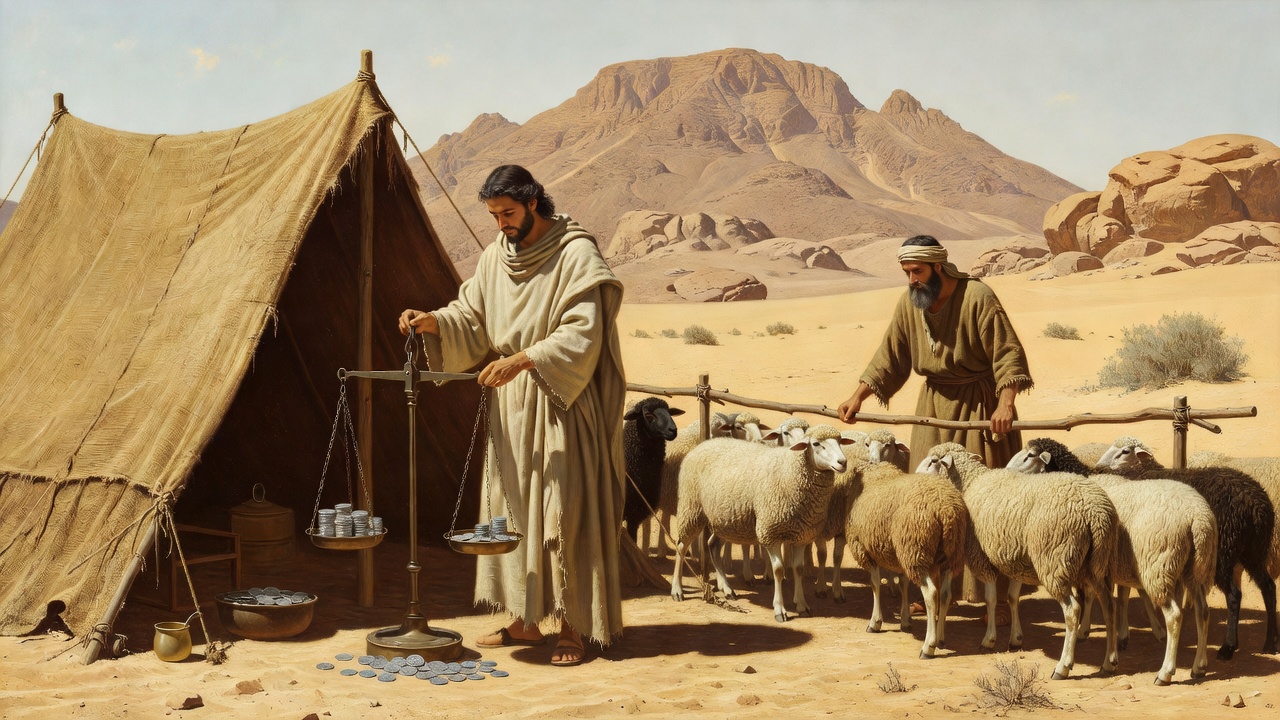
- When Israelites consecrated houses, land, unclean animals, or agricultural tithes to God, they could often redeem them by paying the assessed value plus an additional one-fifth of that price.Sources: the Bible text itself
- Dedicated persons were assigned standard monetary values based on age and sex, calculated using the sanctuary shekel, which was equal to twenty gerahs. If a person making the vow was too poor to pay the fixed amount, the priest set an adjusted price according to their means.Sources: the Bible text itself
- The book of Leviticus concludes by stating that these laws were given to Moses on Mount Sinai, where the Israelites stayed encamped for about a year after the Exodus.Sources: the Bible text itself · Mount Sinai
Notes written with AI assistance from open sources (Theographic Bible Metadata, CC BY-SA 4.0; Easton’s Bible Dictionary, public domain) and reviewed before publishing.
Credits and license for this translation
Wycliffe Bible
This is the Pentateuch and Gospels from The Holy Bible, containing the Old and New Testaments, with the apocryphal books, in the earliest English version made from the latin Vulgate by John Wycliffe and his followers. c.1395
Public Domain
Language: Middle English (English)
Dialect: Middle
Translation by: John Wycliffe
2016-11-08
Section headings adapted from the Berean Standard Bible (public domain); they are not part of this translation’s text.
Source: http://ebible.org/engWycliffe/ · eBible.org