Psalms 73
LXX2012: Septuagint in British/International English 2012 · Tap a verse to see its cross-references.
(74) A Psalm of instruction for Asaph.
Surely God Is Good to Israel
1Therefore have you rejected us, O God, for ever? therefore is your wrath kindled against the sheep of your pasture?
2Remember your congregation which you have purchased from the beginning; you did ransom the rod of your inheritance; this mount Sion wherein you have lived.
3Lift up your hands against their pride continually; because of all that the enemy has done wickedly in your holy places.
4And they that hate you have boasted in the midst of your feast; they have set up their standards for signs,
5ignorantly as it were in the entrance above;
6they cut down its doors at once with axes as in a wood of trees; they have broken it down with hatchet and stone cutter.
7They have burnt your sanctuary with fire to the ground; they have profaned the habitation of your name.
8They have said in their heart, even all their kindred together, Come, let us abolish the feasts of the Lord from the earth.
9We have not seen our signs; there is no longer a prophet; and God will not know us any more.
10How long, O God, shall the enemy reproach? shall the enemy provoke your name forever?
11Therefore turn you away your hand, and your right hand from the midst of your bosom for ever?
12But God is our King of old; he has wrought salvation in the midst of the earth.
13You did establish the sea, in your might, you did break to pieces the heads of the dragons in the water.
14You did break to pieces the heads of the dragon; you did give him for meat to the Ethiopian nations.
15You did cleave fountains and torrents; you dried up mighty rivers.
16The day is yours, and the night is yours; you have prepared the sun and the moon.
17You have made all the borders of the earth; you have made summer and spring.
18Remember this your creation: an enemy has reproached the Lord, and a foolish people has provoked your name.
19Deliver not to the wild beasts a soul that gives praise to you: forget not for ever the souls of your poor.
20Look upon your covenant: for the dark places of the earth are filled with the habitations of iniquity.
21let not the afflicted and shamed one be rejected: the poor and needy shall praise your name.
22Arise, O God, plead your cause: remember your reproaches that come from the foolish one all the day.
23Forget not the voice of your suppliants: let the pride of them that hate you continually ascend before you.
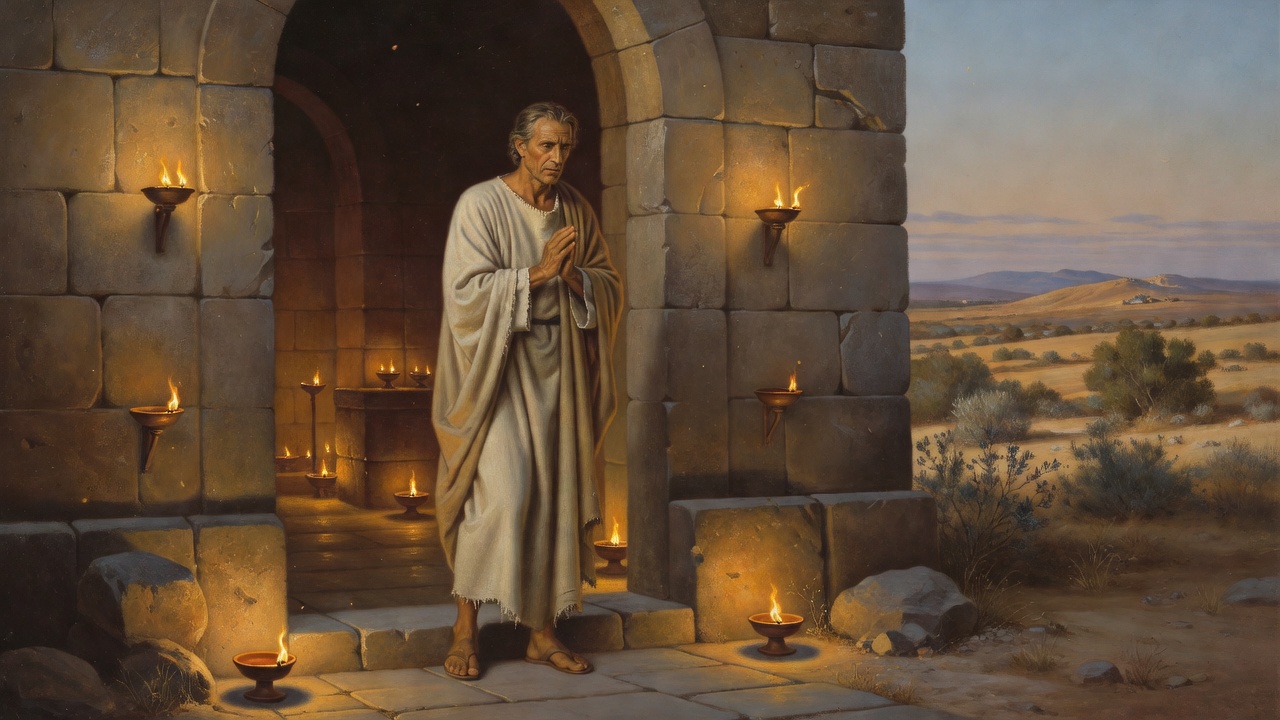
Did you know?
The Prosperity of the Wicked and the Sanctuary
- Psalm 73 begins Book III of the Psalter and is attributed to Asaph, a Levite musician and seer who served as one of King David's choir leaders. A group of twelve psalms (Psalm 50 and 73–83) is associated with him and his guild of singers.Sources: Asaph (Levite) · the Bible text itself
- The psalmist struggles with a deep crisis of faith, questioning the value of personal purity when seeing the carefree wealth and apparent lack of suffering among the wicked. This internal struggle only resolves when he enters the sanctuary of God, where he gains perspective on their eventual ruin.Sources: the Bible text itself
Notes written with AI assistance from open sources (Theographic Bible Metadata, CC BY-SA 4.0; Easton’s Bible Dictionary, public domain) and reviewed before publishing.
Credits and license for this translation
LXX2012: Septuagint in British/International English 2012
The Septuagint with Apocrypha, translated from Greek to English by Sir Lancelot C. L. Brenton and published in 1885, with some language updates (British/International English)
Public Domain
Language: English
Dialect (if applicable): British
Language in English: English
Translation by: Sir Lancelot Charles Lee Breton
LXX2012: Septuagint in English 2012, British/International English Edition
This is a translation of the Old Testament and Apocrypha/Deuterocanon from Hebrew to Greek to 19th Century British English, with some updates of spelling and word usage to contemporary British/International English. The original English translation was done by Sir Lancelot Charles Lee Brenton and published by Samuel Bagster & Sons, Ltd., in London in 1851. It has entered the Public Domain due to the passage of sufficient time. In the process of scanning and typing the text, the original poetry and prose formatting, as well as peripheral material like introductions and notes, have been omitted.
This edition of the Septuagint has some language updates. Brenton's word order and punctuation has been mostly retained, meaning that quotation marks are not used, and sentences within quotes may not start with capital letters, as was standard usage in 1851. Names transliterated from Greek to those transliterated from Hebrew in the common English Bibles often differ. These language updates are dedicated to the Public Domain by the author of those edits, Michael Paul Johnson. Therefore this edition may be freely copied, published, etc.
Before considering making changes to the text of this work, I recommend that you consult with God, because this is really His Book.
If you find errors in the text, please report them so that we can correct them.
Donations to help with the expenses of operating this web site and thus help others have free access to the Word of God may be made to us, but are not required. Please see http://MLJohnson.org/partner/ for more about that.
Section headings adapted from the Berean Standard Bible (public domain); they are not part of this translation’s text.
Source: http://ebible.org/eng-uk-lxx2012/ · eBible.org