Genesis 36
LXX2012: Septuagint in British/International English 2012 · Tap a verse to see its cross-references.
The Descendants of Esau
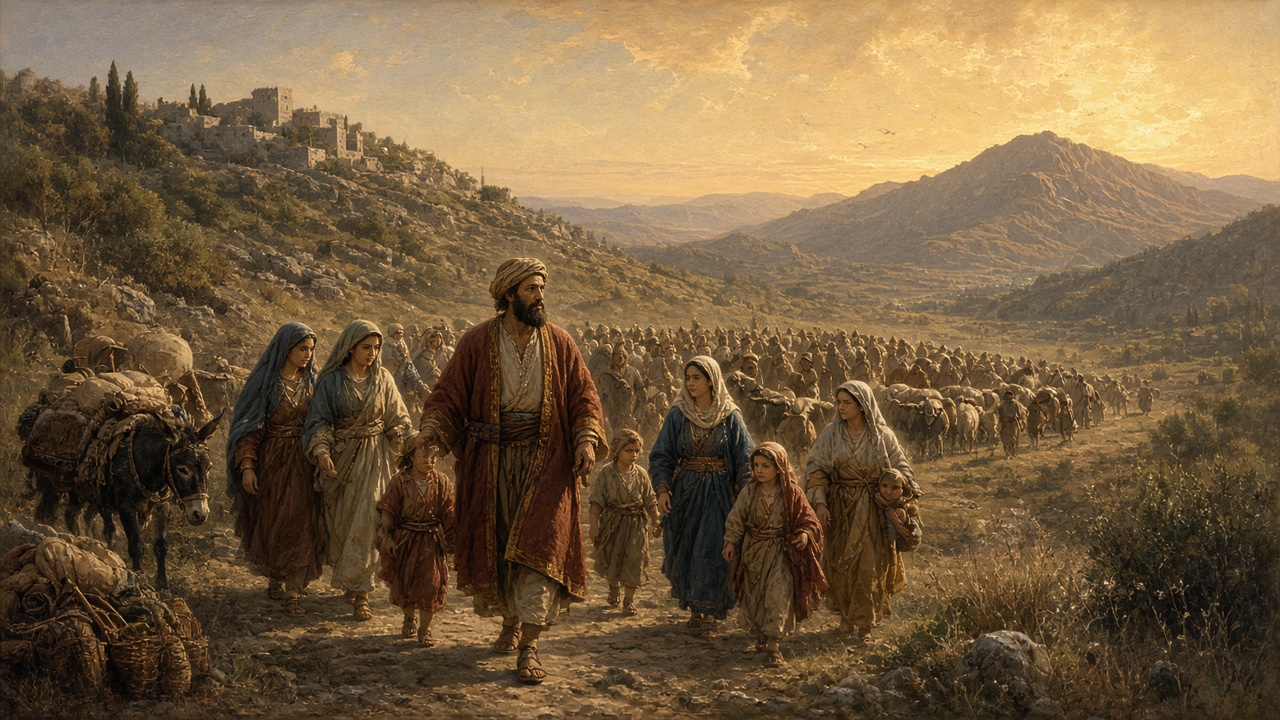
1And these are the generations of Esau; this is Edom. 2And Esau took to himself wives of the daughters of the Chananites; Ada, the daughter of Aelom the Chettite; and Olibema, daughter of Ana the son of Sebegon, the Evite; 3and Basemath, daughter of Ismael, sister of Nabaioth. 4And Ada bore to him Eliphas; and Basemath bore Raguel. 5And Olibema bore Jeus, and Jeglom, and Core; these are the sons of Esau, which were born to him in the land of Chanaan. 6And Esau took his wives, and his sons, and his daughters, and all the persons of his house, and all his possessions, and all his cattle, and all that he had got, and all things whatever he had acquired in the land of Chanaan; and Esau went forth from the land of Chanaan, from the face of his brother Jacob. 7For their substance was too great for them to dwell together; and the land of their sojourning could not bear them, because of the abundance of their possessions. 8And Esau lived in mount Seir; Esau, he is Edom. 9And these are the generations of Esau, the father of Edom in the mount Seir. 10And these are the names of the sons of Esau. Eliphas, the son of Ada, the wife of Esau; and Raguel, the son of Basemath, wife of Esau. 11And the sons of Eliphas were Thaeman, Omar, Sophar, Gothom, and Kenez. 12And Thamna was a concubine of Eliphaz, the son of Esau; and she bore Amalec to Eliphas. These are the sons of Ada, the wife of Esau. 13And these are the sons of Raguel; Nachoth, Zare, Some, and Moze. These were the sons of Basemath, wife of Esau. 14And these are the sons of Olibema, the daughter of Ana, the son of Sebegon, the wife of Esau; and she bore to Esau, Jeus, and Jeglom, and Core. 15These are the chiefs of the son of Esau, even the sons of Eliphas, the firstborn of Esau; chief Thaeman, chief Omar, chief Sophar, chief Kenez, 16chief Core, chief Gothom, chief Amalec. These are the chiefs of Eliphas, in the land of Edom; these are the sons of Ada. 17And these are the sons of Raguel, the son of Esau; chief Nachoth, chief Zare, chief Some, chief Moze. These are the chiefs of Raguel, in the land of Edom; these are the sons of Basemath, wife of Esau. 18And these are the sons of Olibema, wife of Esau; chief Jeus, chief Jeglom, chief Core. These are the chiefs of Olibema, daughter of Ana, wife of Esau. 19These are the sons of Esau, and these are the chiefs; these are the sons of Edom.
The Descendants of Seir
20And these are the sons of Seir, the Chorrhite, who inhabited the land; Lotan, Sobal, Sebegon, Ana, 21and Deson, and Asar, and Rison. These are the chiefs of the Chorrhite, the son of Seir, in the land of Edom. 22And the sons of Lotan were Chorrhi and Haeman; and the sister of Lotan, Thamna. 23And these are the sons of Sobal; Golam, and Manachath, and Gaebel, and Sophar, and Omar. 24And these are the sons of Sebegon; Aie, and Ana; this is the Ana who found Jamin in the wilderness, when he tended the beasts of his father Sebegon. 25And these are the sons of Ana; Deson—and Olibema was daughter of Ana. 26And these are the sons of Deson; Amada, and Asban, and Ithran, and Charrhan. 27And these are the sons of Asar; Balaam, and Zucam, and Jucam. 28And these are the sons of Rison; Hos, and Aran. 29And these are the chiefs of Chorri; chief Lotan, chief Sobal, chief Sebegon, chief Ana, 30chief Deson, chief Asar, chief Rison. These are the chiefs of Chorri, in their principalities in the land of Edom.
The Kings of Edom
31these are the kings which reigned in Edom, before a king reigned in Israel. 32And Balac, son of Beor, reigned in Edom; and the name of his city was Dennaba. 33And Balac died; and Jobab, son of Zara, from Bosorrha reigned in his stead. 34And Jobab died; and Asom, from the land of the Thaemanites, reigned in his stead. 35And Asom died; and Adad son of Barad, who cut off Madiam in the plain of Moab, ruled in his stead; and the name of his city was Getthaim. 36And Adad died; and Samada of Massecca reigned in his stead. 37Samada died; and Saul of Rhooboth by the river reigned in his stead. 38And Saul died; and Ballenon the son of Achobor reigned in his stead. 39And Ballenon the son of Achobor died; and Arad the son of Barad reigned in his stead; and the name of his city was Phogor; and the name of his wife was Metebeel, daughter of Matraith, son of Maizoob. 40These are the names of the chiefs of Esau, in their tribes, according to their place, in their countries, and in their nations; chief Thamna, chief Gola, chief Jether, 41chief Olibema, chief Helas, chief Phinon, 42chief Kenez, chief Thaeman, chief Mazar, 43chief Magediel, chief Zaphoin. These are the chiefs of Edom in their dwelling-places in the land of their possession; this is Esau, the father of Edom. 44And Jacob lived in the land where his father sojourned, in the land of Chanaan.
Did you know?
Esau, Father of the Edomites
- Genesis 36 is the family record of Esau, also called Edom, a name meaning “red,” linked to the red lentil stew for which he sold his birthright. Because his household and Jacob’s had more livestock than the land could support together, Esau left Canaan and settled in the mountainous region of Seir, east of the Arabah, which became the land of Edom.Sources: the Bible text itself · Esau (Edom) · Seir · Edom
- Easton's Bible Dictionary (1897) notes that Esau’s three wives receive different names in this genealogy from those in the earlier narrative. Adah, daughter of Elon the Hittite, is also called Bashemath; Basemath, daughter of Ishmael, is also called Mahalath; and the wife identified as the daughter of Beeri the Hittite appears here as Oholibamah, daughter of Anah and granddaughter of Zibeon the Hivite.Sources: Bashemath · Adah · Aholibamah · the Bible text itself
- Mount Seir was first occupied by the Horites, whom the Edomites later drove out, yet this chapter still lists the Horite chiefs in the land of Edom. It also names kings who reigned in Edom before any king reigned over the Israelites, including Bela, whose city was Dinhabah, and Jobab of Bozrah, a city later mentioned by the prophets.Sources: the Bible text itself · Seir · Dinhabah · Bozrah
Notes written with AI assistance from open sources (Theographic Bible Metadata, CC BY-SA 4.0; Easton’s Bible Dictionary, public domain) and reviewed before publishing.
Places in this chapter
- Canaan · 32.767, 35.333 · verses 2, 5, 6
- Edom · 30.746, 35.604 · verses 9, 16, 17, 20, 21, 31, 32, 40, 43
- Midian · 28.495, 35.012 · verse 35
- Moab · Today: Moab 1 · 31.181, 35.701 · verse 35
Only places identified with high confidence are shown (90% or more according to the scholarly sources compiled by OpenBible). Period map: DARE (Digital Atlas of the Roman Empire), CC BY 4.0; modern map: © OpenStreetMap contributors; places: OpenBible.info (CC BY 4.0).
Credits and license for this translation
LXX2012: Septuagint in British/International English 2012
The Septuagint with Apocrypha, translated from Greek to English by Sir Lancelot C. L. Brenton and published in 1885, with some language updates (British/International English)
Public Domain
Language: English
Dialect (if applicable): British
Language in English: English
Translation by: Sir Lancelot Charles Lee Breton
LXX2012: Septuagint in English 2012, British/International English Edition
This is a translation of the Old Testament and Apocrypha/Deuterocanon from Hebrew to Greek to 19th Century British English, with some updates of spelling and word usage to contemporary British/International English. The original English translation was done by Sir Lancelot Charles Lee Brenton and published by Samuel Bagster & Sons, Ltd., in London in 1851. It has entered the Public Domain due to the passage of sufficient time. In the process of scanning and typing the text, the original poetry and prose formatting, as well as peripheral material like introductions and notes, have been omitted.
This edition of the Septuagint has some language updates. Brenton's word order and punctuation has been mostly retained, meaning that quotation marks are not used, and sentences within quotes may not start with capital letters, as was standard usage in 1851. Names transliterated from Greek to those transliterated from Hebrew in the common English Bibles often differ. These language updates are dedicated to the Public Domain by the author of those edits, Michael Paul Johnson. Therefore this edition may be freely copied, published, etc.
Before considering making changes to the text of this work, I recommend that you consult with God, because this is really His Book.
If you find errors in the text, please report them so that we can correct them.
Donations to help with the expenses of operating this web site and thus help others have free access to the Word of God may be made to us, but are not required. Please see http://MLJohnson.org/partner/ for more about that.
Section headings adapted from the Berean Standard Bible (public domain); they are not part of this translation’s text.
Source: http://ebible.org/eng-uk-lxx2012/ · eBible.org