Ecclesiastes 8
LXX2012: Septuagint in British/International English 2012 · Tap a verse to see its cross-references.
Obey the King
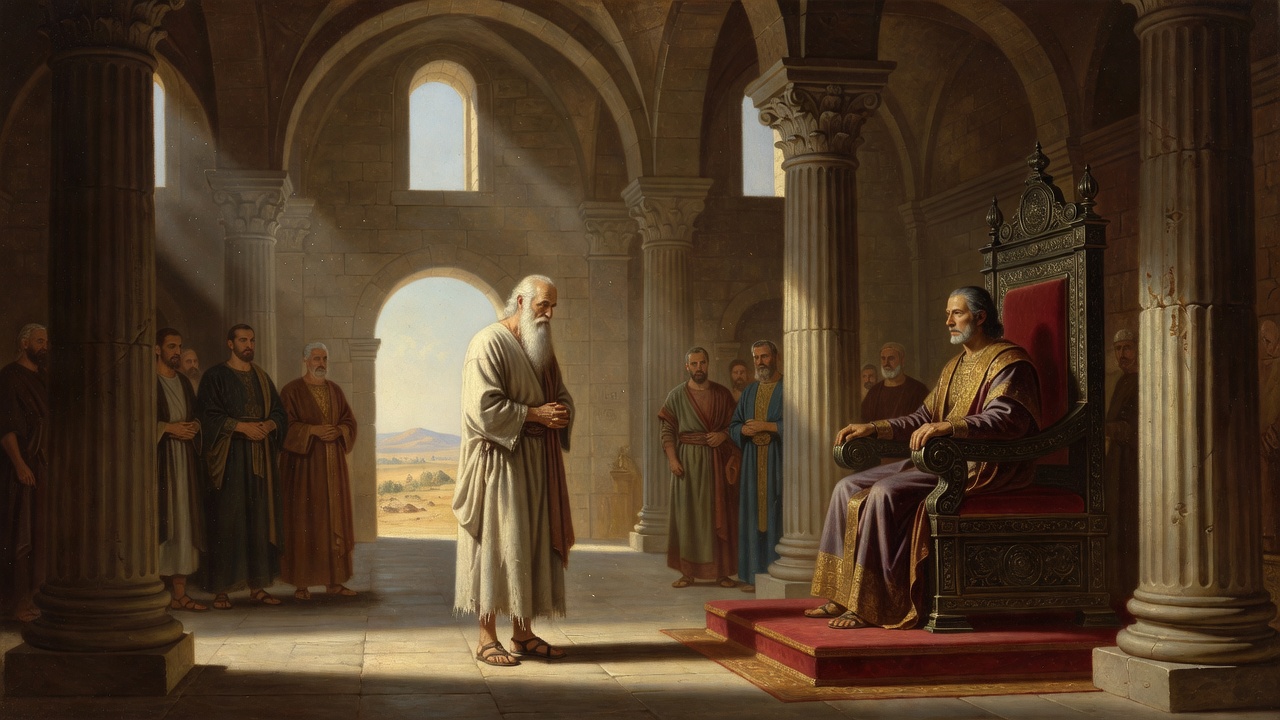
1Who knows the wise? and who knows the interpretation of a saying? A man's wisdom will lighten his countenance; but a man of shameless countenance will be hated. 2Observe the commandment of the king, and that because of the word of the oath of God. 3Be not hasty; you shall go forth out of his presence: stand not in an evil matter; for he will do whatever he shall please, 4even as a king having power: and who will say to him, What do you? 5He that keeps the commandment shall not know an evil thing: and the heart of the wise knows the time of judgement. 6For to every thing there is time and judgement; for the knowledge of a man is great to him. 7For there is no one that knows what is going to be: for who shall tell him how it shall be? 8There is no man that has power over the spirit to retain the spirit; and there is no power in the day of death: and there is no discharge in the day of the battle; neither shall ungodliness save her votary. 9So I saw all this, and I applied my heart to every work that has been done under the sun; all the things wherein man has power over man to afflict him.
Fear God
10And then I saw the ungodly carried into the tombs, and that out of the holy place: and they departed, and were praised in the city, because they had done thus: this also is vanity. 11Because there is no contradiction made on the part of those who do evil quickly, therefore the heart of the children of men is fully determined in them to do evil. 12He that has sinned has done evil from that time, and long from beforehand: nevertheless I know, that it is well with them that fear God, that they may fear before him: 13but it shall not be well with the ungodly, and he shall not prolong his days, which are as a shadow; forasmuch as he fears not before God.
God’s Ways Are Mysterious
14There is a vanity which is done upon the earth; that there are righteous persons to whom it happens according to the doing of the ungodly; and there are ungodly men, to whom it happens according to the doing of the just: I said, This is also vanity. 15Then I praised mirth, because there is no good for a man under the sun, but to eat, and drink, and be merry: and this shall attend him in his labour all the days of his life, which God has given him under the sun. 16Whereupon I set my heart to know wisdom, and to perceive the trouble that was wrought upon the earth: for there is that neither by day nor night sees sleep with his eyes. 17And I saw all the works of God, that a man shall not be able to discover the work which is wrought under the sun; whatever things a man shall endeavour to seek, however a man may labour to seek it, yet he shall not find it; yes, how much soever a wise man may speak of knowing it, he shall not be able to find it: for I applied all this to my heart, and my heart has seen all this.
Did you know?
Wisdom in the Face of Power and Injustice
- The author counsels caution when dealing with royal authority, noting that a king holds supreme power and can act at will. A wise person is advised to keep the king's commands, respect solemn oaths made before God, and discern the right timing and manner to act.Sources: the Bible text itself
- The passage addresses the frustration of delayed justice, noting that when sentences for wrongdoing are not carried out promptly, people are emboldened to commit evil. It also observes life's baffling anomalies, where righteous people sometimes receive what the wicked deserve, and vice versa.Sources: the Bible text itself
- In evaluating human effort to grasp divine providence, the text concludes that even the wisest person cannot fully discover or comprehend the work of God on earth, regardless of relentless search day and night.Sources: the Bible text itself
Notes written with AI assistance from open sources (Theographic Bible Metadata, CC BY-SA 4.0; Easton’s Bible Dictionary, public domain) and reviewed before publishing.
Credits and license for this translation
LXX2012: Septuagint in British/International English 2012
The Septuagint with Apocrypha, translated from Greek to English by Sir Lancelot C. L. Brenton and published in 1885, with some language updates (British/International English)
Public Domain
Language: English
Dialect (if applicable): British
Language in English: English
Translation by: Sir Lancelot Charles Lee Breton
LXX2012: Septuagint in English 2012, British/International English Edition
This is a translation of the Old Testament and Apocrypha/Deuterocanon from Hebrew to Greek to 19th Century British English, with some updates of spelling and word usage to contemporary British/International English. The original English translation was done by Sir Lancelot Charles Lee Brenton and published by Samuel Bagster & Sons, Ltd., in London in 1851. It has entered the Public Domain due to the passage of sufficient time. In the process of scanning and typing the text, the original poetry and prose formatting, as well as peripheral material like introductions and notes, have been omitted.
This edition of the Septuagint has some language updates. Brenton's word order and punctuation has been mostly retained, meaning that quotation marks are not used, and sentences within quotes may not start with capital letters, as was standard usage in 1851. Names transliterated from Greek to those transliterated from Hebrew in the common English Bibles often differ. These language updates are dedicated to the Public Domain by the author of those edits, Michael Paul Johnson. Therefore this edition may be freely copied, published, etc.
Before considering making changes to the text of this work, I recommend that you consult with God, because this is really His Book.
If you find errors in the text, please report them so that we can correct them.
Donations to help with the expenses of operating this web site and thus help others have free access to the Word of God may be made to us, but are not required. Please see http://MLJohnson.org/partner/ for more about that.
Section headings adapted from the Berean Standard Bible (public domain); they are not part of this translation’s text.
Source: http://ebible.org/eng-uk-lxx2012/ · eBible.org