Ecclesiastes 7
LXX2012: Septuagint in British/International English 2012 · Tap a verse to see its cross-references.
The Value of Wisdom
1What advantage has a man? for who knows what is good for a man in his life, during the number of the life of the days of his vanity? and he has spent them as a shadow; for who shall tell a man what shall be after him under the sun? 2A good name is better than good oil; and the day of death than the day of birth. 3It is better to go to the house of mourning, than to go to the banquet house: since this is the end of every man; and the living man will apply good warning to his heart. 4Sorrow is better than laughter: for by the sadness of the countenance the heart will be made better. 5The heart of the wise is in the house of mourning; but the heart of fools is in the house of mirth. 6It is better to hear a reproof of a wise man, than for a man to hear the song of fools. 7As the sound of thorns under a cauldron, so is the laughter of fools: this is also vanity. 8for oppression makes a wise man mad, and destroys his noble heart. 9The end of a matter is better than the beginning thereof: the patient is better than the high-minded. 10Be not hasty in your spirit to be angry: for anger will rest in the bosom of fools. 11Say not, What has happened, that the former days were better than these? for you do not enquire in wisdom concerning this. 12Wisdom is good with an inheritance: and there is an advantage by it to them that see the sun. 13For wisdom in its shadow is as the shadow of silver: and the excellence of the knowledge of wisdom will give life to him that has it. 14Behold the works of God: for who shall be able to straighten him whom God has made crooked?
The Limits of Human Wisdom
15In the day of prosperity live joyfully, and consider in the day of adversity: consider, I say, God also has caused the one to agree with the other for this reason, that man should find nothing after him. 16I have seen all things in the days of my vanity: there is a just man perishing in his justice, and there is an ungodly man remaining in his wickedness. 17Be not very just; neither be very wise: lest you be confounded. 18Be not very wicked; and be not stubborn: lest you should die before your time. 19It is well for you to hold fast by this; also by this defile not your hand: for to them that fear God all things shall come forth well. 20Wisdom will help the wise man more than ten mighty men which are in the city. 21For there is not a righteous man in the earth, who will do good, and not sin 22Also take no heed to all the words which ungodly men shall speak; lest you hear your servant cursing you. 23For many times he shall trespass against you, and repeatedly shall he afflict your heart; for thus also have you cursed others. 24All these things have I proved in wisdom: I said, I will be wise; but it was far from me. 25That which is far beyond what was, and a great depth, who shall find it out? 26I and my heart went round about to know, and to examine, and to seek wisdom, and the account of things, and to know the folly and trouble and madness of the ungodly man. 27And I find her to be, and I will pronounce to be more bitter than death the woman which is a snare, and her heart nets, who has a band in her hands: he that is good in the sight of God shall be delivered from her; but the sinner shall be caught by her. 28Behold, this have I found, said the Preacher, seeking by one at a time to find out the account, 29which my soul sought after, but I found not: for I have found one man of a thousand; but a woman in all these I have not found. 30But, behold, this have I found, that God made man upright; but they have sought out many devices.
Did you know?
Wisdom, Mortality, and the Limits of Understanding
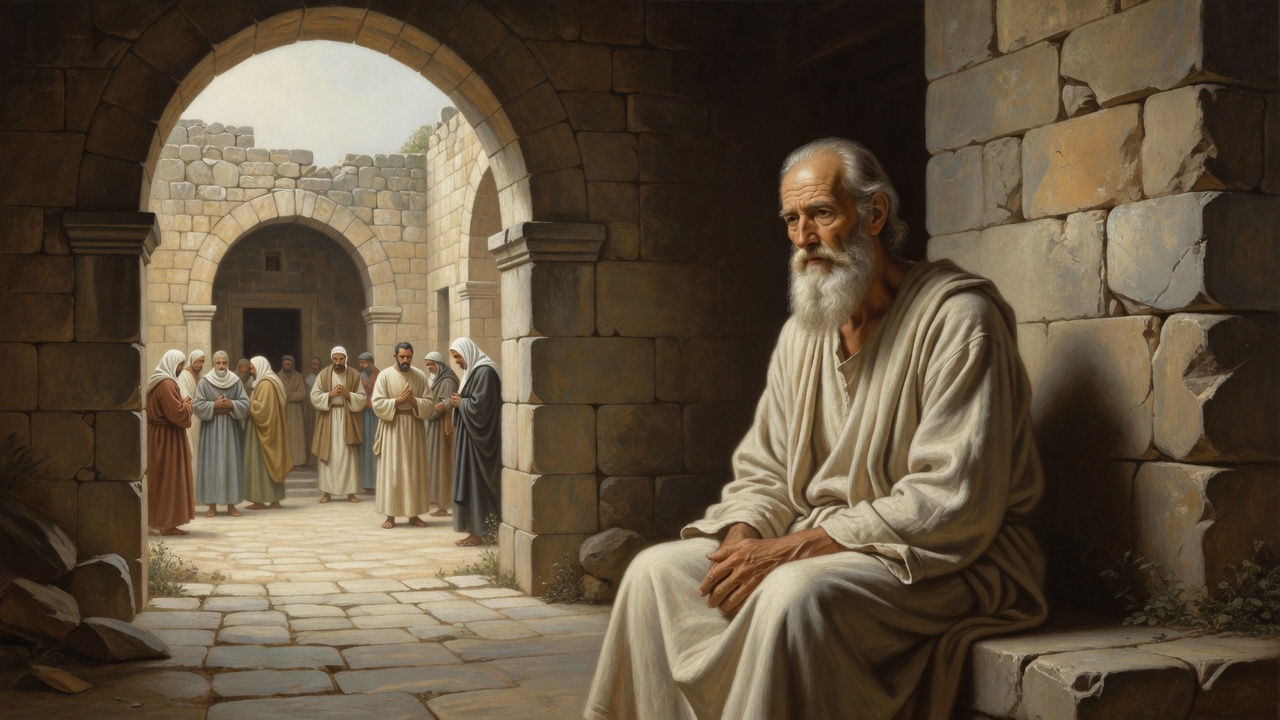
- Ecclesiastes 7 begins with a series of comparative proverbs arguing that moments of solemn reflection, such as visiting a house of mourning or facing sorrow, provide greater insight into life than superficial laughter and feast houses.Sources: the Bible text itself
- The Teacher reflects on the reality of human experience, noting that God has appointed both prosperous and adverse days so that humans cannot foresee their future, and that righteous people sometimes perish while the wicked live long.Sources: the Bible text itself
- The chapter highlights the universal limitation of human goodness, observing that there is no one on earth who does good and never sins, and concluding that while God created humanity upright, people pursue many complex schemes.Sources: the Bible text itself
Notes written with AI assistance from open sources (Theographic Bible Metadata, CC BY-SA 4.0; Easton’s Bible Dictionary, public domain) and reviewed before publishing.
Credits and license for this translation
LXX2012: Septuagint in British/International English 2012
The Septuagint with Apocrypha, translated from Greek to English by Sir Lancelot C. L. Brenton and published in 1885, with some language updates (British/International English)
Public Domain
Language: English
Dialect (if applicable): British
Language in English: English
Translation by: Sir Lancelot Charles Lee Breton
LXX2012: Septuagint in English 2012, British/International English Edition
This is a translation of the Old Testament and Apocrypha/Deuterocanon from Hebrew to Greek to 19th Century British English, with some updates of spelling and word usage to contemporary British/International English. The original English translation was done by Sir Lancelot Charles Lee Brenton and published by Samuel Bagster & Sons, Ltd., in London in 1851. It has entered the Public Domain due to the passage of sufficient time. In the process of scanning and typing the text, the original poetry and prose formatting, as well as peripheral material like introductions and notes, have been omitted.
This edition of the Septuagint has some language updates. Brenton's word order and punctuation has been mostly retained, meaning that quotation marks are not used, and sentences within quotes may not start with capital letters, as was standard usage in 1851. Names transliterated from Greek to those transliterated from Hebrew in the common English Bibles often differ. These language updates are dedicated to the Public Domain by the author of those edits, Michael Paul Johnson. Therefore this edition may be freely copied, published, etc.
Before considering making changes to the text of this work, I recommend that you consult with God, because this is really His Book.
If you find errors in the text, please report them so that we can correct them.
Donations to help with the expenses of operating this web site and thus help others have free access to the Word of God may be made to us, but are not required. Please see http://MLJohnson.org/partner/ for more about that.
Section headings adapted from the Berean Standard Bible (public domain); they are not part of this translation’s text.
Source: http://ebible.org/eng-uk-lxx2012/ · eBible.org