Deuteronomy 23
LXX2012: Septuagint in British/International English 2012 · Tap a verse to see its cross-references.
Exclusion from the Congregation
1He that is fractured or mutilated in his private parts shall not enter into the assembly of the Lord. 2One born of a harlot shall not enter into the assembly of the Lord. 3The Ammanite and Moabite shall not enter into the assembly of the Lord, even until the tenth generation he shall not enter into the assembly of the Lord, even for ever: 4because they met you not with bread and water by the way, when you⌃ went out of Egypt; and because they hired against you Balaam the son of Beor of Mesopotamia to curse you. 5But the Lord your God would not listen to Balaam; and the Lord your God changed the curses into blessings, because the Lord your God loved you. 6You shall not speak peaceably or profitably to them all your days for ever. 7You shall not abhor an Edomite, because he is your brother; you shall not abhor an Egyptian, because you were a stranger in his land. 8If sons be born to them, in the third generation they shall enter into the assembly of the Lord.
Uncleanness in the Camp
9And if you should go forth to engage with your enemies, then you shall keep you from every wicked thing. 10If there should be in you a man who is not clean by reason of his issue by night, then he shall go forth out of the camp, and he shall not enter into the camp. 11And it shall come to pass towards evening he shall wash his body with water, and when the sun has gone down, he shall go into the camp. 12And you shall have a place outside of the camp, and you shall go out there, 13and you shall have a trowel on your girdle; and it shall come to pass when you would relieve yourself abroad, that you shall dig with it, and shall bring back the earth and cover your nuisance. 14Because the Lord your God walks in your camp to deliver you, and to give up your enemy before your face; and your camp shall be holy, and there shall not appear in you a disgraceful thing, and so he shall turn away from you.
Miscellaneous Laws
15You shall not deliver a servant to his master, who coming from his master attaches himself to you. 16He shall dwell with you, he shall dwell amongst you where he shall please; you shall not afflict him. 17There shall not be a harlot of the daughters of Israel, and there shall not be a fornicator of the sons of Israel; there shall not be an idolatress of the daughters of Israel, and there shall not be an initiated person of the sons of Israel. 18You shall not bring the hire of a harlot, nor the price of a dog into the house of the Lord your God, for any vow; because even both are an abomination to the Lord your God. 19You shall not lend to your brother on usury of silver, or usury of meat, or usury of any thing which you may lend out. 20You may lend on usury to a stranger, but to your brother you shall not lend on usury; that the Lord your God may bless you in all your works upon the land, into which you are entering to inherit it. 21And if you will vow a vow to the Lord your God, you shall not delay to pay it; for the Lord your God will surely require it of you, and otherwise it shall be sin in you. 22But if you should be unwilling to vow, it is not sin in you. 23You shall observe the words that proceed from between your lips; and as you have vowed a gift to the Lord God, so shall you do that which you have spoken with your mouth.
Did you know?
Community Purity and Social Laws
- Ammonites and Moabites were excluded from the assembly because they withheld food and water and hired Balaam son of Beor against Israel. Balaam came from Pethor in Aram-naharaim (Mesopotamia), a region between the Tigris and Euphrates rivers where Pethor is identified with the ancient site of Pitru.Sources: the Bible text itself · Balaam · Pethor · Mesopotamia
- In contrast to the exclusion of Ammon and Moab, Israelites were instructed not to despise Edomites, whom they regarded as kin, or Egyptians, among whom they had lived as foreigners. Descendants of the third generation from both groups were permitted to enter the assembly of the Lord.Sources: the Bible text itself · Egypt
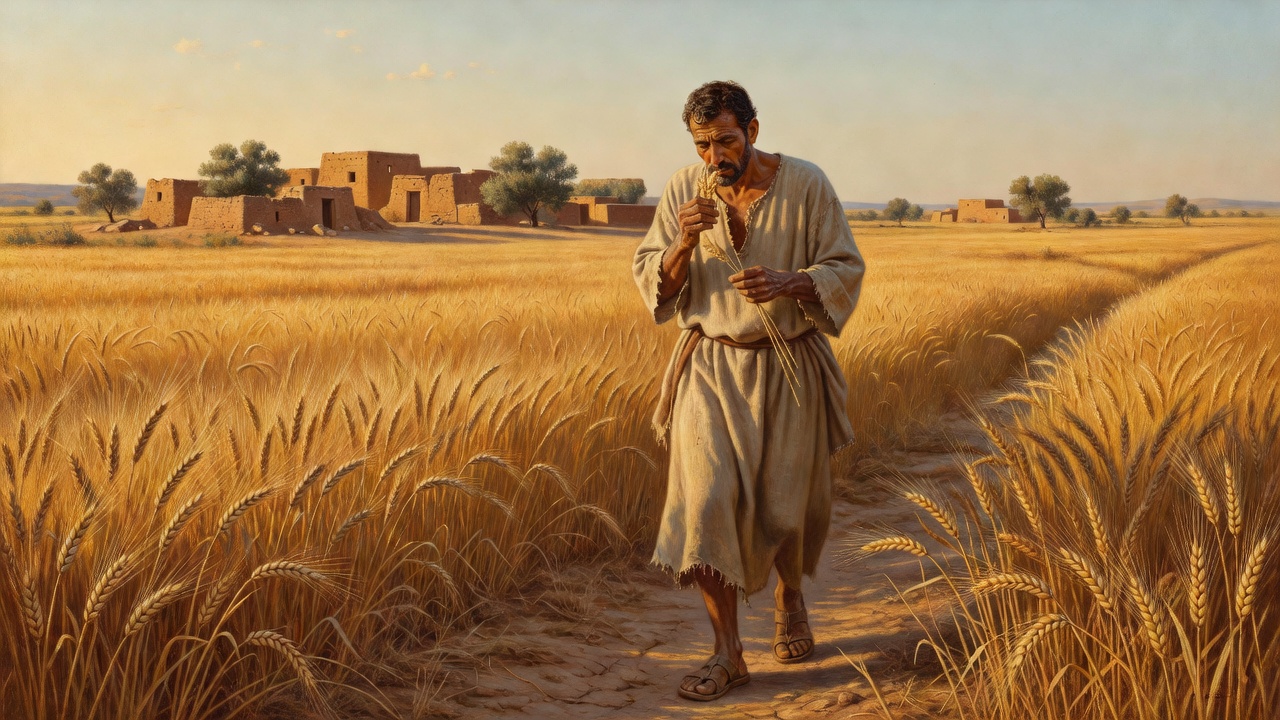
- The chapter outlines distinct social and military protections, including granting refuge to runaway foreign slaves rather than returning them to their masters. It also permitted hungry travelers to eat grapes or pluck grain by hand in a neighbor's field, provided they did not gather surplus into containers or use a sickle.Sources: the Bible text itself
Notes written with AI assistance from open sources (Theographic Bible Metadata, CC BY-SA 4.0; Easton’s Bible Dictionary, public domain) and reviewed before publishing.
Places in this chapter
- Egypt · 30.129, 31.308 · verse 4
- Mesopotamia · Today: Aram-naharaim · 36.864, 39.033 · verse 4
- Pethor · Today: Til Barsip · 36.701, 38.087 · verse 4
Only places identified with high confidence are shown (90% or more according to the scholarly sources compiled by OpenBible). Period map: DARE (Digital Atlas of the Roman Empire), CC BY 4.0; modern map: © OpenStreetMap contributors; places: OpenBible.info (CC BY 4.0).
Credits and license for this translation
LXX2012: Septuagint in British/International English 2012
The Septuagint with Apocrypha, translated from Greek to English by Sir Lancelot C. L. Brenton and published in 1885, with some language updates (British/International English)
Public Domain
Language: English
Dialect (if applicable): British
Language in English: English
Translation by: Sir Lancelot Charles Lee Breton
LXX2012: Septuagint in English 2012, British/International English Edition
This is a translation of the Old Testament and Apocrypha/Deuterocanon from Hebrew to Greek to 19th Century British English, with some updates of spelling and word usage to contemporary British/International English. The original English translation was done by Sir Lancelot Charles Lee Brenton and published by Samuel Bagster & Sons, Ltd., in London in 1851. It has entered the Public Domain due to the passage of sufficient time. In the process of scanning and typing the text, the original poetry and prose formatting, as well as peripheral material like introductions and notes, have been omitted.
This edition of the Septuagint has some language updates. Brenton's word order and punctuation has been mostly retained, meaning that quotation marks are not used, and sentences within quotes may not start with capital letters, as was standard usage in 1851. Names transliterated from Greek to those transliterated from Hebrew in the common English Bibles often differ. These language updates are dedicated to the Public Domain by the author of those edits, Michael Paul Johnson. Therefore this edition may be freely copied, published, etc.
Before considering making changes to the text of this work, I recommend that you consult with God, because this is really His Book.
If you find errors in the text, please report them so that we can correct them.
Donations to help with the expenses of operating this web site and thus help others have free access to the Word of God may be made to us, but are not required. Please see http://MLJohnson.org/partner/ for more about that.
Section headings adapted from the Berean Standard Bible (public domain); they are not part of this translation’s text.
Source: http://ebible.org/eng-uk-lxx2012/ · eBible.org