Proverbs 11
Brenton Septuagint Translation · Tap a verse to see its cross-references.
Dishonest Scales
1False balances are an abomination before the Lord: but a just weight is acceptable unto him. 2Wherever pride enters, there will be also disgrace: but the mouth of the lowly meditates wisdom. 3When a just man dies he leaves regret: but the destruction of the ungodly is speedy, and causes joy. 5Righteousness traces out blameless paths: but ungodliness encounters unjust dealing.
6The righteousness of upright men delivers them: but transgressors are caught in their own destruction. 7At the death of a just man his hope does not perish: but the boast of the ungodly perishes. 8A righteous man escapes from a snare, and the ungodly man is delivered up in his place. 9In the mouth of ungodly men is a snare to citizens: but the understanding of righteous men is prosperous. 10In the prosperity of righteous men a city prospers: 11but by the mouths of ungodly men it is overthrown.
12A man void of understanding sneers at his fellow citizens: but a sensible man is quiet. 13A double-tongued man discloses the secret counsels of an assembly: but he that is faithful in spirit conceals matters. 14They that have no guidance fall like leaves: but in much counsel there is safety.
15A bad man does harm wherever he meets a just man: and he hates the sound of safety. 16A gracious wife brings glory to her husband: but a woman hating righteousness is a theme of dishonour. The slothful come to want: but the diligent support themselves with wealth. 17A merciful man does good to his own soul: but the merciless destroys his own body.
18An ungodly man performs unrighteous works: but the seed of the righteous is a reward of truth. 19A righteous son is born for life: but the persecution of the ungodly ends in death. 20Perverse ways are an abomination to the Lord: but all they that are blameless in their ways are acceptable to him. 21He that unjustly strikes hands shall not be unpunished: but he that sows righteousness shall receive a faithful reward. 22As an ornament in a swine's snout, so is beauty to an ill-minded woman. 23All the desire of the righteous is good: but the hope of the ungodly shall perish.
24There are some who scatter their own, and make it more: and there are some also who gather, yet have less. 25Every sincere soul is blessed: but a passionate man is not graceful. 26May he that hoards corn leave it to the nation: but blessing be on the head of him that gives it. 27He that devises good counsels seeks good favour: but as for him that seeks after evil, evil shall overtake him. 28He that trusts in wealth shall fall; but he that helps righteous men shall rise. 29He that deals not graciously with his own house shall inherit the wind; and the fool shall be servant to the wise man. 30Out of the fruit of righteousness grows a tree of life; but the souls of transgressors are cut off before their time. 31If the righteous scarcely be saved, where shall the ungodly and the sinner appear?
Did you know?
Integrity, Wealth, and the Community
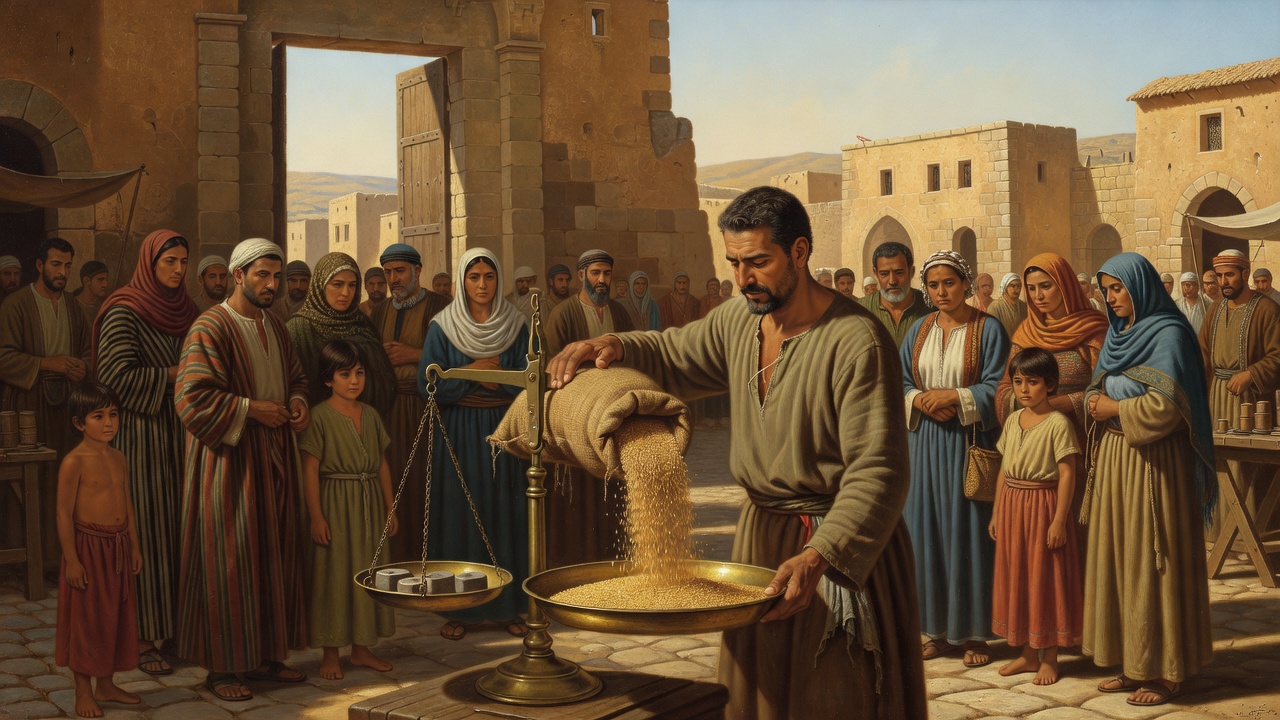
- Ancient commerce relied heavily on balance scales with stone weights to measure precious metals and goods. The chapter opens by condemning dishonest scales and praising accurate weights, emphasizing that honesty in everyday marketplace transactions reflects a person's standing before God.Sources: the Bible text itself
- Proverbs 11 highlights the civic impact of individual behavior, noting that a city's stability and joy depend on the integrity of its upright citizens, wise counselors, and fair leaders rather than the words and actions of the wicked.Sources: the Bible text itself
- In agricultural societies, withholding grain during shortages to drive up prices caused widespread suffering. The chapter contrasts the hoarder of grain, who earns the community's curse, with the merchant who readily sells food to sustain his neighbors.Sources: the Bible text itself
Notes written with AI assistance from open sources (Theographic Bible Metadata, CC BY-SA 4.0; Easton’s Bible Dictionary, public domain) and reviewed before publishing.
Credits and license for this translation
Translation of the Greek Septuagint into English by Sir Lancelot Charles Lee Brenton
Published in 1851, and now in the Public Domain.
If you find errors in the text, please report them so that we can correct them.
Section headings adapted from the Berean Standard Bible (public domain); they are not part of this translation’s text.
Source: http://ebible.org/eng-Brenton/ · eBible.org