Jonah 1
Ãcõrẽ Bed̶ea · Tap a verse to see its cross-references.
About this book
About Jonah
- Jonah, whose name means “a dove,” was the son of Amittai of Gath-hepher and a prophet of Israel. Easton's Bible Dictionary (1897) holds that he wrote the book himself. His ministry is placed very early in the reign of Jeroboam II: he was contemporary with Hosea and Amos, or possibly earlier, and so may have been the oldest of the prophets whose writings survive.Sources: Jonah · Amittai · Easton: Jonah, Book of
- The book professes to tell what actually happened to the prophet. Some critics have read it as a parable or allegory rather than history, because miracle is so prominent and the form is narrative rather than prophecy, or because they deny miracles altogether. Easton's Bible Dictionary (1897) instead treats it as history, attaching great weight to the mention of Jonah in Matthew 12:39-40 and Luke 11:29.Sources: Easton: Jonah, Book of
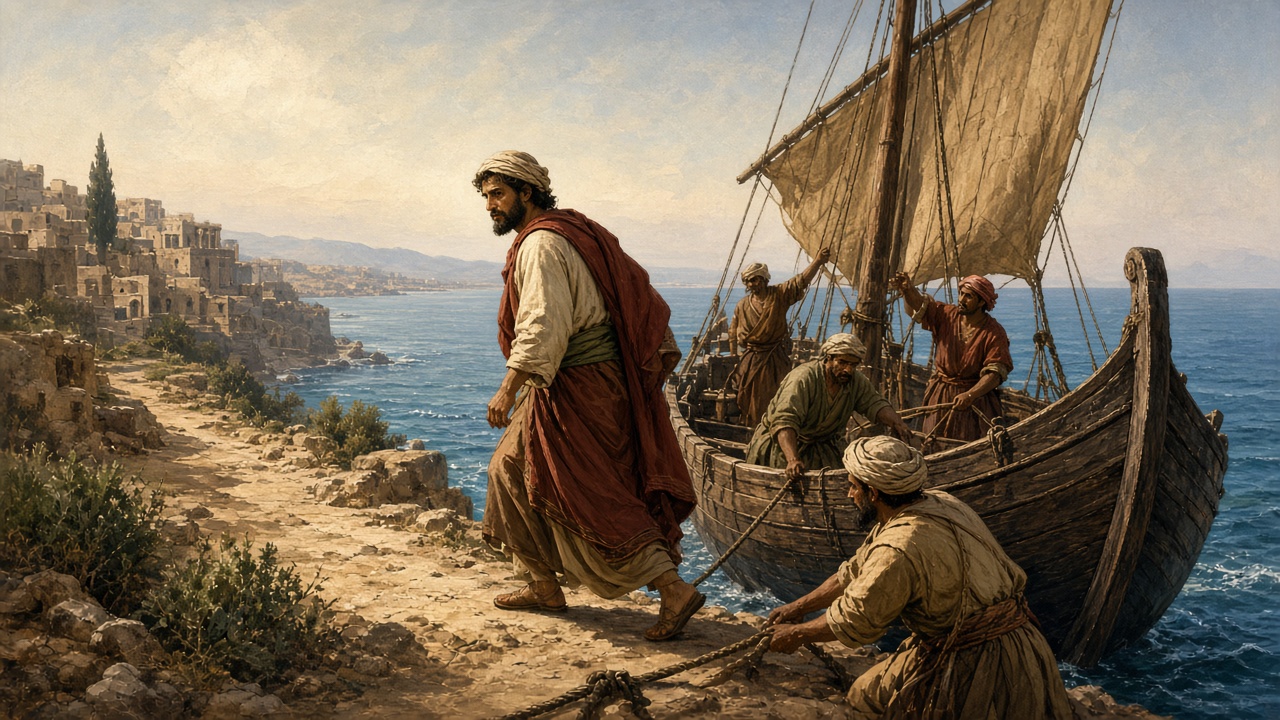
- Jonah was commissioned to go to Nineveh, described as a great and populous city and the flourishing capital of the Assyrian empire, but he sailed from Joppa, Judea's chief seaport, to flee toward Tarshish. Where Tarshish lay is disputed: some place it in the east, on the Indian coast, some identify it with Carthage, and Easton's dictionary takes it to be a Phoenician port in Spain.Sources: Easton: Jonah, Book of · Nineveh · Joppa · Tarshish
- Easton's outline has four movements: the divine commission, disobedience, and punishment; Jonah's prayer and deliverance; a second commission, the Ninevites' repentance, and God's sparing mercy; and Jonah's anger at that mercy, followed by a rebuke. The same dictionary notes that Nineveh was spared for more than a century after his mission.Sources: Easton: Jonah, Book of
- As a prophet of Israel, Jonah foretold the restoration of the kingdom's ancient borders. A biographical note presents him both as a missionary to Nineveh and as a type of the Son of man. The book of Nahum is taken up almost entirely with denunciations of that city, and Zephaniah also predicts its destruction.Sources: Jonah · Nineveh
Notes written with AI assistance from open sources (Theographic Bible Metadata, CC BY-SA 4.0; Easton’s Bible Dictionary, public domain) and reviewed before publishing.
Joná Ãcõrẽnebemada mĩrũ wãna
1Ẽberãda b̶asia Joná abadada. Maʌ̃ Jonára Amitai warra basía. Ewari ab̶a Ãcõrẽba Jonáa jarasia:
2–Mʌ̃a quĩrĩã b̶ʌa bʌra Ninive puru dromanaa wãida. Mʌ̃a unu b̶ʌa maʌ̃ purud̶ebemarãba jũmawãyã cadjiruada o panʌda. Maʌ̃ bẽrã ãdjirãa jaradua mʌ̃a cawa oida.–
3Baribʌrʌ Ãcõrẽba jara b̶ʌ ĩjã o amaaba Jonára Ãcõrẽnebemada mĩrũ wãsia. Wãne barco wib̶aribada puru Jope abadama jũẽsia. Mama barcoda unusia Tarsi druad̶aa wãi carea b̶ʌda. Parata diaped̶a barcod̶e b̶adosia Ãcõrẽnebemada tʌmʌ mĩrũ wãi carea.
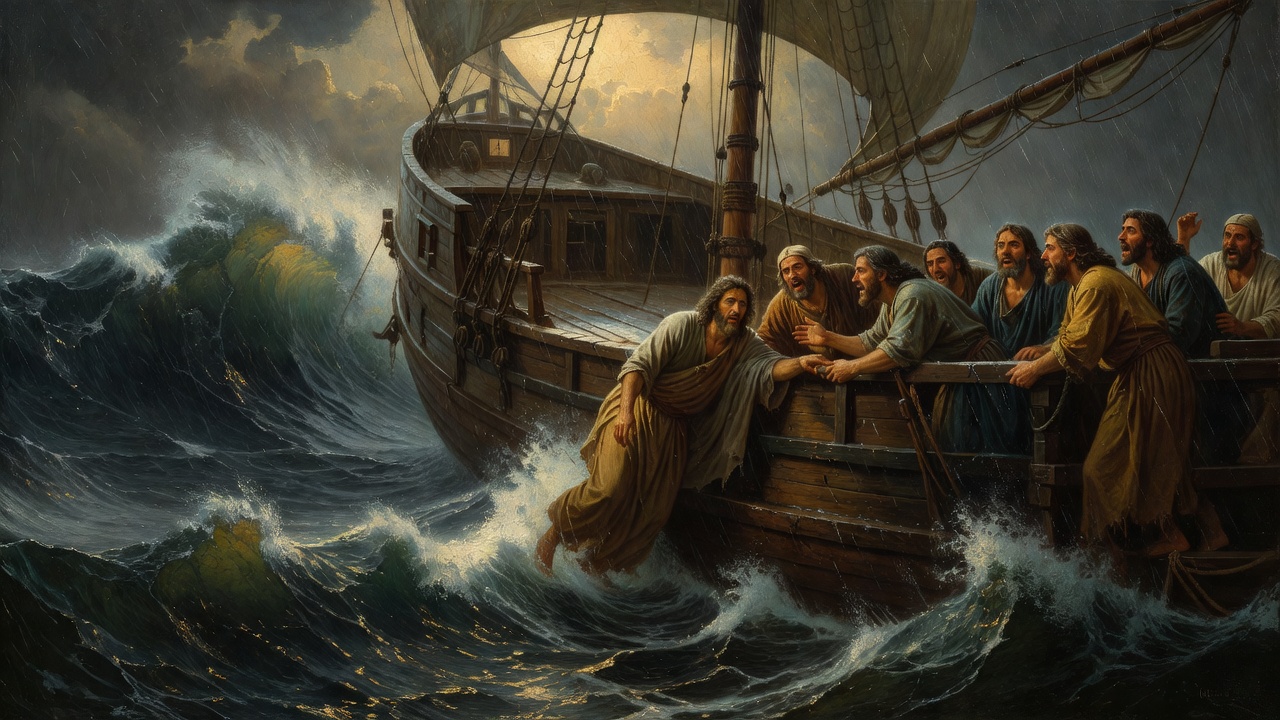
4Baribʌrʌ mãcua tʌmʌ wãnaẽ́ne Ãcõrẽba nãũrãda dji cãbãyã puábisia. Maʌ̃ba pusara quĩrũ nũmeped̶a baidora barcod̶e ed̶a wã nũmesia. Barcora tod̶ogozoaica nũmesia.
5Maʌ̃ bẽrã barco edebʌdarãba ne wayaaba ãdjiza ãdji ãcõrẽa bed̶ea djuburia duanesid̶aa. Maʌ̃ awara barcora wẽsaara ũmemãrẽã ãdji netatara jũma daid̶u b̶atacuasid̶aa. Maʌ̃misa Jonára barcod̶e ed̶a wãped̶a bio cãĩ b̶asia. 6Baribʌrʌ barcod̶ebema boroba Jonára cãĩ b̶ʌda unune wãsia. Maʌ̃ne jarasia:
–Bʌra ¿cãrẽ cãrẽã jãwã cãĩ tab̶ʌ? ¡Pirab̶ariped̶a bʌdji Ãcõrẽa iwid̶idua! Idjia careba quĩrĩãibʌrʌ ãĩbẽrã dadjirãra ẽdrʌ b̶ʌisicada.–
7Joná ʌ̃ta zed̶acarea barco edebʌdarãba ãdjiza jara duanesid̶aa:
–Ne jemenenadrʌ cawad̶i carea caid̶eba jãwã naʌ̃ minijĩchiad̶e panʌda.–
Ara maʌ̃da ne jemenesid̶aa cawad̶i carea. Maʌ̃ne cawasid̶aa Jonádrʌ bed̶ead̶e b̶ʌda. 8Maʌ̃ carea ãdjia jarasid̶aa:
–Daia jaradua bʌa cãrẽda osida jãwã dadjirãra naʌ̃ minijĩchiad̶e panesid̶ara. ¿Bʌa cãrẽda obari? ¿Sãmaʌba zebʌrʌ? ¿Bʌra sãmabema? ¿Sãʌ̃gʌ ẽberãrãnebema?–
9Jonába panusia:
–Mʌ̃ra hebreoda jãwã b̶ʌa. Mʌ̃a bajãnebema Ãcõrẽa bia bed̶eabaria. Idjia pusara, naʌ̃ ẽjũã sid̶a osia.–
10Maʌ̃ awara jarasia idjira Ãcõrẽnebemada mĩrũ wãbʌrʌda. Maʌ̃ cawasid̶ad̶e ãdjirãra bio ne wayasid̶aa. Maʌ̃ carea ãdjia iwid̶isid̶aa:
–¿Bʌa cãrẽ cãrẽã jãwã osi?–
11Maʌ̃misa pusara aud̶uara quĩrũbʌrʌ bẽrã ãdjia iwid̶isid̶aa:
–¿Jãʌ̃be bʌra sãwã od̶i pusa quĩrũbira tumabid̶i carea?–
12Jonába panusia:
–Mʌ̃ra daid̶u b̶atabued̶adua. Mãwãbʌrʌ pusara tumaya. Mʌ̃a cawa b̶ʌa mʌ̃drʌ bed̶ead̶e b̶ʌda naʌ̃ pusa jãcua quĩrũ nũmʌ carea.–
13Baribʌrʌ barco edebʌdarãba aud̶uara wisid̶aa doyaa wãni carea. Mãwãmĩna poyad̶aẽ́ basía, pusara wetara quĩrũna bẽrã. 14Maʌ̃ carea Ãcõrẽa nãwã iwid̶isid̶aa:
–Ãcõrẽ, naʌ̃ ẽberã beabʌda carea daira beubirãdua. Idjida bed̶ea neẽ́ b̶ʌda bead̶ibʌrʌ, daira bed̶ead̶e b̶ʌrãdua. Wãrãda bʌabʌrʌ ara bʌdjia crĩcha b̶ʌ quĩrãca o b̶ʌa.–
15Mãwã jarad̶aped̶a Jonára daid̶u b̶atabuesid̶aa. Ara maʌ̃da pusara tumasia. 16Maʌ̃ unusid̶ad̶e barco edebʌdarãba Ãcõrẽ wayaad̶eba animarãda babue diasid̶aa. Maʌ̃ awara wãrãneba jarasid̶aa idjira ẽpẽnida.
17Maʌ̃ne Ãcõrẽba b̶eda waib̶ʌada diabuesia Joná mĩmãrẽã. Maʌ̃ b̶eda b̶ited̶a Jonára ewari ũbea b̶asia.
Did you know?
Jonah Flees from the Lord
- Jonah, the son of Amittai from Gath-hepher, is also recorded in 2 Kings 14:25 as a prophet active in the northern kingdom of Israel during the reign of Jeroboam II. God instructed him to travel east to Nineveh, the prominent and populous capital of the Assyrian empire, to preach against its wickedness.Sources: Jonah · Amittai · Nineveh · the Bible text itself
- Rather than traveling northeast overland to Nineveh, Jonah journeyed down to the Mediterranean seaport of Joppa to board a ship for Tarshish. Tarshish is traditionally identified as a Phoenician trading port located far to the west in southern Spain, representing the exact opposite direction.Sources: Joppa · Tarshish · the Bible text itself
- The sailors aboard the cargo ship came from polytheistic backgrounds, each calling out to his own deity during the violent tempest. After throwing the ship's cargo overboard to lighten the vessel, they turned to the ancient practice of casting lots to determine who was responsible for the calamity.Sources: the Bible text itself
Notes written with AI assistance from open sources (Theographic Bible Metadata, CC BY-SA 4.0; Easton’s Bible Dictionary, public domain) and reviewed before publishing.
Places in this chapter
Only places identified with high confidence are shown (90% or more according to the scholarly sources compiled by OpenBible). Period map: DARE (Digital Atlas of the Roman Empire), CC BY 4.0; modern map: © OpenStreetMap contributors; places: OpenBible.info (CC BY 4.0).
Credits and license for this translation
Ãcõrẽ Bed̶ea
New Testament in Emberá, Northern (PM:emp:Emberá, Northern)
copyright © 2011 Wycliffe Bible Translators, Inc.
Language: Emberá, Northern
Translation by: Wycliffe Bible Translators, Inc.
Copyright Information
© 2011, Wycliffe Bible Translators, Inc. All rights reserved.
This translation text is made available to you under the
terms of the Creative Commons License: Attribution-Noncommercial-No Derivative Works.
( http://creativecommons.org/licenses/by-nc-nd/3.0/ )
In addition, you have permission to port the text to different file formats, as long as you
do not change any of the text or punctuation of the Bible.
You may share, copy, distribute, transmit, and extract portions
or quotations from this work, provided that you include the above copyright
information:
You must give Attribution to the work.
You do not sell this work for a profit.
You do not make any derivative works that change any of the actual words or punctuation of the Scriptures.
Permissions beyond the scope of this license may be
available if you contact
us with your request.
The New Testament
in Emberá, Northern
© 2011, Wycliffe Bible Translators, Inc. All rights reserved.
This translation is made available to you under the terms of the
Creative Commons Attribution-Noncommercial-No Derivatives license 4.0.
You may share and redistribute this Bible translation or extracts from it in any format, provided that:
You include the above copyright and source information.
You do not sell this work for a profit.
You do not change any of the words or punctuation of the Scriptures.
Pictures included with Scriptures and other documents on this site are licensed just for use with those Scriptures and documents.
For other uses, please contact the respective copyright owners.
2014-04-24
Source: http://ebible.org/empNTpo/ · eBible.org