Genesis 4
Ãcõrẽ Bed̶ea · Tap a verse to see its cross-references.
Caiʌ̃ba idji djaba Abel bead̶a
1Maʌ̃be Adaʌ̃ra dji quima Eva ume cãĩsia. Evara b̶iogoa b̶eped̶a warra tosia. Maʌ̃ne Evaba jarasia: “Mʌ̃a umaquĩrã warrada erob̶esia Ãcõrẽba carebad̶a bẽrã.” Mãwã dji warrara trʌ̃ b̶ʌsia Caiʌ̃.
2Mãwãnacarea dji djaba Abelda tosia. Maʌ̃ Abelera oveja daupẽbari basía. Maʌ̃ne Caiʌ̃ra ne ubari basía.
3Mãwã panʌne ewari ab̶a Caiʌ̃ba idji néud̶ebemada Ãcõrẽa diasia. 4Maʌ̃ne Abelba oveja zaquerã dji naãrã toped̶ad̶ada beaped̶a dji dragada Ãcõrẽa diasia. Ãcõrẽba Abelera idjia diad̶a sid̶a bia unusia. 5Baribʌrʌ Caiʌ̃da idjia diad̶a sid̶a bia unuẽ́ basía. Maʌ̃ carea Caiʌ̃ra bio quĩrũsia. Ab̶ed̶a quĩrã cadjirua nũmesia. 6Maʌ̃ carea Ãcõrẽba Caiʌ̃a jarasia:
–¿Cãrẽ cãrẽã quĩrũ nũmʌ? ¿Cãrẽ cãrẽã quĩrã cadjirua nũmʌ? 7Bʌa biada oibʌrʌ ¿bʌra b̶ʌsrid̶a b̶aẽ́ca? Baribʌrʌ bʌa biada oẽ́bʌrʌ cadjirua jʌwaed̶a b̶aya. Baribʌrʌ bʌa cadjiruara poyaida b̶ʌa.–
8Ewari ab̶a Caiʌ̃ba idji djabaa jarasia: “Ãyã pʌrrʌad̶e wãna.” Ara maʌ̃da wãsid̶aa. Néud̶e ãbaa nĩnane Caiʌ̃ba Abelera adua b̶ʌd̶e beatasia. 9Maʌ̃ bẽrã Ãcõrẽba Caiʌ̃a iwid̶isia:
–¿Sãma b̶ʌ bʌ djaba Abelera?–
Maʌ̃ne Caiʌ̃ba panusia:
–Cawaẽ́a. Mãwãra ¿mʌ̃ra idji acʌbarica?–
10Ãcõrẽba jarasia:
–¿Cãrẽ cãrẽã bʌ djabara jãwã beasi? Idji oa egorod̶e erozoad̶aba jĩgua jara b̶ʌa mʌ̃a jipa cawa omãrẽã. 11Bʌ djabada bead̶a bẽrã mʌ̃a bʌra biẽ́ b̶ʌya. Mʌ̃a bʌra idji oa erozoad̶amaʌba ãyã jʌretaya. 12Bʌa ẽjũã obʌrʌmĩna bʌ néura bia zauca baya. Bʌra naʌ̃ ẽjũãne ara jãwã pʌrrʌa nĩbaya. Ʌ̃nãũi sid̶a neẽ́ b̶aya.–
13Caiʌ̃ba Ãcõrẽa jarasia:
–Mʌ̃ mãwã b̶aira jũmawãyã zarea b̶ʌa. Maʌ̃ra mʌ̃a droaẽ́a. 14Id̶i bʌa mʌ̃ra naʌ̃ druad̶ebemada ãyã jʌretabʌrʌa. Bʌ quĩrãpita mʌ̃ra wãcara b̶aya. Id̶iba ʌ̃taa mʌ̃ra naʌ̃ ẽjũãne pʌrrʌa nĩbaya drua ãĩbema quĩrãca. Bariduaba mʌ̃ra ununibʌrʌ, bead̶ia.–
15Ãcõrẽba jarasia:
–Bariduaba bʌda beaibʌrʌ, mʌ̃a idjira bʌ cãyãbara aud̶uara cawa oya.–
Maʌ̃ bẽrã Ãcõrẽba Caiʌ̃ cacuad̶e sẽyãda b̶ʌsia, bariduaba maʌ̃ sẽyãda unusid̶ara Caiʌ̃ra bearãnamãrẽã. 16Ara maʌ̃da Caiʌ̃ra Ãcõrẽ quĩrãpitabemada ãyã wãped̶a Nod druad̶e b̶ad̶e wãsia. Maʌ̃ Nod druara Edeʌ̃neba ʌ̃mãdau odjabariare b̶ʌa.
Caiʌ̃neba yõped̶ad̶a
17Caiʌ̃ra idji quima ume cãĩsia. Dji wẽrãra b̶iogoa b̶eped̶a Enocoda tosia. Maʌ̃ Enoco tosid̶e Caiʌ̃ba puruda o b̶asia. Dji puru trʌ̃ra dji warra trʌ̃ quĩrãca Enoco trʌ̃ b̶ʌsia.
18Enocora Irá zeza basía. Irára Mehujael zeza basía. Mehujaelera Metusael zeza basía. Metusaelera Lame zeza basía. 19Maʌ̃ Lameba wẽrãda umé erob̶asia. Ab̶ara Adá abadjid̶aa, dewarabemara Zila abadjid̶aa. 20Adába Jabalda tosia. Jabald̶eba yõsid̶aa wua ded̶e b̶eabadada, animarã daupẽbadarã sid̶a. 21Dji djaba trʌ̃ra Jubal basía. Jubald̶eba yõsid̶aa arpa zá cawa b̶eada idjab̶a chiru zá cawa b̶ea sid̶a. 22Zilaba Tubal-Caiʌ̃da tosia. Idjia bronced̶ebemada idjab̶a jiorrod̶ebema sid̶a ne o cawa b̶asia. Tubal-Caiʌ̃ djabawẽrãra Naamá abadjid̶aa.
23Ewari ab̶a Lameba idji quimarã Adáa, Zilaa bid̶a jarasia:
Adá, Zila, mʌ̃ bed̶eada ũrĩnadua. Mʌ̃a ẽberã cũdra b̶ʌda beasia idjia mʌ̃ djara tud̶a carea, mʌ̃ puod̶a carea.
24Bariduaba Caiʌ̃da beaibʌrʌ, Ãcõrẽba maʌ̃gʌra bio cawa oya. Baribʌrʌ bariduaba mʌ̃da dji cũdra carea beaibʌrʌ Ãcõrẽba maʌ̃ ẽberãra aud̶uara cawa oya.
Adaʌ̃ba, Eva bid̶a dewara warra unuped̶ad̶a
25Maʌ̃ ewarid̶e Adaʌ̃ra wayacusa dji quima ume cãĩsia. Maʌ̃be dji quimaba umaquĩrã warrada tosia. Maʌ̃ne jarasia: “Caiʌ̃ba Abel bead̶acarea Ãcõrẽba mʌ̃́a dewara warrada Abel cacuabari diasia.” Mãwã dji warrara trʌ̃ b̶ʌsia Se.
26Maʌ̃be Seba warrada unusia. Dji trʌ̃ra b̶ʌsia Enó. Maʌ̃ ewarid̶eba ʌ̃taa ẽberãrãba Ãcõrẽa ewari iwid̶ibʌdad̶e idji trʌ̃ra “Jehová” a panesid̶aa.
Did you know?
Cain, Abel, and Life East of Eden
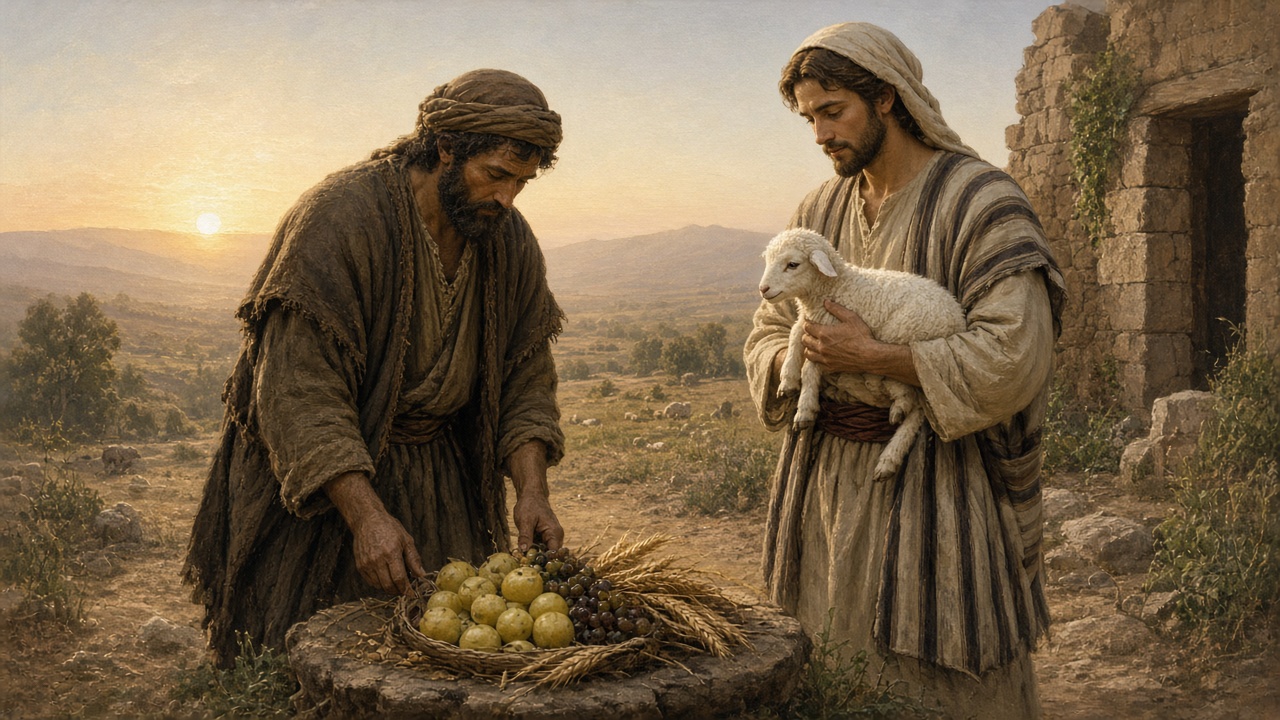
- Abel’s Hebrew name means “breath” or “vanity.” He kept sheep, while his brother Cain tilled the soil: Abel brought the best portions of the firstborn of his flock, and Cain brought fruit of the ground. Easton's Bible Dictionary (1897) reads the phrase “in process of time” (margin, “at the end of days”) as probably referring to the Sabbath.Sources: Abel · Cain · the Bible text itself
- After Abel’s death, Cain settled in the land of Nod, east of Eden, a name meaning exile, wandering, or unrest. There he built a city and named it after his son Enoch. Easton's Bible Dictionary notes that this is the first city mentioned in Scripture.Sources: Nod · Enoch (son of Cain) · the Bible text itself
- Lamech, fifth in descent from Cain, married two women, Adah and Zillah. Easton's Bible Dictionary calls his address to them the only extant example of antediluvian poetry, sometimes known as “Lamech’s sword-song.” Their children are tied to early ways of life: Jabal with tents and livestock, Jubal with the harp and flute, and Tubal-cain with forging bronze and iron.Sources: Lamech (descendant of Cain) · Adah (wife of Lamech) · Zillah · the Bible text itself
Notes written with AI assistance from open sources (Theographic Bible Metadata, CC BY-SA 4.0; Easton’s Bible Dictionary, public domain) and reviewed before publishing.
Credits and license for this translation
Ãcõrẽ Bed̶ea
New Testament in Emberá, Northern (PM:emp:Emberá, Northern)
copyright © 2011 Wycliffe Bible Translators, Inc.
Language: Emberá, Northern
Translation by: Wycliffe Bible Translators, Inc.
Copyright Information
© 2011, Wycliffe Bible Translators, Inc. All rights reserved.
This translation text is made available to you under the
terms of the Creative Commons License: Attribution-Noncommercial-No Derivative Works.
( http://creativecommons.org/licenses/by-nc-nd/3.0/ )
In addition, you have permission to port the text to different file formats, as long as you
do not change any of the text or punctuation of the Bible.
You may share, copy, distribute, transmit, and extract portions
or quotations from this work, provided that you include the above copyright
information:
You must give Attribution to the work.
You do not sell this work for a profit.
You do not make any derivative works that change any of the actual words or punctuation of the Scriptures.
Permissions beyond the scope of this license may be
available if you contact
us with your request.
The New Testament
in Emberá, Northern
© 2011, Wycliffe Bible Translators, Inc. All rights reserved.
This translation is made available to you under the terms of the
Creative Commons Attribution-Noncommercial-No Derivatives license 4.0.
You may share and redistribute this Bible translation or extracts from it in any format, provided that:
You include the above copyright and source information.
You do not sell this work for a profit.
You do not change any of the words or punctuation of the Scriptures.
Pictures included with Scriptures and other documents on this site are licensed just for use with those Scriptures and documents.
For other uses, please contact the respective copyright owners.
2014-04-24
Source: http://ebible.org/empNTpo/ · eBible.org