Genesis 37
Ãcõrẽ Bed̶ea · Tap a verse to see its cross-references.
Jose idji djabarã ume
1Idji zeza Isa jaid̶ad̶acarea Jacobora Canaaʌ̃ druad̶e idji zeza b̶ad̶ama b̶esia. 2Nama nẽbʌrʌ b̶ʌa Jacobo warrarãba oped̶ad̶ad̶ebemada.
Jacobo warra Jose diecisiete poa b̶asid̶e idji djabarã ume oveja waga b̶abadjia. Idji zezaba quima quĩrãca erob̶ʌ wẽrãrã Bilhaba idjab̶a Zilpaba toped̶ad̶a ume Josera biara trajabadjia. Diguid̶a wãbʌrʌd̶e Joseba idji zezaa jarabadjia idji djabarãba cadjirua o panʌda. 3Israelba Joseda waabema warrarã cãyãbara biara quĩrĩã b̶asia Josera idji drõã b̶ʌd̶e tosid̶a bẽrã. Maʌ̃ carea Israelba Jose itea cacuad̶e jʌ̃bada drasoa bio bia quiruda osia. 4Jose djabarãba cawasid̶aa ãdji zezaba Josera ãdjirã cãyãbara biara quĩrĩã b̶ʌda. Maʌ̃ carea idjira quĩrãma panesid̶aa. Idji ume bia bed̶ead̶aca basía.
5Ewari ab̶a Josera cãĩmocarasia. Nurẽma maʌ̃ cãĩmocarad̶ara idji djabarãa nẽbʌrʌsia. Maʌ̃ carea ãdjirãba idjira wetara quĩrãmasid̶aa. 6Idjia nãwã jarasia:
–Ũrĩnadua, mʌ̃a cãĩmocarad̶ada nẽbʌrʌya. 7Mʌ̃a unusia dadjirãba dadji ẽjũãne trigoda tʌd̶aped̶a ãbaa cajʌ̃ panʌda. Cawaẽ́ne mʌ̃a trigo cajʌ̃nara ʌ̃ta nũmesia. Maʌ̃ne bãrãba cajʌ̃ped̶ad̶ara mʌ̃re quĩrãpita ed̶aa b̶arru copanesid̶aa.–
8Maʌ̃ carea Jose djabarãba quĩrũbid̶eba nãwã jarasid̶aa:
–Mãwãra ¿bʌra dai boroda b̶eica? ¿Daira bʌ jʌwaed̶a erob̶aica?–
Joseba maʌ̃ cãĩmocarad̶eba ãdjirã boro baida nẽbʌrʌd̶a carea dji djabarãba idjira wetara quĩrãmasid̶aa.
9Mãwãnacarea Josera wayacusa cãĩmocarasia. Maʌ̃ cãĩmocarad̶a sid̶a idji djabarãa nẽbʌrʌsia. Nãwã jarasia:
–Ũrĩnadua, mʌ̃a waya cãĩmocarasia. Unusia ʌ̃mãdauda, jed̶ecoda, idjab̶a once chĩdauda. Maʌ̃gʌrãra ẽberã quĩrãca mʌ̃ quĩrãpita chĩrãborod̶e b̶arru copanesid̶aa.–
10Joseba idji djabarãa nẽbʌrʌd̶acarea dji zezaa bid̶a nẽbʌrʌsia. Maʌ̃ bẽrã idji zezaba idjira nãwã quẽãsia:
–Maʌ̃ cãĩmocarad̶eba bʌa ¿cãrẽda jara b̶ʌ? Mãwãra ¿bʌ papara, bʌ djabarãra, mʌ̃ sid̶a bʌ quĩrãpita chĩrãborod̶e b̶arru copanenica?–
11Maʌ̃ carea dji djabarãra idji ume sod̶e biẽ́ panesid̶aa baribʌrʌ dji zezaba maʌ̃ cãĩmocarad̶ebemada bio crĩcha b̶esia.
Jose djabarãba idji nẽdobueped̶ad̶a
12Ewari ab̶a Jose djabarãba dji zeza ovejara Siqueʌ̃ puru caita põãjãrã cobid̶e edesid̶aa. 13Maʌ̃ne Israelba Josea nãwã jarasia:
–Warra, bʌ djabarãba Siqueʌ̃ caita mʌ̃ ovejara waga panʌa. Mʌ̃a quĩrĩã b̶ʌa bʌa ãdjira acʌd̶e wãida.–
Joseba panusia:
–Bia b̶ʌa, mʌ̃a ãdjira acʌd̶e wãya.–
14Israelba jarasia:
–Bʌ djabarã, dadji animarã sid̶a sãwã panʌ cawaya acʌd̶e wãdua. Maʌ̃be mʌ̃́a jarad̶e zedua.–
Mãwã jaraped̶a Israelba Josera Hebroʌ̃ jewed̶ad̶eba Siqueʌ̃naa wãbisia. Wãne Josera Siqueʌ̃ne jũẽsia. 15Joseba idji djabarã jʌrʌ nĩne ẽberãba idjira unuped̶a nãwã iwid̶isia:
–¿Cãrẽda jʌrʌ b̶ʌ?–
16Joseba panusia:
–Mʌ̃ djabarãda jʌrʌ b̶ʌa. Ãdjirãba ovejada waga panʌa. ¿Bʌa cawa b̶ʌca sãma panʌda?–
17Ẽberãba panusia:
–Mãẽ, ãdjirãra nama duananaped̶a wãbʌrʌsid̶aa. Mʌ̃a ũrĩsia Dotaʌ̃ ẽjũãnaa wãniana abʌdada.–
Ara maʌ̃da Josera idji djabarã caid̶u wãsia. Wãbʌrʌd̶e ãdjirãra Dotaʌ̃ ẽjũãne unune wãsia. 18Maʌ̃ne ãdjirãba Josera tʌmʌ uruda unusid̶aa. Jose ãdji caita jũẽi naẽna ãdjirãra bed̶ea ausid̶aa idji bead̶i carea. 19Nãwã jarasid̶aa:
–Acʌd̶adua, cãĩmocarabarira jari bueábʌrʌa. 20Idjira bead̶aped̶a baido juebada uriad̶e b̶atabued̶ia. Maʌ̃be dadji zezaa jarad̶ia animarãba cobuesida. ¡Mãwã osid̶ara acʌd̶ia idjia cãĩmocarad̶ara wãrãda mãwãi cawaya!–
21Maʌ̃ bed̶ea ũrĩbʌrʌd̶e ãdji djaba Rubeʌ̃ba Josera ãdji jʌwad̶ebemada ẽdrʌ b̶ʌida crĩchasia. Maʌ̃ carea nãwã jarasia:
–Bead̶aẽ́a. 22Idji oara erozoabid̶aẽ́a. Za b̶ʌ baido juebada uriad̶e b̶atabued̶ia, baribʌrʌ bead̶aẽ́a.–
Rubeʌ̃ba mãwã jarasia Josera ẽdrʌ b̶ʌped̶a dji zezamaa wayacusa edeida crĩchad̶a bẽrã. 23Jose idji djabarãma jũẽsid̶e ãdjirãba idjira jidad̶aped̶a idji cacuad̶e jʌ̃ b̶ʌ drasoa bio bia quiruda ẽrã edasid̶aa. 24Maʌ̃be idjira baido juebada uriad̶e b̶atabuesid̶aa. Dji uriara põãsa baido neẽ́ b̶asia. 25Mãwã od̶aped̶a ne co chũpanesid̶aa. Maʌ̃ne ismaelerãda Gala druad̶eba zebʌdada unusid̶aa. Maʌ̃ ismaelerãba cameyod̶e quera tũãpa b̶eada Egipto druad̶aa nẽdobued̶e edebʌda basía. 26Maʌ̃ne Judaba idji djabarãa jarasia:
–Dadji djabada bead̶aped̶a mẽrãnibʌrʌ, maʌ̃ba ¿cãrẽ biada edad̶i? 27Idjira dadjirã djabaa. Maʌ̃ bẽrã idji bead̶i cãyãbara biara b̶ʌa jari uda ismaelerãa nẽdobued̶ida.–
Juda djabarãba idji crĩchara bia ũrĩsid̶aa. 28Mãwã panʌne maʌ̃ ismaelerã madianita abadara ãdji caita zebʌda basía. Ãdjirãra ne nẽdod̶aped̶a nẽdobuebadarã basía. Jose djabarãba idjira uriad̶e b̶ʌda ʌ̃taa erreb̶ari edad̶aped̶a maʌ̃ ismaelerãa veinte parata torrobari nẽdobuesid̶aa. Ara maʌ̃da ismaelerãba Josera Egiptod̶aa edesid̶aa.
29Mãwãnacarea Rubeʌ̃ra ãyã wã b̶ad̶ada dji uriamaa jẽda zesia. Maʌ̃ne Josera ed̶a unuẽ́ bẽrã sopuad̶eba idjia cacuad̶e jʌ̃ b̶ʌra cõãtasia. 30Maʌ̃be idji djabarãmaa wãped̶a jarasia:
–¡Warrara uriad̶e neẽ́a! Jãʌ̃be mʌ̃a ¿sãwã oi?–
31Maʌ̃ carea ãdjirãba chiwatu zaqueda bead̶aped̶a Joseba cacuad̶e drasoa jʌ̃ b̶ad̶ara dji oaba jũma tãũcuasid̶aa. 32Maʌ̃gʌra ãdji zezamaa diabuesid̶aa. Nãwã jarabisid̶aa: “Dairãba za b̶ʌda unusid̶aa. ¿Naʌ̃gʌra bʌ warraba cacuad̶e jʌ̃ b̶ad̶aẽ́ca?”
33Jacoboba maʌ̃ unusid̶e nãwã jarasia:
–Za b̶ʌra mʌ̃ warraba cacuad̶e jʌ̃ b̶ad̶aa. Animarãba idjira beaped̶a cobuesia.–
34Maʌ̃ bẽrã sopuad̶eba Jacoboba cacuad̶e jʌ̃ b̶ʌra cõãtaped̶a sopua careabema jʌ̃badada jʌ̃sia. Maʌ̃be dji warra carea sopua ewarida dãrã wagasia. 35Dji warrarãba, dji caurã bid̶a obadjid̶aa sobiabid̶i carea, baribʌrʌ idjia iduaribica basía. Nãwã jarabadjia:
–Mʌ̃ sopuara quĩrãdoaẽ́a ab̶a mʌ̃ beubʌrʌd̶aa.–
Mãwã Jose carea aujĩãsia.
36Maʌ̃misa madianitarãba Josera ẽberã Potipa abadaa Egiptod̶e nẽdobuesid̶aa. Maʌ̃ Potipara Egiptod̶ebema boro wagabadarã dji droma basía.
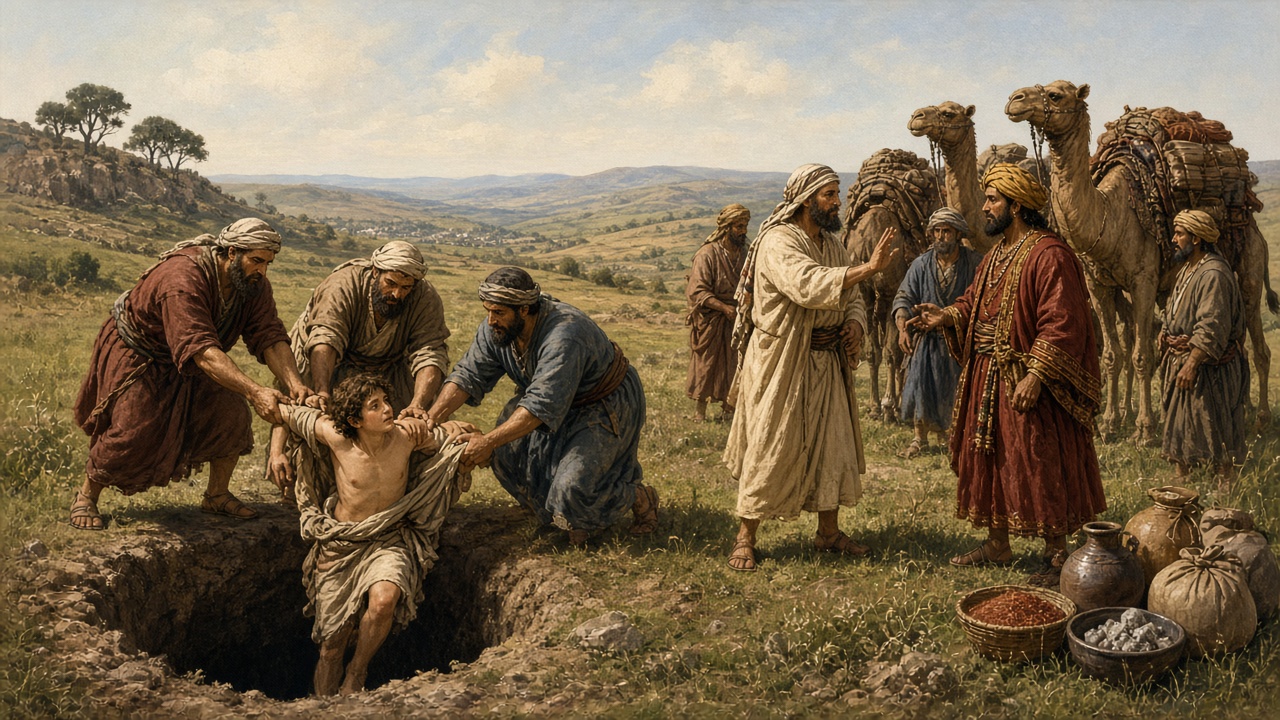
Did you know?
Joseph Sold by His Brothers
- Israel loved Joseph more than his other sons because he was the child of his old age, and he made him a robe of many colors. Easton's Bible Dictionary (1897) reads the Hebrew of Genesis 37:3 as a long, full garment with sleeves, the kind worn by the children of nobles. When the brothers saw that favor, they hated him and could not speak a kind word to him.Sources: Joseph (son of Jacob) · the Bible text itself
- Jacob sent seventeen-year-old Joseph from the Valley of Hebron to see how his brothers and the flocks were faring; they had pastured near Shechem and then gone on to Dothan. Easton's Bible Dictionary (1897) calls Dothan a famous pasture ground with two wells, identified with modern Tell-Dothan about twelve miles north of Samaria among the hills of Gilboa, and says it is mentioned on monuments in 1600 BC. There the brothers saw a caravan of Ishmaelites coming from Gilead, their camels carrying spices, balm, and myrrh on the way down to Egypt.Sources: Dothan · Gilead · the Bible text itself
- Reuben, Jacob's eldest son by Leah, tried to save Joseph from death and planned to return him to their father. Judah then persuaded the brothers to sell Joseph to the Ishmaelites rather than shed his blood. In Egypt the Midianites sold him to Potiphar, an officer of Pharaoh and captain of the guard; Easton's Bible Dictionary (1897) explains that name as 'dedicated to Ra,' the sun-god, and takes the title to mean, probably, chief of the state police, with a margin reading 'chief of the executioners.'Sources: Reuben · Judah (patriarch) · Potiphar · the Bible text itself
Notes written with AI assistance from open sources (Theographic Bible Metadata, CC BY-SA 4.0; Easton’s Bible Dictionary, public domain) and reviewed before publishing.
Places in this chapter
- Canaan · 32.767, 35.333 · verse 1
- Shechem · Today: Tell Balatah · 32.214, 35.282 · verses 12, 13, 14
- Valley of Hebron · 31.525, 35.102 · verse 14
- Egypt · 30.129, 31.308 · verses 25, 28, 36
- Gilead · Today: Gilead 1 · 32.187, 35.692 · verse 25
Only places identified with high confidence are shown (90% or more according to the scholarly sources compiled by OpenBible). Period map: DARE (Digital Atlas of the Roman Empire), CC BY 4.0; modern map: © OpenStreetMap contributors; places: OpenBible.info (CC BY 4.0).
Credits and license for this translation
Ãcõrẽ Bed̶ea
New Testament in Emberá, Northern (PM:emp:Emberá, Northern)
copyright © 2011 Wycliffe Bible Translators, Inc.
Language: Emberá, Northern
Translation by: Wycliffe Bible Translators, Inc.
Copyright Information
© 2011, Wycliffe Bible Translators, Inc. All rights reserved.
This translation text is made available to you under the
terms of the Creative Commons License: Attribution-Noncommercial-No Derivative Works.
( http://creativecommons.org/licenses/by-nc-nd/3.0/ )
In addition, you have permission to port the text to different file formats, as long as you
do not change any of the text or punctuation of the Bible.
You may share, copy, distribute, transmit, and extract portions
or quotations from this work, provided that you include the above copyright
information:
You must give Attribution to the work.
You do not sell this work for a profit.
You do not make any derivative works that change any of the actual words or punctuation of the Scriptures.
Permissions beyond the scope of this license may be
available if you contact
us with your request.
The New Testament
in Emberá, Northern
© 2011, Wycliffe Bible Translators, Inc. All rights reserved.
This translation is made available to you under the terms of the
Creative Commons Attribution-Noncommercial-No Derivatives license 4.0.
You may share and redistribute this Bible translation or extracts from it in any format, provided that:
You include the above copyright and source information.
You do not sell this work for a profit.
You do not change any of the words or punctuation of the Scriptures.
Pictures included with Scriptures and other documents on this site are licensed just for use with those Scriptures and documents.
For other uses, please contact the respective copyright owners.
2014-04-24
Source: http://ebible.org/empNTpo/ · eBible.org