Genesis 30
Ãcõrẽ Bed̶ea · Tap a verse to see its cross-references.
1Raquelera warra toca bẽrã idji djabawẽrã Lea ume sod̶e biẽ́ b̶esia. Maʌ̃ carea Raquelba Jacoboa jarasia:
–Mʌ̃ra warra quĩrĩã b̶ʌa. Warrada unuẽ́bʌrʌ, biara b̶ʌa mʌ̃ra beuida.–
2Maʌ̃ carea Jacobora Raquel ume quĩrũped̶a jarasia:
–¿Mãwãra mʌ̃da Ãcõrẽca? Idjiabʌrʌ bʌra warra idu unubiẽ́ b̶ʌa.–
3Maʌ̃be Raquelba jarasia:
–Mʌ̃ nezocawẽrã Bilhada b̶ʌa. Idji ume cãĩdua. Idjia warrada toibʌrʌ, maʌ̃ warrara mʌ̃re baya. Mãwã mʌ̃ra Bilhad̶eba warra erob̶aya.–
4Ara maʌ̃da Raquelba idji nezocawẽrã Bilhara Jacoboa quima quĩrãca diasia. Maʌ̃be Jacobora Bilha ume cãĩsia. 5Bilhara b̶iogoa b̶eped̶a umaquĩrã warrada tosia. 6Maʌ̃ne Raquelba jarasia: “Mʌ̃a iwid̶id̶ara Ãcõrẽba ũrĩsia. Idjia mʌ̃́a warra diad̶aba cawabi b̶ʌa mʌ̃a jipa osida.” Mãwã dji warrara trʌ̃ b̶ʌsia Daʌ̃.
7Mãwãnacarea Raquel nezocawẽrã Bilhara wayacusa b̶iogoa b̶eped̶a umaquĩrã warrada Jacoboa to diasia. 8Raquelba jarasia: “Mʌ̃ djabawẽrã ume bio djõ b̶ʌd̶e mʌ̃a poyasia.” Mãwã dji warrara trʌ̃ b̶ʌsia Neptali.
9Maʌ̃ ewarid̶e Leaba crĩchasia waa warrara toẽ́da. Maʌ̃ carea idji nezocawẽrã Zilpada Jacoboa quima quĩrãca diasia. 10Mãwã Zilpaba umaquĩrã warrada Jacoboa to diasia. 11Maʌ̃ne Leaba jarasia: “Mʌ̃ra boro biasia.” Mãwã dji warrara trʌ̃ b̶ʌsia Ga.
12Mãwãnacarea Lea nezocawẽrã Zilpaba wayacusa umaquĩrã warrada Jacoboa to diasia. 13Maʌ̃ne Leaba jarasia: “Mʌ̃ra bio b̶ʌsrid̶a b̶ʌa. Id̶ibʌrʌ wẽrãrãba jarad̶ia mʌ̃ra b̶ʌsrid̶a b̶ʌda.” Mãwã dji warrara trʌ̃ b̶ʌsia Aser.
14Trigo ewabada ewarid̶e Jacobo warra iwina Rubeʌ̃ra trigo ud̶amaa wãsia. Mama unusia mandragojõda. Maʌ̃ra Rubeʌ̃ba b̶a edaped̶a idji papa Lea itea edesia. Lea djabawẽrã Raquelba maʌ̃ unuped̶a Leaa jarasia:
–Mʌ̃ quĩrã djuburia bʌ warraba mandragojõ enenanebemada mʌ̃́a diadua.–
15Maʌ̃ne Leaba jarasia:
–¿Ya bia b̶ʌẽ́ca bʌa mʌ̃ quima jãrĩnada? Maʌ̃ awara ¿bʌa mʌ̃ warra mandragojõ sid̶a jãrĩca?–
Raquelba panusia:
–Bʌ warra mandragojõda mʌ̃́a diasira nane diamasi Jacobora bʌ ume cãĩya.–
Raquelba jarad̶ara Leaba bia ũrĩsia. 16Maʌ̃ bẽrã Jacobo quewara idji ẽjũãneba jũẽbʌrʌd̶e Leara idji audiab̶arid̶e wãsia. Maʌ̃be jarasia:
–Nane diamasi bʌra mʌ̃ ume cãĩya mʌ̃ warra mandragojõra Raquelea diad̶abari.–
Maʌ̃ diamasi Jacobora idji ume cãĩsia. 17Leaba iwid̶id̶ara Ãcõrẽba ũrĩsia. Mãwã Leara waya b̶iogoa b̶eped̶a umaquĩrã warrada tosia. Maʌ̃ warrara idjia juesuma tod̶a basía. 18Maʌ̃ne Leaba jarasia: “Mʌ̃ nezocawẽrãda mʌ̃ quimaa diad̶abari Ãcõrẽba mʌ̃́a nebiada diasia.” Mãwã dji warrara trʌ̃ b̶ʌsia Isacar.
19Mãwãnacarea Leara wayacusa b̶iogoa b̶eped̶a umaquĩrã warrada Jacoboa to diasia. Maʌ̃ warrara idjia sei tod̶a basía. 20Leaba jarasia: “Ãcõrẽba mʌ̃́a nebiada diasia. Mʌ̃a sei umaquĩrã warra tod̶a bẽrã mʌ̃ quimaba mʌ̃ra bia unuya.” Mãwã dji warrara trʌ̃ b̶ʌsia Zabuloʌ̃.
21Mãwãnacarea wẽrãcauda tosia. Idjira trʌ̃ b̶ʌsia Dina.
22Maʌ̃ne Ãcõrẽba Raquelera quĩrãdoaẽ́ b̶asia. Raquelba iwid̶id̶ara idjia ũrĩna bẽrã warrada idu unubisia. 23Maʌ̃ warra tosid̶e Raquelba jarasia: “Mʌ̃ warra toca carea pera b̶ad̶ara Ãcõrẽba ãyã b̶ʌsia. 24Mʌ̃a quĩrĩã b̶ʌa Ãcõrẽba warrada dewara diaida.” Mãwã dji warrara trʌ̃ b̶ʌsia Jose.
Jacobo Labaʌ̃ ume dji cũrũgaped̶ad̶a
25Jose tod̶acarea ewari ab̶a Jacoboba dji zãwãrẽ Labaʌ̃a nãwã jarasia:
–Mʌ̃ra mʌ̃ druad̶aa idu wãbidua. 26Mʌ̃ quimarãda, mʌ̃ warrarã sid̶a idu edebidua. Mʌ̃ quimarã carea bʌ itea bari traja b̶asia. Maʌ̃ bẽrã mʌ̃ra idu wãbidua. Bʌa cawa b̶ʌa mʌ̃ra bʌ itea bio trajasida.–
27Baribʌrʌ Labaʌ̃ba jarasia:
–Mʌ̃ quĩrã djuburia mʌ̃ ume b̶edua. Mʌ̃a quĩrãcuita acʌ b̶ʌd̶eba cawa b̶ʌa Ãcõrẽba mʌ̃ra bʌd̶eba careba b̶ʌda. 28Mʌ̃́a jaradua bʌ traja b̶ʌbari jũmasãwã quĩrĩã b̶ʌda. Ara maʌ̃ quĩrãca mʌ̃a diaya.–
29Jacoboba jarasia:
–Bʌa cawa b̶ʌa mʌ̃ra bʌ itea sãwã bia traja b̶ʌda idjab̶a bʌ animarã qued̶eara sãwã panʌda. 30Mʌ̃ zei naẽna bʌa zocãrãẽ́be erob̶asia. Baribʌrʌ mʌ̃ jũẽnacarea zocãrã yõsia Ãcõrẽba bʌra careba b̶ʌ bẽrã. Id̶iba ʌ̃taa mʌ̃ra mʌ̃dji warrarã itea traja quĩrĩã b̶ʌa.–
31Maʌ̃ne Labaʌ̃ba iwid̶isia:
–¿Bʌ waya nama traja b̶ei carea paratada jũmasãwã iwid̶i b̶ʌ?–
Jacoboba panusia:
–Mʌ̃a paratara iwid̶iẽ́ b̶ʌa. Mʌ̃a bʌ ovejara wayacusa waga b̶eya mʌ̃a jarabʌrʌda ĩjãibʌrʌ: nane mʌ̃ra bʌ ovejamaa, chiwatumaa bid̶a wãped̶a dji gorogoroa qued̶eada, dji bagabaga qued̶eada, oveja zaque pãĩma qued̶ea sid̶a awara b̶ʌya. Jũma mãwã b̶eara mʌ̃a edaya nama traja b̶ei carea. 33Mʌ̃ animarã bʌa acʌd̶e zebʌrʌd̶e ab̶abe chiwatu bagabaga b̶eada, gorogoroa b̶eada, idjab̶a oveja pãĩma b̶eada unuibʌrʌ cawaya mʌ̃a arid̶e o b̶ʌda. Baribʌrʌ mãwã b̶eaẽ́da mʌ̃ animarã tãẽna unuibʌrʌ, ebud̶a b̶aya mʌ̃a bʌreda drʌasida.–
34Labaʌ̃ba jarasia:
–Bia b̶ʌa, odua bʌa jara b̶ʌ quĩrãca.–
35Baribʌrʌ ara maʌ̃ ewarid̶e Jacoboba oveja, chiwatu sid̶a awara b̶ʌd̶e wãi naẽna Labaʌ̃ba chiwatu dji umaquĩrã bagabaga b̶eara, gorogoroa b̶eara, chiwatu wẽrãrã bagabaga b̶eara, jĩjĩjĩjĩã b̶eara, tod̶otod̶oa b̶eara idjab̶a oveja pãĩma b̶ea sid̶a chupea ãyã b̶ʌsia. Maʌ̃gʌ animarãra Jacoboba edaida b̶ad̶amĩna Labaʌ̃ba idji warrarãa diasia ara idji itea wagad̶amãrẽã. 36Maʌ̃be ãdjirãba Jacobo b̶ʌmaʌba ãyã ewari ũbea edesid̶aa. Maʌ̃ne Jacoboba waabema animarã idjia edaiẽ́ b̶ʌda arima waga b̶esia.
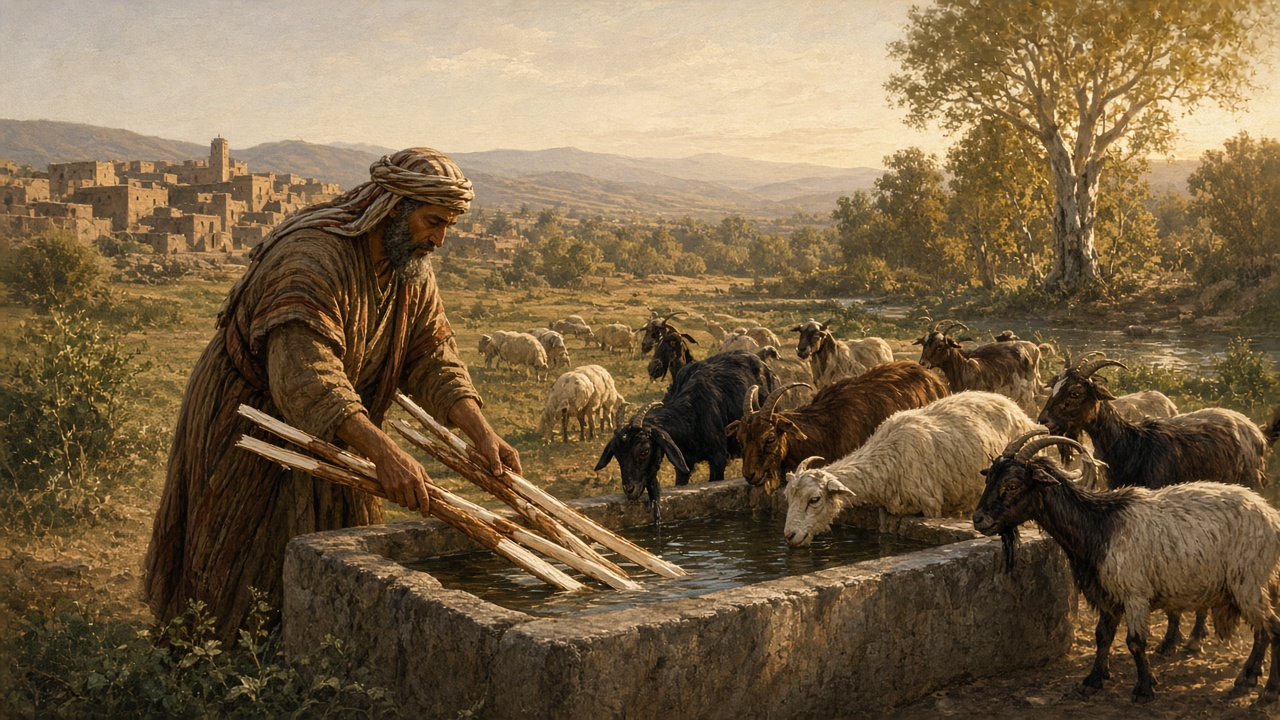
37Maʌ̃be Jacoboba animarã idji itea edai carea nãwã osia: bacuru jʌwate onoada b̶ʌá tu edasia. Álamoda, almendroda, castaño sid̶a b̶ʌá tu edasia. Maʌ̃ra erruerrua jod̶acuasia. 38Maʌ̃be bacuru erruerrua jod̶acuad̶ara dji animarã baido dobadama b̶ʌcuasia. Mama animarãra warra obadjid̶aa. 39Ãdjia maʌ̃ bacuru quĩrãpita warra osid̶ara, bagabaga, jĩjĩjĩjĩã b̶ea sid̶a tocuabadjid̶aa. 40Maʌ̃gʌ animarã qued̶eara Jacoboba awara b̶ʌ wãsia. Maʌ̃ awara oveja warra o panʌne Jacoboba dji oveja wẽrãa Labaʌ̃ animarã patrupatrua b̶eada, pãĩma b̶ea sid̶a acʌbibadjia. Maʌ̃ ovejaba patrupatrua qued̶eada, pãĩma b̶ea sid̶a tosid̶a bẽrã Jacoboba awara b̶ʌ wãsia ara idji itea. Labaʌ̃ animarã ume ãbaa b̶ʌẽ́ basía.
41Maʌ̃ awara animarã boregueara b̶eara warra obʌdaza Jacoboba bacuru jod̶acuad̶ara ãdji baido dobadama b̶ʌbadjia maʌ̃ bacuru ununamãrẽã. Mãwã dji boreguea b̶eaba patrupatrua b̶eada, bagabaga b̶eada jĩjĩjĩjĩã b̶ea sid̶a tocuabadjid̶aa. 42Baribʌrʌ animarã caya qued̶ea mamaa zebʌdad̶e Jacoboba bacurura b̶ʌca basía. Maʌ̃ bẽrã animarã caya qued̶eara Labaʌ̃ itea b̶esia, baribʌrʌ dji boreguea b̶eara Jacobo itea b̶esia. 43Mãwã Jacobora ne barasia. Ovejada, chiwatuda, nezoca umaquĩrãda, nezoca wẽrãda, cameyoda, burro sid̶a zocãrã erob̶esia.
Did you know?
Rivalry, births, and Hebrew names
- Still without children, Rachel gave her maidservant Bilhah to Jacob as a wife, so that Bilhah might bear children for her and Rachel could build a family. Leah later did the same with her maidservant Zilpah. Bilhah became the mother of Dan and Naphtali, and Zilpah the mother of Gad and Asher.Sources: the Bible text itself · Bilhah · Zilpah
- The sons' names take up what the mothers said. Easton's Bible Dictionary (1897) links Dan with Hebrew dananni, "God hath judged me," and gives Naphtali as "my wrestling," which Rachel chose after saying she had wrestled with her sister and won. That dictionary also prefers "Fortunate" or "Fortune" for Gad, rather than the older English "A troop cometh," in keeping with Leah's "How fortunate!"Sources: the Bible text itself · Dan · Naphtali · Gad
- Easton's Bible Dictionary (1897) gives Rachel's name as "ewe." At the birth of her son it records her words, "God hath taken away [Hebrew asaph] my reproach," and "The Lord shall add [Hebrew yoseph] to me another son," the saying from which he was named Joseph.Sources: the Bible text itself · Rachel · Joseph (son of Jacob)
Notes written with AI assistance from open sources (Theographic Bible Metadata, CC BY-SA 4.0; Easton’s Bible Dictionary, public domain) and reviewed before publishing.
Credits and license for this translation
Ãcõrẽ Bed̶ea
New Testament in Emberá, Northern (PM:emp:Emberá, Northern)
copyright © 2011 Wycliffe Bible Translators, Inc.
Language: Emberá, Northern
Translation by: Wycliffe Bible Translators, Inc.
Copyright Information
© 2011, Wycliffe Bible Translators, Inc. All rights reserved.
This translation text is made available to you under the
terms of the Creative Commons License: Attribution-Noncommercial-No Derivative Works.
( http://creativecommons.org/licenses/by-nc-nd/3.0/ )
In addition, you have permission to port the text to different file formats, as long as you
do not change any of the text or punctuation of the Bible.
You may share, copy, distribute, transmit, and extract portions
or quotations from this work, provided that you include the above copyright
information:
You must give Attribution to the work.
You do not sell this work for a profit.
You do not make any derivative works that change any of the actual words or punctuation of the Scriptures.
Permissions beyond the scope of this license may be
available if you contact
us with your request.
The New Testament
in Emberá, Northern
© 2011, Wycliffe Bible Translators, Inc. All rights reserved.
This translation is made available to you under the terms of the
Creative Commons Attribution-Noncommercial-No Derivatives license 4.0.
You may share and redistribute this Bible translation or extracts from it in any format, provided that:
You include the above copyright and source information.
You do not sell this work for a profit.
You do not change any of the words or punctuation of the Scriptures.
Pictures included with Scriptures and other documents on this site are licensed just for use with those Scriptures and documents.
For other uses, please contact the respective copyright owners.
2014-04-24
Source: http://ebible.org/empNTpo/ · eBible.org