Genesis 29
Ãcõrẽ Bed̶ea · Tap a verse to see its cross-references.
Jacobo idji djabadrõãma jũẽna
1Mãwãnacarea Jacobora nocod̶aa wãsia. Wãne ʌ̃mãdau odjabariarebema ẽberãrã druad̶e jũẽne wãsia. 2Mama baido juebada uria corod̶ada unusia. Maʌ̃ caita ovejada zocãrã panasid̶aa. Maʌ̃ ovejara ãdji djibarirã ũbea panʌ caita awara awara ʌ̃nãũ duanasid̶aa. Djibarirãba maʌ̃ baidora ãdji ovejaa jue diabadjid̶aa. Dji baido juebada uria ʌ̃rʌ̃ mõgara waib̶ʌada cob̶asia. 3Ewariza oveja jũma eneped̶ad̶acarea dji oveja wagabadaba maʌ̃ mõgarara ãyã b̶ʌbadjid̶aa ãdji ovejaa baido jue diad̶i carea. Jue diaped̶ad̶acarea wayacusa mõgarara dji uria ʌ̃rʌ̃ cob̶ʌbadjid̶aa. 4Maʌ̃ne Jacoboba dji oveja wagabadaa iwid̶isia:
–Djabarã, ¿bãrãra sãmabema?–
Ãdjia panusid̶aa:
–Daira Haraʌ̃ purud̶ebemaa.–
5Jacoboba iwid̶isia:
–¿Bãrãba Naco warra Labaʌ̃ra unubadaca?–
Ãdjia panusid̶aa:
–Mãẽ, daiba unubadaa.–
6Jacoboba waya iwid̶isia:
–¿Idjira bia b̶ʌca?–
Ãdjia panusid̶aa:
–Idjira bia b̶ʌa. Acʌdua, jari urua dji cau Raquelda. Idji zeza ovejada pe enebʌrʌa.–
7Maʌ̃ne Jacoboba jarasia:
–Acʌd̶adua, wad̶i ãsa nũmʌ bẽrã animarãra cãĩne eded̶iẽ́ panʌa. Ovejara baido dobigad̶aped̶a waya põãjãrã cobid̶e eded̶adua.–
8Ãdjirãba panusid̶aa:
–Wad̶ibid̶a poya baido dobid̶aẽ́a. Daiba jʌ̃ãbadaa jũmarãba ãdji ovejara enenamãrẽã. Maʌ̃bebʌrʌ mõgara baido juebada uria ʌ̃rʌ̃ cob̶ʌra ãyã b̶ʌbadaa ovejara baido dobigad̶i carea.–
9Jacobo ãdjirã ume bed̶ea b̶ʌd̶e Raquelba idji zeza ovejara pe enesia. Idjira dji oveja wagabari basía. 10Raquel zeza Labaʌ̃ra Jacobo papa Rebeca ume dji djaba basía. Jacoboba Raquel, Labaʌ̃ oveja sid̶a unusid̶e baido juebada uriamaa wãped̶a dji mõgara uria ʌ̃rʌ̃ cob̶ʌra ãyã b̶ʌsia. Ãyã b̶ʌped̶a idji djabadrõã Labaʌ̃ ovejara baido dobigasia. 11Maʌ̃ne Jacobora b̶ʌsrid̶asia idji papa ẽberãrãma jũẽna bẽrã. Maʌ̃ carea Raquel uridarrad̶e isõped̶a jĩãsia. 12Maʌ̃be Jacoboba jarasia:
–Mʌ̃ra bʌ zeza Labaʌ̃ tẽãbeaa. Mʌ̃ papa Rebecara bʌ apipia.–
Ara maʌ̃da Raquelera diguid̶aa pira wãsia idji zeza jarad̶e. 13Labaʌ̃ba maʌ̃ ũrĩped̶a pira wãsia idji djabawẽrã warra Jacobo audiab̶arid̶e. Jacobo b̶ʌmaa wãped̶a ojũẽ edaped̶a uridarrad̶e isõsia. Maʌ̃be diguid̶aa edesia. Diguid̶a jũẽnaped̶a Jacoboba Labaʌ̃a idji sãwãnanebemada jũma nẽbʌrʌsia. 14Maʌ̃ne Labaʌ̃ba Jacoboa jarasia:
–Wãrãda bʌra mʌ̃ ẽberãrãa.–
Mãwãnacarea Jacobora Labaʌ̃ ume jed̶eco ab̶a b̶esia.
Jacoboba Labaʌ̃ caurã edad̶a
15Jed̶eco ab̶a b̶ad̶acarea Labaʌ̃ba Jacoboa jarasia:
–Bʌra mʌ̃ tẽãbeamĩna mʌ̃ itea bari trajaiẽ́ b̶ʌa. Mʌ̃́a jaradua jũmasãwã diaida b̶ʌda bʌ trajubari.–
16Labaʌ̃ba cauda umé erob̶asia. Dji nabema trʌ̃da Lea basía. Raquelera dji tẽãbema basía. 17Leara mãcua quĩrãwãrẽãẽ́ b̶asia. Baribʌrʌ Raquelera bio quĩrãwãrẽã b̶asia. 18Maʌ̃ne Jacoboba Raquelda bio quĩrĩã b̶asia. Maʌ̃ carea Labaʌ̃a jarasia:
–Bʌ cau tẽãbema Raquel edai carea mʌ̃ra siete poa bʌ itea bari traja b̶aya.–
19Maʌ̃ne Labaʌ̃ba panusia:
–Biara b̶ʌa mʌ̃ caura bʌ́a diaida dewara ẽberãa diai cãyãbara. Mãẽteara mʌ̃ itea bari traja b̶edua.–
20Ara maʌ̃da Jacobora Raquel edai carea Labaʌ̃ itea siete poa bari trajasia. Jacoboba Raquelera bio quĩrĩã b̶ʌ bẽrã idjimaarã maʌ̃ siete poara dãrãẽ́ basía.
21Siete poa bad̶acarea Jacoboba Labaʌ̃a jarasia:
–Dadjia b̶ʌped̶ad̶a ewarira jũẽna bẽrã bʌ caura diadua mʌ̃ quima bamãrẽã.–
22Ara maʌ̃da Labaʌ̃ba mamabemarãra jũma trʌ̃bigasia dji cau quima edabʌrʌ b̶ʌsrid̶ada oi carea. 23Baribʌrʌ diamasi maʌ̃ b̶ʌsrid̶a o panasid̶ad̶e Labaʌ̃ba idji cau nabema Leada Jacoboa diasia. Idjab̶a idji nezocawẽrã Zilpa abadada Leaa diasia nezoca bara b̶amãrẽã. Maʌ̃ne Jacoboba Leada mãwã b̶ʌda adua b̶asia, diamasi nũmʌ bẽrã. Ara maʌ̃da Jacobora Lea ume cãĩsia. 25Nurẽma Jacoboba unusia Leadrʌ idji cʌd̶ad̶e b̶ʌda. Maʌ̃ carea Labaʌ̃maa wãped̶a jarasia:
–¿Cãrẽ cãrẽã bʌa mʌ̃ra jãwã osi? ¿Mʌ̃ra Raquel carea bʌ itea bari trajaẽ́ basica? ¿Cãrẽ cãrẽã mʌ̃ra cũrũgasi?–
26Maʌ̃ne Labaʌ̃ba panusia:
–Nama dai druad̶e dji nabemadrʌ na quima diabadaa. 27Lea edabʌrʌ b̶ʌsrid̶ara domia ab̶a odua. Mãwãnacarea mʌ̃a dewarabema sid̶a diaya baribʌrʌ bʌra wayacusa siete poa idji carea mʌ̃ itea bari trajaida b̶ʌa.–
28Jacoboba bia b̶ʌad̶a asia. Maʌ̃ bẽrã b̶ʌsrid̶ara domia ab̶a osia. Maʌ̃be Labaʌ̃ba idji cau Raquelera Jacoboa diasia dji quima bamãrẽã. 29Labaʌ̃ba idji nezocawẽrã Bilha abadada idji cau Raquelea diasia nezoca bara b̶amãrẽã. 30Ara maʌ̃da Jacobora Raquel ume cãĩsia idjab̶a idjira Lea cãyãbara quĩrĩãra erob̶esia. Maʌ̃be Jacobora wad̶i siete poa bari traja b̶esia Labaʌ̃ itea.
Jacoboba warrarã ununa
31Maʌ̃ne Ãcõrẽba unusia Jacoboba Leara quĩrĩãẽ́ b̶ʌda. Maʌ̃ carea Ãcõrẽba Leaa warrarãda diasia, baribʌrʌ Raquelera warra toca basía. 32Leara b̶iogoa b̶eped̶a umaquĩrã warrada tosia. Maʌ̃ne crĩchasia: “Mʌ̃ mĩga b̶ʌra Ãcõrẽba acʌsia. Id̶ibʌrʌ mʌ̃ quimaba mʌ̃ra biara quĩrĩãya.” Mãwã dji warrara trʌ̃ b̶ʌsia Rubeʌ̃.
33Leara wayacusa b̶iogoa b̶eped̶a umaquĩrã warrada tosia. Maʌ̃ne crĩchasia: “Ãcõrẽba mʌ̃́a naʌ̃ warra sid̶a diasia mʌ̃ quimaba mʌ̃ quĩrĩãẽ́ b̶ʌ ũrĩna bẽrã.” Mãwã dji warrara trʌ̃ b̶ʌsia Simeoʌ̃.
34Wayacusa b̶iogoa b̶eped̶a umaquĩrã warrada tosia. Maʌ̃ne crĩchasia: “Id̶ibʌrʌ mʌ̃ quimara mʌ̃ ume ãbaa b̶aya, mʌ̃a idji warrada ũbea tobʌrʌ bẽrã.” Mãwã dji warrara trʌ̃ b̶ʌsia Levi.
35Wayacusa b̶iogoa b̶eped̶a umaquĩrã warrada tosia. Maʌ̃ne crĩchasia: “Naʌ̃ne mʌ̃a Ãcõrẽa bia bed̶eaya.” Mãwã dji warrara trʌ̃ b̶ʌsia Juda.
Maʌ̃are Leara dãrãsia warra toẽ́ b̶ʌda.
Did you know?
Jacob’s Marriages in Haran
- Jacob fled to Haran, where his uncle Laban lived, in the land of the people of the east. The city, also called the city of Nahor and identified with Harran, stood on the Belik, a tributary of the Euphrates, about seventy miles above the Belik’s junction with that river, in Upper Mesopotamia. Laban was the son of Bethuel and the grandson of Nahor, Abraham’s brother; Laban’s sister Rebekah was Isaac’s wife.Sources: Haran · Laban · Nahor (brother of Abraham) · the Bible text itself
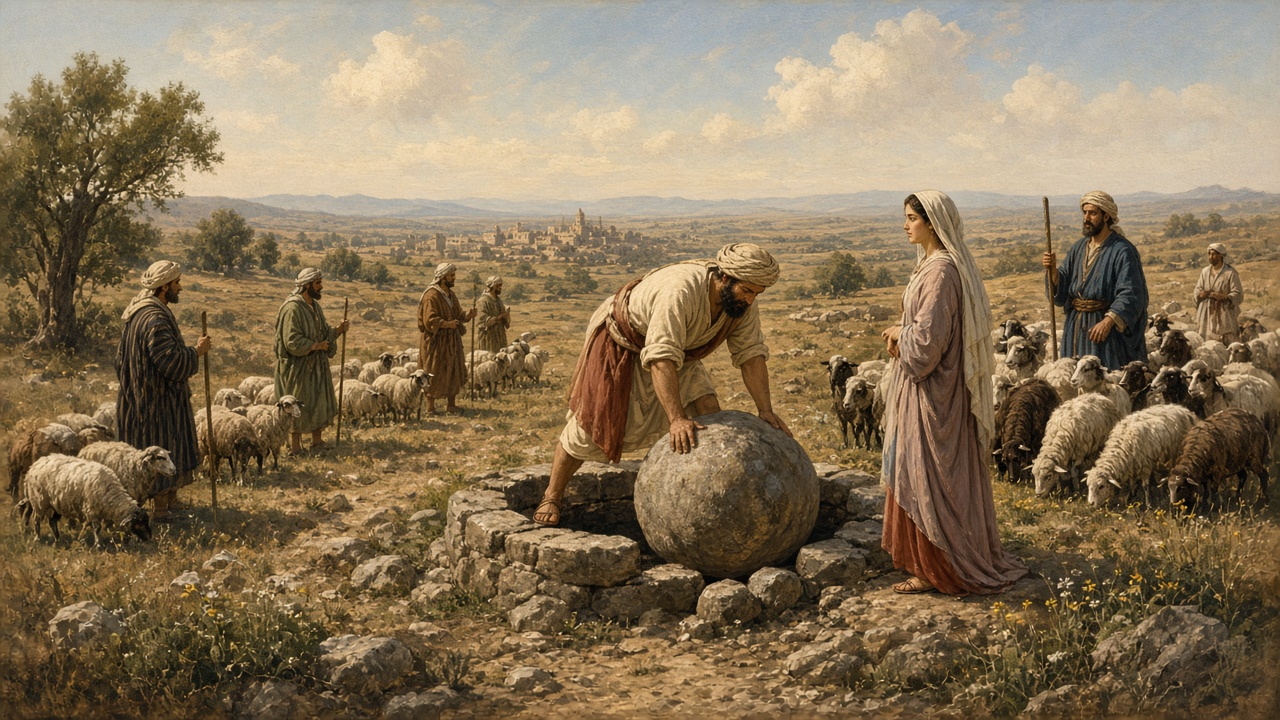
- The well was closed by a large stone that the shepherds rolled away only after all the flocks had gathered, then put back in place. Rachel, whose name is given as “ewe,” was a shepherdess bringing her father’s sheep, and Jacob, who had himself lived as a shepherd, moved the stone and watered his uncle’s flock.Sources: Rachel · Jacob (Israel) · the Bible text itself
- Leah, the elder sister, is called “weary,” and she is described as weak-eyed, or tender-eyed; Rachel, the younger, was shapely and beautiful. Jacob served seven years for Rachel, but at the evening feast Laban gave him Leah, saying it was not the custom there to give the younger daughter in marriage before the older, and then gave him Rachel for another seven years—fourteen in all. Leah’s first sons were Reuben, whose name is given as “Behold a son,” and then Simeon, Levi, and Judah; in naming them she spoke of the LORD seeing her affliction, hearing that she was unloved, her husband becoming attached to her, and her praise of the LORD.Sources: Leah · Rachel · Reuben · the Bible text itself
Notes written with AI assistance from open sources (Theographic Bible Metadata, CC BY-SA 4.0; Easton’s Bible Dictionary, public domain) and reviewed before publishing.
Places in this chapter
- East · Today: region around Amman · 31.955, 35.934 · verse 1
- Haran · Today: Harran · 36.864, 39.033 · verse 4
Only places identified with high confidence are shown (90% or more according to the scholarly sources compiled by OpenBible). Period map: DARE (Digital Atlas of the Roman Empire), CC BY 4.0; modern map: © OpenStreetMap contributors; places: OpenBible.info (CC BY 4.0).
Credits and license for this translation
Ãcõrẽ Bed̶ea
New Testament in Emberá, Northern (PM:emp:Emberá, Northern)
copyright © 2011 Wycliffe Bible Translators, Inc.
Language: Emberá, Northern
Translation by: Wycliffe Bible Translators, Inc.
Copyright Information
© 2011, Wycliffe Bible Translators, Inc. All rights reserved.
This translation text is made available to you under the
terms of the Creative Commons License: Attribution-Noncommercial-No Derivative Works.
( http://creativecommons.org/licenses/by-nc-nd/3.0/ )
In addition, you have permission to port the text to different file formats, as long as you
do not change any of the text or punctuation of the Bible.
You may share, copy, distribute, transmit, and extract portions
or quotations from this work, provided that you include the above copyright
information:
You must give Attribution to the work.
You do not sell this work for a profit.
You do not make any derivative works that change any of the actual words or punctuation of the Scriptures.
Permissions beyond the scope of this license may be
available if you contact
us with your request.
The New Testament
in Emberá, Northern
© 2011, Wycliffe Bible Translators, Inc. All rights reserved.
This translation is made available to you under the terms of the
Creative Commons Attribution-Noncommercial-No Derivatives license 4.0.
You may share and redistribute this Bible translation or extracts from it in any format, provided that:
You include the above copyright and source information.
You do not sell this work for a profit.
You do not change any of the words or punctuation of the Scriptures.
Pictures included with Scriptures and other documents on this site are licensed just for use with those Scriptures and documents.
For other uses, please contact the respective copyright owners.
2014-04-24
Source: http://ebible.org/empNTpo/ · eBible.org