1 Kings 1
Ekajuk Scriptures Bible Portions · Tap a verse to see its cross-references.
About this book
About 1 Kings
- Easton's Bible Dictionary (1897) treats the authorship of the books of Kings as uncertain. A tradition that Jeremiah wrote them is, in Easton's view, supported by passages almost identical with parts of Jeremiah and by events Jeremiah knew personally, yet Easton thinks it more probable that Ezra, after the Captivity, compiled the books from earlier documents, perhaps written by David, Solomon, Nathan, Gad, and Iddo. Easton dates the composition between 561 B.C., when Jehoiachin was released from captivity by Evil-merodach, and 538 B.C., the decree of Cyrus.Sources: Easton: Kings, The Books of
- Easton says these books contain the annals of the kingdom from Solomon's accession until Nebuchadnezzar and the Babylonians subdued it, a period he estimates at about 453 years. 1 Kings opens while David is dying: Adonijah, his fourth son, who had become heir-apparent to the throne after the deaths of Amnon and Absalom, has himself proclaimed king, but Nathan and Bathsheba persuade David to enthrone Solomon at once. Solomon, David's son by Bathsheba, whose history is recorded in 1 Kings 1-11, came to the throne, Easton suggests, at about sixteen or eighteen.Sources: Easton: Kings, The Books of · Adonijah · Solomon
- In the Hebrew Scriptures the two books of Kings originally formed one book; the Septuagint first divided them and, with the Vulgate, numbers them as the third and fourth books of Kings, the books of Samuel being the first and second. Easton notes that Chronicles gives greater prominence to the priestly or Levitical office, while Kings gives greater prominence to the royal office, and that in the threefold division of the Scriptures by the Jews these books are ranked among the Prophets. The narrative points to earlier sources: the book of the acts of Solomon and the chronicles of the kings of Judah and of Israel.Sources: Easton: Kings, The Books of
- After Solomon's death the ten tribes revolted and invited Jeroboam, son of Nebat, to be their king; Easton calls him the first king of those tribes and dates his reign from 976 to 945 B.C. He had fled to Egypt under the protection of Shishak I, and later moved his residence from Shechem, his first capital, to Tirzah, which remained the chief residence of Israel's kings until Omri bought the hill of Shomeron from Shemer for two talents of silver and built Samaria. The later narrative includes Ahab, Omri's son and the seventh king of Israel, whose wife was Jezebel: to the calf worship introduced by Jeroboam he added the worship of Baal, and he was severely admonished by the prophet Elijah.Sources: Jeroboam · Tirzah · Samaria · Ahab
Notes written with AI assistance from open sources (Theographic Bible Metadata, CC BY-SA 4.0; Easton’s Bible Dictionary, public domain) and reviewed before publishing.
Ngare Nyi Devid Ma Kul
1Ngare nyi Devid ma sahb kˈkul, jol afi bo konng-e egbvgbv ebbik ebbik, á joom tiki bel elfuubu. 2Alokeltum ebe kehm-e tongo re, <<Nong wahr seb mongunga nnenkal, no bahke jo loko ntul, fere jo kpur-e. Á bahke ma noongo go egea nkpe, eji nso ntul ewahre bahke bele elfuubu.>>
3Owo bo kehm yannge seb nnobo noba mmonse nkal go Isreel kpee, kehm song nyehn Abisagi, nne ejahbe Sunam, kehm-e koko ba ka ntul. 4Mmonse nkal jolo nne ano; á jo kpuru ntul, jo lok-e, wo ntul tikem noongo a ne.
Adonija Sebe Re Á Ko Eti Etul
5Ngare nyia, Adonija, ye ji bo jo lung nnyehn re Hagiti, kehm mehle elne wahre, kehm bungu re, <<M bahke jolo ntul.>> Ano wo á kehm toobo amvtv akuungu a anyꞌnya, a ane atahl abal ane awubu ba bahke jo gbo-e mbang. 6<<Jol nde we-e ka nyˈnyam, fere bahb-e re, <<Jenji wahnge a kpꞌlimi eljini nia?>> Adonija jolo nne ano, ye wo bo jele kunu Absalom.>>
7Adonija kpa njahm a Joab ji mmona Jeruya, a Abiata ji nlimajom, bo kun-e abo go njahm 8Wo Jadok ji nlimajom, Benaya mmona Jehoiada, Natan ji nnyehnamahr, Simeyi a Reyi, a akahme kahme ane ba jo baabe Devid taamem semme elbo a ntoobo nyi Adonija. 9Adonija kehm koko ejoro, adahmagbudu a ajoko joko abon efong song lim ajom go Eltal ni Joheleti kohlo En Rogel. Á tiingi abonanyehn kpee, ba li abon ntul, a aneblum ba Juda kpee ba kpo lim eltum etahk ntul, 10wo á tiingem Natan ji nnyehnamahr, afi Benaya, afi akahme kahme ane ba jo baabe ntul, afi Solomon ji mmonannyehn.
11Owo Natan kehm bahbe Batiseba ji nnyehn Solomon re, <<Á ka wuk re Adonija, ji mmona Hagiti, ebjol ntul, jol nsoo ntula Devid kahnema? 12Anv nong me n tub-a elle, ana á bahke tahre elkpin ena, a ni Solomon mmon ewa. 13Song go ekpˈkpa goji Ntula Devid, song tong-e re, <<Nsoo ntul, á tirem tong me nlokeltum ewa re, <<Etingitingi Solomon mmon ewa wo bahke jolo ntul toon-ma?, ye wo bahke jehke go egame eti etula? ˈNꞌnan wahnge Adonija ma fere jol ntul?>> 14Ana a kpi mbungu mbungu a ntul, m bahke bake ba kpir-a o, ba tong ntul re, ji a kpꞌbungu lohko li ano.>>
15Ano wo Betiseba mehle song nyehn ntul no ma sahb kˈkul go ege ekpꞌkpa, eji Abisagi nnea Sunem jo kpur-e. 16Betiseba kehm gongo noongo go ndi, go esamahr ntul.
Ntul kehm-e bahbe re, <<Jenji á kpꞌsebe?>>
17Á kehm faange ntul re, <<Ntul ewame, wofono antahng wo tiri tong-m me nlokeltum ewa go mbing nyi Jehova Esowo eba re, <<Solomon mmon ewa wo bahke jolo ntul toon-m, ye wo bahke jehke go egame eti etul.>> 18Wo anv, Adonija wo ma jol ntul, nga wo ntul ewame, wo ka kahn bade. 19Adonija eblim ajom, ko ajoko joko abon efong gbalee, a adahmagbudu, ejoro, fere tiingi abon ntul, Abiata ji nlimajom a Joab ji ntubesia nsoja, wo Solomon nlokeltum ewa, á we-e tiingem. 20Nsoo ntul ewame, amahr nya anebe Isreel kpee kpi wo seenge, re bo kahn go ega nne no bahke jehke go eti etul ji nso ntul toon-e. 21A tohko lim ano, ana bo kpꞌkpake babnso ewahne kak elahm a babnde ebo, me a Solomon mmon ewame, bo bahk-r jabbe ana abi ane.>>
22Ana á kpi mbungu mbungu a ntul, nyehn Natan ji nnyehnamahr ma ba lohng. 23Bo kehm tongo ntul re, <<Natan ji nnyehamahr li a.>> Á kehm tahme go esamahr ntul, kehm song gong esamahr ebe go ndi.
24Natan kehm bungu tong ntul re, <<Nsoo ntul ewame, wobbung re, Adonija wo bahke jolo ntul no bahke jehke toon-aa? ye wo bahke jehke go ega eti etula? 25Lela yeblohng song lim ajom, ko ajoko joko abon efong gbalee, efong, a ejoro. Yebtiingi abon ntul, fere tiingi atubesi asoja, a Abiata ji nlimanjom. Anv, bo baa go kpꞌlehke fere wꞌwo a ne, fere kpꞌbungu re, <<Nong elkpin ena lab, ntula Adonija!>> 26Wo me, nlokeltum ewa, a Jadok nlimanjom, a Benaya mmon no Jehoida, go Solomon nlokeltum ewa, á wahr tiingem. 27Ejum ji a ji nso ntul ewame ma lim, á sebem re wahr alokeltum eba kahn nne no bahke jehke go eti etul ji nso ntul ewahre toon-ea?>>
Devid bobo Solomon Etul
28Owo ntula Devid kehm bungu re, <<Lung Betiseba kam.>>Ejum ji nso ntul ewame ma lim ji a, á sebem re Ano wo á lohngo ba yiimi go esamahr ntul.
29Owo ntul kehm koko nwongo re, <<Go etingitingi ana Jehova li go elkpin, ye ji ma-m tahre go ajoobo atongtong anyehng anyehng, 30m bahke lohko lim lela go etingitingi ji n ko nwongo tong-a go esamahr bi Jehova Esowo bi Isreel. Solomon mmon ewa bahke jehke etul toon-m, á bahke jehke go egame eti etul, go egama enyo.>> Owo Betiseba kehm gongo esamahr ebe go ndi, fere noongo tanne go esamahr ntul, kehm bungu re, <<Nong nsoo ewame, ntula Devid bel nlabe elkpin!>>
31Owo Betiseba kehm gongo esamahr ebe go ndi, fere noongo tanne go esamahr ntul, kehm bungu re, <<Nong nsoo ewame, ntula Devid bel nlabe elkpin!>>
32Ntula Devid kehm bungu re, <<Lung Jadok ji nlimanjom, Natan ji nnyehnamahr, a Benaya mmona Jehoida kam.>> Eji bo ba no go esamahr bi ntul, 33á kehm tongo bo re, "Roden nlokeltuma ntul wahn song, fere rod Solomon mmon ewame kunu go egame enyꞌnya ji kahbe akpade, song a ne go Gihon. 34Nong Jadok ji nlimajom abola Natan ji nnyehnamahr, bo wohng-e akehng go edi jio, bob-r etul bi Isreel. Wor ntang, fere rabe re, <<Ntula Solomon, elkpin ena laboo!>> 35Owo ḿ bahke tahme a ne, á song ji go egame eti etul, jo fili edi go egame enyo. M me-e yehke re á jol nfiladi go Isreel a Juda.>
36Benaya mmona Jehoida kehm faange ntul re, <<Nong jol ano! Nong Jehova, Esowo bi nso ntul ewame bung yiimi tˈtahne. 37Ana Jehova jolo a nsoo ntul ewame, nong á tob jol a Solomon, lim etul ebe gbal sehnge eti etul ji nso ntula David!
38Ano wo Jadok ji nlimajom, Natan nnyehnamahr, go Benaya mmona Jehoida, anebe Kereti a anebe Peleti, bo mehle tahm, song rod Solomon kunu go enyꞌnya ji ntula Devid ji kahbe akpade, fere tv-e ko-e song rehng go Gihon. 39Jadok ji nlimajom kehm rodo ntang nyi akehng wob atahng go mmobkpatahk no li saang ba kak Solomon akehng go esi. Owo bo kehm woro ntang, fvfo ane kpee kehm rabe re, <<Ntula Solomon, elkpin ena laboo!>> 40Ane kpee kehm mehle tahm jo toon-e, jo wor agbehle, jo bel eyebatahng gbalee, ndi jo gbꞌgbehke go ewahl ji jo lim.
41Adonija, a ajenne kpee nya jolo a ne wuku ewahl eji bo yahke li elkak ebo mal. Ana bo kpꞌwuku atang nya bo kpꞌworo, Joab kehm bahbe re, <<Elkohn ewahl ajii li go atahng ejahbe me?>> 42Jol ana á kpi mbungu mbungu, Jonatan mmona Abiata ji nlimajom ebba lohng. Adonija kehm bungu re, <<Ba yel. Nnooba nne ana wo tiki kpi nnoobo etib.>> 43Jonatan kehm faange re, <<Eꞌeeo! nsoo ntul ewahre Devid ebbob Solomon ntul. 44Ntul me-e tum a Jadok ji nlimajom, Natan nnyehnamahr, Benaya mmon no Jehoida, anebe Kereti, anebe Peleti, fvfo bo me-e rod kunu go enyꞌnya ji ntul ji kahbe akpade, 45fvfo Jadok ji nlimajom a Natan nnyehnamahr me-e bob etul go Gihon. Go wo bo lohngo no ba, ba yel go nfam, a ewahl ewahl ana bo ba no. Ewok ji o ji á kpꞌwuku. 46Go nsol kpee, Solomon ebji go nji etul enye ana ntul. 47Fvfo, ane ba kpo lim eltum a ntul, ebba kak nsoo ntula Devid nnyo re, <<Nong Esowo eba lim mbing nyi Solomon ga gbal sehnge nyꞌnya, nji etul enye bel ellub sehnge nyꞌnya!> Ntul gbo kohk esi eje go edilnong kak Esowo, 48fere bung re, <Eltehke jol ka Jehova Esowo bi Isreel, ye ji ma wahng re me nyehn nne no bahke jehke toon-m go eti etul lela.> >> 49Eji bo wuku jia, ajenne kpee nya ba goji Adonija mehle a elfahle, fere be raade no nne tahm mbang enye. 50Wo Adonija go elfahle ni á jo fahl Solomon, mehle tahm song tub ejahm go atang nya jolo go egudu njom. 51Bo kehm tongo Solomon re, <<Adonija kpꞌfahle ntula Solomon, yebsong tub ejahm go atang nya egudu njom. Á bungu re, <<Nong ntula Solomon tir tong-m lela re, á nehm wul me nlokeltum ewe.>>>
52Solomon kehm faange re, <<Á lꞌtib elne ana nne no bo bahk-e ma bum etingitingi, jol ellv esi ene anehng anehng nehm gbo go ndi; wo lꞌjol re abꞌbi bahke jolo go ege atahng, á bahke kpoko.>> 53Owo Ntula Solomon kehm tumu ane, bo song radd-e go egudu njom ba a ne. Owo Adonija kehm bake, ba gbo kohk esi go ndi kpunu Ntula Solomon, owo Solomon kehm bungu tong-e re, <<Song ega etahk.>>
Did you know?
The Succession to David's Throne
- As David's oldest surviving son after the deaths of Amnon and Absalom, Adonijah claimed the royal succession, backed by the military commander Joab and the high priest Abiathar. However, David chose his younger son Solomon, who was supported by the prophet Nathan, the priest Zadok, and the royal bodyguard under Benaiah.Sources: Adonijah · Solomon · the Bible text itself
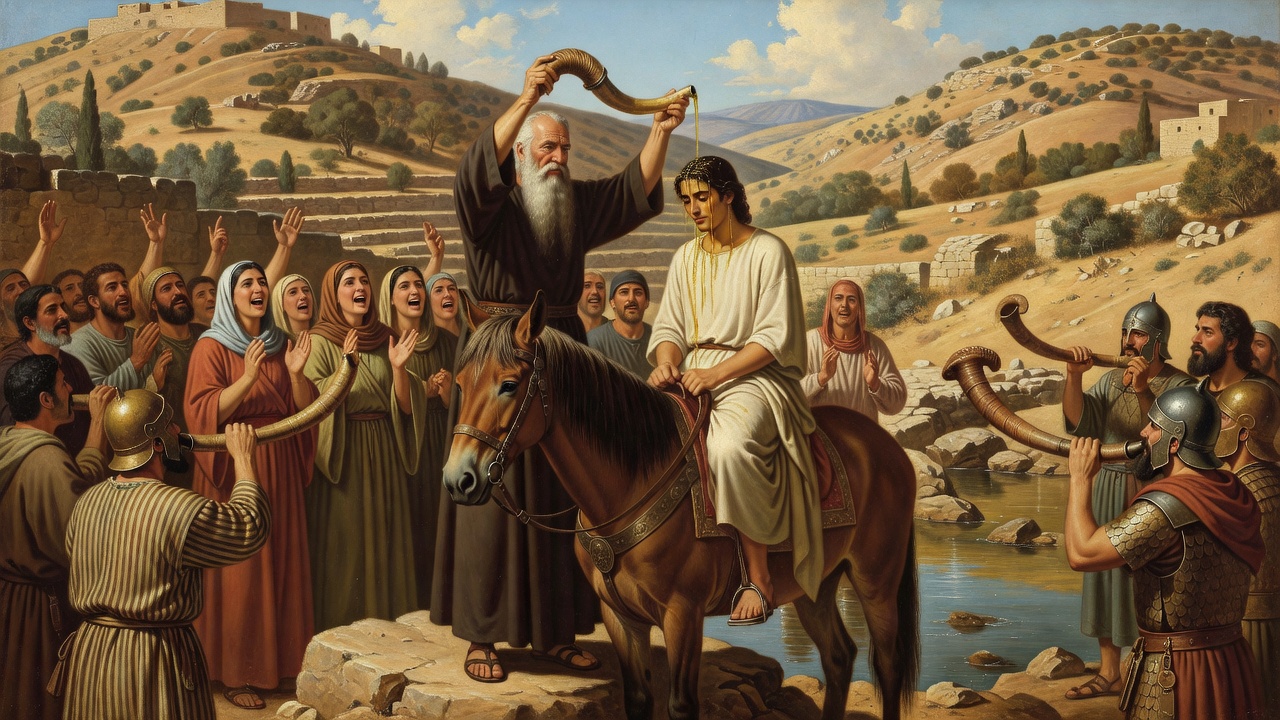
- Riding the king's own mule was a decisive public declaration of royal authority. By David's explicit instruction, Solomon was escorted down to the spring of Gihon, where Zadok anointed him king with oil taken from the tabernacle to the sound of ram's horns and popular celebration.Sources: Gihon · Zadok · the Bible text itself
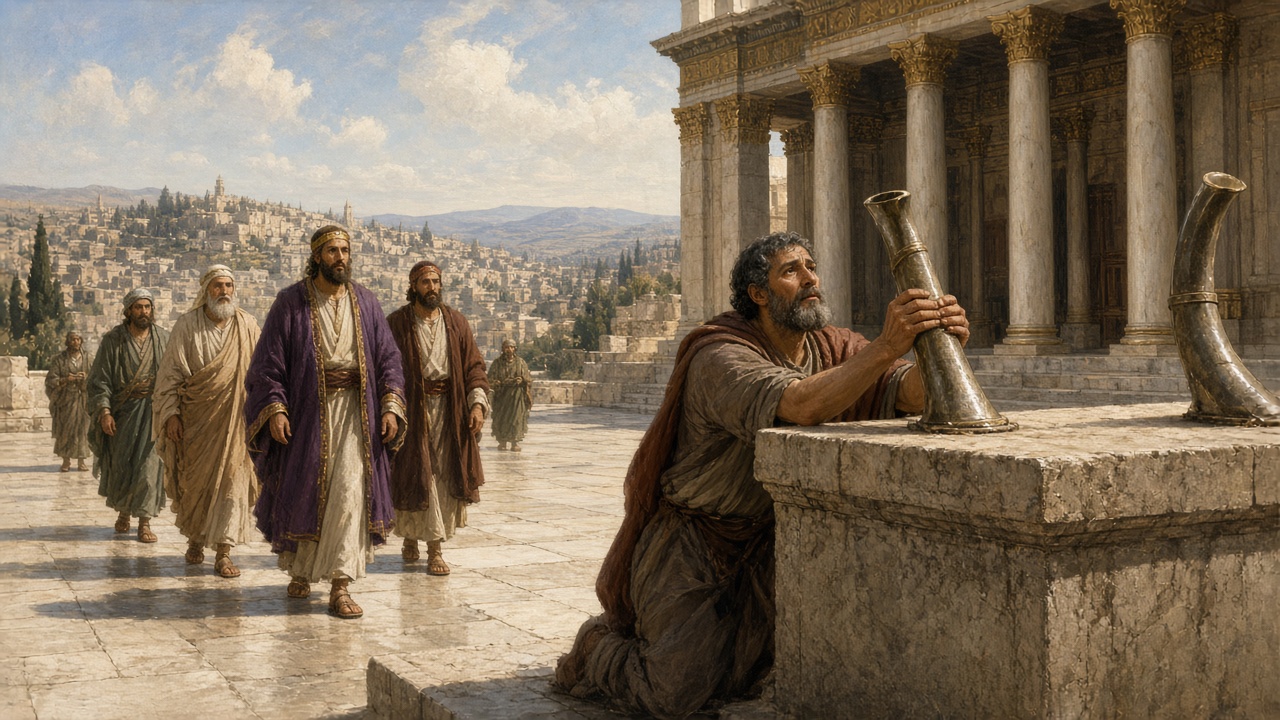
- Upon hearing of Solomon's public coronation, Adonijah fled in terror and sought asylum by taking hold of the horns of the sacrificial altar. Solomon granted him conditional clemency, sparing his life so long as he proved himself a worthy man.Sources: Adonijah · the Bible text itself
Notes written with AI assistance from open sources (Theographic Bible Metadata, CC BY-SA 4.0; Easton’s Bible Dictionary, public domain) and reviewed before publishing.
Places in this chapter
- Shunem · Today: Sulam · 32.606, 35.334 · verse 3
- Serpent’s Stone · Today: within 100 m of Bir Ayub · 31.767, 35.236 · verse 9
- Gihon · Today: Gihon Spring · 31.773, 35.236 · verses 33, 38, 44, 45
- Jerusalem · 31.777, 35.234 · verse 40
Only places identified with high confidence are shown (90% or more according to the scholarly sources compiled by OpenBible). Period map: DARE (Digital Atlas of the Roman Empire), CC BY 4.0; modern map: © OpenStreetMap contributors; places: OpenBible.info (CC BY 4.0).
Credits and license for this translation
Ekajuk Scriptures Bible Portions
Ekajuk: Ekajuk Scriptures Bible Portions (Bible)
copyright © 2024 Luke Initiative for Scripture Translation and The Seed Company
Language: Ekajuk
Contributor: Luke Initiative for Scripture Translation
This translation is made available to you under the terms of the
Creative Commons Attribution Share-Alike license 4.0.
You have permission to share and redistribute this Bible translation in any format and to make reasonable revisions and adaptations of this translation, provided that:
You include the above copyright and source information.
If you make any changes to the text, you must indicate that you did so in a way that makes it clear that the original licensor is not necessarily endorsing your changes.
If you redistribute this text, you must distribute your contributions under the same license as the original.
Pictures included with Scriptures and other documents on this site are licensed just for use with those Scriptures and documents.
For other uses, please contact the respective copyright owners.
Note that in addition to the rules above, revising and adapting God's Word involves a great responsibility to be true to God's Word. See Revelation 22:18-19.
2025-07-02
Source: http://ebible.org/eka/ · eBible.org