Matthew 11
Nǫ̀htsı̨̨ Nı̨̨htł'è · Tap a verse to see its cross-references.
Zezì eyıts'ǫ John-Baptıst
1Zezì edecheekeè hoònǫ-daà-nàke hanì hoghàgoèhtǫ tł'axǫǫ̀ Galılee nèk'e kǫ̀ta yàgòlaa ts'ǫ̀ ajà, ekǫ dǫ hoghàgoehtǫ xè godı nezı̨ı̨ t'à dǫ ts'ǫ̀ gode.
2John-Baptıst wedaàtǫ ekò, Zezì ayìı dàhɂı̨ yeghǫ ıìkw'o ekò edecheekeè yets'ǫ̀ goèhɂà, hadı, 3“Dıı hanì daweahke: Dǫ ı̨łè jǫ nììtła ha ı̨lèe sìı asį̀į̀ eyı anet'e? Eyı anet'e-le nı̨dè asį̀į̀ dǫ eyıì-le danats'eèhɂı̨ ha, hawèahdı,” gòhdı.
4Zezì gots'ǫ̀ hadı, “John-Baptıst ts'ǫ̀ anaahde. Ayìı aahɂı̨ı̨ eyıts'ǫ ayìı aàhkw'oo sìı hazǫǫ̀ wets'ǫ̀ haahdı: 5Dǫ gıdaà goìlee sìı k'egeet'į̀, k'egedè-le sìı k'egedè, gıkwǫ̀ tàda t'à eyagı̨ı̨lı̨ı̨ sìı k'aàt'ıì agejà, gıdzıì goìlee sìı egeèhkw'ǫǫ̀ agejà, ełaàgı̨ı̨dèe sìı nagìdà eyıts'ǫ dǫ-teèt'ı̨ı̨ sìı godı nezı̨ı̨ egıìkw'o. 6Amìı wek'èch'a aht'ı̨-le sìı wexè sìghà hǫt'e,” Zezì gòhdı.
7John-Baptıst wecheekeè nageèhde ekò Zezì John-Baptıst ghǫ dǫ hazǫǫ̀ ts'ǫ̀ hadı, “Ekìı-ka nèk'e ayìı ghàahda ha ekǫ k'eahdè? Tł'oh k'eweehts'ı ghàahda ha nì aaht'ı̨? 8Hanì-le-ı̨dè ayìı ghàahda ha ekǫ k'eahdè? Dǫ nezı̨į̀ nàhtł'ı̨ ghàahda ha nì aaht'ı̨? Į̀le, dǫ goht'ǫ dètìı t'à-aget'ı̨ı̨ sìı k'àowocho wekǫ̀ nàgedè hǫt'e. 9Ekǫ ayìı ghàahda ha aaht'ı̨ ı̨lè? Nakwenàoɂǫǫ? Hęɂę, nakwenàoɂǫǫ nahk'e elı̨ı̨ sìı weahɂı̨ hǫt'e. 10Eyı dǫ weghǫ dıı hanì dek'eèhtł'è:
‘Nenakweè dǫ ı̨łè seyatıì k'eɂa ha. Nenakweè negha ts'atà nìhòɂà ha.’
11Ehkw'ı anaxèehsı̨, dǫ hazǫǫ̀ gıgǫ̀hłı̨ı̨ sìı John-Baptıst wenahk'e gǫ̀hłı̨-le. Hanìkò Nǫ̀htsı̨ Wenàowoò k'ę̀ę̀ hòɂǫǫ geèhkw'ee gıta dǫ dek'aɂį̀ elı̨ı̨ sìı John-Baptıst nahk'e elı̨ hǫt'e. 12John-Baptıst dǫ k'ètaìdzǫ gots'ǫ dıı dzęę̀ gots'ǫ̀ dǫ Nǫ̀htsı̨ Wenàowoò k'ę̀ę̀ hòɂǫǫ k'èch'a aget'ı̨ xè gıts'ǫ̀ k'àhogedè ha gı̨ı̨wǫ. 13John-Baptıst dǫ ts'ǫ̀ gode gots'ǫ̀, nakwenàoɂǫǫ gını̨htł'è, eyıts'ǫ Moses wenı̨htł'è, Nǫ̀htsı̨ Wenàowoò k'ę̀ę̀ hòɂǫǫ ghǫ nadąą̀ gogı̨ı̨de ı̨lè. 14Eyı naxıgha ehkw'ı-ahodı nı̨dè ededı̨ sìı Elıjah jǫ nììtła ha ts'edı ı̨lèe sìı eyı lanì hǫt'e. 15Naxıdzıìhkw'ǫǫ̀ gǫ̀hłı̨ nı̨dè hotıì nezı̨į̀ aàhkw'ǫ.
16“Dıı dǫ xàgeèɂaa sìı ayìı xègı̨ı̨ht'e ts'edı lì? Chekoa tı̨lıbàa geèhkw'ee lagı̨ı̨t'e. Ełets'ǫ̀ hagedıì yagìzeh,
17‘Naxıgha shı̨ ts'eehdı, hanìkò dagoahwho nıìle. Naxıgha ts'ǫǫ̀ts'ı̨ı̨wǫ-zhı̨į̀ t'à ts'ejı̨, hanìkò aahtse nıìle,’ gedı.
18John-Baptıst nììtła ekò, edegǫ t'à shètı̨-le xè yedǫ-le, hanìkò dıı hagedı, ‘Įnìłı̨ı̨ wets'ǫ̀-èlı̨,’ gedı. 19Dǫ-wet'àaɂàa-deè nììtła ekò shètı̨ xè yedǫ, eyıt'à dıı hagedı, ‘Bò gha edì-le xè yedǫ ghaewı. Sǫǫ̀mba-nàhtsį̀ı̨-dǫǫ̀ eyıts'ǫ hołı̨ı̨-hogehtsı̨ı̨-dǫǫ̀ edeàgı̨ą gòt'ı̨,’ gedı. Wet'à gots'ı̨ı̨zǫǫ sìı wek'ę̀ę̀ ts'eeda nı̨dè hoɂıì gok'e wègaat'ı̨ ha hǫt'e,” Zezì gòhdı.
Dǫ edek'egı̨ı̨lı̨-le sìı gıxè hoìla ha
20Zezì hadı tł'axǫǫ̀ kǫ̀ta deɂǫ̀ǫ̀ enıìyah hòèhtsı̨ı̨ sìı ekǫ gots'ǫ dǫ, edek'egı̨ı̨lı̨-le t'à ekǫ-le eghàlagı̨ı̨dà gòhdı, goghǫ gode. 21Zezì hadı, “Kǫ̀ta Korazın, naxıgha hoìla nechà ha! Kǫ̀ta Bethsaıda, naxıgha hoìla nechà ha! Naxıkǫ̀ta enıìyah eghàlaıhdàa sìı kǫ̀ta Tyre got'ı̨į̀ eyıts'ǫ Sıdon got'ı̨į̀ gıxè hanàhòwo nı̨dè whaà edek'egı̨ı̨lı̨ ha ı̨lè, dǫhshǫ̀ǫ goht'ǫǫ̀ t'à-aget'ı̨ xè łèbè ta geèhkw'e ha ı̨lè. 22Ehkw'ı anaxèehsı̨, gosınìyaetıı dzęę̀ k'e nı̨dè Tyre got'ı̨į̀ eyıts'ǫ Sıdon got'ı̨į̀ naxık'aɂį̀ gıgha hoìla ha hǫt'e. 23Ekò Capernaum got'ı̨į̀, asį̀į̀ ı̨dòo yak'e ts'ǫ̀ danaxıìtè ha? Į̀le, ı̨zhıì wehłı̨kǫ̀ ts'ǫ̀ anaxedle ha. Enıìyah naxıdaà hòwhıhtsı̨ı̨ sìı Sodom got'ı̨į̀ gınadąą̀ hanàhòwo nı̨dè dıı dzęę̀ ts'ǫ̀ gıkǫ̀ta gòɂǫ ha ı̨lè. 24Ehkw'ı anaxèehsı̨, gosınìyaetıı dzęę̀ k'e nı̨dè Sodom got'ı̨į̀ naxık'aɂį̀ gıgha hoìla ha hǫt'e,” Zezì gòhdı.
Zezì goxè ts'èwhı̨į̀ hòɂǫǫ̀ ayehɂı̨
25Ekìıyeè k'e Zezì hadı, “Setà, neghàsǫehdı, yak'e eyıts'ǫ dıı nèk'e ts'ǫ̀ K'àowo anet'e. Dǫ gogı̨ı̨zǫǫ xè hoghàgeètǫǫ sìı eyı hazǫǫ̀ gıch'à deɂı̨į̀ wheɂǫ anelà, hanìkò chekoa nechà-lea sìı gık'èezǫǫ̀ anelà. 26Hęɂę, Setà, hanì negha sìghà t'à anelà.
27“Setà t'asìı hazǫǫ̀ setł'aà whelaà ayı̨į̀là. Dǫ wı̨ı̨zìı Nǫ̀htsı̨ Weza k'èezǫ nıìle; Nǫ̀htsı̨-Gotà zǫ yek'èezǫ. Dǫ wı̨ı̨zìı Nǫ̀htsı̨-Gotà k'èezǫ nıìle; Weza zǫ yek'èezǫ hǫt'e. Eyıts'ǫ Weza amìı gòìhchıı sìı Nǫ̀htsı̨-Gotà k'ègeezǫǫ̀ agohɂı̨.
28“Naxı̨ hazǫǫ̀ nìahtsǫǫ xè naxıgha dìì sìı sets'ǫ̀ aahde, naxıxè ts'èwhı̨į̀ hòɂǫǫ agohłe ha. 29Senàowoò edek'e aahłe eyıts'ǫ hoghànaxııhtǫ. Dǫ ts'ǫ̀ sedzeè nezı̨ xè k'èeweèt'ı̨ aht'e. Sek'èaht'e nı̨dè naxıdzeè xè ts'èwhı̨į̀ hòɂǫ ha. 30Senàowoò sìı nedà xè dezhì nıìle,” Zezì gòhdı.
Did you know?
John's question and the cities that did not repent
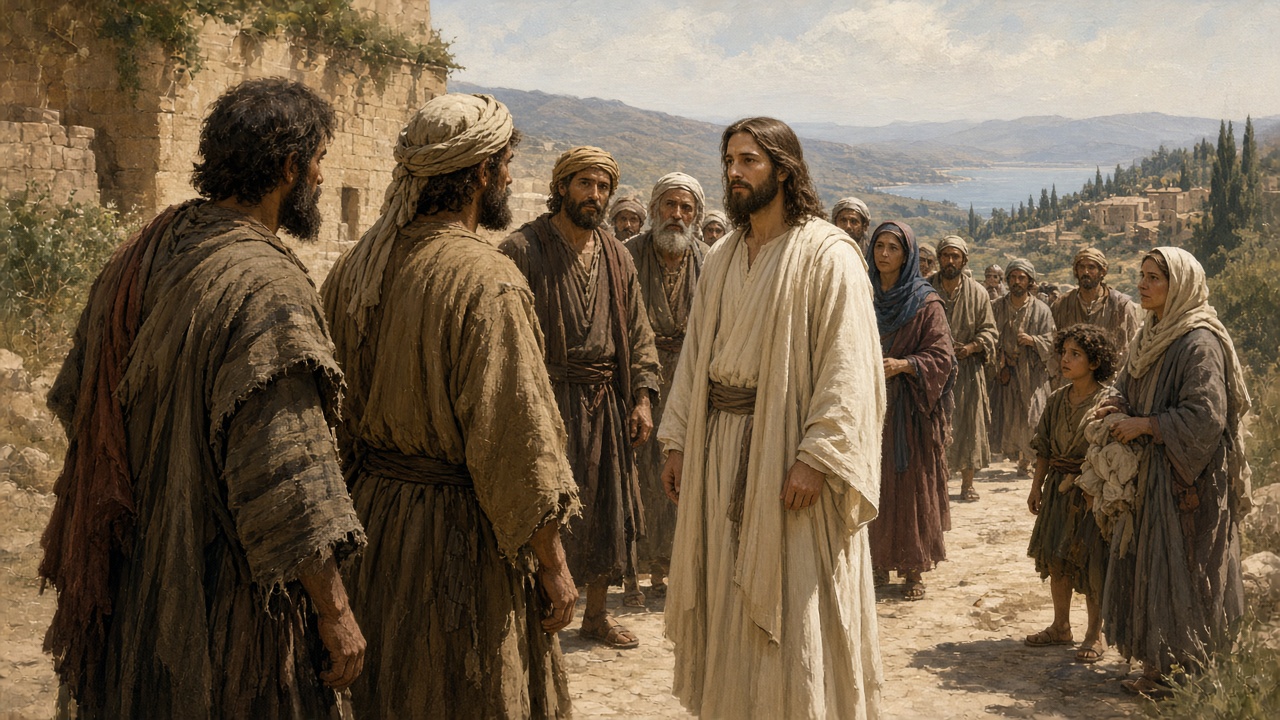
- From prison, John sent his disciples to ask whether Jesus was the one who was to come. Jesus told the crowds that John was more than a prophet—the messenger sent ahead to prepare the way—and, if they were willing to accept it, the Elijah who was to come. A Bible dictionary calls John the forerunner and says his mission was already the subject of prophecy, citing Isaiah 40:3 and Malachi 3:1; it also introduces Elijah as the Elias of the New Testament.Sources: the Bible text itself · John the Baptist · Elijah
- Jesus then denounced Chorazin, Bethsaida, and Capernaum, where most of his miracles had been performed, because they did not repent. A dictionary identifies Chorazin with modern Kerazeh, about two and a half miles up the Wady Kerazeh from Capernaum, and says that Capernaum, absent from the Old Testament, became Jesus' own city after he left Nazareth. It places Bethsaida on the east side of the lake, two miles up the Jordan in Gaulonitis, enlarged by Philip the tetrarch and named Julias after the emperor's daughter, though some have supposed there was only one Bethsaida, near where the Jordan enters the lake.Sources: the Bible text itself · Chorazin · Capernaum · Bethsaida
- He set those cities against Tyre and Sidon, which he said would have repented long ago in sackcloth and ashes, and against Sodom, which he said would have remained to this day. Sidon, on the Mediterranean coast about twenty-five miles north of Tyre, was the oldest Phoenician city there and the mother city of Tyre. A dictionary says the commerce of the whole world was gathered into Tyre's warehouses, and that Sodom, in the vale of Siddim, was destroyed by fire from heaven so completely that no trace of it has been found.Sources: the Bible text itself · Sidon · Tyre · Sodom
Notes written with AI assistance from open sources (Theographic Bible Metadata, CC BY-SA 4.0; Easton’s Bible Dictionary, public domain) and reviewed before publishing.
Places in this chapter
- Galilee · 32.760, 35.527 · verse 1
- Sidon · Today: Sandikli archaeological site in Sidon · 33.561, 35.372 · verses 21, 22
- Tyre · 33.271, 35.196 · verses 21, 22
Only places identified with high confidence are shown (90% or more according to the scholarly sources compiled by OpenBible). Period map: DARE (Digital Atlas of the Roman Empire), CC BY 4.0; modern map: © OpenStreetMap contributors; places: OpenBible.info (CC BY 4.0).
Credits and license for this translation
Nǫ̀htsı̨̨ Nı̨̨htł'è
Dogrib: Dogrib Genesis & New Testament New Testament & Portions of Old Testament
copyright © 2009 Canadian Bible Society
Language: Dogrib
Translation by: Canadian Bible Society
Tłı̨chǫ Genesis and New Testament
About Tłı̨chǫ
Tłı̨chǫ (Dogrib) is a Na-Dene (Athabaskan) language. It is spoken by the First Nations Tłı̨chǫ people in the Northwest Territories in Canada. It has the largest number of speakers of any of the Aboriginal language communities in the NWT, and is one of the official languages of the Northwest Territories.
About This Translation
This translation includes the book of Genesis and the New Testament in Tłı̨chǫ. The first edition of the Tłı̨chǫ New Testament was published in 2003. It was a historic event, as it was the first time in more than a hundred years that a complete New Testament was published for one of the Dene First Nations in the Territories. The first edition was well received and quickly sold out. In the meantime the book of Genesis had been completed. Consequently, the 2008 reprint of the Tłı̨chǫ New Testament included Genesis.
Though this translation of the New Testament and Genesis took a total of ten years, the people who worked on it built on years of labor invested by the Tłı̨chǫ people, elders, priests and missionaries, translators, educators, and linguists. The material contained in this book was checked and approved by consultants from Wycliffe Bible Translators and the Canadian Bible Society.
If you are interested in obtaining a printed copy of this Bible, please contact the Canadian Bible Society at http://www.biblescanada.com .
Copyright Information
Dogrib Genesis and New Testament © 2003, 2008 Canadian Bible Society
The text of the Bible in Tłı̨chǫ that appears in this electronic format or website is for personal use only.
Up to five hundred (500) verses of the Bible text in any form (written, visual, electronic or audio) may be quoted without permission. The quoted verses may not be more than 50% of a complete book of the Bible, or more than 25% of the total text of the work in which they are quoted. Prior written permission must be obtained for any other use of the text. Copyright acknowledgement must in all cases appear on the title or copyright page.
For more information on copyright conditions or to apply, visit http://www.biblesociety.ca/copyright .
This translation is made available to you under the terms of the
Creative Commons Attribution-Noncommercial-No Derivatives license 4.0.
You may share and redistribute this Bible translation or extracts from it in any format, provided that:
You include the above copyright and source information.
You do not sell this work for a profit.
You do not change any of the words or punctuation of the Scriptures.
Pictures included with Scriptures and other documents on this site are licensed just for use with those Scriptures and documents.
For other uses, please contact the respective copyright owners.
2014-04-22
Source: http://ebible.org/dgrDOGNT/ · eBible.org