Matthew 10
Nǫ̀htsı̨̨ Nı̨̨htł'è · Tap a verse to see its cross-references.
Zezì edecheekeè kǫ̀ta goòhɂà
1Zezì edecheekeèdeè hoònǫ-daats'ǫ̀-nàke gokayaı̨htı t'à, łą̀ą nègı̨ı̨de. Įnìłı̨ı̨ dǫ yìı gots'ǫ xàdegeezhı ha eyıts'ǫ dǫ k'aàt'ıì agele ha goghàhòı̨ɂǫ.
2Zezì wecheekeèdeè dıı hagìyeh: Sımon (Peter wìyeh) eyıts'ǫ wechı Andrew, Zebedee weza James, eyıts'ǫ wechı John, 3Phılıp, Bartholomew, Thomas, sǫǫ̀mba-nàhtsį̀ı̨-dǫǫ̀ Matthew, Alphaeus weza James, Thadıyus, 4Sımon (“dǫ edenèè ghǫneètǫǫ” wìyeh), eyıts'ǫ Zhıdàà-Iscarıyot, ededı̨ Zezì k'aodèe gotł'aàyį̀ı̨htı̨ hǫt'e.
5Eyı wecheekeè hoònǫ-daà-nàke sìı Zezì dǫ ta ts'ǫ̀ goı̨hɂà, hagòhdı, “Eyıì-le dǫ xàɂaa ts'ǫ̀ aahde-le, eyıts'ǫ Samarıa got'ı̨į̀ gıkǫ̀ta ts'ǫ̀ aahde-le. 6Israel got'ı̨į̀ gıta sahzǫ̀ą dıkǫède lagı̨ı̨t'ee sìı ts'ǫ̀ aahde. 7Kǫ̀ta yàgòlaa ts'ǫ̀ aahde, dǫ ts'ǫ̀ haahdı, ‘Nǫ̀htsı̨ Wenàowoò k'ę̀ę̀ nèhòkw'ı ha ts'ǫ̀ nıwà-le agòjà,’ gìahdı. 8Dǫ eyagı̨ı̨lı̨ı̨ sìı k'aàt'ıì agıahłe, dǫ ełaı̨dèe sìı naìdà agıahłe, dǫ gıkwǫ̀ tàda t'à eyagı̨ı̨lı̨ı̨ sìı k'aàt'ıì agıahłe, eyıts'ǫ ı̨nìłı̨ı̨ xàahɂà. T'asìı k'èxa-le hanì naxıghàhòt'ǫ t'à, t'asìı k'èxa-le wet'à dǫ ts'àahdı. 9Sǫǫ̀mbawò edexè k'eahłe-le. 10Tehmì k'eahtı̨-le, ɂeh ładı̨ı̨ eyıts'ǫ ke ładı̨ı̨ k'eahłe-le, tèh sı k'eahtı̨-le; dǫ eghàlaedaa sìı wets'àɂeedì hǫt'e.
11“Kǫ̀ta nìahde nı̨dè dǫ wedzeè nezı̨ı̨ sìı hak'eaht'į̀; naahdè gots'ǫ̀ wekǫ̀ aaht'e. 12Eyı kǫ̀ goyaahdè nı̨dè, ‘Naxıxè ts'èwhı̨ welè,’ dǫ hagìahdı. 13Eyı kǫ̀ gots'ǫ dǫ naxıyatıì gìhchì nı̨dè, naxıxè ts'èwhı̨į̀ hòɂǫǫ sìı gıts'ǫ̀ awede. Ekò hanì-le-ı̨dè, naxıxè ts'èwhı̨į̀ hòɂǫǫ sìı naxıts'ǫ̀ anade ha. 14Dǫ naxıgı̨ı̨wǫ-le xè naxıgeèhkw'ǫ-le nı̨dè, naahdè kwe gıkǫ̀ta gots'ǫ ehtł'è naxıkè-tł'a whìle aahłe (hanì-ı̨dè weghàà ekǫ-le eghàlageeda gık'e nìdahoahɂà gık'èezǫǫ̀ ageahłe ha). 15Ehkw'ı anaxèehsı̨, gosınìyaetıı dzęę̀ k'e nı̨dè eyı kǫ̀ta gots'ǫ dǫ dagı̨ı̨ɂa ha. Kǫ̀ta Sodom eyıts'ǫ kǫ̀ta Gomorah dǫ nàı̨dè ı̨lèe sìı nahk'e dagı̨ı̨ɂa ha. 16Sahzǫ̀ą dìga nı k'eɂa lanì dǫ ta ts'ǫ̀ naxeehɂà t'à edexoahdı. Eyıt'à dǫ gıta goahsǫ k'ehoahɂa xè ekǫ-le eghàlaahda-le.
17“Dǫ naxıts'ǫ̀ xànıgı̨ı̨ɂaa sìı gıxoahdı. Nàyaetıı-kǫ̀ ts'ǫ̀ anaxegele ha eyıts'ǫ ełègehdèe-kǫ̀ goyìı naxık'egeehkwa ha. 18Sı̨ sets'ıhɂǫ̀ k'àowocho eyıts'ǫ dèe-ts'ǫ̀-k'àowo gınadąą̀ naxısınìyaetı anaxegele ha. Hanìkò seghǫ gıts'ǫ̀ goahde ha eyıts'ǫ dǫ eyıì-le xàɂaa sı gıts'ǫ̀ goahde ha. 19Danaxegıachì gà naxıghǫ nàyaetı nı̨dè, dànì edek'edaahdı ha eyıts'ǫ ayìı dàahdı ha sìı weghǫ nànıahdè-le. Ekìıyeè k'e nı̨dè ayìı dàahdı ha sìı wek'èahsǫ ha hǫt'e. 20Xàè naxıyatıì t'à goahde ha nıìle; Nǫ̀htsı-Naxıtà wets'ǫ Įnì Degaı naxıwà t'à gode ha.
21“Ekìıyeè k'e nı̨dè ełechı-t'ıì k'aodèe tł'aàłegìhtè ha, eyıts'ǫ gotà gı̨ı̨lı̨ı̨ sìı edeza hagole ha. Chekoa edèot'ı̨ sı k'aodèe tł'aàgogììle xè ełaàgogìhdeè agogele ha. 22Sı̨ sets'ıhɂǫ̀ dǫ hazǫǫ̀ naxıdzagı̨ı̨hwhǫ ha, hanìkò amìı nǫǫde dzęę̀ ts'ǫ̀ Nǫ̀htsı̨ ts'ǫ̀ wınì nàtsoò adìhwhǫǫ sìı edaxàeda ha. 23Kǫ̀ta ı̨łè dǫ danaxegį̀ı̨hɂa nı̨dè kǫ̀ta eyıì-le ts'ǫ̀ kwı̨ahdè. Ehkw'ı anaxèehsı̨, Israel nèk'e kǫ̀ta hazǫǫ̀ ts'ǫ̀ kwı̨ahdè kwe, Dǫ-wet'àaɂàa-deè nììtła ha hǫt'e.
24“Dǫ hoghàweètǫǫ sìı hoghàyeehtǫǫ-dǫǫ̀ nahk'e elı̨ nıìle, eyıts'ǫ k'àowo wecheekeè sìı edets'ǫ k'àowo nahk'e elı̨ nıìle. 25Dǫ hoghàweètǫǫ sìı hoghàyeehtǫǫ-dǫǫ̀ xèht'eè ade ha hǫt'e, eyıts'ǫ k'àowo wecheekeè edets'ǫ k'àowo xèht'eè ade ha hǫt'e. Edekǫ̀ gha k'àowo elı̨ı̨ sìı ‘wehłı̨ı̨’ gıìhdı nı̨dè wekǫ̀ dǫ nàdèe sìı denahk'e gık'adaedè ha hǫt'e!
26“Dǫ gıts'àahjı̨-le. T'asìı hazǫǫ̀ wègaat'ı̨-le sìı wègaat'ı̨į̀ adle ha, eyıts'ǫ t'asìı deɂı̨į̀ whelaa sìı wek'èhoedzǫǫ̀ adle ha hǫt'e. 27Togoòtł'òo t'asìı naxıts'ǫ̀ haehsı̨ı̨ sìı dzę nı̨dè weghǫ goahde ha. Naxıdzıìhkw'ǫǫ̀ yìı ı̨hłį̀ą gots'ede nı̨dè dahmò ka gots'ǫ dǫ hazǫǫ̀ ts'ǫ̀ hòtł'ò haahdı. 28Dǫ naxızhį̀į̀ ełaàgehwhı kò naxıdą̀ązhį̀ı̨ ełaàgehwhı ha dìì sìı gıts'àahjı̨-le. Ekò amìı godą̀ązhį̀ı̨ eyıts'ǫ gozhį̀į̀ wehłı̨kǫ̀ ts'ǫ̀ ayele ha dìì-le sìı eyı wets'àahjı̨. 29Chı̨ą nàke sìı ı̨łè satsǫ̀ą zǫ elı̨ hǫt'e, hanìkò Nǫ̀htsı̨ naxıtà wınì k'ę̀ę̀ lenǫsıı chı̨ą ı̨łè kò dèè k'e nàekw'ı ha nıìle. 30Naxıkwìghà hazǫǫ̀ kò Nǫ̀htsı̨ yııhtà hǫt'e. 31Eyıt'à dahjı̨-le, chı̨ą łǫ nahk'e aahłı̨ hǫt'e.
32“Amìı dǫ nadąą̀ sek'èezǫ hadıı sìı Setà yak'e whedaa sìı wenadąą̀ eyı dǫ wek'èehsǫ dehsı̨ ha. 33Hanìkò amìı dǫ nadąą̀ sek'èezǫ-le hadıı sìı, sı̨ sı Setà yak'e whedaa sìı wenadąą̀ eyı dǫ wek'èehsǫ-le dehsı̨ ha.
34“Dıı nèk'e ts'èwhı̨į̀ agohłe gha jǫ ts'ǫ̀ ahjà dahwhǫ-le. Ts'èwhı̨į̀ hòɂǫ gha jǫ ahjà nıìle; dǫ ełek'èch'a geeda gha jǫ ts'ǫ̀ ahjà hǫt'e.
35‘Dǫzhìı edetà k'èch'a eda ha, ts'èko edemǫ k'èch'a eda ha, eyıts'ǫ ts'èko edetsı̨ k'èch'a eda ha. 36Dǫ xàè wekǫ̀ gots'ǫ wèot'ı̨ et'ıì gıts'ǫ̀ xànı̨ı̨ɂa ha.’
37“Amìı edetà eyıts'ǫ edemǫ senahk'e goghǫneètǫǫ sìı, secheekeè elı̨ ha dìì. Eyıts'ǫ amìı edeza eyıts'ǫ edetì senahk'e goghǫneètǫǫ sìı secheekeè elı̨ ha dìì. 38Eyıts'ǫ amìı edechı̨et'aà sek'èè nayatı̨-le sìı secheekeè elı̨ ha dìì. 39Amìı edınì k'ę̀ę̀ eda ha nıwǫǫ sìı wedıhołè ha. Ekò amìı sets'ıhɂǫ̀ edınì k'ę̀ę̀ eda ha nıwǫ-le sìı eda ha.
40“Dǫ naxıgı̨ı̨wǫǫ sìı sı̨ segı̨ı̨wǫ hǫt'e eyıts'ǫ dǫ segı̨ı̨wǫǫ sìı amìı sı̨ı̨hɂàa sìı gı̨ı̨wǫ hǫt'e. 41Nakwenàoɂǫǫ Nǫ̀htsı̨ yatıì k'eɂaa elı̨ dǫ gık'èezǫ t'à weyatıì gìhchı nı̨dè, nakwenàoɂǫǫ t'asìı nezı̨ı̨ gıghǫ̀t'à ha sìı ededı̨ sı gıghǫ̀t'à ha hǫt'e. Dǫ ehkw'ı edaa elı̨ dǫ gık'èezǫ t'à weyatıì gìhchı nı̨dè dǫ ehkw'ı edaa t'asìı nezı̨ı̨ gıghǫ̀t'à ha sìı ededı̨ sı gıghǫ̀t'à ha hǫt'e. 42Ehkw'ı anaxèehsı̨, dıı secheekeè sexè aget'ı̨ı̨ sìı dǫ gha dek'aɂį̀ gı̨ı̨lı̨ kò, secheekeè aget'ı̨ gok'ègeezǫ t'à, dǫ tı whek'òo zǫ goghàı̨dì nı̨dè wek'èxa t'asìı nezı̨ı̨ weghǫ̀t'à ha hǫt'e,” Zezì edecheekeè gòhdı.
Did you know?
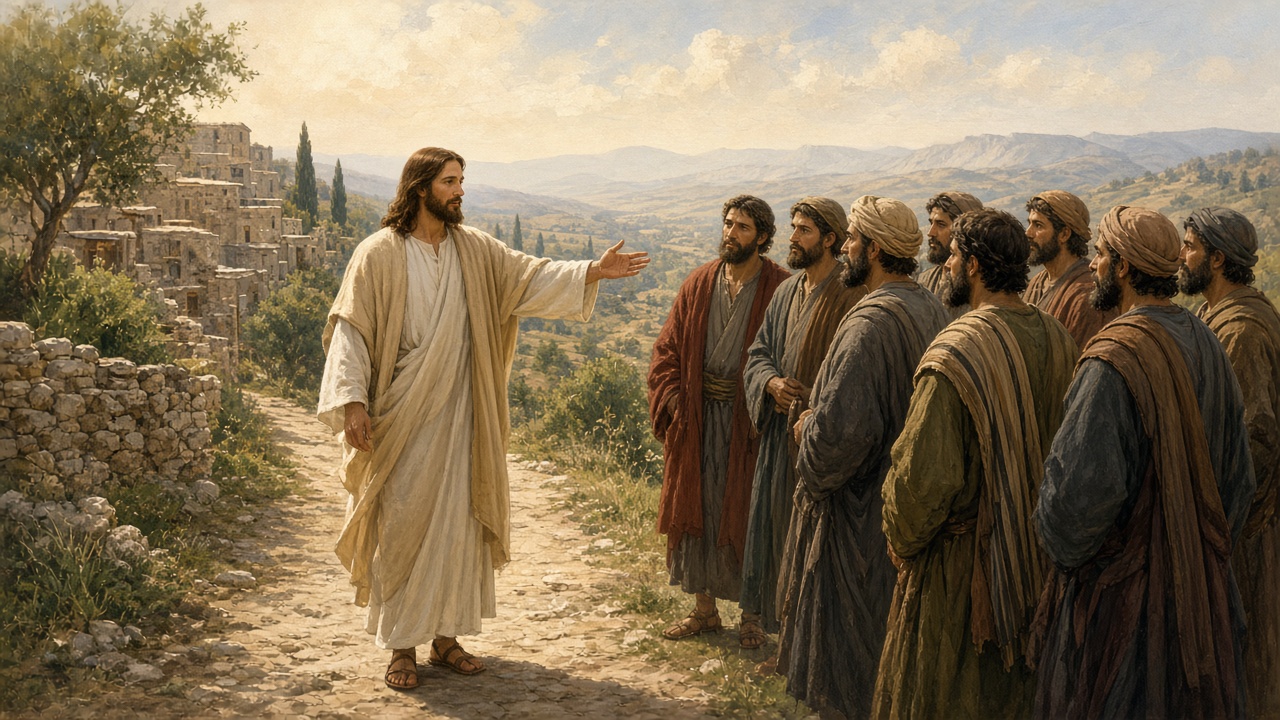
The Twelve Sent on Mission
- Simon, called Peter, and his brother Andrew—the first pair named among the twelve—were fishermen from Bethsaida, on the western coast of the Sea of Galilee. James and John, listed next, were sons of Zebedee, a Galilean fisherman who had his own boats and hired servants.Sources: the Bible text itself · Simon Peter · Andrew · Zebedee
- Matthew, identified in the list as the tax collector, was the son of Alphaeus and had formerly been known as Levi; he collected taxes at Capernaum, and the name Matthew means “gift of God.” Thomas, named beside him, was also called Didymus, the Greek equivalent of the Hebrew name, meaning “twin.” Bartholomew means “son of Tolmai” and is generally supposed to have been the same person as Nathanael.Sources: the Bible text itself · Matthew · Thomas · Bartholomew
- Jesus warns that the day of judgment will be more bearable for Sodom and Gomorrah than for a town that refuses the twelve apostles. Easton's Bible Dictionary (1897) describes those cities of the plain of Siddim as destroyed by fire and proverbial for wickedness, and places them, probably close together, near the northern end of what is now the Dead Sea.Sources: the Bible text itself · Sodom · Gomorrah
Notes written with AI assistance from open sources (Theographic Bible Metadata, CC BY-SA 4.0; Easton’s Bible Dictionary, public domain) and reviewed before publishing.
Credits and license for this translation
Nǫ̀htsı̨̨ Nı̨̨htł'è
Dogrib: Dogrib Genesis & New Testament New Testament & Portions of Old Testament
copyright © 2009 Canadian Bible Society
Language: Dogrib
Translation by: Canadian Bible Society
Tłı̨chǫ Genesis and New Testament
About Tłı̨chǫ
Tłı̨chǫ (Dogrib) is a Na-Dene (Athabaskan) language. It is spoken by the First Nations Tłı̨chǫ people in the Northwest Territories in Canada. It has the largest number of speakers of any of the Aboriginal language communities in the NWT, and is one of the official languages of the Northwest Territories.
About This Translation
This translation includes the book of Genesis and the New Testament in Tłı̨chǫ. The first edition of the Tłı̨chǫ New Testament was published in 2003. It was a historic event, as it was the first time in more than a hundred years that a complete New Testament was published for one of the Dene First Nations in the Territories. The first edition was well received and quickly sold out. In the meantime the book of Genesis had been completed. Consequently, the 2008 reprint of the Tłı̨chǫ New Testament included Genesis.
Though this translation of the New Testament and Genesis took a total of ten years, the people who worked on it built on years of labor invested by the Tłı̨chǫ people, elders, priests and missionaries, translators, educators, and linguists. The material contained in this book was checked and approved by consultants from Wycliffe Bible Translators and the Canadian Bible Society.
If you are interested in obtaining a printed copy of this Bible, please contact the Canadian Bible Society at http://www.biblescanada.com .
Copyright Information
Dogrib Genesis and New Testament © 2003, 2008 Canadian Bible Society
The text of the Bible in Tłı̨chǫ that appears in this electronic format or website is for personal use only.
Up to five hundred (500) verses of the Bible text in any form (written, visual, electronic or audio) may be quoted without permission. The quoted verses may not be more than 50% of a complete book of the Bible, or more than 25% of the total text of the work in which they are quoted. Prior written permission must be obtained for any other use of the text. Copyright acknowledgement must in all cases appear on the title or copyright page.
For more information on copyright conditions or to apply, visit http://www.biblesociety.ca/copyright .
This translation is made available to you under the terms of the
Creative Commons Attribution-Noncommercial-No Derivatives license 4.0.
You may share and redistribute this Bible translation or extracts from it in any format, provided that:
You include the above copyright and source information.
You do not sell this work for a profit.
You do not change any of the words or punctuation of the Scriptures.
Pictures included with Scriptures and other documents on this site are licensed just for use with those Scriptures and documents.
For other uses, please contact the respective copyright owners.
2014-04-22
Source: http://ebible.org/dgrDOGNT/ · eBible.org