Genesis 25
Nǫ̀htsı̨̨ Nı̨̨htł'è · Tap a verse to see its cross-references.
Abraham ełaı̨wo
1Abraham k'achı̨ ts'èko naìchì, Keturah wìyeh. 2Yeza nìı̨laa sìı dıı hagìyeh: Zımran, Jokshan, Medan, Mıdıyan, Ishbak eyıts'ǫ Shuyah. 3Jokshan weza nàke gòı̨lè: Sheba eyıts'ǫ Dedan gìyeh. Dedan wets'ǫ dǫ taı xàgeèɂaa gǫ̀hłı̨: Ashur got'ı̨į̀, Letush got'ı̨į̀ eyıts'ǫ Leum got'ı̨į̀ gìyeh. 4Mıdıyan weza sìı Efah, Efer, Hanok, Abıda eyıts'ǫ Eldah gìyeh. Eyı dǫ haàtłǫǫ Abraham ts'èko naìchìı Keturah wets'ıhɂǫ̀ǫ-dǫǫ̀ agı̨ı̨t'e.
5Abraham t'asìı hazǫǫ̀ wets'ǫ sìı Isaac weghaelı̨į̀ ayį̀į̀là. 6Hanìkò ı̨łaà eda et'ıì wets'èkeè eyıì-le gıza sìı wets'ǫ t'asìı mǫ̀hdaa gota whela gà sa kàɂàa nèk'e ts'ǫ̀ nagoèhɂà, weza Isaac ts'ǫǫ̀ nıwà nagoèhɂà.
7Hazǫǫ̀ t'à Abraham ı̨łèakw'eènǫ-daats'ǫ̀-łǫ̀hdı̨ènǫ-daats'ǫ̀-sı̨làı (175) xo ts'ǫ̀ ı̨ı̨dà. 8Eyı tł'axǫǫ̀ Abraham nǫǫde xàèhjı gà ełaı̨wo, eyıts'ǫ wecho gots'ǫ̀ ajà. Sıì eneèko whelı̨ ts'ǫ̀ ı̨ı̨dà. 9Weza Isaac eyıts'ǫ Ishmael, dèè Makpelah k'e kwe-yìı-gòɂǫǫ yìı wekw'ǫǫ̀ nègı̨į̀tǫ. Mamer nèk'e gà nıwà-le eyıts'ǫ Het got'ı̨į̀ Zohar weza Efron wedèè k'e. 10Eyı dèè sìı Abraham Het got'ı̨į̀ goghǫ nàyeèhdì ı̨lè. Ekǫ Abraham wets'èkeè Sarah gà wekw'ǫǫ̀ whetǫ. 11Abraham ełaı̨wo tł'axǫǫ̀ Nǫ̀htsı̨ Isaac xè sìghà hòɂǫǫ̀ ayį̀į̀là. Ekò k'e Isaac Ber-Lahaı-Roı gòyeh gà nàde ı̨lè.
Ishmael wezake
12Abraham weza Ishmael dıı hanì wegodıì dek'eèhtł'è: Wemǫ Egypt got'ı̨į̀ gots'ǫ ts'èko Hagar wìyeh sìı Abraham weza nìı̨htı̨ hǫt'e. Hagar, Sarah gha eghàlaedaa elı̨ ı̨lè.
13Ishmael weza dıı hagìyeh, ełek'èdaà gıgǫ̀hłı̨ k'ę̀ę̀ gıızì dek'eèhtł'è: Ishmael weza t'akwełǫ̀ǫ̀ wegǫ̀hłı̨ı̨ sìı Nebayot wìyeh, wek'è Kedar, Adbel, Mıbsam, 14Mıshma, Dumah, Masa, 15Hadad, Tema, Jetur, Nafısh, eyıts'ǫ Kedemah. 16Eyı dǫ haàtłǫǫ Ishmael weza agı̨ı̨t'e, eyıts'ǫ hoònǫ-daats'ǫ̀-nàke dǫ xàgeèɂaa gha k'aodèe sìı gıızì k'ę̀ę̀ gıts'ǫ kǫ̀ta hagòyeh agı̨į̀là. 17Hazǫǫ̀ t'à Ishmael ı̨łèakw'eènǫ-daats'ǫ̀-taènǫ-daats'ǫ̀-łǫ̀hdı̨ (137) xo ts'ǫ̀ ı̨ı̨dà. Ishmael nǫǫde xàèhjı gà ełaı̨wo, eyıts'ǫ wecho gots'ǫ̀ ajà. 18Wets'ıhɂǫ̀ǫ-dǫǫ̀ sìı Havılah nèk'e gots'ǫ Shur nèk'e hagǫǫwa ts'ǫ̀ nàgedè agejà. Kǫ̀ta Ashur ts'ǫ̀ ts'adè nı̨dè Egypt nèk'e ts'ǫ̀ nıwà-le agǫ̀ht'e. Hanìkò wets'ıhɂǫ̀ǫ-dǫǫ̀ ts'èwhı̨į̀ ełexè nàgedè ha dìì.
Isaac weza Jacob eyıts'ǫ Esau
19Abraham weza Isaac dıı hanì wegodıì dek'eèhtł'è:
Abraham, Isaac wetà hǫt'e. 20Isaac dı̨ènǫ weghoò ekò Rebekah xè honìdza. Rebekah, Aram got'ı̨į̀ Betuyel wetì hǫt'e, Padan-Aram nèk'e gots'ǫ dǫ hǫt'e, eyıts'ǫ Laban wedè hǫt'e.
21Isaac wets'èkeè Rebekah chekoa wets'ǫ-le t'à yegha gots'ǫ̀ K'àowo ts'ǫ̀ yaı̨htı. Gots'ǫ̀ K'àowo yets'àı̨dı t'à wets'èkeè hotıeda-le ajà. 22Bebìa nàke weyìı ełets'agehchı t'à hadı, “Sexè dàgot'ı̨į̀-agot'ı̨?” Yek'èezǫ ha nıwǫ t'à gots'ǫ̀ K'àowo daehke.
23Gots'ǫ̀ K'àowo yets'ǫ̀ hadı,
“Ełèchǫekèa chǫ wheke.
Eyı dǫ nàke xàɂaa gı̨ı̨lı̨ ha sìı ełek'èch'a agı̨ı̨t'e ha.
Įłè gonahk'e elı̨ ha,
eyıts'ǫ ǫhdah sìı edechı gha eghàlaeda ha,” yèhdı.
24Hòt'a weza gıgǫ̀hłı̨ ha nìkw'o ekò ełèchǫekèa dǫzhìa nìı̨la. 25T'akwełǫ̀ǫ̀ wegǫ̀hłı̨ı̨ sìı wekwǫ̀ ekìı dek'o lanì. Hazǫǫ̀ ts'ǫ̀ wezhį̀į̀ k'e weghàà dehshoa lanì, eyıt'à Esau wìyeh agı̨į̀là. 26Wek'è wechı wegǫ̀hłı̨ ekò edı̨ı̨de Esau wekehtà yàıtǫ̀ hanì wegǫ̀hłı̨. Eyıt'à Jacob wìyeh agı̨į̀là. Isaac ek'ètaènǫ weghoò ekò wets'èkeè ełèchǫekèa nìı̨la.
27Eyı chekoa geèzǫ, ǫhdah gı̨ı̨lı̨į̀ agejà. Esau t'aa nàzèe-dǫǫ̀ elı̨ gha nàghò. Ekìı-ka nàzè wegha nezı̨. Ekò Jacob t'aa hotıı̨t'ee-dǫǫ̀ elı̨, edekǫ̀ wheda zǫ lanì. 28Isaac ekìı-ka ts'ǫ bò wegha łekǫ t'à Esau ghǫneètǫ, ekò Rebekah t'aa Jacob ghǫneètǫ.
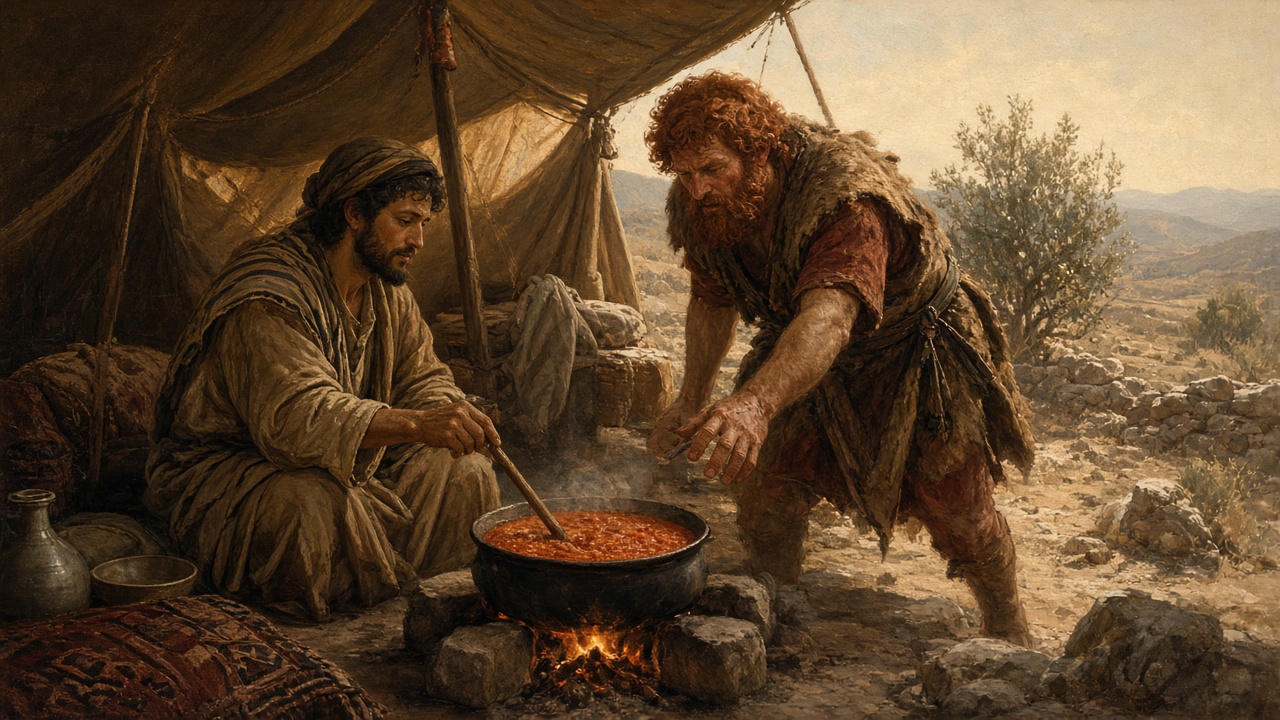
29Įłàà Jacob bò xè tıwo dek'oo ehtse ekò Esau ekìı-ka nàzèe gots'ǫ nǫ̀ǫtła t'à bò ghaàwo. 30Jacob ts'ǫ̀ hadı, “Sıì bò ghaehwhı dìì! Įwhąą̀ eyı tıwo dek'oo mǫ̀hdaa sàı̨dı!” yèhdı. (Eyı ts'ıhɂǫ̀ Esau Edom sı wìyeh. Edom gedı nı̨dè “dek'o” gedıì-agedı.)
31Jacob yets'ǫ̀ hadı, “Età weza ǫhdaà nelı̨ t'à wets'ǫ t'asìı deɂǫ̀atłǫ nets'ǫ̀ ade ha sìı dıì-t'ıì sets'ǫ̀ neghǫ nàèdì nı̨dè tıwo neghàehdı ha,” yèhdı.
32“Hòt'a bò dę t'asahde ha nìkw'o. Età weza ǫhdaà ehłı̨ı̨ sìı segha ayìı welè?” Esau yèhdı.
33Jacob yets'ǫ̀ hadı, “T'akwełǫ̀ǫ̀ yatı nàtsoo seghàı̨ɂà,” yèhdı. Eyıt'à Esau yets'ǫ̀ yatı nàtsoo whehtsı̨ t'à goza ǫhdaà k'ę̀ę̀ t'asìı wets'ǫ̀ ade ha ı̨lèe sìı wechı ts'ǫ̀ weghǫ nàèdì.
34Eyı tł'axǫǫ̀ Jacob, łèt'è eyıts'ǫ tıwo dek'oo Esau ghàı̨dì. Esau shètı̨ tł'axǫǫ̀ nıìtła gà xàèhtła. Eyıt'à Esau goza ǫhdaà k'ę̀ę̀ wetà ts'ǫ t'asìı weghǫ̀zhe ha ı̨lèe sìı wegha t'asìı wı̨ı̨zìı nadlı̨-le.
Did you know?
Abraham’s heirs and the twin brothers
- Keturah, whose name Easton's Bible Dictionary (1897) explains as “incense,” is introduced here as another wife of Abraham. That dictionary says he probably married her after Sarah’s death, though her nationality is unknown, and notes that 1 Chronicles calls her a concubine. She bore him six sons, including Jokshan and Midian, the father of the Midianites; while Abraham was still alive he gave gifts to the sons of his concubines and sent them away from Isaac to the land of the east.Sources: Keturah · Midian · the Bible text itself
- Isaac and Ishmael together buried Abraham in the cave of Machpelah near Mamre, in the field Abraham had bought from Ephron the Hittite, where Sarah already lay. Easton's Bible Dictionary (1897) explains Machpelah as “portion” or “double cave,” set on a hillside east of Hebron and facing Mamre, a place called the oaks—or, in a margin, the terebinths—of Mamre.Sources: Machpelah · Mamre · the Bible text itself
- Esau, Rebekah’s firstborn twin, was born red and covered with hair like a fur coat. Easton's Bible Dictionary (1897) links the further name Edom, “red,” to the red lentil stew for which he sold his birthright, and explains Jacob as “one who follows on another’s heels” or “supplanter,” matching the report that Jacob was born grasping Esau’s heel. Esau grew up as a skillful hunter and a man of the field, while Jacob was a quiet man who stayed at home.Sources: Esau (Edom) · Jacob (Israel) · the Bible text itself
Notes written with AI assistance from open sources (Theographic Bible Metadata, CC BY-SA 4.0; Easton’s Bible Dictionary, public domain) and reviewed before publishing.
Places in this chapter
- East · Today: region around Amman · 31.955, 35.934 · verse 6
- Machpelah · Today: Cave of the Patriarchs · 31.525, 35.111 · verse 9
- Negeb · 31.245, 34.841 · verse 11
- Assyria · 36.359, 43.153 · verse 18
- Egypt · 30.129, 31.308 · verse 18
Only places identified with high confidence are shown (90% or more according to the scholarly sources compiled by OpenBible). Period map: DARE (Digital Atlas of the Roman Empire), CC BY 4.0; modern map: © OpenStreetMap contributors; places: OpenBible.info (CC BY 4.0).
Credits and license for this translation
Nǫ̀htsı̨̨ Nı̨̨htł'è
Dogrib: Dogrib Genesis & New Testament New Testament & Portions of Old Testament
copyright © 2009 Canadian Bible Society
Language: Dogrib
Translation by: Canadian Bible Society
Tłı̨chǫ Genesis and New Testament
About Tłı̨chǫ
Tłı̨chǫ (Dogrib) is a Na-Dene (Athabaskan) language. It is spoken by the First Nations Tłı̨chǫ people in the Northwest Territories in Canada. It has the largest number of speakers of any of the Aboriginal language communities in the NWT, and is one of the official languages of the Northwest Territories.
About This Translation
This translation includes the book of Genesis and the New Testament in Tłı̨chǫ. The first edition of the Tłı̨chǫ New Testament was published in 2003. It was a historic event, as it was the first time in more than a hundred years that a complete New Testament was published for one of the Dene First Nations in the Territories. The first edition was well received and quickly sold out. In the meantime the book of Genesis had been completed. Consequently, the 2008 reprint of the Tłı̨chǫ New Testament included Genesis.
Though this translation of the New Testament and Genesis took a total of ten years, the people who worked on it built on years of labor invested by the Tłı̨chǫ people, elders, priests and missionaries, translators, educators, and linguists. The material contained in this book was checked and approved by consultants from Wycliffe Bible Translators and the Canadian Bible Society.
If you are interested in obtaining a printed copy of this Bible, please contact the Canadian Bible Society at http://www.biblescanada.com .
Copyright Information
Dogrib Genesis and New Testament © 2003, 2008 Canadian Bible Society
The text of the Bible in Tłı̨chǫ that appears in this electronic format or website is for personal use only.
Up to five hundred (500) verses of the Bible text in any form (written, visual, electronic or audio) may be quoted without permission. The quoted verses may not be more than 50% of a complete book of the Bible, or more than 25% of the total text of the work in which they are quoted. Prior written permission must be obtained for any other use of the text. Copyright acknowledgement must in all cases appear on the title or copyright page.
For more information on copyright conditions or to apply, visit http://www.biblesociety.ca/copyright .
This translation is made available to you under the terms of the
Creative Commons Attribution-Noncommercial-No Derivatives license 4.0.
You may share and redistribute this Bible translation or extracts from it in any format, provided that:
You include the above copyright and source information.
You do not sell this work for a profit.
You do not change any of the words or punctuation of the Scriptures.
Pictures included with Scriptures and other documents on this site are licensed just for use with those Scriptures and documents.
For other uses, please contact the respective copyright owners.
2014-04-22
Source: http://ebible.org/dgrDOGNT/ · eBible.org