Genesis 14
Nǫ̀htsı̨̨ Nı̨̨htł'è · Tap a verse to see its cross-references.
Abram edesah Lot edaxàı̨htı̨
1Ekìıyeè k'e kǫ̀ta Shınar gots'ǫ k'àowocho Amafel, kǫ̀ta Elasa gots'ǫ k'àowocho Arok, kǫ̀ta Elam gots'ǫ k'àowocho Kedorlomer, eyıts'ǫ kǫ̀ta Goyım gots'ǫ k'àowocho Tıdal hazǫǫ̀ ełegegǫ gha geède. 2Kǫ̀ta Sodom gots'ǫ k'àowocho Bera, kǫ̀ta Gomorah gots'ǫ k'àowocho Bırsha, kǫ̀ta Admah gots'ǫ k'àowocho Shınab, kǫ̀ta Zeboyım gots'ǫ k'àowocho Shember, eyıts'ǫ kǫ̀ta Bela (dıì Zoyar gòyeh) gots'ǫ k'àowocho xè ełegegǫ. 3K'àowocho sı̨làı nǫǫde gıts'ìzıı sìı ełets'àgedı gha gıts'ǫ eghǫǫ-dǫǫ̀ łetagı̨ı̨wa. Shìhge dèè nıɂàa Sıdım gòyeh, ekǫ ełegegǫ gha łą̀ą ełègı̨ı̨de. 4Eyı k'àowocho sı̨làı ełets'àgedıı sìı hoònǫ-daats'ǫ̀-nàke xo gots'ǫ̀, k'àowocho Kedorlomer wetł'aà geèhkw'e ı̨lè, hanìkò hoònǫ-daats'ǫ̀-taı xo k'e eyı k'àowocho gık'èı̨t'e ha gı̨ı̨wǫ-le agejà.
5Hoònǫ-daats'ǫ̀-dı̨ xo k'e k'àowocho Kedorlomer, eyıts'ǫ k'àowocho gıxè nàowo gèhtsı̨ı̨ sìı ełets'àgedı t'à kǫ̀ta Ashterot-Karnayım gots'ǫ Refayım got'ı̨į̀, kǫ̀ta Ham gots'ǫ Zuzım got'ı̨į̀, eyıts'ǫ kǫ̀ta Shaveh-Kıratayım gots'ǫ Emım got'ı̨į̀ xè ełegıagǫ t'à goghǫ geèhnǫ. 6Eyıts'ǫ shìhta Seyır gòyeh ekǫ Horı got'ı̨į̀ nàgedèe sìı ededı̨ sı goghǫ geèhnǫ. Ekìı-ka nèk'e gà kǫ̀ta El-Paran gòyeh haı̨wa ts'ǫ̀ ekǫ got'ı̨į̀ xè ełegıagǫ t'à goghǫ geèhnǫ. 7Eyı tł'axǫǫ̀ ets'ageède t'à En-Mıshpat (dıì Kadesh gòyeh) ts'ǫ̀ agejà. Ekǫ Amalek got'ı̨į̀, eyıts'ǫ Amor got'ı̨į̀ kǫ̀ta Hazazon-Tamar nàgedèe sìı goghǫ geèhnǫ t'à gıdèè hazǫǫ̀ goghǫ gį̀į̀hchì.
8Eyı tł'axǫǫ̀ kǫ̀ta Sodom gots'ǫ k'àowocho, kǫ̀ta Gomorah gots'ǫ k'àowocho, kǫ̀ta Admah gots'ǫ k'àowocho, kǫ̀ta Zeboyım gots'ǫ k'àowocho, eyıts'ǫ kǫ̀ta Bela (dıì Zoyar gòyeh) gots'ǫ k'àowocho, edekǫ̀ta gots'ǫǫ̀ xàgeède t'à shìhge dèè nıɂàa Sıdım gòyeh ekǫ ełegegǫ gha sınìgı̨ı̨de. 9Kǫ̀ta Elam gots'ǫ k'àowocho Kedorlomer, kǫ̀ta Goyım gots'ǫ k'àowocho Tıdal, kǫ̀ta Shınar gots'ǫ k'àowocho Amrafel, eyıts'ǫ kǫ̀ta Elasa gots'ǫ k'àowocho Arok ts'ǫ̀ ełegegǫ gha sınìgı̨ı̨de. Eyı k'àowocho dı̨ nǫǫde sìı k'àowocho sı̨làı ts'ǫ̀ ełegegǫ ha. 10Eyı shìhge dèè nıɂàa Sıdım gòyeh sìı ekǫ kwedzeè k'è łǫ gòla, eyıt'à kǫ̀ta Sodom eyıts'ǫ kǫ̀ta Gomorah gots'ǫ k'àowocho kwı̨geèhde ekò gıts'ǫ eghǫǫ-dǫǫ̀ mǫ̀hdaa kwedzeè k'è gòlaa goyìı gı̨ı̨tł'ı, eyıts'ǫ mǫ̀hdaa shìhta ts'ǫ̀ kwı̨geèhde. 11Eyı k'àowocho dı̨ hogeèhnǫ ts'ıhɂǫ̀ kǫ̀ta Sodom eyıts'ǫ kǫ̀ta Gomorah gots'ǫ t'asìı łǫ negı̨į̀wa, eyıts'ǫ gıghǫ shèzhee sı hazǫǫ̀ negı̨į̀wa tł'axǫǫ̀ nageèhde. 12Abram wesah Lot kǫ̀ta Sodom nàde ı̨lè t'à eyı k'àowocho dı̨ Lot eyıts'ǫ t'asìı hazǫǫ̀ wets'ǫ sìı edexè agı̨į̀là.
13Dǫ ı̨łè goch'à kwı̨èhsaa sìı ekǫ dàgòjàa sìı Hebrew got'ı̨į̀ Abram ts'ǫ̀ hadı. Ekò k'e Abram, Amor got'ı̨į̀ Mamer wets'ǫ ts'ı nechàa nàwheɂaa gà nàde ı̨lè. Eyı dǫ Mamer sìı Eshkol eyıts'ǫ Aner gìot'ı̨ hǫt'e. Eyı dǫ hazǫǫ̀ Abram xè ełets'àgedı gha nàowo gèhtsı̨ ı̨lè. 14Eyıt'à Abram wesah nıgıìchì ghǫ godı ıìkw'o ekò wecheekeè gıts'ıhɂǫ̀ǫ-dǫǫ̀ sìı taekw'eènǫ-daats'ǫ̀-hoònǫ-daats'ǫ̀-ek'èdı̨ (318) dǫ haàtłǫǫ ełegegǫ gha hoghàgeètǫǫ sìı gokayaı̨htı gà kǫ̀ta Dan gòyeh haı̨wa ts'ǫ̀ k'àowocho dı̨ Lot nıgıìchìı sìı k'è geède. 15Eyı toò Abram dǫ hazǫǫ̀ łats'ıgǫǫwa gà k'àowocho dı̨ ts'ǫ̀ łegıagǫ t'à ekòet'ıì goghǫ geèhnǫ. Kǫ̀ta Damaskus gòyeh wete ts'ǫ̀ kǫ̀ta Hobah gòyeh ts'ǫ̀ nagodegeèzhì. 16K'àowocho dı̨ t'asìı hazǫǫ̀ negı̨į̀waa sìı hazǫǫ̀ nayį̀ı̨wa. Wesah Lot t'asìı hazǫǫ̀ wets'ǫ xè nayį̀ı̨htı̨. Ts'èko hazǫǫ̀, eyıts'ǫ dǫ hazǫǫ̀ goxè negogı̨į̀waa sìı hazǫǫ̀ nagǫ̀ǫwa.
17Abram, k'àowocho Kedorlomer, eyıts'ǫ wexè k'àowocho eyıì-le goghǫèhnǫ gots'ǫ nǫ̀ǫtła ekò, kǫ̀ta Sodom gots'ǫ k'àowocho shìhge dèè nıɂàa Shaveh gòyeh (dıì K'àowocho Gıts'ǫ Shìhge Dèè Nıɂàa gòyeh) ekǫ Abram ts'ǫ̀ èhtła.
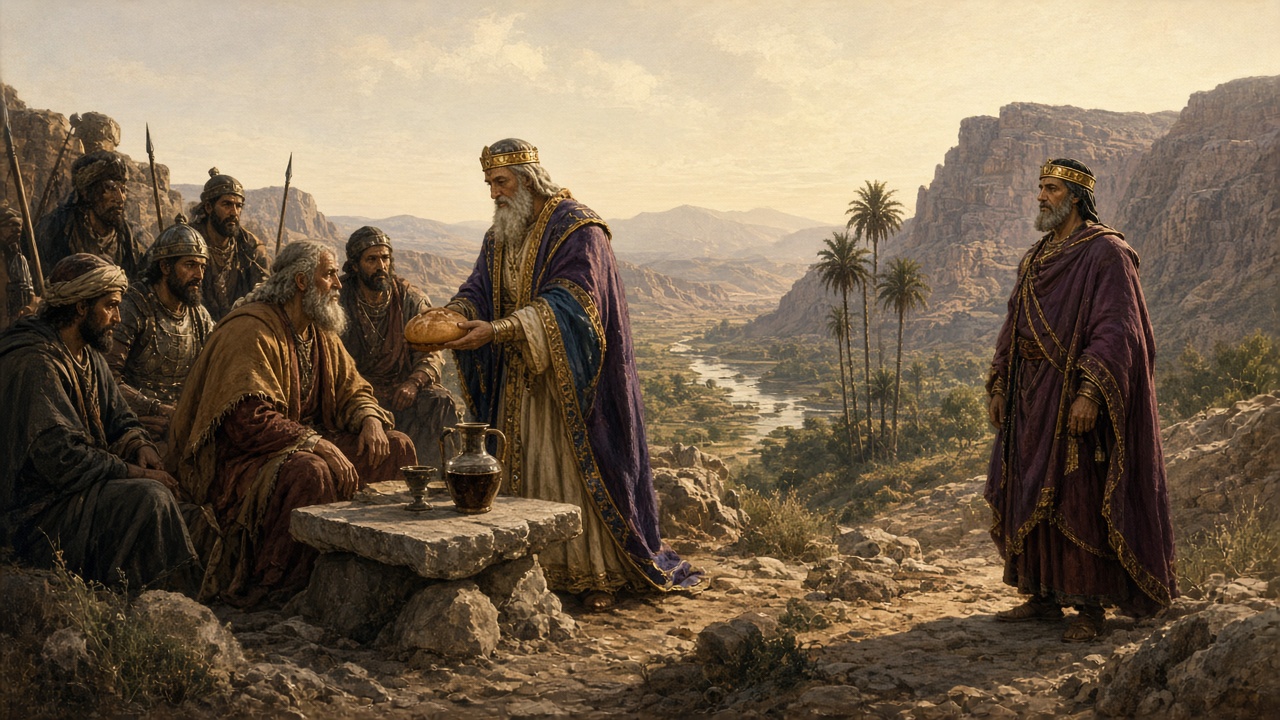
18Eyı tł'axǫǫ̀ kǫ̀ta Salem gots'ǫ k'àowocho Melkızedek wìyeh, łèt'è eyıts'ǫ jìetì Abram ts'ǫ̀ yeèwa. Ededı̨ sìı Nǫ̀htsı̨ Enıìyah Deè wets'ǫ yahtıı elı̨ ı̨lè. 19Abram ts'ǫ̀ sìghà nıwǫ t'à dıı hadıì Abram ts'ǫ̀ xàyaı̨htı,
“Nǫ̀htsı̨ Enıìyah Deè elı̨ı̨ sìı Abram xè sìghà hòɂǫǫ̀ ayııle.
Ededı̨ sìı yak'e eyıts'ǫ dèè sı whehtsı̨ı̨ hǫt'e.
20Nǫ̀htsı̨ Enıìyah Deè elı̨ı̨ sìı weghàsǫts'eedı welè.
Dǫ nek'èch'a gı̨ı̨lı̨ı̨ sìı netł'aà nègòı̨la hǫt'e,” Melkızedek Abram ts'ǫ̀ hadı.
Eyı tł'axǫǫ̀ Abram ełegegǫ gots'ǫ t'asìı hazǫǫ̀ nèyı̨ı̨waa sìı wets'ǫ hoònǫ-ı̨łè yahtıı Melkızedek ghàyı̨ı̨la.
21Kǫ̀ta Sodom gots'ǫ k'àowocho Abram ts'ǫ̀ hadı, “Sı̨ t'aa dǫ seghàgı̨ı̨le. Eyı wedę t'asìı hazǫǫ̀ edegha wek'èı̨dì,” yèhdı.
22Hanìkò Abram eyı k'àowocho ts'ǫ̀ hadı, “Nǫ̀htsı̨ Enıìyah Deè, yak'e eyıts'ǫ dèè whehtsı̨ı̨ sìı wets'ǫ̀ dadeehtso t'à yatı nàtsoo whıhtsı̨ hǫt'e. 23T'asìı wı̨ı̨zìı nets'ǫ sìı neèhchı ha nıìle wèehsı̨. Negoht'ǫǫ̀ gots'ǫ ehtł'ı̨kw'ee, nekechı̨į̀tł'ıì kò wı̨ı̨zìı neèhchı ha nıìle. Hanì-ı̨dè seghǫ dıı haı̨dı ha-le, ‘Abram dǫ ahxee whelı̨į̀ awèhłà,’ nı̨ı̨dı hǫı̨lı̨ ha-le. 24T'asìı wı̨ı̨zìı edegha neèhchı ha-le, sets'ǫ dǫ ayìı gıghǫ shèzhee, eyıts'ǫ dǫ sexè agejàa sìı Aner, Eshkol eyıts'ǫ Mamer, t'asìı edegha gìhchìı sìı eyı zǫ,” Abram yèhdı.
Did you know?
The Campaign of the Four Kings
- Easton's Bible Dictionary (1897) identifies the four invading kings with names on ancient inscriptions: Chedorlaomer with Khudur-Lagamar of Elam, Amraphel with Khammu-rabi of Shinar (southern Chaldea), Arioch, king of Ellasar, with Eri-Aku of Larsa, and Tidal with Tudkhula. It explains Eri-Aku as an Elamite name meaning “servant of the moon-god,” later changed to Rimsin, and takes Goiim—“nations”—as Gutium, east of the Tigris and north of Elam.Sources: Chedorlaomer · Amraphel · Arioch (king of Ellasar) · Tidal
- The five local kings drew up for battle in the Valley of Siddim, which this chapter equates with the Salt Sea, and the valley was full of tar pits into which some of the fleeing men fell. Easton's Bible Dictionary places that valley at the south end of the Dead Sea, between Engedi and the cities of the plain, and calls the pits bitumen pits.Sources: the Bible text itself · Vale of Siddim
- Abram lived near the oaks of Mamre the Amorite, a brother of Eshcol and Aner, and the three were bound by treaty to him. Easton's Bible Dictionary calls Mamre and Eshcol Amorite chiefs and Aner a Canaanite chief, and notes that they joined Abram in pursuing Chedorlaomer and recovering Lot.Sources: the Bible text itself · Mamre · Eshcol · Aner
Notes written with AI assistance from open sources (Theographic Bible Metadata, CC BY-SA 4.0; Easton’s Bible Dictionary, public domain) and reviewed before publishing.
Places in this chapter
- Elam · 32.189, 48.258 · verses 1, 9
- Shinar · Today: Babylonia · 32.543, 44.422 · verses 1, 9
- Salt Sea · Today: Dead Sea · 31.500, 35.500 · verse 3
- Shaveh-kiriathaim · Today: within 1 km of Al Qurayyat · 31.541, 35.686 · verse 5
- Dan · Today: Tel Dan · 33.249, 35.652 · verse 14
- Damascus · 33.511, 36.306 · verse 15
- Valley of Shaveh · Today: intersection of Kidron Valley and Valley of Hinnom · 31.767, 35.236 · verse 17
- Salem · Today: Jerusalem · 31.777, 35.234 · verse 18
Only places identified with high confidence are shown (90% or more according to the scholarly sources compiled by OpenBible). Period map: DARE (Digital Atlas of the Roman Empire), CC BY 4.0; modern map: © OpenStreetMap contributors; places: OpenBible.info (CC BY 4.0).
Credits and license for this translation
Nǫ̀htsı̨̨ Nı̨̨htł'è
Dogrib: Dogrib Genesis & New Testament New Testament & Portions of Old Testament
copyright © 2009 Canadian Bible Society
Language: Dogrib
Translation by: Canadian Bible Society
Tłı̨chǫ Genesis and New Testament
About Tłı̨chǫ
Tłı̨chǫ (Dogrib) is a Na-Dene (Athabaskan) language. It is spoken by the First Nations Tłı̨chǫ people in the Northwest Territories in Canada. It has the largest number of speakers of any of the Aboriginal language communities in the NWT, and is one of the official languages of the Northwest Territories.
About This Translation
This translation includes the book of Genesis and the New Testament in Tłı̨chǫ. The first edition of the Tłı̨chǫ New Testament was published in 2003. It was a historic event, as it was the first time in more than a hundred years that a complete New Testament was published for one of the Dene First Nations in the Territories. The first edition was well received and quickly sold out. In the meantime the book of Genesis had been completed. Consequently, the 2008 reprint of the Tłı̨chǫ New Testament included Genesis.
Though this translation of the New Testament and Genesis took a total of ten years, the people who worked on it built on years of labor invested by the Tłı̨chǫ people, elders, priests and missionaries, translators, educators, and linguists. The material contained in this book was checked and approved by consultants from Wycliffe Bible Translators and the Canadian Bible Society.
If you are interested in obtaining a printed copy of this Bible, please contact the Canadian Bible Society at http://www.biblescanada.com .
Copyright Information
Dogrib Genesis and New Testament © 2003, 2008 Canadian Bible Society
The text of the Bible in Tłı̨chǫ that appears in this electronic format or website is for personal use only.
Up to five hundred (500) verses of the Bible text in any form (written, visual, electronic or audio) may be quoted without permission. The quoted verses may not be more than 50% of a complete book of the Bible, or more than 25% of the total text of the work in which they are quoted. Prior written permission must be obtained for any other use of the text. Copyright acknowledgement must in all cases appear on the title or copyright page.
For more information on copyright conditions or to apply, visit http://www.biblesociety.ca/copyright .
This translation is made available to you under the terms of the
Creative Commons Attribution-Noncommercial-No Derivatives license 4.0.
You may share and redistribute this Bible translation or extracts from it in any format, provided that:
You include the above copyright and source information.
You do not sell this work for a profit.
You do not change any of the words or punctuation of the Scriptures.
Pictures included with Scriptures and other documents on this site are licensed just for use with those Scriptures and documents.
For other uses, please contact the respective copyright owners.
2014-04-22
Source: http://ebible.org/dgrDOGNT/ · eBible.org