Acts 20
Majepacʉ jʉ̃menijicʉi yávaiye mamaene coyʉitucubo · Tap a verse to see its cross-references.
Pablo ʉ̃i nʉino Macedoniai, Greciai máre
1No cod̶oboboino mácarõ cũiyede, Pablo daicõjenejamed̶a ʉ̃i yebai ina Jesúre jʉ aipõevare, majicacʉyʉ náre. Aru “Nʉñʉmu” arĩ, dajocarejamed̶a náre, nʉcʉyʉ Macedonia ãmicʉrijoborõi. 2Ʉ̃ vaiváyʉ no joborõre bueyʉ barejámed̶a nócavʉre, cad̶atecʉyʉ náre. Que teyʉ, earejamed̶a Grecia ãmicʉrijoborõi. 3Mautedejamed̶a noi yóbecʉrã aviáva baju. Jatacʉyʉ barejámed̶a Siria ãmicʉrijoborõi. Ʉbenita coreóvarejamed̶a ʉ̃́re ʉ̃i nʉquiyedeca jiad̶ocũ ʉracũque apevʉ judíova boarĩ́ jarʉvarãjivʉre ʉ̃́re. Que baru jatubedejamed̶a dicũi. Quénora mái nʉri, vaidéjamed̶a Macedonia ãmicʉrijoborõi bedióva cojedeca. 4Aru apevʉ yóvarejaimad̶a ʉ̃́re, ne ãmiá Sópater, Pirroi mácʉ, Berea ãmicʉriĩmarocacʉ; Aristarco aru Segundo máre, Tesalónica ãmicʉriĩmarocavʉ; Gayo, Derbe ãmicʉriĩmarocacʉ; Timoteo; aru Tíquico, Trófimo máre, Asia ãmicʉrijoborõcavʉ. 5Ina Jesúre jʉ aipõeva ñʉje jipocai nʉri, coredejaima ñʉjare Troas ãmicʉriĩmaroi. 6Pã́ure bʉcʉre d̶aiye cʉbe ãiye torojʉve teinʉmʉ yóboi, ñʉja jatuivʉ jiad̶ocũ ʉracũi etarejacarã Filipos ãmicʉriĩmarore jocarĩ aru cũinápʉrʉpe paijãravʉa yóboi tuijarejacarã Troas ãmicʉriĩmaroi. Aru cʉrejacarã nore cũinásumana.
Pablo ʉ̃i jã́cʉnʉino Troacavʉre
7Domingo jãravʉi Jesúre jʉ aipõeva cójijidejacarã, ãri ũcurajivʉ, ãrʉrajivʉ Jesúi yaiye báquede. Aru etarãjivʉ barejacárã cõmiáijãravʉre. Que baru Pablo coyʉyʉ barejáme náre joe ñami corica bajita. 8Cójijidejacarã pʉenocatucubʉ jívʉi aru ʉre pẽoibʉa pẽorejavʉ̃. 9Cũinácʉ bojʉyo, ʉ̃i ãmiá Eutico, dobarejame jã́icobei. Pablo ʉ̃i ʉrarõ coyʉiyedeca, vʉo ijidejavʉ̃ ñai Euticore. Cãri nʉrejame ʉ̃. Aru cãñʉ, tʉrejame jã́icobede jocarĩ pʉ joborõita. Yóbecʉriva cʉraivare vainí tʉrejame ʉ̃. Apevʉ ʉ̃́re jẽnejaima, jave yaiyʉ́ bácʉta. 10Ʉbenita Pablo jõd̶ari yaiyʉ́ bácʉi baju bácarõre tucʉnʉri, narióñʉ arejame apevʉre:
—Cuecumamejara. Apʉcʉbe cojedeca, arejame Pablo.
11Dinʉmʉ Pablo copaini mʉri nʉrejame pʉenocatucubʉi cojedeca. Ñai bojʉyore nʉvarejaima apʉcʉre. Aru torojʉrejaima, ʉ̃́re mead̶aiye boje. Pablojã pã́ure cotʉvarĩ, ãrejacarã. Ãri bʉojarĩ Pablo borotedejame náque joe baju miad̶áe tʉiyeta, ñʉje etaiyeta. Que teniburu yóboi, nʉrejacarã ñʉja.
Pablo ʉ̃i nʉino Miletoi, Troare jocarĩ
13Pablo nʉicõjenejame ñʉjare jiad̶ocũ ʉracũque Aso ãmicʉriĩmaroi ʉ̃i jipocai. Ʉ̃́capũravʉ mái nʉcʉyʉ barejáme, copʉcʉyʉ ñʉjare noi. 14Que teni ñʉje copʉiyede Aso ãmicʉriĩmaroi, Pablo jaturejame ñʉjaque. Aru nʉrejacarã Mitilene ãmicʉriĩmaroi. 15Cõmiáijãravʉi Mitilene ĩmarore jocarĩ, jatarĩ nʉri earejacarã Quío ãmicʉrijiavʉ cõchinoi. Bedióva cõmiáijãravʉi jatarĩ nʉri, tuijarejacarã Samos ãmicʉrijiavʉ tuipãvai. Jatarĩ nʉri Troguilio ãmicʉriĩmaroi, jabʉóvarejacarã noi. Aru cõmiáijãravʉi jatarĩ nʉri, earejacarã Mileto ãmicʉriĩmaroi. 16Pablo eaiyʉrejame Jerusalén ãmicʉriĩmaroi Pentecostés torojʉve teijãravʉ jipocai. Que baru jatarĩ nʉri, vaidéjacarã Éfeso ãmicʉriĩmarore jocarĩ, Pablo ʉ̃i mauteiyʉbe boje Asia ãmicʉrijoborõi.
Pablo ʉ̃i yávaino Éfesocavʉ jʉ aivʉre coreipõevare
17Ʉ̃i cʉede Mileto ãmicʉriĩmaroi, Pablo boro jarorejame Jesúre jʉ aivʉre coreipõevare Éfeso ãmicʉriĩmarocavʉre, ne darãjiyepe ayʉ ʉ̃i yebai. 18Ne edaiyede ʉ̃i yebai, arejame náre:
—Mʉjavacari coreóvaivʉbu aipe cʉcʉre yʉ mʉje jẽneboi mamarʉmʉre ji daiyede Asiai pʉ caride máre. 19Cainʉmʉa cʉ́tecacʉ yʉ mʉje jẽneboi Jesúre memecayʉ, dápiabecʉ ji baju apevʉ pʉeno meacʉpe, aru oyʉ ji ñájiyede judíova ne ãmed̶aiyʉe boje yʉre. 20Jidʉbecʉ coyʉyʉ batecácʉ mʉjare caiyede, cad̶atecʉyʉ mʉjare. Bueyʉ batecácʉ Jesús ʉ̃i yávaiye méne mʉje cójijiñamiai aru mʉje cʉ̃ramia coapa. 21Parʉrõreca coyʉyʉ batecácʉ judíovare aru judíova ãmevʉre máre: “Chĩojara mʉje ãmeina teiyede. Oatʉvajarã mʉje d̶aiyede. Aru jʉ ajarã Jesús ʉ̃i yávaiye méne”, arĩ coyʉyʉ batecácʉ yʉ. 22Aru caride, ñai Espíritu Santo nʉicõjeimi yʉre Jerusalẽ́i. Majibevʉ yʉ aipe yʉre vaiquíyede noi. 23Quénora ñai Espíritu Santo majide d̶aibi yʉre yópe: Cainoa ĩmaroai ji nʉquinoai põeva cored̶ama yʉre. Ñájine d̶arãjarama yʉre. Aru apenʉmʉa bʉorãjarama yʉre ãmeina teivʉre jẽni jacoiñami. 24Ʉbenita ye baquinó ãmevʉ yʉre cʉcʉre ijãravʉre. Quénora d̶aiyʉvʉ mearo iye memeiyede, Jesús ʉ̃i d̶aicõjeiyede yʉre pʉ ji bʉojaiyeta diede. Coyʉiyʉvʉ caivʉre iye yávaiye méne Jʉ̃menijicʉi ʉrarõ mearo d̶acaiyede põevare, ʉ̃i mead̶aquiyepe ayʉ náre.
25’Jápiajarã. Coyʉcʉnʉcacʉ iye yávaiye méne Jʉ̃menijicʉi jaboteinore mʉje jẽneboi. Ʉbenita coreóvaivʉ yʉ mʉja jã́menajivʉre yʉre cojedeca ijãravʉre. 26Que baru coyʉivʉ yʉ mʉjare caride yópe: Mʉjavacari mʉje bajuma bíjaru jãravʉ cũiméjãravʉ baquinóre, yʉ́capũravʉ cad̶ateni bʉojabevʉ mʉjare. Jave d̶acavʉ yʉ mʉjare caino ji oainope. 27Jidʉbecʉ bueni bʉojacacʉ yʉ mʉjare me caiye iye Jʉ̃menijicʉi yávaiyede. Ye ãrʉmetebevʉ yʉ caiye diede. 28Me d̶ajarã mʉja. Ñai Espíritu Santo mʉjare jã́ri corede d̶aibi caivʉ Jesúre jʉ aipõevare. Que baru me corejarã náre yópe ovejavare coreipõecʉ ʉ̃i coreiyepe. Caivʉ Jesúre jʉ aipõeva Jʉ̃menijicʉ jinatamu na, Jʉ̃menijicʉi mácʉ, Jesús, ʉ̃i yaicáiye báque boje náre. 29Coreóvaivʉ yʉ ji etarĩburu yóboi mʉjare jocarĩ, apevʉ darãjivʉre mʉje jẽneboi yópe ãimara macarõcavʉ jijecʉrivʉ ne daiyepe ovejava jẽneboi. Borocʉrãjarama mʉjare, mʉje dajocarãjiyepe aivʉ mʉje jʉ aiyede Jesúre. 30Aru apevʉ mʉjacavʉvacari borocʉrivʉ buebenajarama jãvene. Quénora jʉjovarãjarama Jesúre jʉ aipõevare, mʉje dajocarãjiyepe aivʉ mʉje jʉ aiyede Jesúre aru mʉje yóvarãjiyepe aivʉ náre. 31Que baru me jã́jara mʉja. Ãrʉjara iye yóbecʉriʉjʉa jãravʉre aru ñamine máre ʉrarõ ji orĩ majicavaquede caivʉ mʉjare.
32’Yʉ jẽniañʉmu Jʉ̃menijicʉre, ʉ̃i jã́ri corequiyepe ayʉ mʉjare. Aru yávaiye me ʉrarõ mearo d̶acaiye cad̶atequiyebu mʉjare. Que baru parʉre d̶aquiyebu mʉjare mʉje ũmei ʉ̃i yávaiye parʉéque, mʉje jʉ arãjiyepe Jesúre cainʉmʉa. Aru Jʉ̃menijicʉ epecʉyʉme mʉjare mʉje cʉrãjino caivʉ apevʉque, ina ʉ̃i mead̶aimaraque, ne Jesúre jʉ aiye boje. 33Yʉ ĩ́yʉbevʉ jíyeva apecʉ ʉ̃i tãutʉrare aru ʉ̃i cuitótecajeare máre. 34Mʉjavacari coreóvaivʉbu aipe memeñʉre yʉre, bojed̶arĩ ĩcʉyʉ yʉre jaʉéde aru ina ji yóvaimarare jaʉéde máre. 35Cainʉmʉa yʉ jã́d̶ovaivʉ mʉjare yópe ʉrarõ memeino jaʉrõre mʉjare, mʉje cad̶atenajiyepe ayʉ ina cõmaje ãrojarivʉre. Aru dápiajarã cainʉmʉa yópe Jesús ʉ̃i aiye báquepe: “Ñai jíyʉ apecʉre torojʉcʉtame ñai jacopʉyʉ pʉeno”, arejame Pablo.
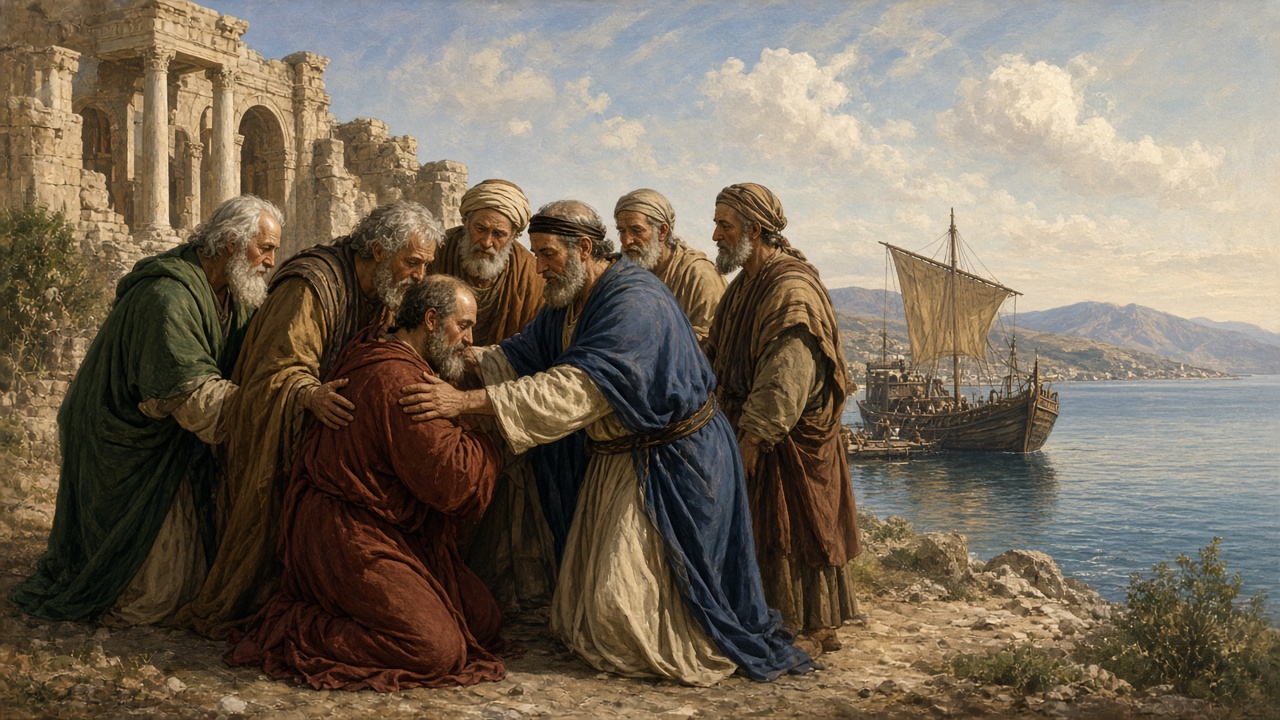
36Que arĩburu yóboi, Pablo ñʉatutarĩ jẽniarejame Jʉ̃menijicʉre caivʉque. 37Aru caivʉ orĩ narióri Pablore, nuivʉ barejáima ʉ̃i jivare, yópe ne d̶arĩ cõmajiyepe névʉ ne nʉrajiye jipocai. 38Ʉrarõ chĩoivʉ barejáima, “Yʉre jã́menajivʉbu mʉja cojedeca ijãravʉi” ʉ̃i aiye báque boje jipocamia. Aru ʉ̃́re yóvarejaima mái, jia ʉrad̶a ẽcarʉi nʉri jiad̶ocũ ʉracũ yebaita.
Did you know?
Farewell on the way to Jerusalem
- Leaving Troas, Paul sent his companions ahead by ship and walked to Assos along the Roman road. Assos was a seaport of Proconsular Asia in Mysia, on the north shore of the Gulf of Adramyttium; the walk was about 20 miles, the sea route about 30, and the island of Lesbos lay about 7 miles offshore.Sources: the Bible text itself · Assos
- Paul sailed past Ephesus to avoid spending time in the province of Asia—the Roman province in western Asia Minor, with Ephesus as its capital—because he hoped, if possible, to reach Jerusalem by the day of Pentecost. He stopped at Miletus, a seaport and the ancient capital of Ionia about 36 miles south of Ephesus, and summoned the elders of the Ephesian church.Sources: the Bible text itself · Asia · Miletus
- Seven men traveled with him: Sopater of Berea, Aristarchus and Secundus of Thessalonica, Gaius of Derbe, Timothy, and Tychicus and Trophimus from Asia. Aristarchus of Thessalonica later shared Paul’s imprisonment in Rome, and Trophimus, an Ephesian, accompanied him on this part of the journey and was with him in Jerusalem.Sources: the Bible text itself · Aristarchus · Trophimus
Notes written with AI assistance from open sources (Theographic Bible Metadata, CC BY-SA 4.0; Easton’s Bible Dictionary, public domain) and reviewed before publishing.
Places in this chapter
- Macedonia · 41.600, 22.540 · verses 1, 3, 6
- Greece · 37.972, 23.727 · verse 2
- Syria · Today: Syria 2 · 33.511, 36.306 · verse 3
- Asia · 38.400, 28.300 · verses 4, 16, 18
- Berea · Today: Veria · 40.518, 22.200 · verse 4
- Thessalonica · Today: Thessaloniki · 40.638, 22.946 · verse 4
- Troas · Today: Alexandria Troas · 39.752, 26.159 · verses 5, 6
- Philippi · 41.012, 24.285 · verse 6
- Assos · 39.491, 26.337 · verses 13, 14
- Mitylene · Today: ancient theater at Mitylene · 39.110, 26.547 · verse 14
- Chios · 38.373, 26.137 · verse 15
- Miletus · 37.531, 27.276 · verses 15, 17
- Samos · 37.750, 26.833 · verse 15
- Trogyllium · Today: Cape Mycale · 37.659, 27.003 · verse 15
- Ephesus · 37.939, 27.341 · verses 16, 17
- Jerusalem · 31.777, 35.234 · verses 16, 22
Only places identified with high confidence are shown (90% or more according to the scholarly sources compiled by OpenBible). Period map: DARE (Digital Atlas of the Roman Empire), CC BY 4.0; modern map: © OpenStreetMap contributors; places: OpenBible.info (CC BY 4.0).
Credits and license for this translation
Majepacʉ jʉ̃menijicʉi yávaiye mamaene coyʉitucubo
New Testament in Cubeo (CO:cub:Cubeo)
copyright © 2009 Wycliffe Bible Translators, Inc.
Language: Cubeo
Translation by: Wycliffe Bible Translators, Inc.
Cubeo [cub], Colombia
Copyright Information
© 2009, Wycliffe Bible Translators, Inc. All rights reserved.
This translation text is made available to you under the
terms of the Creative Commons License: Attribution-Noncommercial-No Derivative Works.
( http://creativecommons.org/licenses/by-nc-nd/3.0/ )
In addition, you have permission to port the text to different file formats, as long as you
do not change any of the text or punctuation of the Bible.
You may share, copy, distribute, transmit, and extract portions
or quotations from this work, provided that you include the above copyright
information:
You must give Attribution to the work.
You do not sell this work for a profit.
You do not make any derivative works that change any of the actual words or punctuation of the Scriptures.
Permissions beyond the scope of this license may be
available if you contact
us with your request.
The New Testament
in Cubeo
© 2009, Wycliffe Bible Translators, Inc. All rights reserved.
This translation is made available to you under the terms of the
Creative Commons Attribution-Noncommercial-No Derivatives license 4.0.
You may share and redistribute this Bible translation or extracts from it in any format, provided that:
You include the above copyright and source information.
You do not sell this work for a profit.
You do not change any of the words or punctuation of the Scriptures.
Pictures included with Scriptures and other documents on this site are licensed just for use with those Scriptures and documents.
For other uses, please contact the respective copyright owners.
2014-04-22
Source: http://ebible.org/cubNT/ · eBible.org