Genesis 9
Las Escrituras en Ashéninka Ucayali del Sur del Perú · Tap a verse to see its cross-references.
1Ikanta Tajorentsi itajonkawentakiri Noé itsipataakiri itomipaeni, iroka ikantakiri: “Roshekitee pitomipaeni, ithonkya inampiteeyaawo kepatsiki. 2Ithaawanteemi antamiweripaeni. Eeroka yotashiteerini shiwankiripaeni, antamiweripaeni, nijaweripaeni. 3Kameethatatsi poyaari antamiweripaeni eejatzi pankirentsipaeni. Naakaha pakimirori maawoeni. 4Riima añiinkari wathatsi, eero powakotawo riraa, rootaki añaakayiriri. 5Roo kowaperotachari irahaantsi. Arika piratakakiri pisheninka pompojeri, arira nomatakimi naaka. Arira nokantzityaari pipira, pirentzi, maawoeni atziriyitatsiri, niratakayiri nompojeri.
6Iitarika ompojerini atziri,
Arira rompojeeteeri rirori.
Tema Tajorentsi owetsikakiri atziri, roshiyakaakiri itajorentsishiretzi irirori.
7Roshekitee pitomipaeni eeroka,
Ithonkaeya inampitanteeyaawo kepatsiki.”
8Eekiro iñaanatatziiri Tajorentsi irika Noé itsipataakiri itomipaeni, ikantziri: 9“Pikem, tzimatsi nokashiyaakaakimiri, ari nokantzityaari eejatzi picharinipaeni. 10Ari nokanteri maawoeni antamiweripaeni ikaatzi tsipayitakimiri pishitowaera amaatakomentotsiki: shiwankiripaeni, tsimeripaeni, ikaatera tzimayitaatsini kepatsiki. 11Okaatzi nokashiyaakaakimiri eero nowashiñeero. Eero napiitantaawo oonkawo nowajankitanteeyaari atziriite eejatzi antamiweripaeni. Eero apiita oonkaeya kepatsi othonkaerikari tzimayitaatsiri.” 12Eekiro ikenkithawaetakaatziiri Tajorentsi, ikantziri: “Irika iñahaeteeri riyotanteetyaari tzimatsi nokashiyaakaakimiri, roo piñaapiinteeri eeroka eejatzi antamiweripaeni. 13Arika piñeeri oye menkoriki, piyotzi eenitatsi nokashiyaakaakimiri. 14Arika ooreenkakite kepatsiki, ari iñahaeteeri ikatziye oye. 15Ari nokenkithashireterori naaka nokashiyaakaakimiri eeroka eejatzi antamiweripaeni, eero rapiiteero iñahaero oonkawo othonkaero kepatsi. 16Arika noñeeri oye menkoriki, nokenkithashiretapiinteero nokashiyaakaakimiri rootaki naapatziyanteeyaariri atziripaeni, eejatzi antamiweripaeni jeekatsiri kepatsiki. 17Roo iñeeri atziripaeni riyotantyaari, riyotee eejatzi antamiweripaeni eenitatsi nokashiyaakaantziri.” Roowa iñaani Tajorentsi ikamantakiriri Noé.
18Irika itomipaeni Noé ikaatzi shitowaatsiri amaatakomentotsiki: Sem, Cam, Jafet. Riitaki Cam ipaapatetanakari Canaán. 19Ritaki mawa itomipaeni Noé oshekitaatsiri kepatsiki. 20Owaancheempeki rini Noé, riira etanakawo ipankiyitziro chochoki imiriyiiteeri. 21Ikanta rirakirowa Noé owaa iwankiri, antawoete ishinkitanakawo tee iñaakoteeya, aatonkoryaawaetaka ipankoki. 22Ikanta Cam ipaapatetanakari Canaán, iñaakiri ipaapate raatonkoryaawaetaka, ikamantakiri rirentzi. 23Ipokapaaki Sem itsipatakari Jafet, ramaki ithaari ipashikaeri ipaapate. Itaapi ipokantaka eero iñaantari raatonkoryaakaa. 24Ikanta ikakitee Noé, riyotaki ritaki iyaapitsi itomi pashikaeriri. 25Ikantanaki:
Iyakataarewo rinatye Canaán,
Romperatapiintane rinatye rirentzi.
26Eekiro ikantanakitzi Noé:
Riitaki Tajorentsi tajonkawenteerini Sem,
Riitaki omperateeyaarini Canaán.
27Riitaki Tajorentsi kantakaeyaarini Jafet roshekitanteeyaari,
Inampiteeyaawo iipatsiteki Sem,
Rijatzi omperateeyaarini Canaán.
28Okanta awijakira oonkapaetetantakari kepatsi, ojamani rañaawae Noé okaatzi 350 ojarentsi. 29Okaatzi ojamanitaki rañaaki Noé 950 ojarentsi roojatzi ikamantaari.
Did you know?
Noah's Covenant and the Words about His Sons
- God makes a covenant with Noah, with his descendants, and with every living creature that came out of the ark, promising never again to destroy all life by a flood. The sign is a rainbow set in the clouds, for all generations. One chronology dates this covenant to 2346 BC.Sources: the Bible text itself · God makes a covenant with Noah
- Genesis 9 says the whole earth was populated from Shem, Ham, and Japheth. Shem is explained as 'a name' or 'renown,' probably the eldest and the ancestor of the Israelites, though Japheth is also described as perhaps first by birth. Japheth means 'wide spreading,' a play on the Hebrew 'God shall enlarge Japheth,' and is linked to many tribes in the east of Europe and the north of Asia; Ham, meaning 'warm' or 'hot,' and hence the south, is called Noah's youngest son.Sources: the Bible text itself · Shem · Japheth · Ham
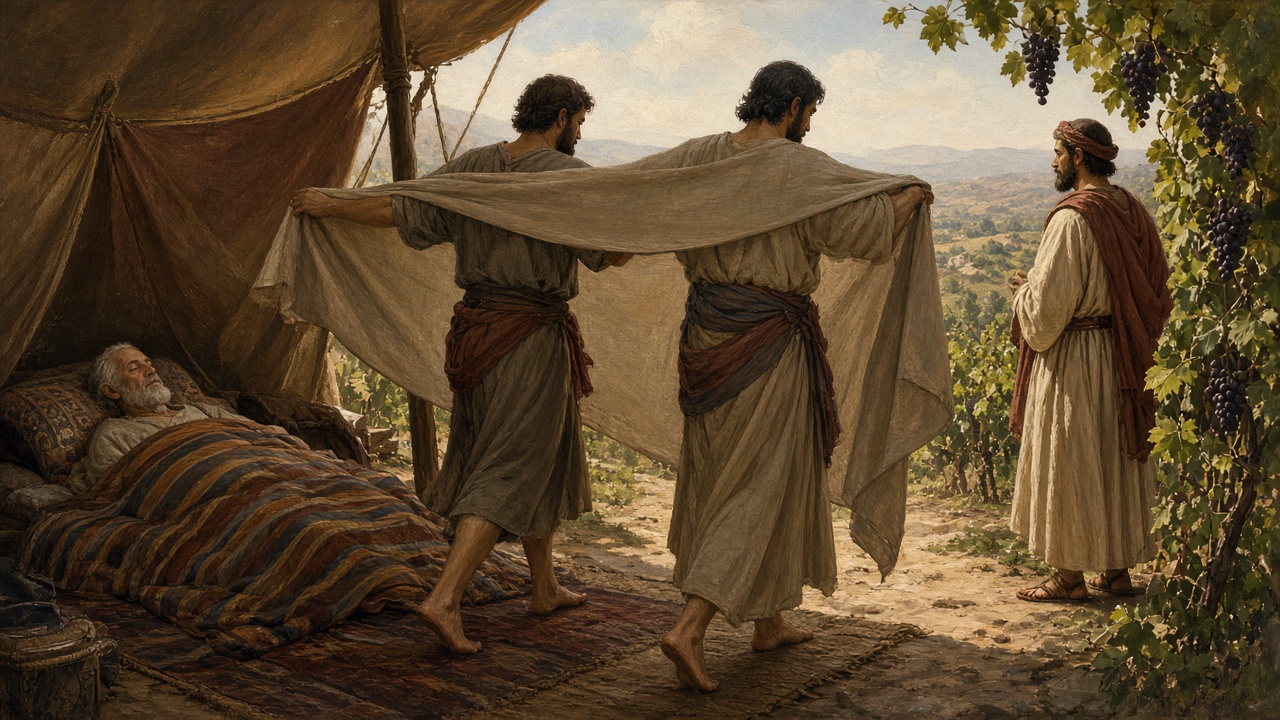
- Noah, a man of the soil, plants a vineyard, drinks the wine, and lies uncovered in his tent. Shem and Japheth cover him while walking backward, faces turned away, an act a dictionary calls filial piety and the occasion of the prophecy that Japheth's descendants would spread. The curse is spoken against Canaan, Ham's fourth son, because of what his father had done; one chronology dates the episode to 2345 BC.Sources: the Bible text itself · Japheth · Canaan · Noah gets drunk and Canaan is cursed
Notes written with AI assistance from open sources (Theographic Bible Metadata, CC BY-SA 4.0; Easton’s Bible Dictionary, public domain) and reviewed before publishing.
Credits and license for this translation
Las Escrituras en Ashéninka Ucayali del Sur del Perú
The Holy Bible in the South Ucayali Ashéninka language of Peru
Las Escrituras en Ashéninka Ucayali del Sur del Perú
copyright © 2008 Wycliffe Bible Translators, Inc.
Language: Ashéninka Ucayali del Sur (Ashéninka, South Ucayali)
Translation by: Wycliffe Bible Translators
This translation is made available to you under the terms of the
Creative Commons Attribution-Noncommercial-No Derivatives license 4.0.
You may share and redistribute this Bible translation or extracts from it in any format, provided that:
You include the above copyright and source information.
You do not sell this work for a profit.
You do not change any of the words or punctuation of the Scriptures.
Pictures included with Scriptures and other documents on this site are licensed just for use with those Scriptures and documents.
For other uses, please contact the respective copyright owners.
2016-06-08
Source: http://ebible.org/cpy/ · eBible.org