Genesis 8
Las Escrituras en Ashéninka Ucayali del Sur del Perú · Tap a verse to see its cross-references.
1Ikanta Tajorentsi, roshiretaari Noé eejatzi maawoeni antamiweripaeni itsipatakarira amaatakomentotsiki. Itampyaatakaakiro pyahaana oonkawo. 2Ashitayitanaa oshitowaawitaha nijaa poñaaneenchari inthomoeki kepatsiki, ari okantzitanaka jenoki inkiteki. Kaatanee opari inkani, 3amatsinka okantaka opiyaata nijaa. Okaataki 150 kitejeri, opiyahaantari nijaa. 4Ikanta rawijaki 5 kashiri, opiryaatakotee amaatakomentotsi janta ochempiki iitachari Ararat. 5Eekiro iyaatatzi opiyaataawo nijaa. Ikanta rawijaneentakiro rawijaki apite kashiri, ari okoñaatee tonkaari jenokitatsiri.
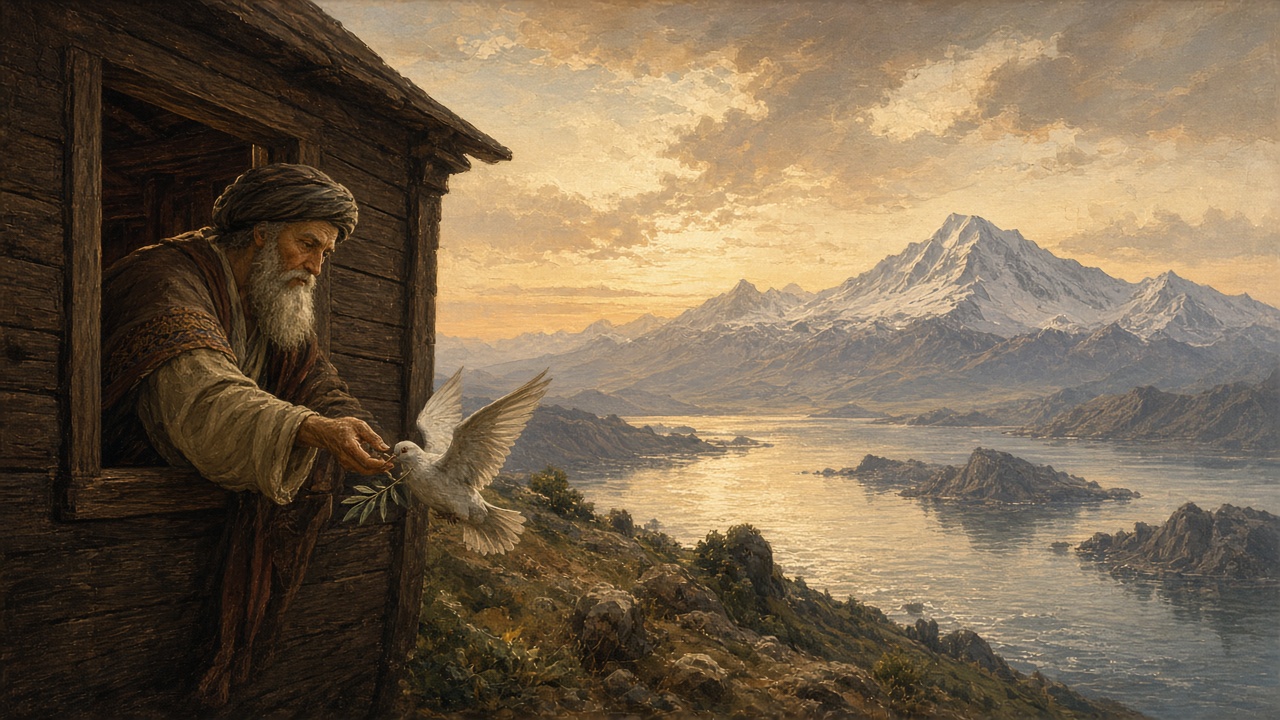
6Okanta awijaki 40 kitejeri, rashitaryahaero Noé imoontakirowa amaatakomentotsi, 7rowaahakiri tzijoniro. Ikanta reworewowaeta tzijoniro royaawentawo opiryaatee kepatsi. 8Ikanta Noé, romishitowakiri shiro iñaantyaawori piryaateerika kepatsi. 9Eejatzi ipiyaawo shiro amaatakomentotsiki, tee iñi jempe rookya, eenirowa oonka kepatsiki. Rowaankawakotanaka Noé rookantapaari shiro romonkyaawaeri amaatakomentotsiki. 10Eejatzi royaawentaawo Noé okaatzi 7 kitejeri, rapiiteeri rowahaeri shiro. 11Okanta otsireniityaaki, piyaawo shiro, ramae ithowaki tsipanashi. Ari riyotee Noé piryaatzimatee. 12Eejatzi royaawentawaa Noé okaatzi 7 kitejeri, rapiiteero rowaahaeri shiro. Tee ipiyaawo.
13Okaataki Noé 601 rojarentsite, ari opiryaate kepatsi. Ikanta rawijaneentanakiro 10 kashiri, rookaero Noé opankoshi amaatakomentotsi. Iñaakiro piryaatee kepatsiki. 14Ikanta imonkaatzimataka apite kashiri, ari opiryaateeri kameetha kepatsi. 15Ikanteeri Tajorentsi irika Noé: 16“Pishitowae amaatakomentotsiki, pitsipateeyaawo piina, pitomipaeni eejatzi paniropaeni. 17Pomishitowaeri maawoeni antamiweripaeni ikaatzira pitsipatakari: shiwankiripaeni, ipiraetari, anashiyitachari kepatsiki. Ishekiteeta maawoeniki kepatsiki.” 18Ikanta Noé itsipatakawo iina, itomipaeni, raniropaeni, shitowoeyeeni amaatakomentotsiki. 19Ari ishitowaeyanakini maawoeni antamiweripaeni, ipiraetari, anashiyitachari, aayitatsiri maawoeni.
20Roojatzi rowetsikantaka Noé taapokimentotsi roemoshirenkantyaariri Tajorentsi. Raaki apaani ikaatzi tsimeriyitatsiri kitewathatatsiri, ari ikantzitakari ikaatzi shiwankiyitatsiri. Itaakiniri. 21Ikanta ikemaenkatawakiri Tajorentsi iwoshininka, ikantanaki: “Eero napiiteero nothonkaeri atziripaeni, nothonkawentashitakari iyaaperonkari. Okantawitaka reentsitakori ikenkithashiryahaapiintawo atziripaeni rantayitero kaariperori. Ari ikimitakiri maawoeni antamiweripaeni, eero napiiteeri nothonkaeri nokimitaakirira nimaeka.
22Ashi owaero ipankiwaete inampiki roojatzi rowiitanteeyaawori iwankiwaeropaeni.
Ashi owaatyeero omajawirentsitee eejatzi okatsinkaetyee.
Ashi owaatyeero okyaawontsitee eejatzi ojarentsitee.
Okitejiyitayi eejatzi otsireniyitayi jaka kepatsiki.”
Did you know?
The Waters Recede
- The ark came to rest on the mountains of Ararat, a name meaning “sacred land” or “high land” for a country on whose mountains the ark settled after the flood. Easton's Bible Dictionary (1897) suggests those mountains were probably the Kurdish range of southern Armenia, though the name is also commonly applied to a high, almost inaccessible peak rising from the plain of the Araxes. In 2 Kings 19:37 and Isaiah 37:38 the Authorized Version renders the name “Armenia” and the Revised Version “land of Ararat,” while Jeremiah 51:27 uses it for central or southern Armenia.Sources: Ararat · the Bible text itself
- Noah’s Hebrew name means “rest,” and in this chapter the ark itself comes to rest as the waters go down. He was the son of Lamech and the grandson of Methuselah, and the father of Shem, Ham, and Japheth. Easton's Bible Dictionary describes him as the connecting link between the old world and the new, and as a second great progenitor of the human family.Sources: Noah · the Bible text itself
- Chronological notes place the Great Flood in 2347 BC, lasting one year; the subsiding of the waters in 2346 BC, over 220 days; and the leaving of the ark in 2346 BC, as a single day. In the chapter itself, the waters have gone down after 150 days and the ark rests on the seventeenth day of the seventh month; on the first day of the first month of Noah’s six hundred and first year the waters have dried up, and by the twenty-seventh day of the second month the earth is fully dry.Sources: The Great Flood · The flood subsides · Leaving the Ark · the Bible text itself
Notes written with AI assistance from open sources (Theographic Bible Metadata, CC BY-SA 4.0; Easton’s Bible Dictionary, public domain) and reviewed before publishing.
Places in this chapter
- Ararat · Today: Urartu · 39.703, 44.300 · verse 4
Only places identified with high confidence are shown (90% or more according to the scholarly sources compiled by OpenBible). Period map: DARE (Digital Atlas of the Roman Empire), CC BY 4.0; modern map: © OpenStreetMap contributors; places: OpenBible.info (CC BY 4.0).
Credits and license for this translation
Las Escrituras en Ashéninka Ucayali del Sur del Perú
The Holy Bible in the South Ucayali Ashéninka language of Peru
Las Escrituras en Ashéninka Ucayali del Sur del Perú
copyright © 2008 Wycliffe Bible Translators, Inc.
Language: Ashéninka Ucayali del Sur (Ashéninka, South Ucayali)
Translation by: Wycliffe Bible Translators
This translation is made available to you under the terms of the
Creative Commons Attribution-Noncommercial-No Derivatives license 4.0.
You may share and redistribute this Bible translation or extracts from it in any format, provided that:
You include the above copyright and source information.
You do not sell this work for a profit.
You do not change any of the words or punctuation of the Scriptures.
Pictures included with Scriptures and other documents on this site are licensed just for use with those Scriptures and documents.
For other uses, please contact the respective copyright owners.
2016-06-08
Source: http://ebible.org/cpy/ · eBible.org