Genesis 3
Las Escrituras en Ashéninka Ucayali del Sur del Perú · Tap a verse to see its cross-references.
1Tema kiyothaniri ikantaka maanki rawijiri antamiweri ikaatzi rowetsikakiri Tajorentsi Pawa. Ari rojampitakiro tsinani, ikantakiro: “¿Arima ikantzimi Tajorentsi tee okameethatzi pithotero okithoki okaatzi pankiteenchari jaka?” 2Akanakiri tsinani, okantanakiri: “Shinetaantsitatsi nothotero okithoki pankiyiteenchari, 3rooma ojatekaenchari pankirentsimashiki eero nothotziro. Tema ikantatyaana Tajorentsi tee okameethatzi nothotero, tee inintakaanawo eejatzi noteeyiro, aririka noteeyakiro, ari nokamaki.” 4Ari rakanakiro maanki iroka tsinani, ikantziro: “Theeyaantsi ini, eero pikami. 5Tema riyotzitakawo Tajorentsi aririka pithotakiro okithoki pankirentsi ipinkakaemiri aritaki piyotanakiro kameethatatsiri eejatzi kaariperori, poshiyakotanakyaari ikantaha Tajorentsi rirori.” 6Aminanakiro tsinani okithoki pankirentsi kameetha okantaka, oñaawenatanakawo othotero, oshekitzimotantyaawori iyomento. Aakiro chochoki, othotakiro. Roojatzi aantanakanariri oemi, opapaakiri, ithotawakiro eejatzi rirori. 7Ari okoñaatzimotanakiro, ojeekamerekitashiteeyani apiteroeni. Ahaeyanakini oshi pankirentsi, oshirikakiro, rootaki opoñaantanakari.
8Okanta otampetyaanaki tsireniiteeni ikematziiri ranashitapaaka Tajorentsi Pawa ikinawaeteeyinira rirori pankirentsimashiki. Ari ishiyeeyanakani roma-napithatyaari pankirentsimashiki. 9Riitaki kantacha Tajorentsi Pawa ikaemapaakiri shirampari: “¿Jempe pijeekakika?” 10Ari rakanakiri shirampari: “Nokemawakimi pikinapaaki pankirentsimashiki, antawoete nothaawanaki, tema tekatsi nokithaatyaari, rootaki nomanantanakari.” 11Ikanta Tajorentsi, rojampitapaakiri: “¿Iitaka kantakimiri pijeekamerikitashitaha? ¿Pithotakiroma chochoki nokantzimiri eero pithotziro?” 12Rakanaki shirampari, ikantzi: “Kaarima tsinani pipakinari notsipatyaari, rootakira pakinawori chochoki, nothotantakawori naaka.” 13Ikanta Tajorentsi Pawa rojampitanakiro tsinani, ikantziro: “¿Iitaka pantantawori iroka?” Roojatzi okantantanakari roori: “Maanki amatawitakinari naaka, rootaaki nothotantakawori chochoki.” 14Ikantanakiri maanki Tajorentsi Pawa: “Okantakaantziro pantakirowa iroka, nimaeka riyakateetemi pitsipawitarira maawoeni antamiweripaeni. Pishipaneeki panashiteeya nimaeka, kepatsi powaeya. 15Naaka kantakahaeyaawoni okijaneentantemiri iroka tsinani. Ari ikanteemiri ojariteeyaari ikijaneenteeri pitomipaeni. Riitaki ompojiimini piitoki ojariteeyaari tsinani, apatziro patsikiri eeroka iitziki.” 16Ikantanakiro tsinani: “Antawoete pikemaatsiwaeteeya aririka pitzimaanite. Pikoetyaapiinteeri piimi, riitaki antariwentzimiri rirori, osheki pipinkathateri eeroka.” 17Eejatzi ikanteetanakiri shirampari: “Okantakakimi paawakotawakiro piina roojatzi pithotantakawori chochoki nopinkakawitziimiri, eerokaha kantakaanteroni riyakatanteetyaawori kepatsi. Antawoete pipomeentsiwaeteeyaawo pantawaetee piñaanteeyaawori otzimae powaeyaari eenirowa pañaayitzi. 18Kitocheemashi okantayiteeya kepatsi. Piwankiri powayiteeyaari. 19Otzimatye pimajawiwenteero okaate powayiteeyaari, roojatzi piikamakotee, tema kepatsipane pinatzi rowetsikaetakimiri, eejatzi pipeyaneeyawo kepatsi.” 20Ikanta shirampari iitakiro iina ‘Eva,’ tema roo rinirontayityaari ikaate tzimayitatsini. 21Roojatzi raantanaka Tajorentsi Pawa mashitsi rowetsikakiniri iithaari, rootaki ikithaatakiriri shirampari eejatzi tsinani,
22ikantaki: “Ari roshiyakae aakapaeni shirampari, riyotanakiro kameethatatsiri eejatzi kaariperori. Nimaeka tee nokowakaaneeri ithotaneero chochoki owañaantatsiri, tee nokoyi rañe ikanteetatyeeyani eero ikamaanite.” 23Roojatzi romishitowantakari Tajorentsi irika shirampari pankirentsimashiki jeekatsiri Edén-ki. Rantawaetakaakiri jaka kepatsiki jempe rahaetakiri rowetsikanteetakariri shirampari. 24Ikanta romishitowaetakiri shirampari, rowaakiri ronampiri tajorentsi pankirentsimashiki jempe ishitowapiintzi ooryaa. Rowaakiro eejatzi owathaamentotsi oshiyawori opaamatzi paamari, oshewatzimaeta eejatzi, eero rareetanteetawo pankirentsi ow añaantatsiri.
Did you know?
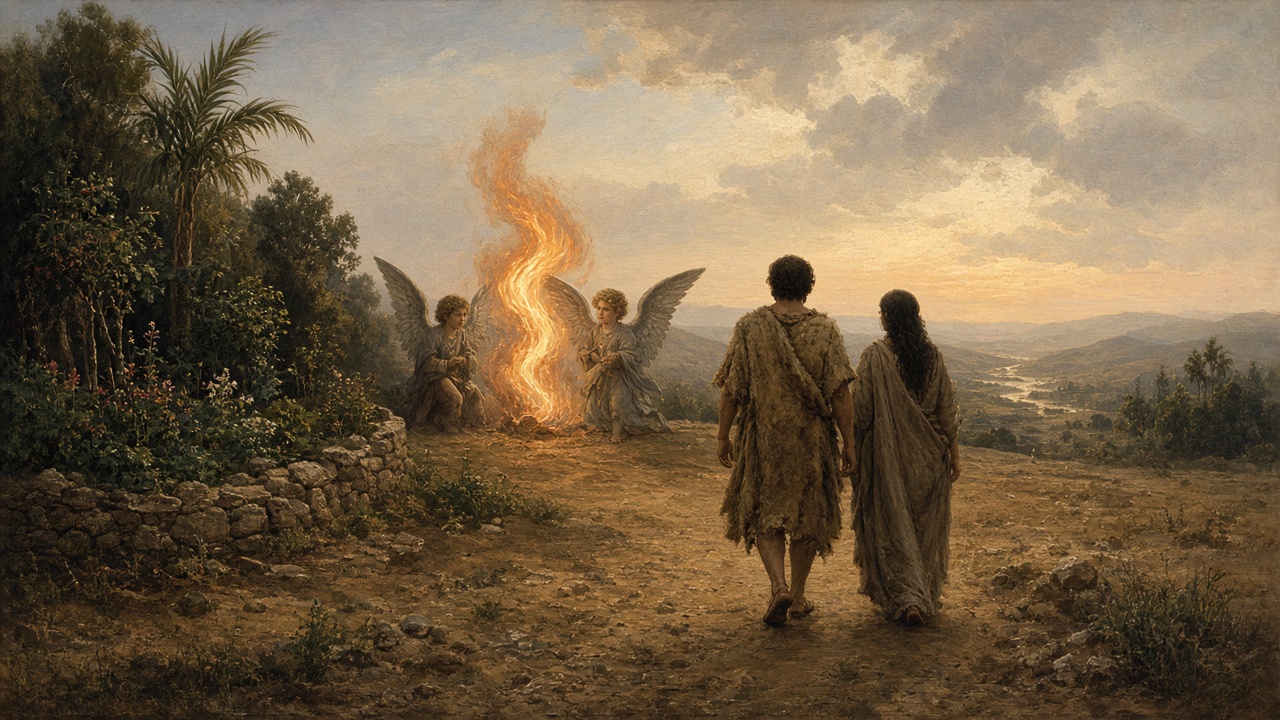
The Fall and Exile from Eden
- A traditional reference explains Adam as “red,” a Babylonian word used as the generic name for man, with the same meaning in Hebrew and Assyrian, and links the name to his being formed from the dust of the earth. In this chapter that origin returns in the judgment: he will toil for his food until he returns to the ground, for he is dust and to dust he will return, and he is sent to work the soil from which he was taken.Sources: Adam · the Bible text itself
- In this chapter Adam gives his wife the name Eve, meaning “life” or “living,” because she would be the mother of all the living.Sources: Eve · the Bible text itself
- The site of the garden of Eden, from which the man is driven in this chapter, has been much discussed and placed in Armenia, west of the Caspian Sea, in Media, near Damascus, in Palestine, in southern Arabia, and in Babylonia. A traditional geographical note looks for it along the Tigris and the Euphrates, in the land of Shinar, or Babylonia.Sources: Eden · the Bible text itself
Notes written with AI assistance from open sources (Theographic Bible Metadata, CC BY-SA 4.0; Easton’s Bible Dictionary, public domain) and reviewed before publishing.
Credits and license for this translation
Las Escrituras en Ashéninka Ucayali del Sur del Perú
The Holy Bible in the South Ucayali Ashéninka language of Peru
Las Escrituras en Ashéninka Ucayali del Sur del Perú
copyright © 2008 Wycliffe Bible Translators, Inc.
Language: Ashéninka Ucayali del Sur (Ashéninka, South Ucayali)
Translation by: Wycliffe Bible Translators
This translation is made available to you under the terms of the
Creative Commons Attribution-Noncommercial-No Derivatives license 4.0.
You may share and redistribute this Bible translation or extracts from it in any format, provided that:
You include the above copyright and source information.
You do not sell this work for a profit.
You do not change any of the words or punctuation of the Scriptures.
Pictures included with Scriptures and other documents on this site are licensed just for use with those Scriptures and documents.
For other uses, please contact the respective copyright owners.
2016-06-08
Source: http://ebible.org/cpy/ · eBible.org