Genesis 4
Chiga Tevaen'Jema Atesuja 1, Aisheve Caña'cho · Tap a verse to see its cross-references.
Caín Abelma fi'tti'cho
1Tsomba tse'i Adán tise pushe, Evai'ccu ccuisi Evaja surie dapa tsandie du'shuve isu. Tisema inisian Caínme. Evaja Caínma isupa su: “Na'su Chiga ñanga afesi gi tsandieve isu.” 2Omboe tsambe quinshin, Abelve isu. Nane coemba Abelja oveja coira'suve da. Caínjan andema nasipave sema'su tsu.
3Can'jemba jai'ngae Caínjan andenga sho'yoqque'su nama taipa Na'su Chiganga afeye i. 4Toya'caen Abelja tseyi isu'cho oveja du'shuma fi'ttipa yayapatssi nama ipa afe. 5Tsa'caen afe'fasi Chigaja Abelma in'jamba tise afe'choma'qque in'jan. Tsa'ma Caínma ni tise afe'choma'qque tiseja in'jambi. Tsa'cansi Caín iyicca'yesi 6Na'su Chigaja tisema su:
—¿Jongoesie qui iyicca'ye? 7Nane que ñotsse tson'ninda gi queve ñotsse in'jaña. Tsa'ma ñotsse tsombi'ta —injama'tse, ñoa'me tsu egae tsincon'cho quema qqueñañe tson'jen. Nane quema patsuye tsu in'jan. Tsa'ma queja egae tsincon'choma patsuya'cho.
8Tsomba tse'i fae a'ta Caínjan tise quinshin Abelma ttu'se nasipani pasia'ngaye. Tsomba nasipani can'jemba Caínjan iyicca'yepa jangipa tise quinshin Abelma fi'tti. 9Tsa'caen fi'ttipa jisi Na'su Chigaja Caínma iñajampaña:
—¿Mani tsu que quinshin, Abelja?
Caínjan su:
—¿Ma'caen gi atesuya? ¿Ñanda ti gi ña quinshinma coira'su?
10Tsonsi Na'su Chigaja su:
—¿Jongoesie qui tsa'caen tson? Que quinshimbe anjampa tsu andenga tssamba ñama fundopa ttu'se ccane'qque quema fi'ttiye. 11Tsa'cansi qui ja'ñojan ti'tsse vana'ma va ande'ye teyamoeñemba ñotsse isuya'bi. Nane andeja, aya'fama sharuqquia'caen que quinshin anjampama que tive'ye cu'ipa tsu quenga afeye se'piya. 12Ja'ño andema dyan'dyapa jon'ni'qque tsu sho'yaeñe se'piya que jongoesuma taisa'ne. Ñoa'me qui biani injanga jacamba poiyi'ccoma dyopa ccuyin ja'suve daya.
13Tsa'caen susi Caínjan Na'sunga su:
—Ñoa'me gi oshambi tsa'caen canseye. Panshaen qui ñama vanae. 14Ja'ño qui ñama tteyamoeña va ande'ye. Biani poiyi'ccoma dyopa ccuyin japa injanga jacan'suve dasi majan ñama atte'ta tsu fi'ttiya. Ni quema gi ccase atteya'bi.
15Tsonsi Na'su Chigaja tisema su:
—Tsa'caña'bi tsu. Nane majan Caínma fi'tti'ninda gi tisema ñoa'me ti'tsse vanaeña. Siete se ti'tsse tsu vanaña.
Tsa'caen supa Na'suja canjaeña'choma Caínga afe cuintsu poiyi'cco majan tisema cachui'a'qque fi'ttimbecañe. 16Tsonsi Caínjan tseni Na'su Chigai'ccu condase'jene sombopa Edénima chiga sombo'jefanga Nod andeni ja.
Caín omba'su dutssiyendeccu
17Tsomba tse'i Caín tise pushei'ccu ccui'jesi surie dapa Enocve isu. Omboe Caínjan canqqueve canqquian. Tsa canqqueve canqquiamba inisian tise du'shu Enoc iniseningae. 18Enocja Irad quitsa tsu. Iradja Mehujael Quitsa. Mehujaelja Metusal quitsa. Metusalja Lamec quitsa. 19Lamecja dos pusheve tsu pushe. Fae'ccombe iniseja Adave. Faesuja Zila. 20Adaja Jabalve isu. Isusi tiseja poiyi'cco carpani canjensundeccumbe yayave tsu da. Poiyi'cco tsu vaura'can'ma'qque coirasundeccu. 21Jabal quinshinjan Jubal tsu. Tsambe dushundeccu tsu poiyi'cco majan gitara'cain'ccu, fendo'ccoi'ccu'qque jeñasundeccu. 22Toya'caen Lamec faesu pushe Zilaja Tubal-caínme isu. Tsaja coemba yoshava, cu'a yoshavama'qque semamba osha'chove ñoña'su tsu. Tubal-caín que'tteja Naama tsu.
23Fae a'ta Lamecja tise dos pushendeccuma ttu'sepa su:
“Ada, toya'caen Zila, que'ima gi pushe.
Ña su'choma ñotsse paña'faja.
Tsandie ñama iñaccaensi gi tisema fi'tti.
Nane tsa chu'a tsandie ñama tssaisi gi tisema fi'tti.
24Tsa'cansi majan Caínma fi'tti'suja
siete se ti'tsse vanaña'cho qquen su'chomanda
ñoa'me majan ñama fi'tti'ta setenta y siete se
tsu ti'tsse vanaña'cho.”
Adán pushe Eva faesu du'shuve isu
25Ccase Adán tise pushe Evai'ccu ccuisi faesu tsandie du'shuve isu. Tisema inisian Setve. Nane Evaja su: “Caín Abelma fi'ttisi pasi tsu Chiga Quitsaja ñanga faesu du'shuma afe.”
26Toya'caen Set'qque coemba pushepa du'shuve an'biamba tisema inisian Enósve. Tise can'jeinte tsu aindeccuja Na'suma iñajañe ashaen'fa.
Did you know?
Cain, Abel, and Life East of Eden
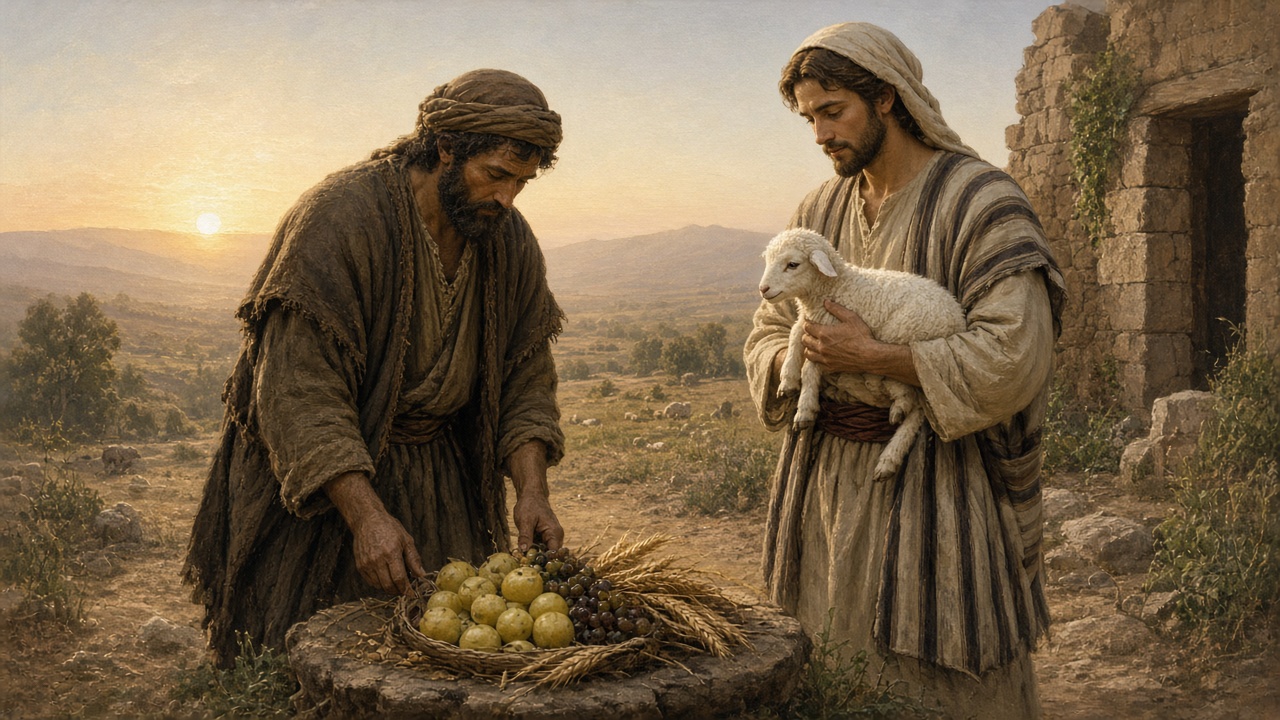
- Abel’s Hebrew name means “breath” or “vanity.” He kept sheep, while his brother Cain tilled the soil: Abel brought the best portions of the firstborn of his flock, and Cain brought fruit of the ground. Easton's Bible Dictionary (1897) reads the phrase “in process of time” (margin, “at the end of days”) as probably referring to the Sabbath.Sources: Abel · Cain · the Bible text itself
- After Abel’s death, Cain settled in the land of Nod, east of Eden, a name meaning exile, wandering, or unrest. There he built a city and named it after his son Enoch. Easton's Bible Dictionary notes that this is the first city mentioned in Scripture.Sources: Nod · Enoch (son of Cain) · the Bible text itself
- Lamech, fifth in descent from Cain, married two women, Adah and Zillah. Easton's Bible Dictionary calls his address to them the only extant example of antediluvian poetry, sometimes known as “Lamech’s sword-song.” Their children are tied to early ways of life: Jabal with tents and livestock, Jubal with the harp and flute, and Tubal-cain with forging bronze and iron.Sources: Lamech (descendant of Cain) · Adah (wife of Lamech) · Zillah · the Bible text itself
Notes written with AI assistance from open sources (Theographic Bible Metadata, CC BY-SA 4.0; Easton’s Bible Dictionary, public domain) and reviewed before publishing.
Credits and license for this translation
Chiga Tevaen'Jema Atesuja 1, Aisheve Caña'cho
New Testament and Genesis in Cofán (EC:con:Cofán)
copyright © 2012 Wycliffe Bible Translators, Inc.
Language: Cofán
Translation by: Wycliffe Bible Translators, Inc.
Cofán
con
Ecuador
Copyright Information
©Wycliffe Bible Translators, Inc. All rights reserved.
This translation text is made available to you under the
terms of the Creative Commons License: Attribution-Noncommercial-No Derivative Works.
( http://creativecommons.org/licenses/by-nc-nd/3.0/ )
In addition, you have permission to port the text to different file formats, as long as you
do not change any of the text or punctuation of the Bible.
You may share, copy, distribute, transmit, and extract portions
or quotations from this work, provided that you include the above copyright
information:
You must give Attribution to the work.
You do not sell this work for a profit.
You do not make any derivative works that change any of the actual words or punctuation of the Scriptures.
Permissions beyond the scope of this license may be
available if you contact
us with your request.
The New Testament
in Cofán
©Wycliffe Bible Translators, Inc. All rights reserved.
This translation is made available to you under the terms of the
Creative Commons Attribution-Noncommercial-No Derivatives license 4.0.
You may share and redistribute this Bible translation or extracts from it in any format, provided that:
You include the above copyright and source information.
You do not sell this work for a profit.
You do not change any of the words or punctuation of the Scriptures.
Pictures included with Scriptures and other documents on this site are licensed just for use with those Scriptures and documents.
For other uses, please contact the respective copyright owners.
2014-04-22
Source: http://ebible.org/conNTpo/ · eBible.org